Ornamental · Plantaginaceae
Spike Speedwell
Veronica spicata
Give it full sun and sharp drainage, and speedwell sends up blue spikes all summer.
Full sun
Every 5–10 days
USDA 3–8
2–3 ft · 0.6–0.9 m
Overview
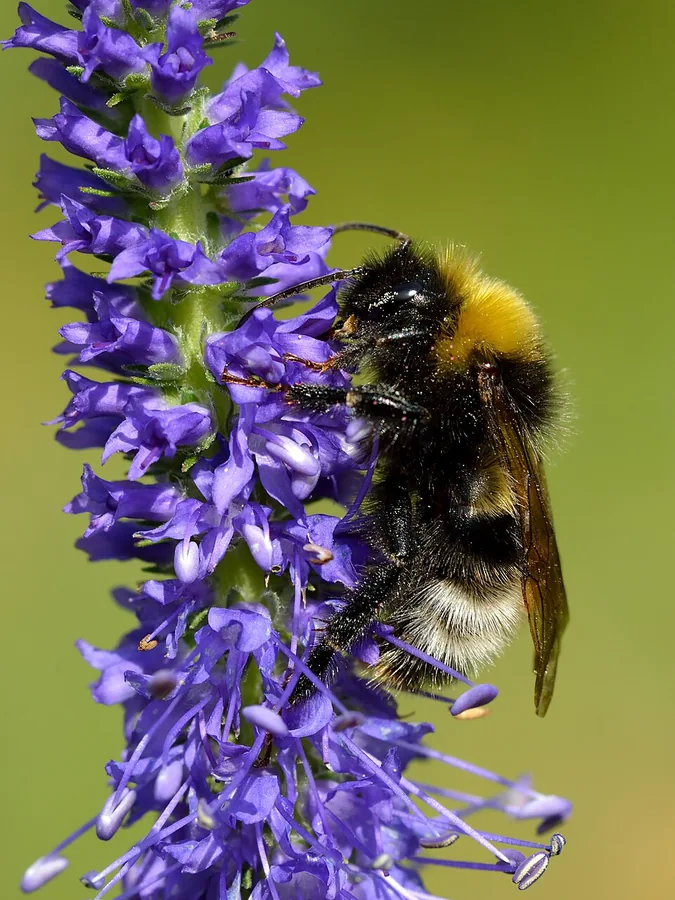
Spike speedwell is a tough, easy border perennial that throws up slender spires of blue, pink, or white flowers from early summer on. It belongs to the plantain family and earns its place in a sunny bed, where pollinators work the spikes from June into August. Cold holds no fear for it, since it's hardy from zones 3 to 8.
The plant grows into a tidy clump, roughly 2 to 3 feet (61 to 91 cm) tall and about as wide. It asks for little once settled, and deer and rabbits tend to pass it by. The one thing it won't forgive is wet feet, so the soil has to drain.
Give it sun and good drainage and speedwell more or less takes care of itself. Shear the spent spikes and you often coax a second flush in fall, and a clump pulled apart every few years stays vigorous for years to come.
Care
The short version: full sun, moist but sharply drained soil, and steady water without sogginess. Deadhead the spent spikes to keep the bloom going, and divide the clump every few years to hold its vigor.
Light
Speedwell flowers best in full sun, with 6 or more hours of direct light a day. It tolerates light or partial shade, but a shady spot leaves it stretching and blooming thin.
Water
Give it steady, regular moisture rather than letting it dry out or sit wet. Once established it shrugs off some drought, though the shallow roots can't take a long dry spell. Keep the soil from going soggy, especially over winter, or root rot sets in.
Soil
Plant it in average to rich loam or silt that holds moisture but drains well. A pH from 6.0 to 7.5 suits it, and good winter drainage matters more than anything, since heavy, wet clay is what kills these plants.
Temperature
Speedwell is built for the cold, hardy down to -40°F (-40°C) and comfortable up to about 86°F (30°C). That toughness is why it carries through winter in zones 3 to 8 without fuss.
Humidity
Ordinary outdoor air suits it, so there's no humidity number to manage. Air movement is what counts, since crowded, still conditions over wet soil invite trouble at the roots.
Feeding
It isn't a hungry plant. A single balanced feed or topdressing of compost in spring carries it through the season, and overfeeding only encourages floppy growth.
Pruning
Deadhead or shear the spent spikes through the season to push fresh bloom, and cut the plant back to its basal rosette after the main flush for a chance at a fall repeat. Tidy up the old growth in late winter or early spring.
Repotting
As a garden perennial, speedwell is divided rather than potted on. Split the clump every 3 to 4 years to keep it vigorous, especially once the center starts to thin or flowering drops off.
Size & spacing
A mature plant reaches 2 to 3 feet (61 to 91 cm) tall and spreads about 24 to 30 inches (61 to 76 cm) wide. Set plants roughly that far apart so each clump has room to fill out and air can move through.
When to plant
Speedwell follows the seasons in a temperate garden. Start seed indoors a few weeks before your last frost, set plants out once the soil warms in spring, and the flower spikes open from June through August.
Northern hemisphere
Southern hemisphere
Typical months for a temperate climate: start earlier in warm zones, later where spring frosts linger.
- Sow: 6 to 8 weeks before last spring frost
- Plant: After last spring frost once soil has warmed
- Harvest: June to August (late spring to mid-summer)
Hardiness
USDA hardiness zones: 3–8
Temperature: down to -40°C
Troubleshooting
Speedwell is low trouble, and most of what goes wrong traces back to either too much water or too little sun. Catch the early signs below and the fix is usually a change of site or a quick deadheading.
Wilting and yellowing with soft, blackened roots
This is root rot, and it comes from wet, poorly drained soil rather than too little water. Winter is the worst time for it, when cold ground stays soggy and the shallow roots sit in standing water. Lift the crown to check, move the plant to a sharply drained spot, and discard any clump that has gone soft and mushy.
Fix:
- Reduce watering and improve drainage
- Move or replant into a sharply drained, raised, or amended site
- Remove and discard severely rotted plants
Few flowers and floppy, leggy stems
Too much shade leaves speedwell stretching for light and blooming poorly. Old spent spikes left on the plant also tell it to stop. Move it into full sun, give it 6 or more hours of direct light, and shear off the finished spikes to bring on a fresh flush.
Fix:
- Site in full sun (6 or more hours of direct sun)
- Deadhead or shear spent spikes to promote rebloom
- Cut back to the basal rosette after the main flush
Toxicity
Good news for pet owners and parents: speedwell is not considered toxic. It carries no poison warning from the extension references and doesn't appear on the ASPCA toxic plant list, so cats, dogs, and grazing animals can share the garden with it. The worst a big mouthful might do is bring on a brief, mild stomach upset, the same as with most any plant.
Safe for
People · Cats · Dogs · Horses · Rabbits · Livestock · Birds
Cats None
Speedwell is safe to grow around cats, with no toxic compounds on record. A cat that nibbles a leaf may at most get a brief, mild stomach upset, the same as with any plant eaten in quantity.
Dogs None
Dogs can share the garden with speedwell without worry. It carries no toxicity warning and isn't on the ASPCA list, so a curious chew calls for nothing more than a watchful eye.
Horses Safe
Horses are not at risk from speedwell. The plant holds no known toxins, and grazing on it does no harm.
Rabbits Safe
Rabbits often leave speedwell alone in the garden, and it poses no danger if they do take a bite.
Livestock Safe
Cattle, goats, and sheep can graze near speedwell safely, since none of its parts are toxic to them.
Birds Safe
Speedwell is harmless to birds, which often visit the flower spikes for pollen and nectar without any risk.
People Safe
Speedwell is safe to handle and grow around children. It isn't a food plant, so there's no part meant to be eaten, but a nibbled leaf brings no more than a possible mild stomach upset.
No special handling precautions; generally considered safe around pets and people.
Varieties
Spike speedwell comes in a handful of named cultivars, sorted mostly by flower color and habit. These are the ones you'll meet most often.
Icicle
A white-flowered cultivar that lights up the front of a border.
Rosea
Carries soft pink flower spikes instead of the usual blue.
Royal Candles (Glory)
Stays compact and tidy, topped with deep violet-blue spikes.
Red Fox (Rotfuchs)
Stands out for its rosy-red to deep pink flower spikes.
How to propagate
Speedwell is easy to multiply, whether you split an existing clump, raise it from seed, or root a few cuttings in summer.
DivisionEasy
Early spring as shoots emerge, or early fall · One growing season
Division is the simplest and most reliable way to make more speedwell. In early spring as the shoots break ground, or in early fall, dig the whole clump, pull it apart into pieces, and replant them. Each division settles in over a single growing season.
SeedModerate
Indoors 6 to 8 weeks before last frost, or outdoors in early spring · Germinates in about 14 to 21 days; flowers later that season or the next
Seed takes more patience but works well. Start it indoors 6 to 8 weeks before your last frost, or sow outdoors in early spring, and press the seed onto moist mix without covering it, since it needs light to sprout. Seedlings come up in 14 to 21 days and bloom either later that season or the next.
Stem cuttingsModerate
Late spring to early summer · A few weeks to root
You can also clone a plant from cuttings in late spring or early summer. Take a 4 to 6 inch tip, strip the lower leaves, and stand it in a well-drained mix, where it roots over a few weeks.
Myths
Speedwell is poisonous to cats and dogs.
Spike speedwell carries no toxicity warning from NC State Extension and isn't on the ASPCA toxic plant list. It is considered safe around pets, though eating a large amount of any plant can bring on a mild, passing stomach upset.
Speedwell needs constantly wet soil to thrive.
It wants moisture but hates sitting in it. Soggy, poorly drained ground brings on root rot, while established plants shrug off some drought, so the goal is steady water with sharp drainage.