Ornamental · Plantaginaceae
Beardtongue
Penstemon digitalis
Give it full sun and sharp drainage, and this tough native sends up white spikes the bees can't resist.
Full sun
Every 7–14 days
USDA 3–8
2–4 ft · 0.6–1.2 m
Overview
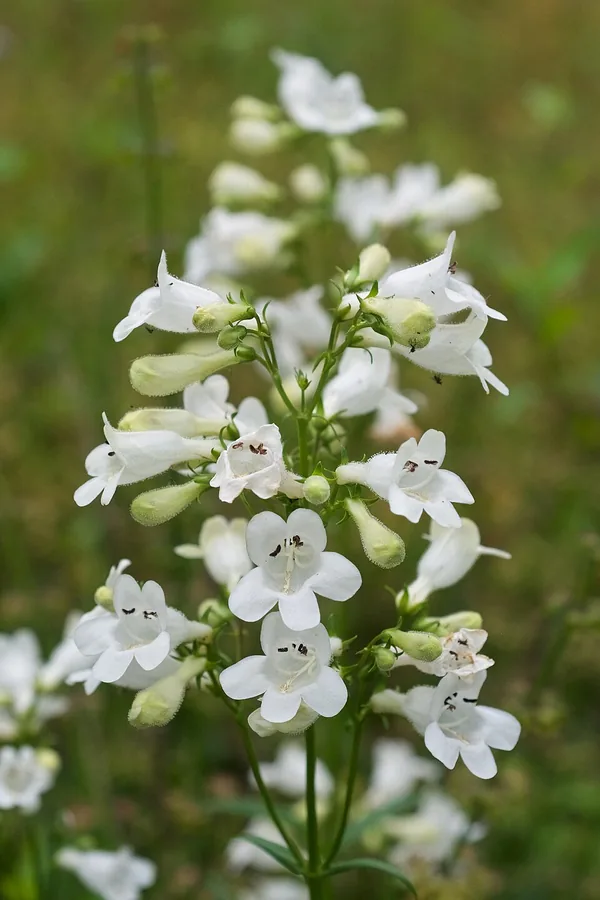
Beardtongue is a clump-forming native perennial from the figwort side of the plant world, and it earns its keep in a sunny border. From late spring into early summer it throws up tall spikes of white, two-lipped tubular flowers that hum with bees and the odd hummingbird. The common name foxglove beardtongue points at the flower shape, not at any kinship with true foxglove.
What makes it easy to live with is how little it asks. It shrugs off cold down to -29°F (-34°C), holds up through dry spells once its roots take hold, and grows fast enough to fill a gap in a season. Give it sun and ground that drains and it largely takes care of itself.
The one habit to watch is its tendency to spread. Beardtongue self-seeds and the clump widens year on year, so it can wander past the spot you gave it. Deadheading and a division every few years keep it where you want it.
Care
The short version: full sun and sharp drainage are the whole game. Water moderately while it establishes, then let it ride dry spells, feed it next to nothing, and lift and divide the clump every 2 to 3 years to keep it blooming.
Light
Beardtongue blooms best in full sun, where the spikes stand straight and flower heavily. It will take partial sun or light shade, but the plant grows looser and gives you fewer flowers for the trade.
Water
Water moderately while the plant settles in, letting the top half of the soil dry between drinks, roughly every 7 to 14 days. Once established it handles drought well, and the real danger is the other way: wet or poorly drained soil rots the roots, so err on the dry side.
Soil
It is not fussy about soil and grows in loam, clay, or sand as long as the drainage is good. Aim for a pH between 5.5 and 7.0, and remember that sharp drainage matters far more than richness here.
Temperature
This is a tough, cold-hardy native that takes winters down to -29°F (-34°C) and summer heat up to around 86°F (30°C). That range covers a wide stretch of the country without any special protection.
Humidity
Average outdoor humidity suits it fine, so there's no figure to hit. Air movement counts for more than moisture in the air, since crowded, still conditions are what let leaf spot get going.
Feeding
A native that thrives on lean ground, beardtongue needs almost no feeding. A light spring dose of balanced fertilizer or a little compost is plenty, and rich feeding only makes it floppy.
Pruning
Deadhead the spent flower spikes through the season to keep the plant tidy and curb its self-sowing. Cut the foliage back in late fall or early spring to clear the way for fresh growth.
Repotting
Beardtongue lives in the ground rather than a pot, but it does want regular renewal. Divide the clump every 2 to 3 years to keep it vigorous, watching for declining bloom or a crowded, dying center as your cue.
Size & spacing
Plants reach 2 to 4 feet (60 to 120 cm) tall in flower and form a clump 18 to 24 inches (45 to 60 cm) across. Space them with that width in mind so air moves freely and leaf spot stays away.
When to plant
Beardtongue runs on a cool-season rhythm. Its seed needs a cold, moist chill before it will sprout, so sow it outdoors in fall or start it indoors in late winter after stratifying, set plants out in spring once frost has passed, and look for the white spikes from May to July.
Northern hemisphere
Southern hemisphere
Typical months for a temperate climate: start earlier in warm zones, later where spring frosts linger.
- Sow: Late winter after 1-3 months cold-moist stratification
- Plant: Spring after last frost
- Harvest: May to July
Hardiness
USDA hardiness zones: 3–8
Temperature: down to -40°C
Troubleshooting
Beardtongue has few real enemies, and most of its troubles trace back to wet soil or a clump that has outgrown its space. Match what you see below and act early, while a fix still does some good.
Wilting plant with a blackened base and mushy roots
This is root or crown rot, and it comes from soil that stays wet, especially over winter. Beardtongue handles drought far better than soggy ground, so the fix is drainage, not more water. Move the plant to a raised, well-drained spot and pull out anything that has already rotted through.
Fix:
- Improve drainage by amending soil or relocating to a raised, well-drained site
- Reduce watering and avoid wet winter soils
- Remove and discard severely rotted plants
Plant creeping past its spot and crowding neighbors
Beardtongue self-seeds and widens its clump, and in a settled garden it can push past where you want it. Deadhead the spent spikes before they set seed to slow the sowing, and pull any volunteers you don't want. Lifting and dividing the clump every few years keeps it in bounds.
Fix:
- Remove unwanted seedlings
- Deadhead before seed set to limit self-sowing
- Divide and thin the clump
Spots and blotches scattered across the leaves
These marks are fungal leaf spot, an occasional and mostly cosmetic problem. Pick off the affected leaves and the plant carries on fine. The real cure is air movement, so give it room and keep water off the foliage.
Fix:
- Remove and dispose of affected leaves
- Improve air circulation and avoid overhead watering
Toxicity
Good news on this front: beardtongue is safe. Despite the foxglove in its common name, it carries none of true foxglove's poison and sits on no toxic plant list, so it's fine around cats, dogs, livestock, and curious children.
Safe for
People · Cats · Dogs · Horses · Rabbits · Livestock · Birds
Cats None
Beardtongue is safe for cats, with no toxic compounds to worry about. A curious nibble won't cause poisoning.
Dogs None
Dogs can be around this plant without risk. Eating a large amount of any plant might upset a stomach, but there's no toxin here.
Horses Safe
Horses are not harmed by beardtongue. It carries none of the cardiac toxicity found in true foxglove.
Rabbits Safe
Rabbits can graze it safely. The leaves and flowers hold nothing that would poison them.
Livestock Safe
Grazing cattle, goats, and sheep face no danger from this plant. It is not listed as toxic to livestock.
Birds Safe
Birds are safe around the foliage and seed. The plant offers nectar to pollinators and poses no risk to them.
People Safe
Beardtongue is harmless to people, including children. Its name nods to foxglove, but it shares none of that plant's poison.
Generally safe around pets and people; no special handling required.
Varieties
Most gardens grow either the wild species or one standout cultivar prized for its dark foliage. These are the two worth knowing.
Husker Red
Named the 1996 Perennial Plant of the Year for its maroon-red spring foliage, which greens with age while keeping its maroon veining and red stems.
Foxglove Beardtongue (species)
The straight species carries tall clusters of white, two-lipped tubular flowers from late spring into early summer.
How to propagate
Beardtongue is easy to multiply, whether you split an established clump, sow the ripe seed, or root summer cuttings to keep a favorite cultivar true.
DivisionEasy
Spring · One growing season
Division is the simplest way to make more beardtongue and keep the clump vigorous. Lift and split it in spring every 2 to 3 years, and each piece settles back in over a single growing season.
SeedModerate
Fall sow outdoors or stratify and sow late winter · Germinates best with cold-moist stratification and light; blooms typically the following year
Seed ripens in fall and germinates best after a cold, moist chill and with light. Sow it outdoors in fall to let winter do the work, or stratify and start it in late winter, and expect first blooms the following year.
Stem cuttingsModerate
Summer · Several weeks to root
Take softwood cuttings in summer when you want a named cultivar to come true, since seed won't keep the foliage color. The cuttings root over several weeks before they're ready to pot on.
Myths
Foxglove beardtongue is poisonous like foxglove because of its name.
The shared name is the only thing these two plants have in common. Penstemon digitalis belongs to a different genus and carries none of the cardiac glycosides that make true foxglove dangerous. It appears on no toxic plant list and is safe around pets and people.