Ornamental · Goodeniaceae
Fan Flower
Scaevola aemula
Give it full sun and soil that drains, and fan flower trails out blue blooms from summer to frost.
Full sun
Every 3–7 days
64–95°F · 18–35°C
USDA 10–11
Overview
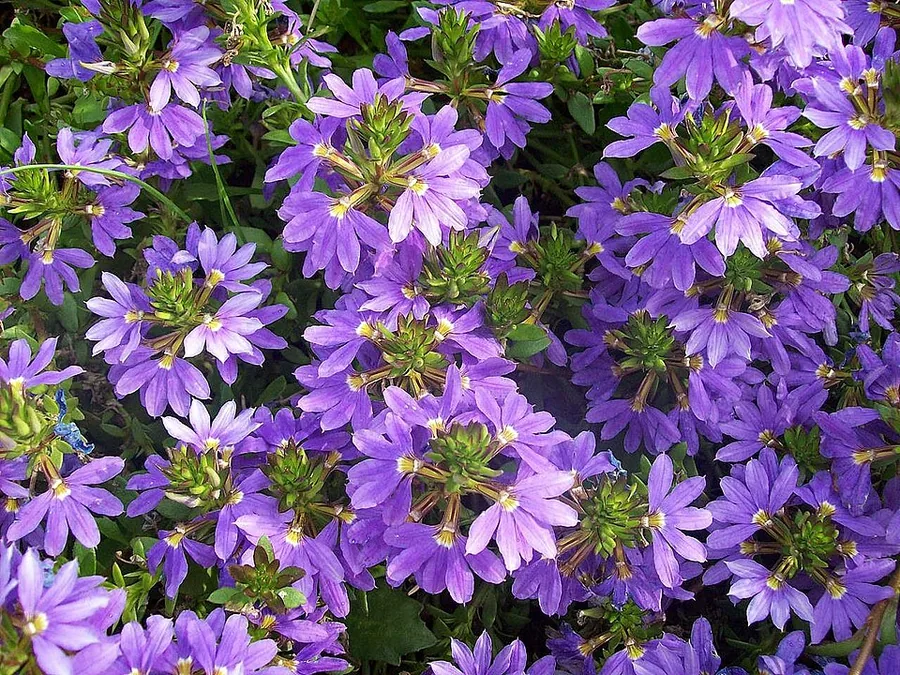
Fan flower earns its name from the one-sided, fan-shaped blooms that line its trailing stems. It comes from Australia, where it grows wild, and it carries that toughness into the garden as a heat-loving plant happy in beds, borders, and especially hanging baskets. The flowers come in cool blues, violets, and the odd pink, and they keep coming all season.
Most gardeners grow it as a warm-season annual. It's a tender perennial at heart, hardy only in zones 10 and 11, so almost everywhere else it gets planted in spring and enjoyed until the first frost takes it. That suits its habit, since it puts on its best show in a single long summer.
It asks for little once it settles in. Full sun, soil that drains, and a regular feed are about the whole list, and the self-cleaning flowers mean you never have to pinch off spent blooms. The one thing it won't forgive is wet feet.
Care
The short version: full sun and well-drained soil, with water when the top of the soil dries and a balanced feed every couple of weeks through the growing season.
Light
Give fan flower full sun for the heaviest bloom. It will take a little afternoon shade, but a plant kept in real shade stretches out and flowers poorly.
Water
Water every 3 to 7 days through the growing season, then let the top of the soil dry before the next drink. It handles a short dry spell far better than soggy roots, so when in doubt, hold off.
Soil
Plant it in average, well-drained loam with some organic matter worked in. It's easygoing about pH, taking anything from 6.0 to 8.0, but the drainage is what really counts.
Temperature
It thrives in the warmth, somewhere between 64°F and 95°F (18°C to 35°C), and laughs off summer heat. Frost is the line it won't cross, which is why it's grown as an annual in cooler zones.
Humidity
Ordinary outdoor humidity suits it fine, so there's no figure to hit. It even takes humid, muggy summers in stride.
Feeding
Feed it a balanced liquid fertilizer every two weeks while it's growing. Skip the high-phosphorus blends, which this plant doesn't take well to.
Pruning
There's almost nothing to prune. Pinch back leggy stems if the plant gets stretched to keep it full, and since the flowers are self-cleaning, you can leave the deadheading shears in the drawer.
Size & spacing
Plants reach about 9 to 18 inches (23 to 46 cm) tall and spread 12 to 24 inches (30 to 61 cm) wide. That trailing spread is what makes them spill so well over the edge of a basket or wall.
When to plant
Fan flower craves warmth and dies at the first frost, so it's grown as a summer annual in most gardens. Start seed indoors 6 to 8 weeks before your last frost, move plants outside once the soil hits 65°F (18°C), and the bloom runs from summer right up to frost.
Northern hemisphere
Southern hemisphere
Typical months for a temperate climate: start earlier in warm zones, later where spring frosts linger.
- Sow: 6 to 8 weeks before the last frost date
- Plant: In spring after the last frost when soil temperatures reach 65°F (18°C)
- Harvest: Summer through first frost
Hardiness
USDA hardiness zones: 10–11
Temperature: down to -1°C
Troubleshooting
Fan flower is an easy plant, and most of its troubles trace back to too much water or too little sun. Read the early signs on the roots, stems, and flowers, and you can usually fix things before the plant goes downhill. Match what you see below, then act while it still helps.
Wilting and yellow leaves with soft, brown roots
This is root rot, and it almost always starts with soil that stays wet. When the mix never dries, the roots suffocate and turn soft and brown. Cut back on watering, fix the drainage or move the plant into a fast-draining mix, and pull any plant that has collapsed past saving.
Fix:
- Reduce watering frequency
- Improve drainage or replant into well-drained media
- Remove severely affected plants
White cottony fluff and sticky film on the stems
Those cottony tufts at the leaf joints are mealybugs, sap-suckers that leave a sticky residue behind. Blast them off with a hard jet of water, then spot-treat what's left with insecticidal soap or horticultural oil. Check new plants before they join the rest and give everything room so air can move.
Fix:
- Wash off with a strong spray of water
- Spot-treat with insecticidal soap or horticultural oil
Few flowers and long, floppy stems
Thin bloom and stretched, weak growth point to too little light or too little food. A plant sitting in shade or going unfed grows long gaps between leaves and skips the flowers. Move it into full sun, feed it through the season, and pinch the leggy stems to push fresh branching.
Fix:
- Move to a full-sun location
- Fertilize regularly during the growing season
- Pinch back leggy stems to encourage branching
Toxicity
Good news for pet owners and parents: fan flower is not toxic. Nothing in the leaves or flowers will poison a cat, dog, rabbit, bird, grazing animal, or child, so you can plant it in a basket by the door or a bed the dog patrols without a second thought.
Safe for
People · Cats · Dogs · Horses · Rabbits · Livestock · Birds
Cats None
Safe around cats. A curious nibble won't poison them, though any plant eaten in quantity can upset a cat's stomach.
Dogs None
No toxins here that threaten dogs. The worst a chewed stem might cause is mild, passing tummy trouble.
Horses Safe
Horses can graze near it without harm, since fan flower carries nothing poisonous to them.
Rabbits Safe
Rabbits are fine around the foliage, and a stray bite poses no real danger.
Livestock Safe
Cattle, goats, and sheep can share a pasture with it safely. The plant holds no compounds known to harm grazing stock.
Birds Safe
Backyard and pet birds are in no danger from it. Nothing in the leaves or flowers is toxic to them.
People Safe
Not poisonous to people. It's grown for its flowers rather than for eating, so there's no need to put it on the table.
Varieties
Fan flower comes in a handful of named selections, mostly sorted by flower color and how far they trail. These are the ones you'll run into most.
Blue Wonder
It pours out cool blue to violet fan-shaped flowers without a break on long trailing stems, which makes it a natural for hanging baskets.
New Wonder
A vigorous trailing pick grown for its heavy show of blue-lavender fan flowers.
Pink Charm
A dwarf type that tops out near 4 inches tall and 5 inches wide and carries soft pink blooms.
How to propagate
Fan flower is simple to multiply, whether you take a cutting from a plant you already grow or start a packet of seed.
Stem cuttingsEasy
During the growing season · A few weeks to root
The easiest route is a stem cutting taken during the growing season, which sends out roots in a few weeks and gives you a copy of the parent. You can also start it from seed indoors, sown 6 to 8 weeks before your last frost.
Myths
You have to deadhead fan flower to keep it blooming.
The flowers drop on their own as they fade, so there's no spent-bloom cleanup to keep up with. Fan flower is self-cleaning, and the only pinching it needs is the occasional trim of a leggy stem to hold its shape.
Fan flower needs rich, constantly moist soil to thrive.
It actually does its best in well-drained soil and shrugs off heat and a dry spell once established. Keep it soggy and the roots rot, which is the fastest way to lose the plant.