Houseplant · Cycadaceae
Sago Palm
Cycas revoluta
An ancient, easy-going cycad that asks for little, but holds a toxin that can kill a pet.
Bright indirect
Every 7–14 days
48–86°F · 9–30°C
USDA 9–12
Overview
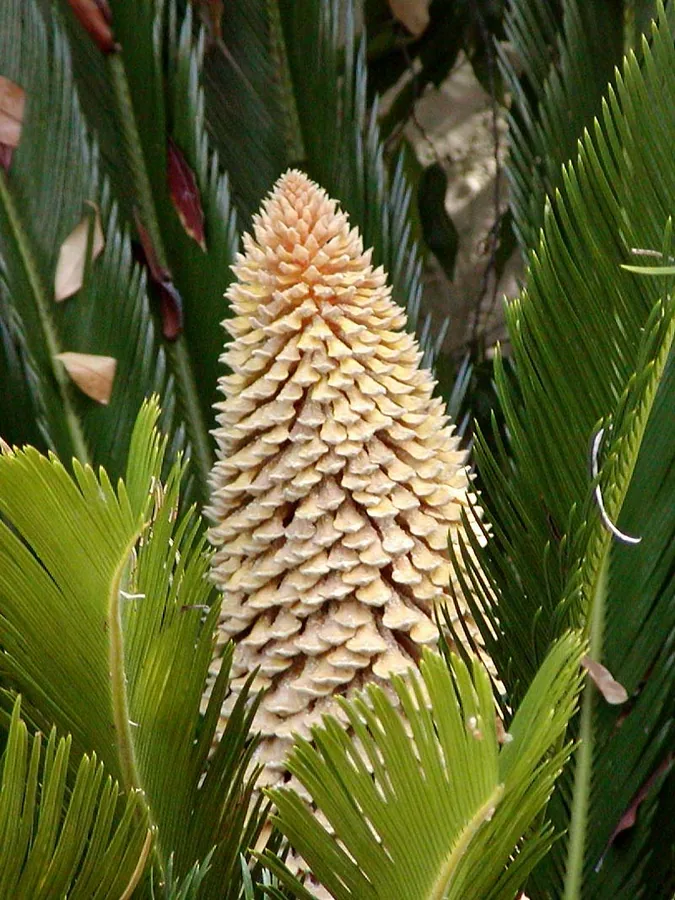
The sago palm looks every bit the tropical palm, with a stout trunk and a rosette of stiff, glossy fronds, yet it belongs to a far older group of plants. It is a cycad, a survivor from the age of the dinosaurs, and despite the name it is no true palm at all. Grown indoors it stays small and slow, an architectural plant that holds its shape for years.
Care is undemanding once you understand what it wants. Give it bright light and a sandy, fast-draining mix, then water sparingly and let the soil dry between drinks. It grows at its own unhurried pace, putting out a single flush of new fronds a year, so a healthy, settled plant needs very little fuss.
One thing overrides all the rest. Every part of the sago palm is severely poisonous, and the seeds most of all, so it is the wrong plant for a home with pets or small children who might chew on it. Where that risk can be ruled out, it is one of the longest-lived and most forgiving plants you can keep.
Care
The short version: bright indirect light, a gritty, fast-draining mix, and water only after the top half of the soil has dried. Feed with a palm fertilizer in the growing season, expect slow growth, and keep this toxic plant away from pets and children.
Light
Sago palms do best in bright, indirect light and will take some full sun once they are used to it. Indoors, set the plant near a sunny window. Too little light gives you weak, stretched fronds.
Water
Let the top half of the soil dry out before you water again, which usually means a drink every 7 to 14 days. This is a drought-tolerant plant that hates wet feet, so soggy soil and poor drainage are the fastest way to kill it. When in doubt, wait.
Soil
Plant in a well-drained sandy or loamy mix, because sharp drainage is not optional here. A slightly acidic pH of 5.5 to 6.5 keeps nutrients, especially manganese, available to the roots. Add grit if your mix holds water too long.
Temperature
It is comfortable anywhere from 48°F to 86°F (9°C to 30°C), which covers ordinary room temperature with ease. The plant is not frost-hardy, so a sago kept outdoors in summer needs to come in before the first cold nights.
Humidity
Average household humidity suits a sago palm fine, so there's no number to hit. Very dry air can invite spider mites, so a little extra moisture around the plant helps keep them off.
Feeding
Feed through the growing season, spring into summer, with a complete palm fertilizer. Choose one that includes manganese and other micronutrients, since a manganese shortage is what causes the frizzled new growth known as frizzle top.
Pruning
Prune as little as possible. Remove only the fully dead or badly damaged lower fronds and leave every healthy green leaf in place, because this slow grower takes a long time to replace what you cut.
Repotting
Repot only every few years, or when the roots have clearly filled the pot. The sago palm grows slowly and is happy somewhat pot-bound, so frequent moves do more harm than good.
Size & spacing
Grown in the ground a sago palm can reach 3 to 10 feet (90 cm to 3 m) tall and about as wide, though in a pot indoors it stays much smaller and takes years to get there.
Troubleshooting
A sago palm rarely complains, but when it does the warning shows up in the fronds or at the base of the trunk. Most trouble traces back to overwatering or a nutrient it can't reach. Match what you see below and act early, because this slow grower is slow to recover too.
Yellow fronds with a soft, mushy base and rotting roots
This is root and crown rot, almost always the result of too much water and soil that drains too slowly. Cut back on watering and let the mix dry out, switch to a gritty, sandy blend, and if you catch it early you can trim away the rotted tissue and repot into fresh, fast-draining media. Never leave the plant standing in water.
Fix:
- Reduce watering and allow the soil to dry
- Improve drainage with a gritty, sandy mix
- Remove rotted tissue and repot into fresh well-drained media if rot is caught early
New leaves come in yellow, then brown and frizzled
When only the newest flush of growth turns yellow and frizzles while the old fronds stay green, the cause is manganese deficiency, often called frizzle top. It usually shows up where the soil pH has crept above 6.5 and locked the manganese away from the roots. Treat it with manganese sulfate, not Epsom salts, watered in under the canopy, and feed with a complete palm fertilizer to keep it from coming back.
Fix:
- Apply manganese sulfate (not magnesium sulfate / Epsom salts) under the canopy and water in
- Use a complete palm fertilizer that includes manganese
- Correct excessively high soil pH
Sticky fronds with bumps, cottony fuzz, or fine webbing
Sticky residue, small raised bumps, or white cottony tufts point to scale or mealybugs, while fine webbing and pale stippling mean spider mites, which take hold in dry indoor air. Wipe or wash the pests off, then treat with horticultural oil or insecticidal soap. Raising the humidity helps push the mites back.
Fix:
- Wipe or wash off pests
- Treat with horticultural oil or insecticidal soap
- Raise humidity to discourage spider mites
Toxicity
This is the part to take seriously. The sago palm is not a palm but a cycad, and every part of it contains cycasin, a potent toxin that attacks the liver. The seeds carry the most, and for a dog or cat a single seed can be enough to kill. Keep this plant, its fallen fronds, and any seeds well out of reach of animals and children, and treat any suspected mouthful as an emergency.
Toxic to
Cats · Dogs · Horses · Rabbits · Livestock · Birds · People
Cats Severe
Every part of the plant is dangerous, and the seeds are the worst of all. A cat that chews even a little may vomit, pass dark bloody stool, and turn jaundiced before its liver begins to fail, and many die even with treatment.
Dogs Severe
Dogs are drawn to the seeds, and one or two can be fatal. Watch for vomiting, dark tarry stool, heavy thirst, bruising, and the yellow tinge of liver damage, which can progress to fatal liver failure within days.
Horses Severe
The same cycasin that poisons cats and dogs hits horses hard. Expect vomiting, bloody diarrhea, jaundice, and clotting problems as the liver gives out, and the outcome is often death.
Rabbits Severe
A rabbit has no defense against this toxin either. Even a small nibble of frond or seed can wreck the liver and prove fatal, so the plant and any trimmings must stay completely out of reach.
Livestock Severe
Cattle, goats, and sheep that graze the fronds or seeds suffer severe liver damage and often die. Keep grazing animals away from any sago palm growing within reach of a pasture or paddock.
Birds Severe
Birds are not spared. The cycasin in the seeds and foliage is just as deadly to them, so a pet bird should never have access to the plant or its dropped seeds.
People Caution
No part of the sago palm is food, and the seeds in particular can cause severe liver damage if eaten. Keep children well away from it, handle the seeds with care, and call poison control at once if any part is swallowed.
Keep the plant, fallen fronds, and especially the seeds well out of reach of pets and children; wash hands after handling and dispose of trimmings and seeds securely.
Helpline numbers

United States
ASPCA Animal Poison Control: (888) 426-4435 (fee applies)
Poison Control: (800) 222-1222



Canada
Poison Centres: 1-844-764-7669
Varieties
The sago palm sold as a houseplant is almost always the one species, so there is really just the standard form to know.
Cycas revoluta (king sago)
This is the standard species, a stout-trunked cycad carrying stiff, glossy, feather-like fronds that looks like a palm but is really an ancient gymnosperm.
How to propagate
Multiplying a sago palm takes patience above all, since it is one of the slowest plants you can grow. You have two routes, an easy one and a slower one, and both ask you to handle the toxic plant with care.
Offsets & pupsEasy
Spring to early summer · Several months to a year or more, as the plant is very slow-growing
The easiest way to multiply a sago palm is to lift the basal offsets, the small pups that form around the base of the trunk, and root them in spring or early summer. Be patient, because this is a slow plant and a pup can take several months to a year or more to settle in and grow on its own.
SeedModerate
When fresh seed is available from a pollinated female plant · Several months to germinate and well over a year to establish
Growing from seed is the slower road and needs both a male and a female plant, since sago palms are dioecious. Fresh seed can take several months to germinate and well over a year to establish, and the seeds are highly toxic, so handle them with care and keep them away from pets and children.
Myths
The sago palm is a palm, so it is no riskier than any other houseplant palm.
It is not a palm at all but a cycad, and that distinction matters. Unlike the true palms, which are harmless, every part of a sago palm carries cycasin, and swallowing it, especially the seeds, can bring on fatal liver failure in pets and people alike. Treat it as one of the most poisonous plants you can keep indoors.