Vegetable · Brassicaceae
Romanesco
Brassica oleracea var. botrytis
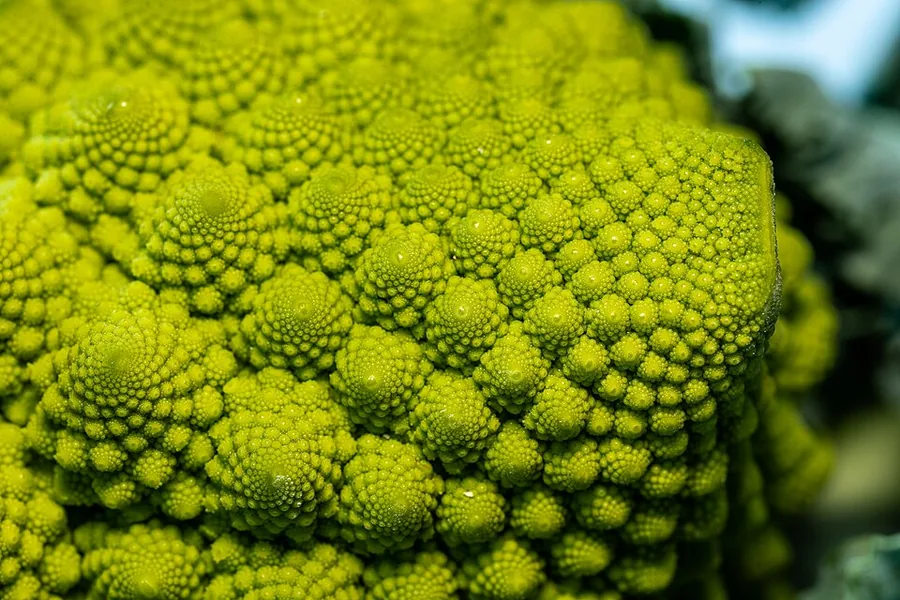
Grow it as a cool-weather fall crop and you get a head spiraling into perfect green fractals.
Full sun
Every 5–7 days
50–70°F · 10–21°C
75–100 days
Overview
Romanesco is the vegetable that looks like math made edible, each head a spiral of lime-green cones repeating smaller and smaller toward the tip. It belongs to the cabbage family and sits in the same cauliflower and broccoli group as its plainer cousins. Italian gardeners have grown it for generations, and it eats like a cauliflower with a sweeter, nuttier edge.
It is the most demanding of the brassicas to grow well. The plant wants steady moisture, rich soil, and above all cool weather while the head fills out. Push it through summer heat and the curds turn loose and grainy, which is why most gardeners treat it as a fall crop and time the harvest for cooling days.
Get the timing right and the rest falls into place. Give it full sun, even water, and room to grow, keep the cabbage pests off the leaves, and cut the head while it is still tight. The payoff is one of the most striking things you can pull from a garden bed.
Care
The short version: full sun, rich and evenly moist soil, and a feed every couple of weeks, all timed so the head matures in cool fall weather rather than summer heat.
Light
Romanesco wants full sun, and it needs every bit of that light to color the head a proper chartreuse. It will take a little partial shade, but never tie the leaves over the curds the way you would with white cauliflower, since shading them only dulls the color.
Water
Keep the soil evenly moist, roughly an inch of water a week, and never let the plant run dry. Uneven watering is what brings on buttoning and ragged heads. Water in the morning so the leaves dry off and disease stays away.
Soil
Plant in fertile, well-drained ground loaded with compost or well-rotted manure, the kind of soil that holds moisture without going soggy. A pH between 6.0 and 7.0 suits it, and that slightly higher, sweeter range also helps hold clubroot in check.
Temperature
Cool is the whole game. Romanesco does best between 50°F and 70°F (10°C to 21°C), and the head needs that coolness to set tight. Once days climb past the mid-80s the curds loosen and turn grainy.
Humidity
Ordinary outdoor humidity is fine, so there's no target to hit. Airflow matters more than any moisture reading, since crowded, damp leaves invite the diseases that trouble brassicas.
Feeding
This is a hungry plant. Feed it every two weeks with a balanced or low-phosphorus fertilizer matched to a soil test, and side-dress with nitrogen such as calcium nitrate once the plants reach about 4 inches tall.
Pruning
There's no shaping to do here. Leave the head uncovered so sunlight builds the color, and the only leaves worth removing are the ones that turn diseased or get chewed up by pests.
Size & spacing
Plants reach 2 to 3 feet (60 to 90 cm) tall and spread 18 to 30 inches (45 to 75 cm) across. Give each one that full spread so air moves freely between the big outer leaves and disease has less of a foothold.
When to plant
Romanesco lives or dies by timing, because the head has to fill out in cool weather. Start seed indoors 6 to 8 weeks ahead, then transplant in cool early spring or, better, in mid to late summer so the crop heads up in the cool of fall.
Northern hemisphere
Southern hemisphere
Typical months for a temperate climate: start earlier in warm zones, later where spring frosts linger.
- Sow: Start seed indoors 6-8 weeks before the intended transplant date.
- Plant: Transplant in cool early spring, or (preferred) in mid- to late summer for a fall harvest; Romanesco is best grown as a fall crop.
- Harvest: Cut the head when it is full-sized, firm and tight, before the fractal spiral curds begin to separate or loosen.
Hardiness
USDA hardiness zones: 3–10
Temperature: down to -40°C
Troubleshooting
Most Romanesco trouble traces back to one thing: a check to steady growth or a spell of heat at the wrong moment. Watch the head and the leaves, since that is where the early warnings show. Match what you see below and act before the problem locks in.
No firm head, or one that turns loose and ricey
Heat is the main culprit here, since the curds break apart once daytime temperatures push past 86°F (30°C) while the head is forming. A shortage of boron can also brown the curds and keep them from staying compact. Time the crop so the head matures in cool fall weather, and correct boron only if a soil test calls for it.
Fix:
- Time the crop so heads mature during cool weather
- Correct boron deficiency per soil test
Wilting, stunted plants with swollen, galled roots
Dig up a failing plant and you may find the swollen, distorted roots of clubroot or maggots tunneling through the root zone. There's no rescuing an infected plant, so pull it and destroy it. Raising the soil toward neutral pH holds clubroot back, and a long rotation away from brassicas keeps it from building up.
Fix:
- Remove and destroy affected plants
- Raise soil pH toward neutral to suppress clubroot
A tiny head forms early on a small, stunted plant
This is buttoning, and it follows almost any check to growth, whether transplant shock, a hungry plant, or a dry spell. Old or cold-stressed seedlings set out too soon are the usual trigger. Keep the soil evenly moist and well fed, and move young transplants out at the right time so they never stall.
Fix:
- Maintain even moisture and adequate fertility
- Avoid transplanting overgrown or cold-stressed seedlings
Chewed holes in the leaves with green caterpillars feeding
Velvety green cabbageworms and cabbage loopers are the most common chewers, while tiny jumping flea beetles punch shot holes in young seedlings. Pick the caterpillars off by hand and cover the plants early with floating row covers. Bacillus thuringiensis handles a heavy run of caterpillars without touching anything else.
Fix:
- Handpick caterpillars
- Use floating row covers
- Apply Bacillus thuringiensis for caterpillars if needed
Toxicity
Romanesco is a food crop and safe through and through. Nothing in the leaves, stems, or head is toxic to people or pets, so you can grow it wherever cats, dogs, rabbits, or chickens wander. The only mild note is that brassicas in large amounts can bring on gas in some animals.
Safe for
People · Cats · Dogs · Horses · Rabbits · Livestock · Birds
Cats None
Safe around cats, with nothing toxic in the leaves, stems, or head. A nibble might bring a little gas at most.
Dogs None
No toxins here for dogs. Plain cooked florets make a fine treat, though raw brassica eaten in quantity can leave a dog a bit gassy.
Horses Safe
Not poisonous to horses. Brassicas aren't a natural part of their diet, so offer only small amounts to avoid an upset stomach.
Rabbits Safe
The leaves and florets are safe for rabbits and make a good green. Introduce them slowly so the gut adjusts.
Livestock Safe
Non-toxic as forage. The one thing to watch is heavy, steady grazing of brassicas, since the natural goitrogens can build up over time.
Birds Safe
Safe for backyard poultry, which happily peck at the leaves and curds. No part of the plant poses a risk.
People Safe
A nutritious vegetable eaten raw or cooked. The whole head and tender leaves are good to eat with no caution needed.
Safe to handle and grow around pets and children. Note that brassica glucosinolate goitrogens are mainly a concern for heavily-grazed livestock, not household pets.
Varieties
Only a couple of Romanesco types turn up in most seed catalogs, and both deliver the signature spiral. Here is how they differ.
Veronica
A popular hybrid that throws uniform lime-green fractal heads with sharp, well-defined spirals.
Romanesco Italia
An open-pollinated heirloom carrying classic apple-green pointed spirals on tall plants over a long season.
How to propagate
There is just one way to start Romanesco at home, and that is from seed. It doesn't root from cuttings, so every plant begins in a tray indoors.
SeedModerate
Sow indoors 6-8 weeks before transplanting; transplant when seedlings have 4-5 true leaves. · About 4 weeks from sowing to transplant-ready seedling, then 75-100 days to a mature head.
Romanesco grows from seed and isn't cloned at home, so a seed packet is where every plant starts. Sow indoors 6 to 8 weeks before you plan to transplant, and move the seedlings out once they carry 4 to 5 true leaves, roughly 4 weeks along. From there it's a long haul of 75 to 100 days before a head is ready to cut.
Myths
Romanesco heads must be blanched by tying the leaves over them like white cauliflower.
That trick belongs to white cauliflower, which needs shade to stay pale. Romanesco is the opposite. The chartreuse curds need full sun to color up, so leave the leaves untied and let the light reach the head.
Romanesco is a genetically engineered cross of broccoli and cauliflower.
It's a traditional Italian cultivar of Brassica oleracea, sitting in the same cauliflower and broccoli group as its cousins. It's an old heirloom, not a GMO, and gardeners have grown it for generations.