Ornamental · Saxifragaceae
Rodgersia
Rodgersia aesculifolia
Give it wet feet and cool shade, and rodgersia rewards you with huge, sculpted leaves all season.
Partial shade
USDA 5–7
3–5 ft · 0.9–1.5 m
Overview
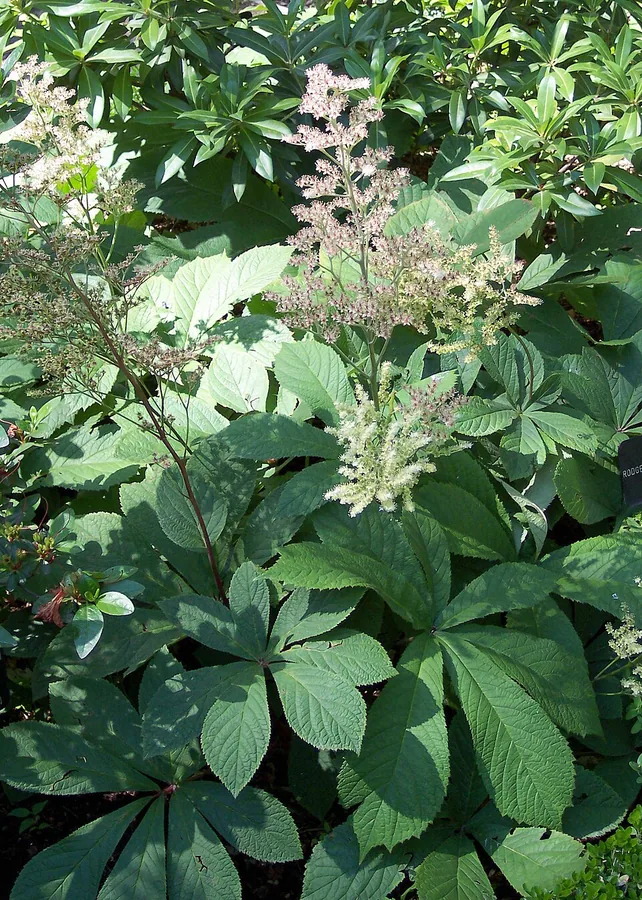
Rodgersia is a big, bold perennial grown for its foliage as much as its flowers. The leaves are the draw, deeply cut and shaped like a horse chestnut's, spreading wide enough to hold their own against any plant in a shady, damp corner. In summer it pushes up tall, branched flower heads that look much like an astilbe's.
This is a plant for the wet, shady spots that defeat most perennials. Bog gardens, the edge of a pond, a low patch by a stream, the north side of the house where the ground stays cool and damp, all suit it well. It's hardy and long-lived, settling in for years once it finds a site it likes.
What it won't forgive is dry soil. Let the ground bake and the leaf edges crisp and brown almost at once. Keep its roots cool and moist, though, and rodgersia asks for very little else.
Care
The short version: plant it in part to full shade in rich, humusy soil that stays moist to wet, never letting it dry out, and feed it with compost during the growing season.
Light
Rodgersia does best in part to full shade, the cooler and shadier the better in a hot climate. Too much sun, especially harsh afternoon sun, scorches the leaf edges brown.
Water
This is the part that matters most. The soil must stay consistently moist to wet, never drying out, which is why rodgersia shines in bog gardens and along pond and stream banks. Let it go thirsty and the leaf margins brown within days.
Soil
Plant in rich, humusy soil loaded with organic matter, the kind that holds water well. It should stay moist to wet but not turn into stagnant, standing muck, so a bit of movement or drainage helps.
Temperature
Rodgersia is fully hardy, taking winter cold down to about -20°F (-29°C) and handling summers up to roughly 75°F (24°C). It suits cool, temperate gardens far better than hot, dry ones.
Humidity
Average outdoor humidity is fine, so there's no figure to track. The plant cares far more about moisture at its roots than about the air around its leaves.
Feeding
Work compost or a balanced fertilizer into that rich soil during the growing season. A yearly mulch of organic matter feeds the plant and keeps the ground damp at the same time.
Pruning
Cut the spent flower stalks off once the blooms fade, and trim away any tattered or browned leaves through the season to keep the clump looking fresh.
Size & spacing
Rodgersia grows into a substantial clump, reaching 3 to 5 feet (91 to 152 cm) tall and just as wide. Give it that full 3 to 5 feet (91 to 152 cm) of room so the big leaves have space to spread.
When to plant
Rodgersia is planted out in spring once the frost has passed, going into a cool, moist, partly shaded spot. It flowers from June into August, then settles in to bulk up its clump over the seasons that follow.
Northern hemisphere
Southern hemisphere
Typical months for a temperate climate: start earlier in warm zones, later where spring frosts linger.
- Sow: Sow seed in late winter to early spring; seed may need cool stratification.
- Plant: Plant outdoors in spring after frost in a moist, partly shaded site.
- Harvest: Blooms June to August with branched, astilbe-like panicles.
Hardiness
USDA hardiness zones: 5–7
Temperature: down to -29°C
Troubleshooting
Rodgersia is largely trouble-free, and most of what goes wrong shows up on the leaves. The usual causes are dry soil, hungry slugs, or a touch of mildew. Match what you see below and act early.
Brown, scorched edges along the leaves
This is leaf scorch, and it traces back to soil that dried out or too much hot sun on the foliage. Rodgersia wants its roots in cool, damp ground at all times. Keep the soil moist, move the plant into more shade, and mulch around the crown to hold water in.
Fix:
- Keep soil consistently moist
- Provide partial to full shade
- Mulch to conserve moisture
Ragged holes chewed through the leaves
Slugs and snails love the damp shade that rodgersia thrives in, and they rasp irregular holes in the big leaves overnight. Look for slime trails to confirm them. Pick them off after dark, set out baits or a copper barrier, and clear away the debris they hide under during the day.
Fix:
- Hand-pick at night
- Use slug baits or barriers
- Reduce excess debris around plants
A dusty white film coating the leaves
That dusty film is powdery mildew, which shows up most on crowded plants or ones stressed by drought. Pull off the worst leaves, open the clump up so air can move through it, and keep the soil evenly moist so the plant never goes thirsty.
Fix:
- Improve air circulation
- Avoid drought stress
- Remove affected foliage
Toxicity
Good news for households with animals: rodgersia is not known to be toxic. The ASPCA doesn't list it among plants that poison cats or dogs, and there are no reports of trouble for other animals or people. You can plant it without worrying about curious pets or children.
Safe for
People · Cats · Dogs · Horses · Rabbits · Livestock · Birds
Cats Safe
Rodgersia isn't listed as toxic to cats, so a nibbled leaf shouldn't cause real harm. A curious cat may still get a mild, passing stomach upset from chewing the foliage.
Dogs Safe
Dogs can be around this plant safely, and it carries no known poison for them. As with any rough plant fiber, eating a lot of leaf at once might bring on a brief tummy ache.
Horses Safe
There are no reports of rodgersia poisoning horses. They can graze near it without worry.
Rabbits Safe
Rabbits won't be poisoned by rodgersia. The big, slightly coarse leaves are simply not a favorite, so most rabbits leave them be.
Livestock Safe
Cattle, sheep, and goats can share a pasture or pond edge planted with rodgersia, since it holds no toxin that affects them.
Birds Safe
Backyard birds and poultry face no danger from this plant, whether they peck at the foliage or forage in the damp soil around it.
People Safe
Rodgersia is grown for its leaves and flowers, not for eating, but it poses no poisoning risk to people. There's no need to keep children away from it in the garden.
Varieties
A few rodgersia kinds turn up in gardens, each grown for a different leaf shape or flower color. These are the two worth knowing.
Rodgersia pinnata 'Superba'
A featherleaf type whose new foliage opens bronze-purple before settling to green, then sends up rose-pink to red flowers through summer.
Rodgersia podophylla
Carries bold palmate leaves of 5 lobes, and now and then 7, that reach up to 16 inches across and finish the year in bronze-red.
How to propagate
Rodgersia is simple to multiply, mostly by splitting an established clump but also from seed if you're patient.
DivisionModerate
Divide thick rhizomes in spring or early fall. · One to two growing seasons
Division is the surest way to make more rodgersia. Lift an established clump in spring or early fall and cut the thick rhizomes into pieces, each with a bud and some roots. Replant them in rich, moist soil and give them one to two growing seasons to bulk up and settle in. You can also grow it from seed, and over time a happy plant spreads on its own as the rhizomes creep outward.
Myths
Rodgersia is a true aquatic plant that has to grow submerged in standing water.
It does love the damp, thriving in moist to wet soil along pond and stream edges, but it isn't a water plant. The soil should stay reliably moist without ever turning into stagnant, waterlogged mud.