Ornamental · Saxifragaceae
Coral Bells
Heuchera sanguinea
Grown for its bold, year-round foliage as much as its airy spring flowers, coral bells light up the shade.
Partial shade
USDA 3–8
8–20 in · 20–50 cm
Overview
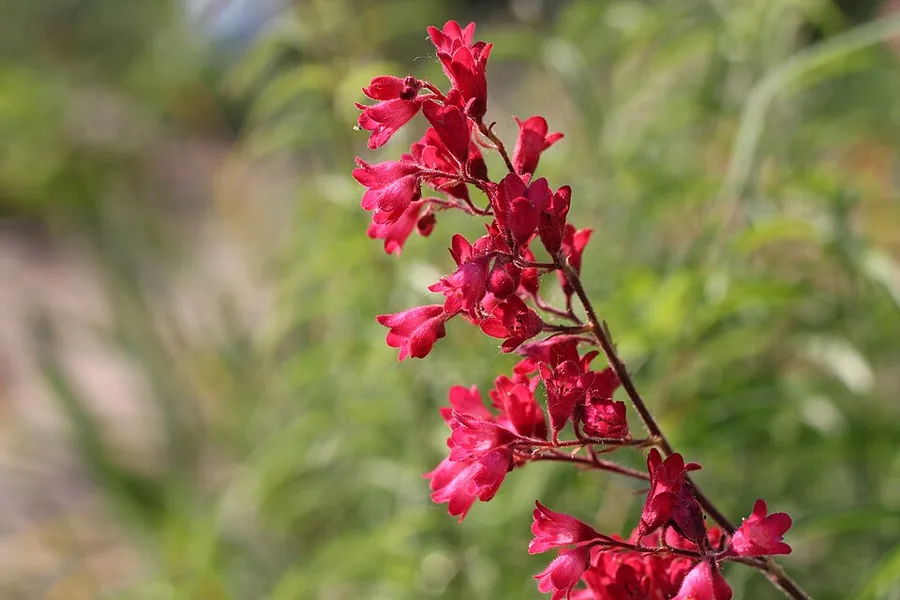
Coral bells earn their place for the leaves first and the flowers second. The mounded clumps come in a remarkable spread of colors, from deep purple and bronze to lime green and peach, and they hold that color from spring well into fall. Slim wiry stems rise above the mound in late spring and carry tiny bell-shaped blooms that draw hummingbirds.
This is an easygoing perennial that asks for little once it settles in. It belongs to the saxifrage family and grows wild across much of North America, which is part of why it handles a wide swing of conditions. Most gardeners use it as an edging plant, a filler in shady borders, or a tidy mound near the front of a bed.
Give it the light and soil it wants and it will reward you for years. The main things to get right are even moisture, good drainage, and a spot out of harsh afternoon sun. Skip those and you trade rich foliage for scorched edges and rotting crowns.
Care
The short version: plant coral bells in part shade with rich, well-drained soil, keep the moisture even without letting the roots sit wet, and deadhead the spent flower stalks to keep the blooms coming.
Light
Coral bells do best in partial shade, though they will take partial sun and even full shade. Some sun deepens the leaf color and pushes more flowers, but in hot regions the afternoon sun scorches the foliage, so give them a break from it.
Water
Aim for medium, even moisture, which matters most for plants growing in full sun where the leaves scorch when they dry out. They turn drought tolerant once established, but never let the roots sit wet, since soggy soil brings on root rot.
Soil
Plant in humus-rich, well-drained soil worked over with plenty of organic matter. A pH between 6.0 and 7.0 suits them, and they dislike heavy clay that holds water around the crown.
Humidity
Average humidity is all they need, so there is no number to chase. Airflow matters more than moisture in the air, since still, damp conditions are what invite powdery mildew and other leaf diseases.
Feeding
Coral bells are light feeders. A single spring application of balanced fertilizer or a topdressing of compost during the growing season is plenty to keep the foliage full.
Pruning
Deadhead the spent flower stalks to keep the blooms coming through the season. Come spring, tidy up any old or winter-damaged foliage to make room for fresh growth.
Size & spacing
The mounds reach 8 to 20 inches (20 to 50 cm) tall and spread 9 to 18 inches (23 to 46 cm) wide. Give each plant room to form its full mound so air moves freely and the leaves stay dry.
When to plant
Coral bells settle in best when the weather is cool. Plant divisions or nursery stock in late fall or early spring, and you will see the bell-shaped flowers from May into June, often carrying on through early fall if you keep the spent stalks trimmed.
Northern hemisphere
Southern hemisphere
Typical months for a temperate climate: start earlier in warm zones, later where spring frosts linger.
- Sow: Late winter to early spring; surface-sow seed as it needs light to germinate
- Plant: Late fall or early spring
- Harvest: May to June, often through early fall if deadheaded
Hardiness
USDA hardiness zones: 3–8
Temperature: down to -40°C
Troubleshooting
Most coral bells trouble traces back to water, sun, or winter cold. Catch the early signs on the leaves and crown and you can step in before a small problem spreads. Match what you see below, then act while it still helps.
Wilting plant with a blackened crown that collapses
This is root rot, often the water mold Phytophthora, and it sets in when the soil stays soggy or drains poorly. Dig down and you will find dark, mushy roots and a soft crown. There is no saving a badly hit plant, so pull it, improve the drainage with plenty of organic matter, and ease off the watering.
Fix:
- Improve drainage and amend with organic matter
- Avoid overwatering
- Remove and discard severely affected plants
White powder, rust pustules, or spots on the leaves
Several foliar diseases can mark coral bells, including powdery mildew, rust, and bacterial leaf spot. They take hold when the leaves stay damp and the air sits still. Space plants so air moves through them, water at the base rather than overhead, and clip off any foliage that is already marked.
Fix:
- Improve air circulation
- Avoid overhead watering
- Remove affected foliage
Plant heaved out of the ground with roots showing
This is frost heaving, and it happens when winter freeze-and-thaw cycles lift the crown clear of the soil. Once the roots are exposed to cold, dry air, the plant is at risk. Press or replant the crown back to its original depth in spring, and spread a winter mulch once the ground has frozen to even out the soil temperature.
Fix:
- Gently press or replant the crown back into the soil in spring
- Apply winter mulch after the ground freezes
Brown, crispy edges along the leaves
This is leaf scorch, and it shows up when sun-baked plants run short of water in hot, dry weather. The damage lands on the most exposed foliage first. Move plants into afternoon shade where summers turn hot, and keep the soil evenly moist so the leaves never dry out.
Fix:
- Provide afternoon shade in hot climates
- Maintain consistent soil moisture
Toxicity
Good news for pet owners and parents: coral bells are safe across the board. The ASPCA lists them as non-toxic to cats, dogs, and horses, and there is no concern for rabbits, livestock, birds, or people either. Plant them wherever you like without a second thought.
Safe for
People · Cats · Dogs · Horses · Rabbits · Livestock · Birds
Cats None
Coral bells are listed as non-toxic, so a curious cat that nibbles a leaf has nothing to fear.
Dogs None
A dog can chew the foliage without harm, since no part of the plant is poisonous to them.
Horses None
These are safe around horses, with no toxic compounds in the leaves, stems, or flowers.
Rabbits Safe
Rabbits can browse coral bells with no risk of poisoning.
Livestock Safe
Grazing livestock face no danger from this plant in the pasture or garden.
Birds Safe
Birds that peck at the leaves or seed are perfectly safe.
People Safe
Coral bells pose no poisoning risk to people, including children who handle the foliage.
Varieties
Breeders have given coral bells a wide range of leaf colors, and a few selections stand out. These are the ones worth knowing by name.
Palace Purple
Named the 1991 Perennial Plant of the Year, it carries deep purple to bronze-green lobed leaves with wine-red undersides and is grown above all for that foliage color.
Georgia Peach
Its peach-to-rose foliage was bred to hold up better through heat and humidity than older types.
Primo 'Pretty Pistachio'
This one pairs bright lime-green leaves with soft pink flowers.
How to propagate
Coral bells are simple to multiply, whether you split an established clump or start the species from seed.
DivisionEasy
Spring, dividing clumps every 3-4 years · One growing season
The simplest way to make more coral bells is to divide the clumps in spring, lifting and splitting the crowns every 3 to 4 years. Replant each division at its original depth in amended soil, and it settles in over a single growing season.
SeedModerate
Late winter to early spring · Bloom typically the following year; named hybrids do not come true from seed
You can grow the straight species from seed sown in late winter to early spring, but surface-sow it since the seed needs light to germinate. Expect bloom the following year, and know that named hybrids will not come true this way.
Myths
Coral bells are poisonous to dogs and cats.
The ASPCA lists coral bells as non-toxic to dogs, cats, and horses. You can plant them anywhere your pets roam without worry.
Coral bells need full shade and will not flower in sun.
They grow in anything from full sun to part shade, and many color and bloom best with some direct light. Afternoon shade is the smart choice in hot climates, and plants in full sun need steady moisture to avoid scorched leaves.