Houseplant · Commelinaceae
Purple Heart
Tradescantia pallida
Give it strong light and dry-leaning soil, and purple heart rewards you with deep violet foliage and almost no fuss.
Full sun
USDA 10–11
8–12 in · 20–30 cm
Overview
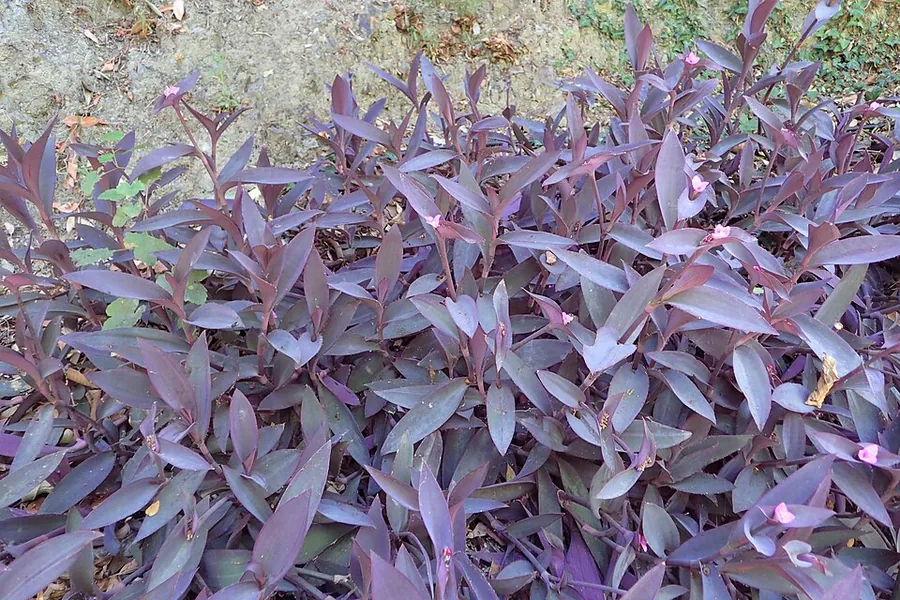
Purple heart is grown for one thing above all: color. The trailing stems and pointed leaves turn a deep violet-purple that few other houseplants can match, and it carries small pink flowers through the warmer months. It comes from Mexico and belongs to the spiderwort family, the same group as the inch plants.
What makes it a favorite is how little it asks. It's fast-growing and tough, happy to dry out between waterings, and it roots from almost any piece of stem you break off. The one rule that matters is light. Keep it bright and the purple stays rich, but let it sit in shade and the leaves fade toward green while the stems stretch and go leggy.
Indoors it works as a potted plant in your sunniest window, where it trails over the edge and fills in fast. The sap is a mild skin irritant, so it's worth a pair of gloves at pruning time and a spot out of reach of pets and small children.
Care
The short version: as much light as you can give it for the deepest color, well-drained soil that you let dry between waterings, warmth above 50°F (10°C), and a regular pinch to keep it bushy.
Light
Light is everything for this plant. Give it full sun or the brightest spot you have to keep the deep violet color, because in shade the leaves fade to green and the stems stretch. A south-facing window indoors is close to ideal.
Water
Purple heart is highly drought-tolerant once settled in, so let the top of the soil dry out before you water again. It would rather be too dry than too wet. Standing water and soggy soil are the fast track to root and stem rot.
Soil
It isn't fussy about soil as long as it drains well. Rich, organic ground is best, but it copes with clay, loam, or sand across a wide range of pH. The only thing it won't forgive is a mix that stays waterlogged.
Temperature
Keep it above 50°F (10°C), since this plant has no cold tolerance and a frost blackens the top growth. Normal indoor warmth suits it year-round, and anywhere that drops below that line, grow it inside or bring it in for winter.
Humidity
Average household humidity is plenty, so there's no number to chase. It handles dry indoor air without complaint and asks nothing special on this front.
Feeding
Feed monthly through spring and summer while it's actively growing, using a balanced general-purpose fertilizer. Ease off in the cooler months when growth slows.
Pruning
Pinch the stems back whenever you like to keep the plant compact and bushy and to spark fresh growth, and snip off the flower stems once they fade. The tips you remove root easily, so nothing goes to waste.
Repotting
Pot it up every 1 to 2 years or whenever it outgrows its container. Roots poking through the drainage holes, sparse new growth, or soil that dries out almost as soon as you water are the signs it's ready for more room.
Size & spacing
It stays small and low, reaching about 8 to 12 inches (20 to 30 cm) tall and trailing out to 12 to 18 inches (30 to 45 cm) wide. That spreading habit makes it a natural for a hanging pot or the edge of a container.
Troubleshooting
Purple heart is forgiving, and most of its troubles trace back to either too little light or too much water. Read the early signs below and the fix is usually simple. Match what you see, then act before it spreads.
Soft, mushy, blackened stems collapsing at the base
This is root and stem rot from soil that stays too wet, the one thing that really threatens this plant. The base turns soft and dark, the soil never dries, and the roots go brown and slimy instead of firm and white. Stop watering, cut away the rot, and re-root a few firm cuttings in fresh, well-drained mix.
Fix:
- Stop watering and allow soil to dry out
- Cut away rotted tissue and re-root healthy firm stem cuttings in fresh well-drained mix
- Discard severely rotted plants and soil
Foliage blackening and dying back after a cold snap
This plant has no tolerance for cold below 50°F (10°C) or frost, and a chill leaves the top growth limp and blackened. Trim off the damaged growth and keep it warm. Where frost is a risk, bring the pot indoors or overwinter a few cuttings rather than gamble on the roots pulling through.
Fix:
- Remove damaged top growth
- Bring containers indoors or take cuttings to overwinter where frost occurs
- Where roots survive in mild climates, allow the plant to resprout from the base
Stippled or distorted leaves with sticky residue or webbing
Sap-sucking pests like spider mites, mealybugs, aphids, and scale all turn up on indoor plants, each leaving its own tell. Watch for fine webbing, cottony tufts, clustered insects, or hard little bumps on the stems and leaf undersides. Rinse and wipe the plant down, treat with insecticidal soap or horticultural oil, and keep it apart from your others until it clears.
Fix:
- Rinse plant and wipe off pests
- Treat with insecticidal soap or horticultural oil, repeating as needed
- Isolate affected plants to prevent spread
Leaves fading to green with stretched, leggy stems
Purple heart needs strong light to hold its deep violet color, and too little sun is what greens it out. Without enough light the stems also stretch and the leaves spread far apart. Move it to your brightest window or into full sun, then pinch back the lank growth so it comes back compact and well colored.
Fix:
- Move to a spot with full sun or as much bright direct light as possible
- Pinch back leggy stems to encourage compact, well-colored regrowth
Long bare stems with leaves only at the tips
Purple heart trails and sprawls by nature, and left alone the stems grow long and bare with foliage bunched at the ends. Weak light makes the stretching worse. Pinch the stems back to push fresh branching, and root the tips you remove to fill the pot back in.
Fix:
- Pinch or cut stems back to encourage branching and bushier growth
- Root the removed tips as cuttings to fill in the plant or start new ones
Red, irritated skin after handling cut stems
The sap from broken leaves and stems is a skin irritant that can leave your hands red and itchy, a mild contact dermatitis. Wash the area with soap and water if it happens. The simple fix is to wear gloves whenever you pinch, prune, or take cuttings.
Fix:
- Wash the affected skin with soap and water
- Avoid further bare-handed contact with cut stems
Toxicity
Purple heart isn't deadly, but it isn't a hands-off plant either. The sap is a mild irritant that can leave your skin red and itchy, and a pet that chews the leaves may drool and get a queasy stomach. Wear gloves when you handle cut stems, and keep it where curious animals and children can't nibble it.
Toxic to
Cats · Dogs · Horses · Rabbits · Livestock · Birds · People
Cats Mild
A cat that chews the leaves may drool and get a mildly upset stomach, and the sap can leave the skin red and itchy. The reaction stays minor, but it's worth keeping a determined chewer away.
Dogs Mild
Dogs react much like cats. Expect a little drooling and a passing stomach upset if they nibble it, plus possible skin irritation where the sap touches them.
Horses Caution
The same irritant sap can bother a horse's mouth and skin, so treat browsing as something to discourage rather than allow.
Rabbits Caution
There's no clear feeding record for rabbits, and the irritant sap is reason enough to keep this plant off the menu. Don't offer it as forage.
Livestock Caution
Grazing animals could pick up the same mouth and stomach irritation from the sap, so it's best fenced off where stock can reach it.
Birds Caution
Pet birds are small and sensitive, and the irritant sap makes this a poor choice within beak's reach. Keep it out of cages and off perches.
People Caution
Handling broken stems can give you contact dermatitis, with the skin turning red and itchy where the sap lands. Wear gloves when you prune or take cuttings, and keep curious children from chewing the leaves.
Cell sap is a skin irritant (contact dermatitis); wear gloves when pruning, pinching, or taking cuttings
Helpline numbers

United States
ASPCA Animal Poison Control: (888) 426-4435 (fee applies)
Poison Control: (800) 222-1222



Canada
Poison Centres: 1-844-764-7669
Varieties
Purple heart is sold mostly as a single named form, the one that gives the plant its richest color.
'Purpurea'
This is the form sold almost everywhere as Purple Heart, with stems and leaves a richer, more even violet-purple than the plain species.
How to propagate
Few plants are easier to copy than purple heart, which roots from almost any stem you remove.
Stem cuttingsEasy
Any time during active growth · Roots in 1-2 weeks
This is the easiest plant going to multiply, and cuttings are the way to do it. The brittle stems root at every node, so a tip or stem piece pushed into soil or stood in water roots within a week or two. Take them any time the plant is actively growing.
Myths
Purple heart needs constant watering and won't survive a dry spell.
It's the opposite. Once established the plant shrugs off dry soil and overwatering is the real danger, since soggy roots rot and the stems collapse. Let the soil dry out between drinks.
The purple color is fixed no matter where you grow it.
Light is what sets the color. Full sun brings out the deepest violet, while a plant kept in shade fades toward green and stretches as it reaches for light.