Shrub · Oleaceae
Privet
Ligustrum vulgare
A tough, fast hedge that shears into almost any shape, but one that escapes the garden and poisons grazing animals.
Full sun
Every 7–14 days
USDA 4–8
10–15 ft · 3–4.6 m
Overview
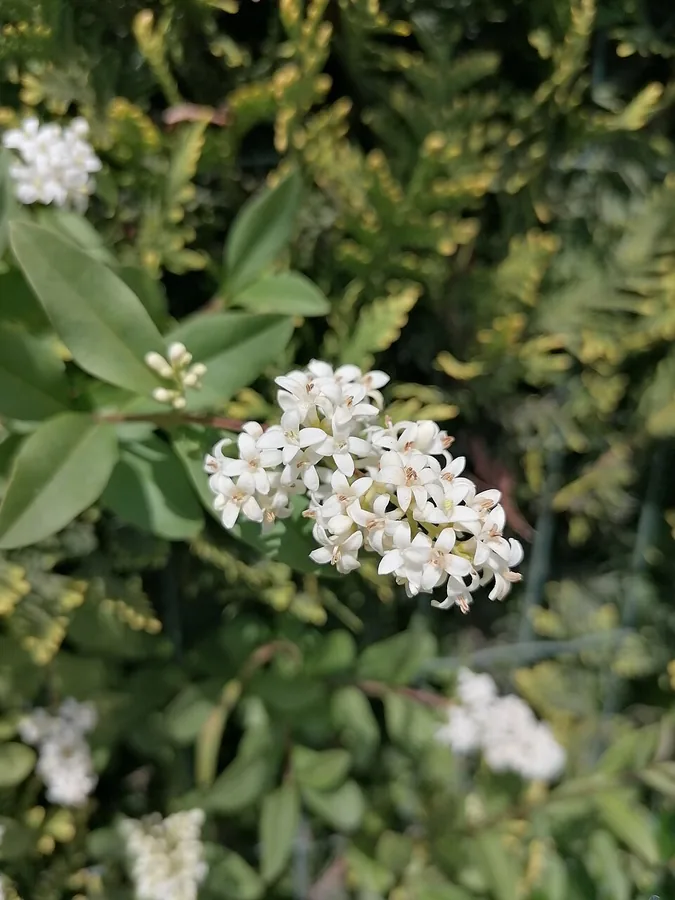
Privet is the classic hedge shrub, a fast, dense grower in the olive family that takes hard shearing better than almost anything else you can plant. It greens up early, holds its small oval leaves late into the season, and carries spikes of white flowers in late spring that give way to clusters of dark berries. Gardeners reach for it because it is cheap, quick, and forgiving.
That same vigor is the catch. Birds eat the berries and drop the seed across woods and field edges, where privet forms dense thickets that shade out native plants. Several species are listed or regulated as invasive, and common privet is flagged as a significant threat in some regions.
It is also poisonous. The leaves and especially the berries hold compounds that are toxic to pets, livestock, and people, so this is a shrub to site with care, shear before it fruits, and keep well away from grazing animals.
Care
The short version: plant in full sun to part shade in any well-drained soil, water new shrubs until they root and then mostly leave them be, and shear to shape in late spring after flowering.
Light
Privet grows densest in full sun but takes partial sun and partial shade in stride. More light gives you a tighter, fuller hedge, while heavy shade thins the growth and opens gaps you'll have to work to close.
Water
Keep new plantings watered until the roots take hold, then ease off, since an established privet handles moist to occasionally dry soil without much help. Let the top half of the soil dry between drinks, roughly every 7 to 14 days while it settles in.
Soil
Almost any soil suits it, from clay to loam to sand, as long as it drains. A pH from 6.0 to 7.5 covers the range it likes, which is most ordinary garden ground.
Temperature
Privet is genuinely cold-hardy, taking winters down to about -29°F (-34°C) and summer heat up to 100°F (38°C). That broad tolerance is a big reason it thrives across so wide a range of climates.
Humidity
Ordinary outdoor humidity is all it asks, so there's no number to track. Good air movement matters more than moisture in the air, since a crowded, stagnant hedge invites leaf spot and mildew.
Feeding
In average soil privet rarely needs feeding at all. If growth looks weak, a balanced granular fertilizer in spring is plenty, and overfeeding only pushes soft growth that draws pests.
Pruning
This is where privet earns its keep, taking hard shearing without complaint. Shape it as a hedge in late spring after the flowers fade, or shear repeatedly through the season, and cutting before the fruit sets helps keep its seed from spreading.
Repotting
Privet is rarely grown in a pot and seldom needs repotting. If you do contain one, move it up when roots circle the pot or push through the drainage holes and water starts running straight through.
Size & spacing
Left unsheared, privet reaches 10 to 15 feet (3 to 4.5 m) tall with a spread of 8 to 15 feet (2.4 to 4.5 m). For a solid hedge, set plants closer than that mature spread and shear them into a continuous run.
When to plant
Privet asks little of you on timing. Set new plants out in spring or fall while the soil is workable, expect the white flowers around June, and shear it to shape once flowering finishes, ideally before the berries form and scatter.
Northern hemisphere
Southern hemisphere
Typical months for a temperate climate: start earlier in warm zones, later where spring frosts linger.
- Plant: Spring or fall
- Harvest: White flowers in late spring to early summer (around June)
Hardiness
USDA hardiness zones: 4–8
Temperature: down to -34°C
Troubleshooting
Privet is hard to kill, so trouble is usually cosmetic rather than fatal. Most issues show up as marked or chewed leaves and a few sap-feeding insects, with root rot in soggy ground the one problem that can take a whole plant down. Match what you see below and act before it spreads.
The whole shrub wilting and yellowing in soggy ground
When a normally tough privet wilts and fades, suspect root rot in soil that never drains. Dig down and you'll find dark, soft, decayed roots sitting in waterlogged ground. Fix the drainage and stop overwatering, but a badly affected plant is usually past saving and best replaced in a drier spot.
Fix:
- Improve drainage and stop overwatering
- Remove severely affected plants
- Replant in well-drained soil
Spotted leaves, dying twigs, and sunken cankers
Dark spots, blighted twigs, and sunken stem lesions usually mean anthracnose or twig blight, while a white dusting on the leaves is powdery mildew. Prune out and destroy the infected wood, then thin the canopy so air moves through. Water at the base and rake up fallen leaves to keep the spores from coming back.
Fix:
- Prune out and destroy infected twigs and branches
- Improve air circulation by thinning the canopy
- Avoid overhead watering and clean up fallen leaves
White, waxy insects and a sticky film on the leaves
This points to whiteflies or white peach scale feeding on the sap. Knock the whiteflies off with a hard jet of water, then coat the leaf undersides with horticultural oil or insecticidal soap. Repeat until the sticky honeydew and black sooty mold clear.
Fix:
- Spray foliage with a strong jet of water to dislodge whiteflies
- Apply horticultural oil or insecticidal soap, coating undersides of leaves
- Repeat applications per label until populations decline
Notched leaf edges and lackluster growth
The scalloped notches along the leaf margins are the work of a weevil, either the ligustrum or Japanese kind, which feeds at night while the larvae chew the roots below. Shake the adults onto a cloth early in the morning and reach for a labeled insecticide only if the damage gets heavy. A well-watered, vigorous plant shrugs off the cosmetic chewing.
Fix:
- Handpick or shake adults onto a cloth in early morning
- Apply a labeled insecticide if damage is heavy
- Maintain plant vigor with proper watering
Toxicity
Treat every part of privet as poisonous. The leaves and the dark berries hold cardiac glycosides, saponins, and protoanemonin, and the berries are the main danger. Eating them causes vomiting and diarrhea, with incoordination and heart effects after a larger dose, and it can be fatal to horses and other livestock. Keep the berries and prunings away from animals and small children.
Toxic to
Cats · Dogs · Horses · Rabbits · Livestock · Birds · People
Cats Mild
A cat that nibbles the leaves or berries usually drools, goes off its food, and gets an upset stomach with diarrhea. Most cases stay mild, but the dark berries carry the most toxin, so keep curious cats away from them.
Dogs Mild
Dogs tend to react with drooling, belly pain, and loose stools, and may seem dull or low afterward. Eating a pile of dropped berries or fresh prunings is the usual way they get into trouble.
Horses Severe
Privet hits horses hard. Watch for colic, painful gut, drooling, and a depressed, unsteady animal, and know that a large feed of leaves or berries can prove fatal. Treat any suspected case as an emergency.
Rabbits Toxic
The same glycosides that poison other animals make privet unsafe for rabbits, bringing on gut upset and lethargy. Never offer the leaves or berries, even in small amounts.
Livestock Severe
Cattle, goats, and sheep can suffer serious gut distress and colic from the foliage and fruit, and heavier feeds turn deadly. Fence privet out of pasture and bin the prunings rather than tossing them where animals graze.
Birds Toxic
Wild birds swallow the berries whole and pass the seed unharmed, which is exactly how privet spreads, but the leaves and fruit are not safe fare for pet birds. Keep cage birds well clear of any trimmings.
People Caution
No part of privet is food. The berries are the main hazard, and eating them can bring on vomiting and diarrhea, with incoordination and heart effects after a larger dose. Keep the berries out of reach of small children.
Keep berries and prunings away from pets and grazing animals; clip flower panicles before berries form to limit fruit on the plant.
Helpline numbers

United States
ASPCA Animal Poison Control: (888) 426-4435 (fee applies)
Poison Control: (800) 222-1222



Canada
Poison Centres: 1-844-764-7669
Varieties
Privet covers a group of closely related shrubs and small trees, and the ones you meet most often are prized for fast hedging or bright foliage, even where they have a troubling invasive streak.
Ligustrum sinense (Chinese privet)
A semi-evergreen hedge privet that has turned highly invasive across the eastern and southern US, throwing up dense thickets from bird-sown seed.
Ligustrum japonicum (Japanese / wax-leaf privet)
A warm-climate favorite with large, glossy, thick evergreen leaves that has also escaped into the wild across parts of the southern US.
Ligustrum lucidum (glossy privet)
A tree-sized glossy privet listed as a noxious weed in California and running wild through much of the South.
Ligustrum × vicaryi (golden privet)
Grown for its bright golden-yellow foliage, which colors up best in full sun.
How to propagate
Privet multiplies almost too easily, by cuttings, by seed, and by branches that root on their own, which is exactly why it spreads so freely once it gets loose.
Stem cuttingsEasy
Softwood cuttings in late spring/early summer or hardwood cuttings in late fall to winter · 4 to 8 weeks to root
Privet roots from cuttings with almost no coaxing. Take softwood cuttings in late spring or early summer, or hardwood cuttings from late fall into winter, and they strike roots in 4 to 8 weeks. That eagerness is a big part of why the plant establishes so aggressively in the first place.
SeedEasy
From ripe black berries in fall · Germinates readily; seed is abundantly bird-dispersed
The ripe black berries in fall are full of seed that sprouts readily. Privet self-sows freely, and birds scatter that seed far and wide, which is the main engine behind its invasiveness. Clipping the flowers before fruit sets is the surest way to keep volunteers down.
LayeringEasy
Spring through summer · Several weeks to months
Low branches root wherever they rest on the soil, taking anywhere from several weeks to a few months to anchor. The plant pushes up suckers as well, so a single shrub can quietly creep outward on its own.
Myths
Privet is a harmless ornamental hedge you can plant anywhere.
Privet spreads far beyond the garden. Birds carry its seed deep into woods and field edges, where it forms dense thickets that smother native plants, and several species are listed or regulated as noxious weeds. Check local rules before you plant, and weigh a native hedge instead.
Privet berries must be safe because the birds eat them.
Birds digest the fruit just fine and drop the seed everywhere, but that says nothing about other animals. The berries and leaves are toxic to pets and livestock, holding cardiac glycosides, saponins, and protoanemonin that birds simply tolerate.