Shrub · Oleaceae
Common Lilac
Syringa vulgaris
Plant it in full sun with room to breathe, and the common lilac repays you with heavy spring scent for decades.
Full sun
Every 7–14 days
USDA 3–7
8–16 ft · 2.4–4.9 m
Overview
The common lilac is a hardy deciduous shrub in the olive family, prized for the wave of fragrant flowers it throws out in mid to late spring. Left to its own devices it grows into a tall, multi-stemmed shrub, reaching 8 to 16 feet (2.4 to 4.9 m) with a broad, suckering base. It is tough, long-lived, and famously cold-hardy, which is why old farmstead lilacs often outlast the houses they were planted beside.
Lilacs ask for little once established. They want full sun, soil on the neutral to slightly alkaline side, and good air movement around the leaves. The one habit worth learning is that they bloom on old wood, meaning this spring's flowers formed on last year's growth, so when and how you prune decides how well the shrub flowers next year.
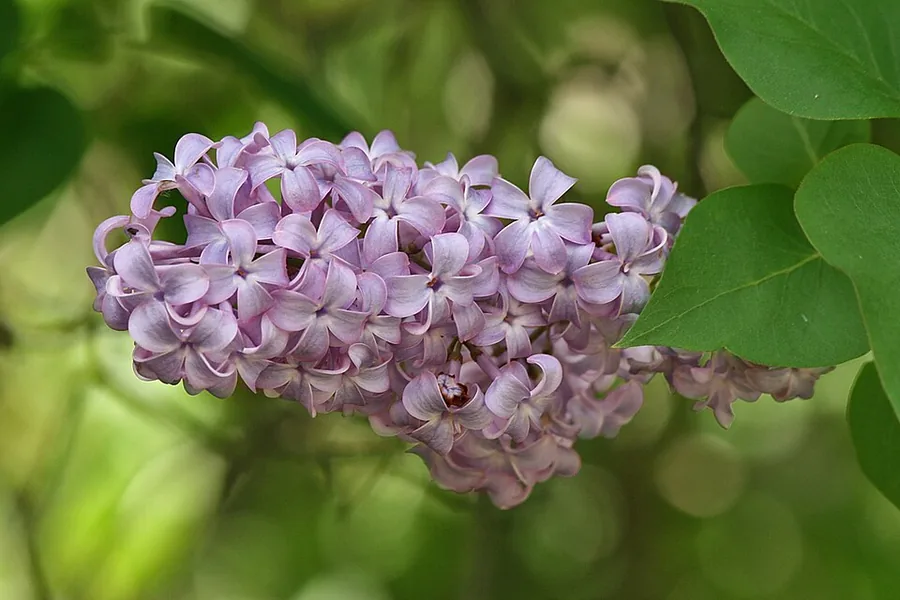
Color runs from the classic soft lilac purple through deep violet, wine-red, and pure white, depending on the cultivar. Give the plant sun and space and it largely takes care of itself, with only powdery mildew and the occasional borer turning up as real problems.
Care
The short version: full sun, fertile and well-drained soil that leans neutral to slightly alkaline, deep but infrequent watering, and a prune right after the flowers fade so you don't cut off next year's buds.
Light
Lilacs flower best in full sun, meaning six or more hours of direct light a day. They will live in partial shade, but you trade away flowers for it, and shade also invites the powdery mildew that mars the leaves.
Water
Water deeply but not often. A settled lilac only needs a drink every 7 to 14 days in dry spells, since it has medium moisture needs and resents wet feet. Soggy soil brings on root rot and cuts the flowering right back.
Soil
Plant in fertile, organically rich loam that drains well. Lilacs prefer ground on the neutral to slightly alkaline side, a pH of 6.5 to 7.5, which sets them apart from the many shrubs that crave acidic soil.
Temperature
This is a cold-climate plant through and through, comfortable from -40°F to 95°F (-40°C to 35°C). The deep winter chill is not a problem to endure but a need, since lilacs require a cold dormancy to bloom well.
Humidity
Ordinary outdoor air suits a lilac, so there is no humidity figure to hit. Airflow is what counts here, because still, muggy air around crowded branches is what lets powdery mildew take hold.
Feeding
Lilacs are light feeders that flower fine in average soil, so feed them rarely and only in early spring if at all. Use a low-nitrogen balanced fertilizer and keep lawn feed away from them, since extra nitrogen pushes leaves at the expense of flowers.
Pruning
Timing is everything because lilacs bloom on old wood. Prune and deadhead right after flowering so the shrub can set next year's buds, and every so often renew an aging plant by cutting about a third of the oldest stems down to the base.
Repotting
Lilacs are made for the open ground and are seldom grown in pots. A container plant tells you it has outgrown its home when roots circle the pot and water races straight through, but in a bed repotting is rarely an issue at all.
Size & spacing
Give a lilac real room, because it matures into a broad shrub of 8 to 16 feet (2.4 to 4.9 m) tall and 6 to 12 feet (1.8 to 3.7 m) wide. Spacing it well keeps air moving and mildew down.
When to plant
Lilacs run on a simple spring schedule. Set new plants out in spring or fall while the weather is cool, expect the show of bloom in mid to late spring, and do your pruning in the short window just after those flowers fade.
Northern hemisphere
Southern hemisphere
Typical months for a temperate climate: start earlier in warm zones, later where spring frosts linger.
- Plant: Spring or fall
- Harvest: Mid to late spring (typically May)
Hardiness
USDA hardiness zones: 3–7
Temperature: down to -40°C
Troubleshooting
A healthy lilac in full sun rarely gives much trouble, and the two issues that do show up are easy to read. Watch the leaves in late summer and the lower trunk through the season, then match what you see below.
Sawdust and exit holes low on the trunk with dying branches
The damage points to the lilac borer, the larva of a clearwing moth that tunnels through stems near the soil line. Watch for quarter-inch holes, expelled sawdust, and the cast pupal skins it leaves behind. Cut infested stems back to the base, keep the plant well watered and unstressed, and time a bark spray to spring egg hatch if borers keep coming back.
Fix:
- Prune out and destroy infested and weak stems back to the base
- Reduce plant stress with proper watering and care
- Apply a labeled bark insecticide (e.g., permethrin or bifenthrin) timed to egg hatch in spring
Dusty white film coating the leaves in summer
This is powdery mildew, a fungus that settles in when air sits still around a shaded, crowded plant. It looks bad but rarely harms a healthy lilac, so the fix is mostly about airflow. Thin out the plant, clear away the worst leaves, and reach for a fungicide only if the look really bothers you.
Fix:
- Improve air circulation by thinning and spacing plants
- Remove and dispose of severely affected leaves
- Apply a labeled fungicide only if appearance is a concern
Toxicity
Good news for pet owners and parents: the common lilac is safe. Syringa vulgaris is not toxic to cats, dogs, horses, or people, and the worst a hungry animal might get from a big mouthful of leaves is a mild, passing stomach ache. Don't confuse it with the unrelated and genuinely toxic Persian lilac, which is really Chinaberry.
Safe for
People · Cats · Dogs · Horses · Rabbits · Livestock · Birds
Cats None
A cat can brush past the foliage or nibble a leaf with nothing to worry about. The plant carries no toxin that affects them.
Dogs None
Lilac is safe around dogs, so a curious chew on a fallen flower or leaf is harmless. At most, a dog that gorges on a lot of plant material might get a passing stomach ache.
Horses None
Horses can graze near a lilac without risk. Eating a large amount of leaves might bring on some mild digestive upset, but nothing more serious.
Rabbits Safe
The leaves and stems hold no compounds that trouble rabbits, so trimmings near a hutch are fine.
Livestock Safe
Cattle, goats, and sheep can be kept around lilac shrubs safely, with no poisoning risk from the foliage.
Birds Safe
Backyard and pet birds are in no danger from lilac, whether they perch in the branches or pick at a flower.
People Safe
Lilac poses no poisoning hazard to children or adults, and the blooms are even used now and then to scent or flavor food.
No special handling required; keep clippings out of reach of grazing animals as a general precaution.
Varieties
Most lilacs sold are named cultivars chosen for flower color and form. A few turn up again and again, and these are the ones worth knowing.
Sensation
Its purple florets each carry a crisp white margin that makes the trusses stand out.
Ludwig Spaeth
Single flowers in a deep reddish purple give this old cultivar its rich, almost wine-dark color.
Agincourt Beauty
Very large single deep-violet florets pack into oversized trusses for a bold show.
Angel White
Pure white flowers and a low chill requirement let this one bloom well where milder winters leave other lilacs shy.
How to propagate
Lilacs are easy to multiply, and the suckering habit that some gardeners curse is exactly what makes free plants so simple to get.
DivisionEasy
Early spring or fall · 1-2 seasons
Lilacs throw up root suckers from the base, and the easiest way to make new plants is to dig those rooted shoots and separate them in early spring or fall. Give each one a season or two to settle in before you expect much growth.
Stem cuttingsModerate
Spring (softwood) · Several weeks to root
Take softwood cuttings in spring and they will root over several weeks, though success is hit or miss. Expect to lose a few, so start more cuttings than the number of plants you want.
LayeringEasy
Spring to summer · One growing season
Bend a low branch down, pin it against the soil from spring through summer, and it will form its own roots over a single growing season. Once rooted, cut it free from the parent and move it on.
GraftingDemanding
Dormant season · One growing season
Grafting is a dormant-season job used mainly in the nursery trade for certain cultivars, and it takes a growing season to knit together. Grafted plants tend to push understock suckers from below the graft, which you should rub off as they appear.
Myths
Lilacs are poisonous to dogs and horses.
True lilac, Syringa vulgaris, is non-toxic and safe to grow around pets and grazing animals. The confusion comes from the 'Persian lilac,' which is actually Chinaberry (Melia azedarach), an unrelated plant whose meliatoxins cause vomiting, weakness, and seizures. That toxic species is the one the ASPCA flags, not the common lilac in your yard.