Ornamental · Primulaceae
Primrose
Primula vulgaris
Give it cool shade and steady moisture, and the primrose opens the garden's first color each spring.
Partial shade
Every 2–4 days
USDA 4–8
3–6 in · 8–15 cm
Overview
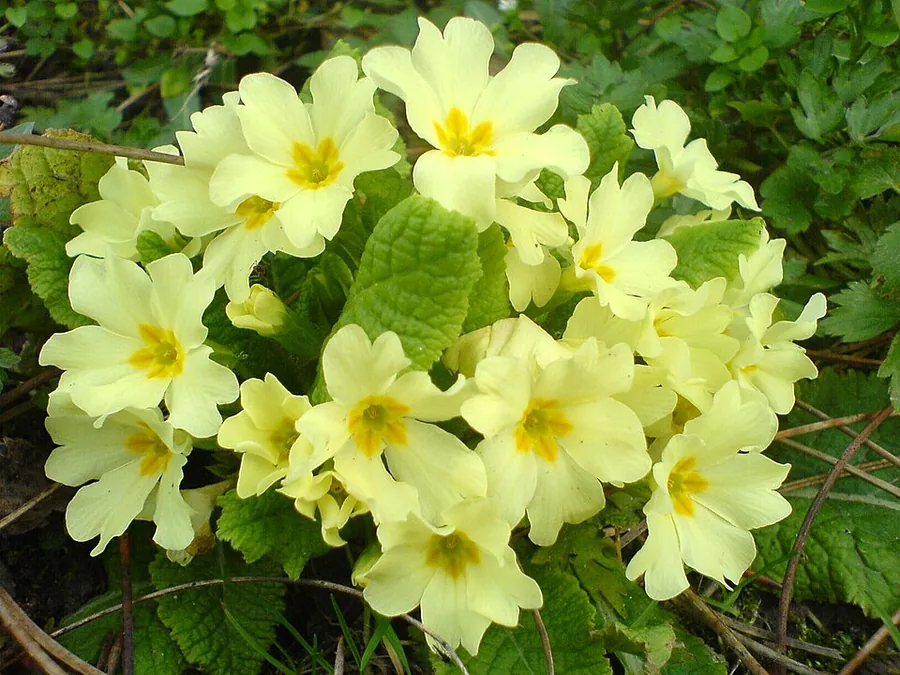
Primroses are one of the first plants to flower as winter loosens its grip. They grow low to the ground in tidy rosettes of wrinkled leaves, sending up short stalks of bloom in early to mid spring. The wild species wears pale yellow, but the garden forms come in nearly every color, which is why you see flats of them for sale the moment the weather turns.
This is a cool-weather perennial that hates to be hot or dry. It belongs in the shade of a tree, along a north wall, or in a damp corner where little else will bloom so early. Hardy from zone 4 through 8, it shrugs off hard winters yet starts to struggle once summer heat sets in.
Primroses ask for little once they're in the right spot. Keep the soil moist and rich, split the clumps every few years, and they'll come back stronger each season. Plant them in a hot, dry bed, though, and you'll watch them sulk.
Care
The short version: plant primrose in cool partial shade, in rich soil you keep evenly moist, feed it in spring, and lift and divide the clumps every few years to keep the flowers coming.
Light
Primrose wants partial shade and resents full sun, which scorches the leaves and cuts the bloom short. It will take full shade or a little morning sun, but the sweet spot is the dappled light under a deciduous tree.
Water
Keep the soil consistently moist, because primrose has no tolerance for drying out. Water every 2 to 4 days in warm spells, and lay down a spring mulch to hold that moisture and keep the roots cool.
Soil
Give it organically rich, well-drained loam that stays moist without turning to mud. Dig in plenty of compost before planting, since lean or fast-draining ground leaves the plant thirsty and weak.
Temperature
This is a cool-season plant, hardy down to -29°F (-34°C) and happiest below 75°F (24°C). It powers through cold winters with ease but fades when summer heat builds, so a shaded, sheltered spot helps it last.
Humidity
Average outdoor humidity suits primrose fine, with no number to hit. Moist soil matters more than moist air, and good airflow around the crown keeps the mold and rot it's prone to from setting in.
Feeding
Feed once in spring as growth begins, using a balanced fertilizer or a good helping of compost worked into the soil. That single seasonal boost carries the plant through its bloom and into the rest of the year.
Pruning
Deadhead the spent flowers to keep the plant tidy and pull off any tattered or diseased leaves as you spot them. Divide the clumps in spring after they finish blooming, which doubles as both grooming and renewal.
Repotting
Primrose clumps grow crowded over time and bloom less from the worn-out center. Lift and divide every 2 to 3 years in spring after flowering, splitting tired, congested clumps into fresh, vigorous pieces.
Size & spacing
Primrose stays small, reaching just 3 to 6 inches (8 to 15 cm) tall and spreading 3 to 9 inches (8 to 23 cm) wide. Tuck plants close together as an edging or a shady groundcover, and they'll knit into a low spring carpet.
When to plant
Primroses run on the cool end of the year. Start seed in late winter so it has time to wake from its slow, chilly start, set plants out in spring once the hard frosts have passed, and look for bloom in early to mid spring before the summer heat arrives.
Northern hemisphere
Southern hemisphere
Typical months for a temperate climate: start earlier in warm zones, later where spring frosts linger.
- Sow: Late winter (seed can be slow and benefits from a cold/chilling period)
- Plant: Spring, after frost danger eases, into cool moist soil
- Harvest: Early to mid spring (around April)
Hardiness
USDA hardiness zones: 4–8
Temperature: down to -34°C
Troubleshooting
Most primrose trouble comes down to the damp, shaded conditions the plant otherwise loves, which also suit slugs, rot, and mold. Read the early signs on the leaves, flowers, and crown, then act before a small problem takes hold.
Plants wilt and collapse with brown, rotting roots
Soggy ground brings on root rot, and the cool damp air that follows invites gray mold onto crowded crowns. There's no saving a plant once the roots turn soft and brown, so lift it and bin it. Fix the drainage and give the survivors room to breathe before the trouble spreads.
Fix:
- Remove and discard severely affected plants
- Improve drainage and avoid waterlogging
- Increase spacing and airflow to reduce humidity around foliage
Ragged holes in the leaves and flowers with slime trails
This is the work of slugs and snails, which thrive in the same cool, moist shade that primroses love. Hunt them down by hand in the evening, clear away the leaf litter they shelter under by day, and ease off the watering so the ground stays a little less inviting.
Fix:
- Hand-pick slugs and snails in the evening
- Remove leaf litter and debris that provide daytime shelter
- Reduce excess moisture and improve airflow around plants
Twisted new growth, stippled leaves, and fine webbing
Two pests cause this. Aphids cluster on the soft new growth, while red spider mites stipple the leaves and spin fine webs once the air turns warm and dry. Blast them off with a hard spray of water, follow up with insecticidal soap if they hang on, and keep the plant cool and moist to keep mites at bay.
Fix:
- Rinse foliage with a strong spray of water
- Treat persistent infestations with insecticidal soap
- Maintain adequate humidity and moisture to discourage spider mites
Toxicity
Primrose is only mildly toxic, so a curious nibble usually means nothing worse than an upset stomach for a pet. The bigger catch is for the gardener, since the leaves carry primin, a contact allergen that can irritate sensitive skin. Wear gloves when you handle the plant and keep pets from grazing on it.
Toxic to
Cats · Dogs · Horses · Rabbits · Livestock · Birds · People
Cats Mild
A cat that nibbles the leaves usually gets a queasy stomach and some vomiting. The upset is mild and tends to pass on its own once the plant is out of reach.
Dogs Mild
Dogs that chew the foliage may vomit or go off their food for a while. Signs stay mild, though a big mouthful is worth a call to the vet.
Horses Mild
Grazing on primrose can leave a horse with a touch of stomach upset. The reaction is mild, but keep the plant out of paddocks and reach all the same.
Rabbits Caution
The same compounds that bother cats and dogs can give a rabbit loose stools or a sour stomach, so it's not a safe nibble. Keep primrose away from a rabbit's run.
Livestock Caution
Cattle, goats, and sheep rarely seek primrose out, but a curious mouthful can bring on mild digestive upset. Fence it off from grazing animals to be safe.
Birds Caution
There's little to suggest birds eat primrose, yet the plant isn't a safe forage either. Keep it clear of pet birds and poultry that peck at greenery.
People Caution
Eating primrose isn't the worry here. Handling it is, because the foliage carries primin, a contact allergen that can leave sensitive skin red, itchy, or blistered, so wear gloves and wash your hands after working with the plant.
Toxic principle is listed as unknown; signs are mild. Separately, primrose species (notably Primula obconica) contain primin, a contact allergen that can cause skin irritation or allergic dermatitis in some people, so wear gloves when handling and wash hands after contact.
Helpline numbers

United States
ASPCA Animal Poison Control: (888) 426-4435 (fee applies)
Poison Control: (800) 222-1222



Canada
Poison Centres: 1-844-764-7669
Varieties
Primrose ranges from the modest wild species to bright, many-colored garden hybrids. These are the two groups you'll meet most often.
Primula vulgaris (common species)
The wild form carries pale yellow, faintly fragrant flowers about an inch across on short stalks, rising straight from a low rosette of wrinkled, spoon-shaped leaves.
Polyanthus and modern hybrids
Bred for color, these forms come in blue, red, pink, purple, white, and gold, often with a contrasting eye, and fill most of the bedding and pot displays you see for sale.
How to propagate
Primroses are easy to multiply, whether you split an established clump or take the slower route from seed.
DivisionEasy
Spring, after flowering · One growing season
Division is the surest way to make more primroses and keep old clumps vigorous. Lift a mature plant in spring once the flowers fade, tease it into rooted pieces, and replant them right away. Each division settles in and fills out over a single growing season.
SeedModerate
Late winter to spring · Several months to a year to reach flowering size
Growing from seed takes patience. Sow in late winter or spring and give the seed the cool conditions it needs, because it's slow to wake up. Plan on several months to a year before a seedling reaches flowering size, and bear in mind the species comes true from seed far more reliably than the hybrids do.
Myths
Every plant called primrose is the same, so they're all equally safe or unsafe.
The common name covers very different plants. ASPCA lists this primrose, Primula vulgaris, as toxic to cats, dogs, and horses, while Cape Primrose, a Streptocarpus and no real relation, is listed as non-toxic to the same animals. The name on the label tells you nothing about the risk, so check the botanical name.