Shrub · Rosaceae
Shrubby Cinquefoil
Potentilla fruticosa
Tough as nails and flowering all summer, shrubby cinquefoil asks for almost nothing in return.
Full sun
Every 7–14 days
USDA 2–7
2–4 ft · 0.6–1.2 m
Overview
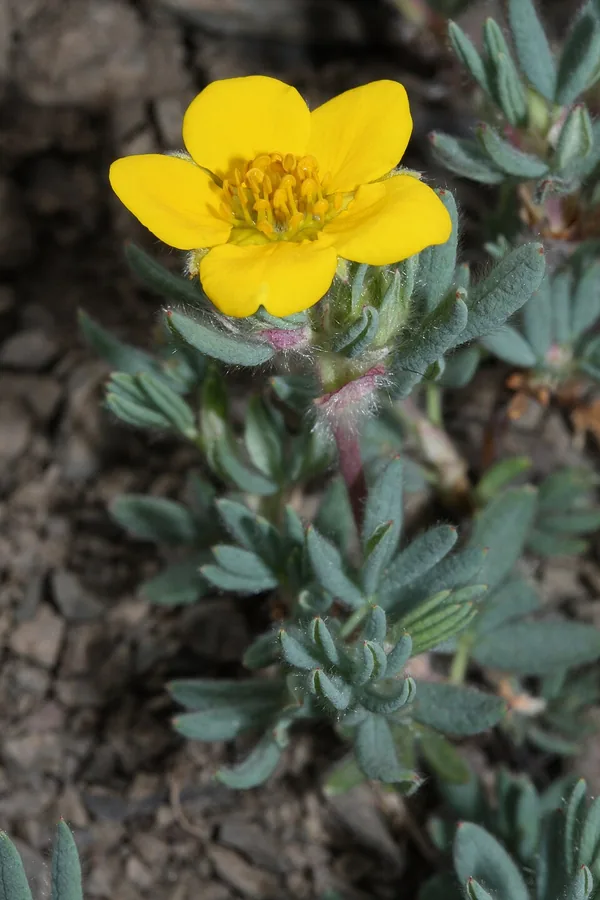
Shrubby cinquefoil is a small, rounded deciduous shrub in the rose family, and it earns its keep with months of bloom. From June through September it carries simple five-petaled flowers, classically a buttery yellow, above fine-textured foliage. It stays low and tidy, reaching 2 to 4 feet (61 to 122 cm) tall, which makes it an easy fit for a border edge, a low hedge, or a tough sunny corner.
What sets this shrub apart is how little it minds hardship. It shrugs off cold down to USDA zone 2, takes poor, alkaline, sandy, or heavy clay soils in stride, and once it's rooted in it handles drought without complaint. Plant breeders have pushed past the original yellow, too, so you can also find white, pink, and orange-flowered cultivars.
It does have one preference worth respecting: it likes summers on the cool side. Heat washes out the flower color and can leave the plant looking tired, so it shines brightest in northern gardens and cooler climates. Give it full sun, decent drainage, and a hard cut each spring, and it asks for little else.
Care
The short version: full sun, average well-drained soil, and a hard shearing in late winter or early spring. It needs almost no feeding, tolerates drought once established, and rewards a cool summer with months of bloom.
Light
Give shrubby cinquefoil full sun for the heaviest bloom. It will take partial shade and partial sun, but the flowers thin out as the light drops, and the plant grows looser and leggier in the shade.
Water
Water young plants steadily until they're established, then ease right off. A settled shrub is notably drought tolerant and only needs help during a long dry spell, with the top half of the soil drying out between drinks.
Soil
This shrub is one of the least fussy you can grow. Average, well-drained soil is all it asks, and it adapts to clay, loam, sand, and even poor or alkaline ground, handling a pH anywhere from 5.5 to 8.0.
Temperature
Cold is no obstacle here, with hardiness running from a brutal -49°F (-45°C) up to around 86°F (30°C). The catch is the warm end: prolonged summer heat fades the flowers, so cool-summer climates suit it best.
Humidity
It prefers things on the dry side and dislikes muggy air. Low humidity with good airflow keeps the foliage clean, since humid, stagnant conditions are what invite leaf spot and mildew.
Feeding
Don't overthink the feeding. A balanced general-purpose fertilizer or a little compost in early spring is plenty, and the plant flowers fine on lean soil if you skip it.
Pruning
This is the one job that matters. Because it blooms on new wood, shear or prune it hard in late winter to early spring to keep a compact shape and drive fresh flowering, cutting back any leggy or ragged stems.
Repotting
Grown in the ground it never needs repotting, and even in a container it's rarely required. Move it up a size only when roots circle the pot, water runs straight through, or growth stalls.
Size & spacing
Expect a mounded shrub of about 2 to 4 feet (61 to 122 cm) tall, spreading wider than it is tall at 3 to 5 feet (91 to 152 cm). Give each plant that much room so the rounded form fills in without crowding.
When to plant
This is a cold-hardy shrub built for a long northern season. Set new plants out in spring once the frost has passed, or in early fall, and shear them hard in late winter to keep the summer-long bloom coming from June into September.
Northern hemisphere
Southern hemisphere
Typical months for a temperate climate: start earlier in warm zones, later where spring frosts linger.
- Sow: Late winter (stratified seed), 8-10 weeks before last frost
- Plant: Spring after last frost, or early fall
- Harvest: June to September
Hardiness
USDA hardiness zones: 2–7
Temperature: down to -46°C
Troubleshooting
Shrubby cinquefoil rarely gives much trouble, and most of what goes wrong traces back to heat, humidity, or a missed spring pruning. Match what you see on the leaves or flowers below, then act while the fix still helps.
Stippled, bronzing leaves with fine webbing
This is the work of spider mites, which move in during hot, dry, stagnant spells and drain the color from the leaves. Confirm them by tapping a branch over white paper and watching for tiny specks that crawl. Blast the undersides with a hard jet of water, open up the air around the plant, and reach for insecticidal soap or horticultural oil only if the infestation is heavy.
Fix:
- Spray foliage with a strong jet of water, focusing on leaf undersides
- Improve air movement and avoid hot, stagnant, dry locations
- Apply insecticidal soap or horticultural oil if infestation is heavy
Dark spots or a white coating on the leaves
Discrete dark spots point to fungal leaf spot, while a dusty white film is powdery mildew, and both show up where the air sits humid and still. Strip off the marked foliage and bin it. Keep water off the leaves and thin the plant so air can move, and the trouble usually fades on its own.
Fix:
- Remove and dispose of affected foliage
- Avoid overhead watering and wetting foliage
- Thin or prune to improve air circulation
Faded flowers on a leggy, open shrub
When the color washes out and the base goes woody and bare, the cause is usually summer heat fading the blooms paired with skipped spring pruning. Shear the shrub hard in late winter to early spring to push fresh flowering wood. Pink and red cultivars hold their color far better in cool climates, so site the plant where summers stay mild.
Fix:
- Shear or prune hard in late winter to early spring to renew flowering wood
- Site in cooler, sunny locations; pink and red cultivars hold color better in cool climates
Toxicity
Good news for anyone with pets or small children: this shrub is safe. The ASPCA lists cinquefoil as non-toxic to cats, dogs, and horses, and there's nothing in it that poses a hazard to other animals or people. You can plant it anywhere in the garden without a second thought.
Safe for
People · Cats · Dogs · Horses · Rabbits · Livestock · Birds
Cats None
Safe to have around cats, with no toxic compounds to worry about if one nibbles a leaf or flower.
Dogs None
A dog can brush past or chew on this shrub without any risk of poisoning.
Horses None
Horses graze near it without harm, since the ASPCA lists cinquefoil as non-toxic to them.
Rabbits Safe
Rabbits can browse the foliage with no toxicity concern.
Livestock Safe
Cattle, goats, and sheep can graze around the plant safely.
Birds Safe
Garden birds that pick at the shrub face no danger from it.
People Safe
Harmless to handle and grow around children, though it is an ornamental rather than something to eat.
No special handling precautions for toxicity; wear gloves if desired when pruning woody stems.
Varieties
Breeders have given this old garden standby plenty of range beyond the classic yellow. These are the cultivars you're most likely to meet.
'Abbotswood'
A compact shrub carrying pure white flowers above cool blue-green foliage.
'Goldfinger'
Large, deep golden-yellow flowers cover this compact mound over a long season.
CHEESEHEAD ('SMPFMY')
A bright yellow-flowered cultivar chosen for its tidy, mounded shape.
Happy Face Pink Paradise
A pink-flowered selection that holds its color far better through cooler summers.
How to propagate
Shrubby cinquefoil is easy to multiply, whether you root a cutting, split a clump, or sow seed and accept a little variation.
Stem cuttingsEasy
Softwood cuttings in late spring to summer · 4-8 weeks to root
The easiest way to make more is from cuttings. Take softwood or semi-hardwood pieces in late spring to summer, keep them under humidity, and they root readily in about 4 to 8 weeks.
SeedModerate
Sow stratified seed in late winter to early spring · Several weeks to germinate; cultivars do not come true from seed
Seed works but takes patience. Give it a cold stratification and sow in late winter to early spring, and it sprouts over several weeks. Just know that named cultivars don't come true from seed, so the seedlings will vary.
DivisionEasy
Spring or early fall · One growing season
Established plants can be split in spring or early fall. Lift a clump or a rooted sucker, separate it, and replant. The divisions settle in over one growing season.
Myths
Shrubby cinquefoil is poisonous to pets like many flowering shrubs.
This one carries no toxins for animals at all. The ASPCA lists cinquefoil, Potentilla spp., as non-toxic to cats, dogs, and horses, so a curious nibble is nothing to worry about.
Potentilla should be pruned right after it flowers, like spring-blooming shrubs.
Pruning after bloom would cut off next year's flowers, because this shrub blooms on new wood. Shear it hard in late winter to early spring instead, and you get the fullest summer display.