Shrub · Rosaceae
Common Ninebark
Physocarpus opulifolius
A tough native shrub with peeling bark and colorful foliage that asks for almost nothing in return.
Full sun
Every 7–14 days
USDA 2–8
5–8 ft · 1.5–2.4 m
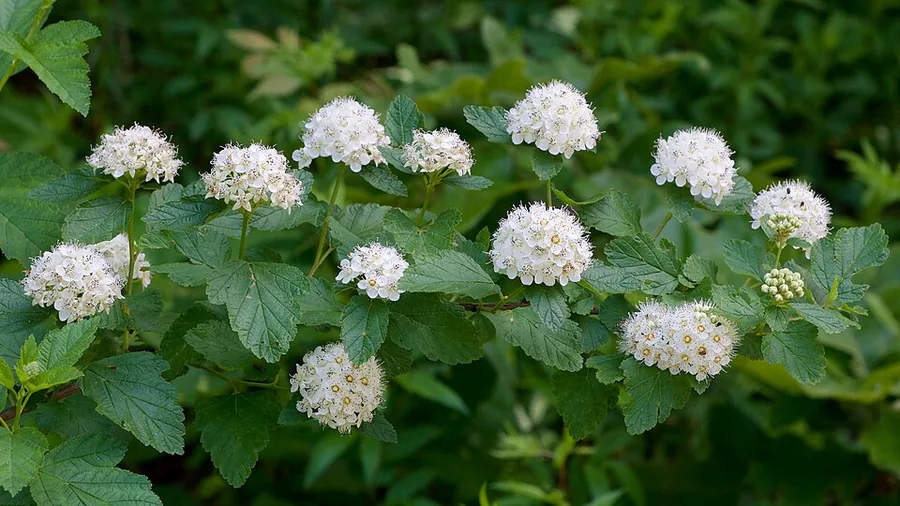
Overview
Ninebark is one of the easiest shrubs you can plant. A native of eastern North America in the rose family, it shrugs off cold down to zone 2, takes drought once its roots are down, and grows in almost any soil you put it in. The name comes from the bark that peels away in thin papery strips, giving the older stems texture all winter long.
What most people grow it for now is the foliage. Breeders have pulled out cultivars in deep purple, gold, copper, and wine-red, and clusters of small white-to-pink flowers arrive in late spring. The dark and gold leaves carry the show from the moment they open until they drop in fall.
It is a fast, vigorous shrub that wants room and sun. Give it a spot with good airflow and it mostly looks after itself, but crowd it into damp shade and powdery mildew moves in. Plant it right and you get a low-care backbone shrub that earns its place for years.
Care
The short version: full sun for the best leaf color, average well-drained soil it will happily adapt to, and water through the first season only. After that it is drought tough, needs little feeding, and asks for one prune a year right after it blooms.
Light
Ninebark grows best in full sun, and the purple and gold cultivars hold their color far better there. It will take partial shade, but expect duller leaves and a greater chance of powdery mildew once the air goes still.
Water
Water a new plant regularly through its first growing season to settle the roots in. After that it is genuinely drought tolerant and only wants a drink during a long dry spell. Let the top half of the soil dry between waterings, roughly every 7 to 14 days.
Soil
This shrub is not fussy about ground. It does best in average, well-drained soil but adapts to clay, loam, sand, rocky, dry, and even wet spots. It handles a wide pH from 5.5 to 8.0, so most gardens suit it without any amendment.
Temperature
Ninebark is remarkably hardy, taking winter cold down to about -51°F (-46°C) and summer heat up to 100°F (38°C). That range covers hardiness zones 2 through 8, which is why it turns up in so many cold-climate gardens.
Humidity
Outdoor humidity is no concern on its own, so there's no number to hit. Airflow matters more than moisture in the air, since crowded, stagnant conditions are what invite powdery mildew onto the leaves.
Feeding
This tough native rarely needs feeding. If growth looks weak, give a light application of balanced fertilizer in early spring and leave it at that. Too much, especially nitrogen, only pushes soft growth that fireblight finds easy to attack.
Pruning
Prune right after it blooms and no later than mid-August, because next year's flowers form on old wood and a late cut takes them off. To rescue an overgrown, leggy plant, you can cut it close to the ground in winter and let it come back fresh.
Repotting
Ninebark belongs in the ground and rarely needs potting on. If you do grow one in a container, move it up when roots circle the pot, push out the drainage holes, or water starts running straight through.
Size & spacing
Plan for a substantial shrub, 5 to 8 feet (152 to 244 cm) tall with a spread of 4 to 6 feet (122 to 183 cm). Give it that full width so air moves through the branches and mildew has less of a foothold.
When to plant
Ninebark is a hardy shrub with a wide planting window. Set new plants out in spring or fall while the weather is mild, then watch for the white-to-pink flowers in late spring, roughly April through June, before the colored foliage takes over for the rest of the year.
Northern hemisphere
Southern hemisphere
Typical months for a temperate climate: start earlier in warm zones, later where spring frosts linger.
- Plant: Spring or fall
- Harvest: Late spring (April to June)
Hardiness
USDA hardiness zones: 2–8
Temperature: down to -46°C
Troubleshooting
Ninebark rarely gives much trouble, and most of what shows up lands on the leaves rather than the whole plant. The few problems worth knowing trace back to crowding and damp, still air. Match what you see below and act before it spreads.
Shoot tips turn black and curl as if scorched
This is fireblight, a bacterial infection that blackens the tips and bends them into a shepherd's crook while they stay clinging to the branch. Cut the blighted wood out well below the visible damage, wipe your tools between every cut, and burn or bin what you remove rather than composting it. Easing off the nitrogen and pruning in dry weather keeps it from coming back.
Fix:
- Prune out blighted wood well below visible damage
- Disinfect pruning tools between cuts
- Destroy removed material; do not compost
White, dusty film coating the leaves and shoot tips
This is powdery mildew, a fungus that settles in where the air sits still and the shade lingers, and it goes hardest on the dark-leaved cultivars. Thin out crowded stems so air can move through, strip off the worst leaves, and give the shrub more sun. It looks rough but rarely does lasting harm.
Fix:
- Improve air circulation by thinning crowded stems
- Remove and dispose of badly infected foliage
- Site or move plants into full sun
Dark spots and blotches scattered across the leaves
These are fungal leaf spots, and they spread when the foliage stays wet and the plants grow too close together. They mar the look of the shrub but almost never threaten its health. Rake up the fallen leaves, open the planting for better airflow, and water at the base instead of over the top.
Fix:
- Rake up and dispose of fallen infected leaves
- Improve spacing and airflow
- Avoid wetting foliage when watering
Toxicity
There's nothing to worry about here. Ninebark is not on the ASPCA poison lists and is treated as non-toxic to pets, livestock, and people alike. The worst a big mouthful might do is a brief, mild stomach upset, the same as overeating any leafy plant.
Safe for
People · Cats · Dogs · Horses · Rabbits · Livestock · Birds
Cats None
Ninebark is safe around cats and doesn't appear on the ASPCA poison list. A curious nibble might bring on a little drool or a brief upset stomach, the same as chewing any leafy plant, but nothing more.
Dogs None
Dogs can share a garden with ninebark without worry. Wolfing down a big mouthful of foliage may loosen the stomach for an afternoon, yet there's no real poison here to fear.
Horses Safe
Horses grazing near a ninebark hedge are fine. The shrub carries no toxin known to harm them, and they tend to leave the woody stems alone anyway.
Rabbits Safe
Rabbits, whether pet or wild, take no harm from ninebark. They often browse the young shoots, and the leaves sit well with their digestion.
Livestock Safe
Cattle, goats, and sheep can graze around ninebark safely, since it holds nothing that would poison them. A goat may strip the tender growth without any trouble at all.
Birds Safe
Birds are in no danger from ninebark. Many feed on the dry seed capsules through winter and nest in the dense branches, drawn to the shelter rather than put off by it.
People Safe
Ninebark poses no poisoning risk to people. It isn't grown to be eaten, so there's no reason to nibble it, but a stray taste won't do any harm.
No special handling precautions are required; wear gloves when pruning if you have sensitive skin.
Varieties
Most ninebark sold today is a colored-leaf cultivar rather than the plain green species. These are the ones you're most likely to meet, sorted by the foliage they're grown for.
Diabolo
This is the well-known dark-leaved cultivar, carrying deep purple foliage that can fade toward green through a hot summer.
Dart's Gold
Bright golden-yellow leaves are its signature, and the color holds best when the shrub gets full sun.
Summer Wine
A more compact pick with dark wine-red foliage set against white-to-pink flowers.
Coppertina
Its new growth opens a coppery orange before settling into red as the leaves mature.
Amber Jubilee
The foliage runs through gold, orange, and amber, shifting its tones as the season moves along.
How to propagate
Ninebark gives you three ways to make more, and which you pick depends on whether you care about keeping a cultivar's leaf color true.
Stem cuttingsEasy
Late spring to summer using softwood cuttings · 4 to 8 weeks to root
Cuttings are the way to go if you want a named colored-leaf cultivar to come back true to its parent. Take softwood or semi-hardwood pieces from late spring into summer, and they root in 4 to 8 weeks. This is the most reliable method of the three.
SeedModerate
Sow in fall or after cold stratification in spring · Several weeks to germinate; seedlings of cultivars vary
Seed grows the wild species well, sown in fall or given a cold spell before a spring sowing, and it sprouts over several weeks. Just know that seedlings from a colored cultivar won't match the parent's foliage, so they're a gamble if leaf color is what you're after.
LayeringEasy
Spring through summer · One growing season
Layering is the no-fuss option. Pin one of the low arching branches down against the soil any time from spring through summer, give it one growing season to root, then sever it from the parent as a new plant.
Myths
The name ninebark means the bark peels off in exactly nine separate layers.
The name points to the showy bark that flakes away in thin strips down the stems, not to any real count. Nine is an old figurative number here, a way of saying many layers rather than precisely nine.