Ornamental · Onocleaceae
Ostrich Fern
Matteuccia struthiopteris
Give it shade and steady moisture, and this hardy fern unfurls knee-high fronds shaped like green shuttlecocks.
Partial shade
Every 3–7 days
USDA 3–7
3–6 ft · 0.9–1.8 m
Overview
The ostrich fern is one of the easiest hardy ferns to grow, prized for tall, arching fronds that fan out like the plumes of a shuttlecock. It runs cold-hardy down to -40°F (-40°C), thriving in zones 3 through 7 where many ornamentals give up. In the right damp, shaded spot it forms a lush colony with almost no help from you.
Two things keep it happy: shade and water. It belongs to cool, moist woodland and the banks of streams, and it sulks in hot, dry, exposed ground. Plant it where the soil stays damp and the afternoon sun never reaches, and it rewards you with fronds that can stand 3 to 6 feet (90 to 180 cm) tall.
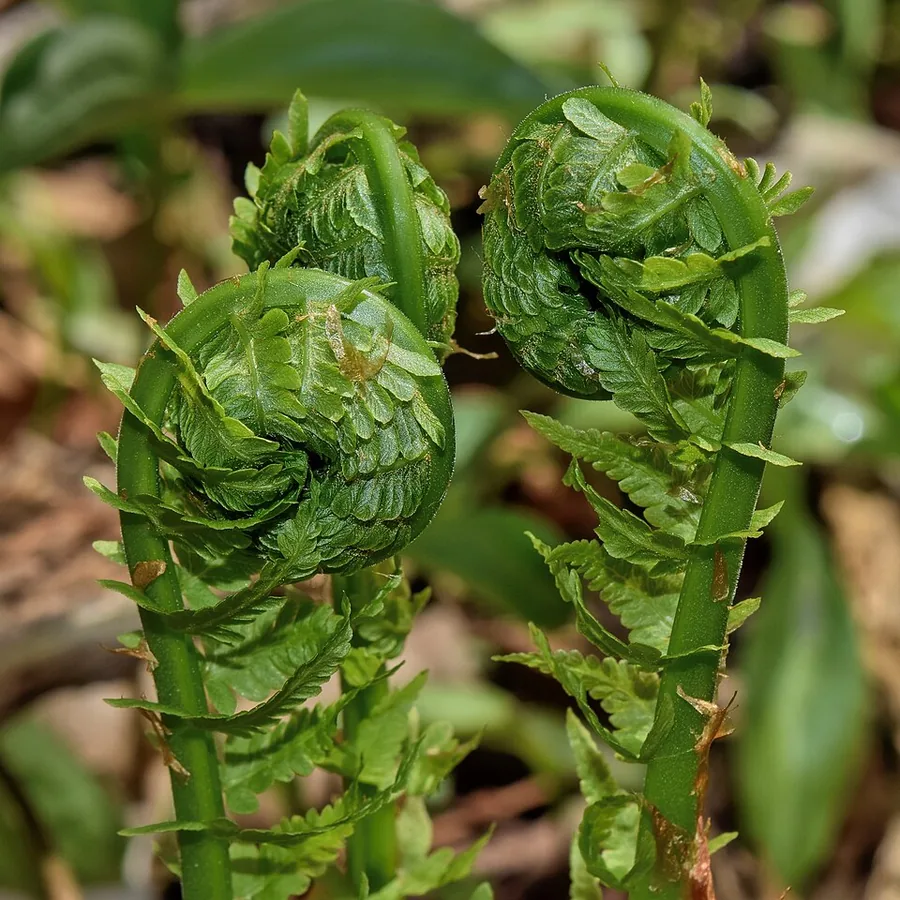
There is a catch worth knowing up front. The fern spreads by underground runners and will keep widening its patch, so give it room or pen it in. Its other claim to fame is the fiddlehead, the tight coiled crown harvested in early spring as a foraged vegetable, which is good eating once it's properly cooked.
Care
The short version: part to full shade with rich, consistently moist soil that never dries out. Mulch to hold the damp and keep the roots cool, feed lightly in spring, and give the colony space or a root barrier to contain its spread.
Light
Give this fern part to full shade. It will take a little morning sun where the soil stays wet, but hot afternoon sun scorches the fronds and sends the plant into early dormancy.
Water
Keep the soil consistently moist to wet, never letting it dry out. The fern is built for streambanks and damp woodland, so it falls apart fast in hot, dry sites. In a normal spell, water every 3 to 7 days and lean wetter in heat.
Soil
Plant in rich, humusy ground that holds moisture, even heavy clay, which it tolerates well. A pH anywhere from 5.0 to 7.0 suits it, so most garden soil works as long as it stays damp.
Temperature
Cold is no obstacle here, with hardiness running from -40°F to 86°F (-40°C to 30°C). The trouble is the top of that range, since sustained heat is what drives the fronds into their summer slump.
Humidity
It likes the moist air of a shaded, damp spot, roughly 40% to 70%. Outdoors that takes care of itself once the soil and shade are right.
Feeding
Feed lightly in spring with a balanced fertilizer, or simply topdress with compost or leaf-mold mulch. A fern in good woodland soil barely needs more than that.
Pruning
Pruning is minimal. Cut back any tattered or browned green fronds in late fall or early spring before the new fiddleheads appear, and you can leave the brown fertile fronds standing over winter for interest, then trim them in spring.
Repotting
This isn't a container plant. Instead of repotting, lift and divide a congested colony every 3 to 4 years when the crowns start crowding and the fronds come up smaller and weaker.
Size & spacing
Mature fronds reach 3 to 6 feet (90 to 180 cm) tall, and a colony spreads 2 to 8 feet (60 to 240 cm) wide over time. Plant with that eventual sprawl in mind, or hold it back with a root barrier.
When to plant
This is a spring fern with a quiet summer. Set new plants out in spring once the frost has passed, or in early fall, and harvest the coiled fiddleheads in early spring as the crowns push up but before the fronds unfurl. Expect the fronds to tire and brown by midsummer as the plant eases into its natural rest.
Northern hemisphere
Southern hemisphere
Typical months for a temperate climate: start earlier in warm zones, later where spring frosts linger.
- Plant: Spring after frost, or early fall
- Harvest: Non-flowering; harvest fiddleheads in early spring as the coiled crowns emerge, before the fronds unfurl
Hardiness
USDA hardiness zones: 3–7
Temperature: down to -40°C
Troubleshooting
An ostrich fern has few real problems, and most of what looks wrong is just the plant responding to heat or running out of room. Read the signs below before you reach for any fix. More often than not the answer is shade, water, or a spade.
New crowns popping up far from the parent clump
This is the fern's spreading habit at work, not a disease. Underground stolons send out runners that surface as fresh fiddlehead crowns, and a happy colony will keep marching outward. Dig out the stray crowns in spring or fall, or sink a deep root barrier to hold the patch where you want it.
Fix:
- Dig out unwanted crowns and runners in spring or fall
- Install a physical root barrier to contain the colony
- Divide and relocate or discard excess crowns
Fronds browning and looking ragged by midsummer
Part of this is just summer dormancy, the way an ostrich fern naturally winds down once the heat arrives. The rest comes from heat and drought stress, made worse by too much sun and soil that dries out. Water deeply, mulch to hold moisture and cool the roots, and the crown pushes fresh fronds again the following spring.
Fix:
- Water deeply to keep soil consistently moist
- Mulch to retain moisture and cool the roots
- Provide more shade in hot climates
- Remove tattered fronds; the plant rebounds from the crown the following spring
Toxicity
Good news for a household with animals: the ostrich fern carries no known toxins and isn't flagged as a poison to pets or livestock. Its fiddleheads are even eaten by people, though only after a thorough cook. The one real caution here is about cooking your own foraged fiddleheads, not about your pets brushing against the plant.
Safe for
People · Cats · Dogs · Horses · Rabbits · Livestock · Birds
Cats None
No poisoning is documented in cats, and a curious nibble shouldn't cause harm. A cat that gorges on any greenery may still cough up a little or have a loose stool.
Dogs None
Dogs aren't known to be poisoned by this fern. The worst a chewed frond is likely to do is upset a sensitive stomach for a day.
Horses None
There's no record of ostrich fern harming horses. It isn't the bracken fern that causes trouble in pastures, so a grazing horse has nothing to fear from it.
Rabbits None
Rabbits can browse the fronds without any known ill effect. As with any new green, bring it in slowly so their gut has time to adjust.
Livestock None
Cattle, goats, and sheep can graze around an ostrich fern safely, since it carries none of the toxins found in bracken.
Birds None
No toxicity is reported for birds, whether pet or backyard flock. A hen that pecks at the fronds is in no danger.
People None
The young fiddleheads are a prized spring vegetable once they're cooked through. Boil them for 15 minutes or steam them for 10 to 12, since raw or barely cooked fiddleheads can make you sick.
No special contact precautions are documented. If foraging fiddleheads for food, rub off the brown papery husk, wash, and cook thoroughly (boil 15 minutes or steam 10-12 minutes); never eat them raw or merely sauteed/stir-fried/microwaved.
Varieties
Most gardens grow the plain species, but a few selections turn up when you want extra size or the true native form. These are the ones worth knowing by name.
'The King'
A supersized selection with a heavy crown and fronds about half again as large, sometimes topping out near 7 feet tall.
'Jumbo'
A vigorous large-fronded form grown when you simply want the biggest shuttlecock the plant can throw.
subsp./var. pensylvanica
This is the North American native form of the species, set apart from the Eurasian populations of the same fern.
How to propagate
Multiplying an ostrich fern takes almost no skill, since the plant is already busy cloning itself underground and only asks you to lift and move the results.
DivisionEasy
Spring as crowns emerge, or early fall · 1 to 2 growing seasons
Lift and split the crowns as they wake in spring, or wait for early fall. The fern does much of the work for you by sending out underground stolons that surface as offset crowns, and those are easy to slice away and replant. Give a transplant 1 to 2 growing seasons to settle in and start throwing full-sized fronds. In the wild it sows itself from spores on the brown fertile fronds, but at home division is almost always the way to go.
Myths
Fiddleheads are fine to eat raw or barely cooked, like any other spring green.
Raw and undercooked fiddleheads have caused foodborne-illness outbreaks across the US and Canada since 1994, with nausea, vomiting, cramps, diarrhea, and headaches. Rub off the brown husk, then boil them 15 minutes or steam them 10 to 12 minutes. A quick saute, stir-fry, or zap in the microwave does not get them hot enough for long enough.
Every fern's fiddleheads are good to eat.
Only the ostrich fern's fiddleheads are recommended for the table, and only after a full cook. Bracken and other ferns can be toxic or even cancer-causing, so getting the identification right matters before anything goes in the pot.
Ostrich fern is a Eurasian import that doesn't belong in North America.
The fern is native to both Eurasia and North America. The home-grown form even has its own name, M. struthiopteris subsp./var. pensylvanica.