Bulb · Amaryllidaceae
Nerine
Nerine bowdenii
Leave the bulbs crowded and undisturbed in full sun, and nerines light up the fall border in pink.
Full sun
Every 5–10 days
USDA 7–10
14–20 in · 36–51 cm
Overview
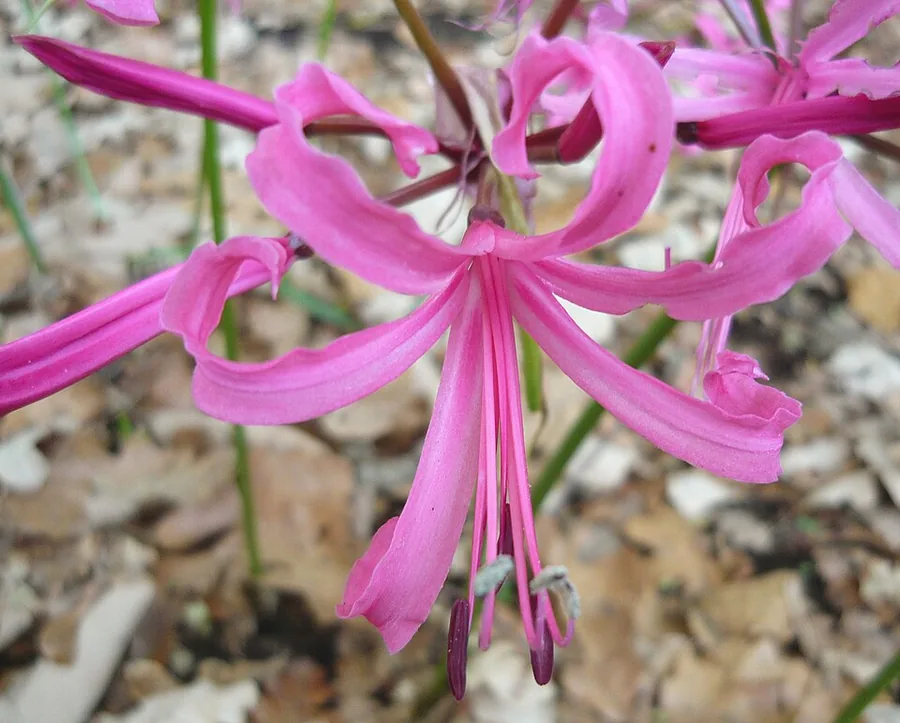
Nerines flower when most of the garden is winding down. These South African bulbs send up bare stems in fall, each topped with a loose cluster of pink, lily-like blooms with narrow, slightly wavy petals. The strappy leaves come and go on their own schedule, often before or after the flowers rather than alongside them.
Nerine bowdenii is the hardy one of the group, taking temperatures down to about 25°F (-4°C) and settling happily into a sunny border in zones 7 through 10. It grows from a bulb that likes its neck sitting above the soil line, not buried, which is one of the small details that decides whether it flowers well.
The plant asks for little once it's placed right. Give it full sun, sharp drainage, and a clump it can crowd into, then mostly leave it alone. Fuss over it with frequent lifting and dividing and you trade away the very flowers you were after.
Care
The short version: full sun, sharp drainage, and a bulb planted shallow with its neck above the soil. Water through the growing season, keep it dry while dormant, and leave the clump crowded and undisturbed.
Light
Nerines want full sun to flower well, though they put up with a little afternoon shade. Sun through the growing season is what builds the bulb and sets the next round of blooms, so don't tuck them into a shady corner.
Water
Water freely while the leaves are actively growing, then keep the bulbs dry once they go dormant. The plant shrugs off drought but still needs steady moisture through its growing season, with a drink every 5 to 10 days in dry spells.
Soil
Plant in rich, well-drained loam with plenty of organic matter worked in. Sharp drainage matters most here, since bulbs sitting in wet ground are the ones that rot.
Temperature
Nerine bowdenii is the hardy nerine, taking cold down to about 25°F (-4°C) and heat up to roughly 86°F (30°C). Below 25°F (-4°C) the bulbs risk injury, so mulch them or grow them in pots where winters run colder.
Humidity
Ordinary outdoor humidity suits them fine, so there's no number to chase. These are dry-country bulbs that care far more about drainage than about moisture in the air.
Feeding
Feed with a dilute balanced fertilizer while the leaves are actively growing, once or twice over the season. Hold off entirely while the bulb is dormant, since it isn't taking anything up.
Pruning
Cut off the spent flower stalks after bloom, then let the foliage yellow and die back on its own. That fading leaf is feeding the bulb for next year, so don't be tempted to tidy it away early.
Repotting
These bulbs flower best crowded, so leave them undisturbed for several years at a stretch. Only lift and replant when the bulbs start shouldering up to the soil surface or flowering drops off after a long run.
Size & spacing
Stems reach 14 to 20 inches (36 to 51 cm) tall, while the slim foliage spreads only 1 to 3 inches (3 to 8 cm) across. Plant the bulbs close so they can crowd into the clumps they like.
When to plant
Nerines run on a fall schedule. Set the bulbs out in spring with the neck above the soil, water them through their growing season, and the flower stems rise in fall, from September into November.
Northern hemisphere
Southern hemisphere
Typical months for a temperate climate: start earlier in warm zones, later where spring frosts linger.
- Sow: sow fresh seed when ripe; seedlings take 3-4 years to flower
- Plant: spring, with the bulb neck above the soil line
- Harvest: fall (September to November)
Hardiness
USDA hardiness zones: 7–10
Temperature: down to -18°C
Troubleshooting
Most nerine trouble traces back to the bulb itself, whether it's been disturbed, kept too wet, or found by a pest. Match what you see below, then act while the bulb is still sound.
Soft, hollow, or rotting bulbs
A bulb that turns soft or hollow has usually been hit by narcissus bulb fly larvae, which tunnel inside and feed, or it has simply rotted from water sitting around it while dormant. Lift the bulbs and check for grub tunnels and mush. Throw out any that are infested or rotten, hold off watering once the bulb goes dormant, and grow the rest in sharper-draining soil.
Fix:
- Discard infested or rotted bulbs
- Withhold water while bulbs are dormant
- Improve drainage of the growing medium
Plenty of leaves but no flowers
A nerine that grows leaves and skips flowers is usually a bulb that was lifted or split too recently, since division often costs a year of bloom. It may also still be too comfortable, because these bulbs flower best once they crowd each other. Leave the clump alone, keep it in full sun through the growing season, and the flowers come back.
Fix:
- Leave clumps undisturbed and allow them to become crowded
- Site in full sun during active growth
- Avoid unnecessary division
White cottony fluff in the leaf joints
Those white, waxy tufts in the leaf axils and on the bulb neck are mealybugs, and every nerine is an easy target for them. Wipe the colonies away with a cotton swab dipped in rubbing alcohol, then follow up with insecticidal soap or horticultural oil. Keep a marked plant apart from the others until it clears.
Fix:
- Wipe off colonies with a cotton swab dipped in rubbing alcohol
- Treat with insecticidal soap or horticultural oil
- Isolate affected plants
Toxicity
Treat the whole plant as poisonous. Like its daffodil and amaryllis relatives, nerine is loaded with lycorine and related alkaloids, and the bulb holds the most of all. Swallowing any part brings on drooling, vomiting, and diarrhea, so keep the bulbs away from pets, livestock, and children, and never mistake them for onions in the kitchen.
Toxic to
Cats · Dogs · Horses · Rabbits · Livestock · Birds · People
Cats Toxic
A cat that chews any part can start drooling and then vomit, with loose stools soon after. The bulb carries the most lycorine, so a dug-up bulb is the real danger.
Dogs Toxic
Dogs that dig up and gnaw the bulbs get the worst of it, with heavy drooling, vomiting, and diarrhea. A dog that swallows a whole bulb can keep being sick for hours.
Horses Toxic
The same alkaloids upset a horse's gut, bringing on drooling, colicky discomfort, and diarrhea. Keep clippings and lifted bulbs well out of reach of paddocks.
Rabbits Toxic
Rabbits should never nibble the leaves or bulbs, which leave them drooling and with a badly upset stomach. This is not a safe browsing plant for them.
Livestock Toxic
Grazing animals such as cattle, goats, and sheep can be poisoned by the foliage and bulbs, showing salivation, vomiting where they can, and scouring. Fence the bulbs off from anywhere stock can reach.
Birds Toxic
The lycorine in the plant is unsafe for birds, so keep pet and poultry birds away from the leaves and bulbs entirely.
People Caution
No part of a nerine is meant to be eaten, and the bulb in particular can cause drooling, vomiting, and diarrhea if swallowed. Keep children from mistaking the bulbs for onions and wash your hands after handling them.
Keep bulbs and plants away from pets and children; the bulb is the most toxic part.
Helpline numbers

United States
ASPCA Animal Poison Control: (888) 426-4435 (fee applies)
Poison Control: (800) 222-1222



Canada
Poison Centres: 1-844-764-7669
Varieties
Most nerines you'll meet are pink, but a few named forms are worth knowing for their color or size.
Alba
A white-flowered form that stands apart from the usual pink nerines.
Mark Fenwick
A vigorous selection prized for its strong stems and rich pink flowers.
Pink Triumph
Carries noticeably larger flowers than the plain species.
How to propagate
You can make more nerines by splitting off the bulbs they produce or, with patience, by raising them from seed.
Offsets & pupsEasy
After flowering or during dormancy · May delay blooming for a year after separation
The simplest way to make more nerines is to lift a crowded clump after it flowers or while it sits dormant and pull the offset bulbs from the parent. These bulbs resent disturbance and want to be crowded, so only separate them when the clump is genuinely packed, and expect the divided pieces to skip a season before they flower again.
DivisionModerate
After flowering or during dormancy · Often skips a year of bloom after division
You can split an overgrown clump after bloom or during dormancy, but do it sparingly. The bulbs flower best left undisturbed, so a divided clump often skips a year of bloom before it settles and picks up again.
SeedDemanding
Sow fresh seed when ripe · 3-4 years until seedlings flower
Growing from seed takes real patience. Sow the large, fleshy seeds fresh as soon as they ripen, since they don't store well, and be ready to wait 3 to 4 years for a seedling to reach flowering size.
Myths
Nerine bulbs must be divided regularly to keep them blooming.
These bulbs hate being moved and flower best when they sit crowded together. Routine splitting does the opposite of what people expect and usually robs you of a year of bloom. Divide only when a clump has truly outgrown its space.