Bulb · Amaryllidaceae
Amaryllis
Hippeastrum hybridum
Pot the bulb, add warmth and water, and a bare bulb becomes a tall stalk of trumpet flowers in weeks.
Bright indirect
Every 5–10 days
64–75°F · 18–24°C
28–56 days
Overview
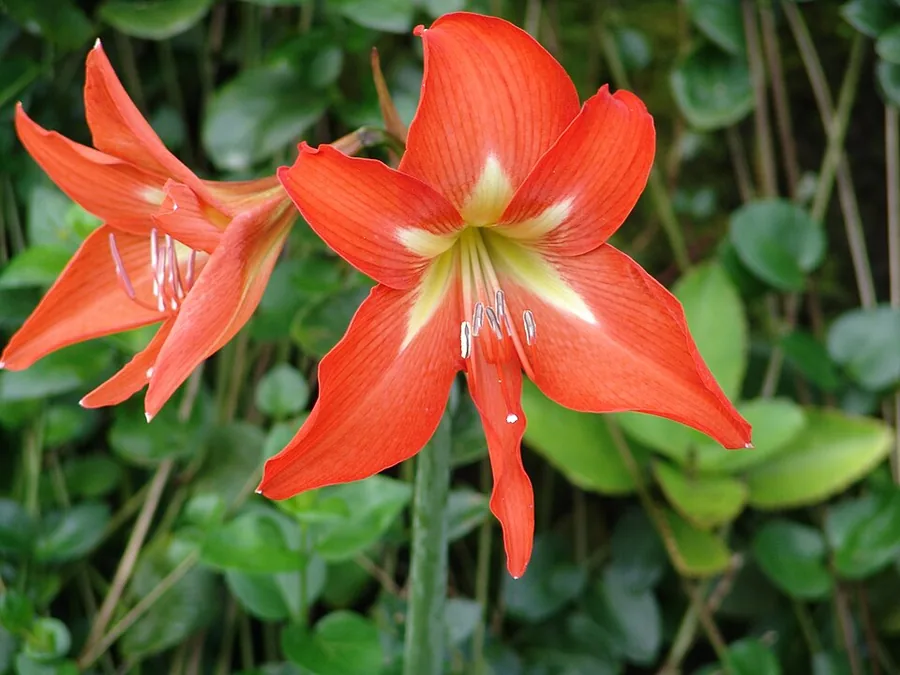
Few bulbs put on a show like an amaryllis. From a single fat bulb comes a thick stalk topped with several huge trumpet flowers, often in deep red, pure white, or pink and white together. It belongs to the genus Hippeastrum, the tender amaryllis relatives grown indoors, and it asks for very little to bloom.
Most people grow it as a forced indoor bulb, potting it in fall to flower through winter and into spring. Set the bulb with its top third sitting above the soil, water it, and keep it warm, and the first flowers open about 4 to 8 weeks later, then last for three or four weeks. In the mild winters of zones 7 to 10 it can also grow on outdoors.
The trick to a second year of flowers is what you do after the blooms fade. Keep the leaves growing in bright light and feed them so the bulb stores up energy, then let it rest cool and dark before you start it again. Skip that and you get all leaves and no flowers the following season.
Care
The short version: bright light, warm rooms, and a well-drained pot. Plant the bulb with its top third exposed, water when the top 2 inches of soil dry out, and feed during active growth so the bulb can flower again next year.
Light
Amaryllis wants bright light, ideally a sunny window with several hours of direct sun. It takes full sun to partial shade, but too little light gives you weak, leaning stalks. Turn the pot every few days so the flower stem grows straight.
Water
Water well right after potting, then keep the mix only lightly moist until growth picks up. Water when the top 2 inches of soil feel dry and let the pot drain freely. Step up to once or twice a week during active growth and flowering, and cut back or stop while the bulb is dormant.
Soil
Use a well-drained potting mix rich in organic matter, something like equal parts peat and perlite. A pH of 6.0 to 7.0 suits it. Good drainage matters most here, since a bulb sitting in wet soil rots fast.
Temperature
Keep it in normal warm rooms, 64°F to 75°F (18°C to 24°C), while it grows and flowers. Cooler temperatures help the open blooms last longer. The separate cool, dark spell it needs for dormancy is a different stage, not its everyday range.
Humidity
Ordinary indoor humidity is plenty, so there's no number to hit. Amaryllis isn't fussy about moisture in the air, which makes it an easy winter houseplant.
Feeding
Feed every two weeks while the plant is in active growth and the leaves are up, never while the bulb is bare and dormant. A liquid houseplant fertilizer higher in phosphorus, around a 10-20-15 blend, supports flowering, and you apply it at half strength.
Pruning
Snip off each flower as it fades, then cut the whole stalk back near the bulb once the last bloom is done. Leave the foliage alone, since those leaves recharge the bulb for next year. Remove the leaves only after they yellow and die back on their own.
Repotting
Amaryllis flowers best when slightly potbound, so repot only every 3 to 4 years. Move it on when roots crowd or circle the pot, the bulb fills most of the container, or the flowers start to shrink. Replant with the top third of the bulb above the soil line.
Size & spacing
A potted amaryllis stands 12 to 35 inches (30 to 90 cm) tall in flower and spreads about 9 to 12 inches (23 to 30 cm). One bulb to a pot is the rule, in a container only a little wider than the bulb itself.
When to plant
Amaryllis runs on the calendar of a forced bulb. Pot it in fall, usually October or November, and it sends up its stalk for winter and early-spring color. In zones 7 to 10 you can move it outdoors once spring frost has passed.
Northern hemisphere
Southern hemisphere
Typical months for a temperate climate: start earlier in warm zones, later where spring frosts linger.
- Sow: Pot bulbs indoors in fall to early winter (often October through November) for winter and early-spring bloom.
- Plant: Move or plant outdoors in spring after all danger of frost has passed (zones 7-10).
- Harvest: Winter to spring; flowers typically develop about 4 to 8 weeks after potting and last roughly 3 to 4 weeks.
Hardiness
USDA hardiness zones: 7–10
Temperature: down to -18°C
Troubleshooting
Most amaryllis problems show up in the stalk, the leaves, or the bulb itself. Catch the early signs and you can often save the bulb for next year. Match what you see below, then act before the trouble spreads.
A soft, mushy bulb and collapsing growth
A bulb that feels soft and smells foul has bulb rot, and the usual cause is a pot kept too wet, especially around a leafless bulb. Stop watering at once and let the mix dry out, then repot into fresh, well-drained soil with the top third of the bulb sitting above the surface. Trim away any rotted tissue, and bin the bulb entirely if the rot has reached the core.
Fix:
- Stop watering and let the medium dry out
- Repot into fresh, well-drained mix with one-third to one-half of the bulb above the soil line
- Trim away rotted tissue or discard a badly rotted bulb
Plenty of leaves but no flowers
This is the classic failure to rebloom, and it almost always traces back to a bulb that never got a proper rest or never built up enough reserves. Keep the leaves growing in bright light and feed them after the last bloom so the bulb can recharge, then give it about 8 to 12 weeks of cool, dark dormancy before you force it again. A bulb that is still too small or young simply needs another season to size up.
Fix:
- Keep foliage actively growing in bright light and fertilize during the growing season to rebuild the bulb
- Provide a cool (about 50 to 60 degrees F), dark rest period of 8 to 12 weeks
- Resume watering and warmth to force new growth and bloom
Red streaks and blotches on leaves and stalks
Red spots and streaks spreading across the leaves and flower stalk point to red blotch, also called leaf scorch, a fungal infection that rides in on the bulb. Strip off and destroy the worst-hit leaves, and check the bulb for the tunneling and soft spots that mean bulb mites or narcissus fly larvae instead. Repot healthy bulbs into fresh, clean mix, and throw out any that are infested or rotting.
Fix:
- Remove and destroy severely affected leaves or bulbs
- Inspect and discard infested or rotting bulbs
- Repot healthy bulbs into fresh, clean potting mix
Tall stalks that stretch and lean toward the window
Weak, leaning stalks are etiolation, the plant reaching for light it isn't getting. Move it to a bright, sunny window and turn the pot every few days so the stalk grows straight instead of bending. Warm rooms make the problem worse by pushing soft, fast growth, and a stake will hold up the tallest flower stems until they firm up.
Fix:
- Move the plant to a bright, sunny window
- Rotate the pot regularly so stalks grow upright
- Stake tall flower stalks for support if needed
Toxicity
This is a poisonous plant, and the bulb is the most dangerous part of all. Every part holds lycorine and related alkaloids that upset the stomach if eaten. Keep bulbs and plants out of reach of pets, livestock, and children, and wash your hands after handling them.
Toxic to
Cats · Dogs · Horses · Rabbits · Livestock · Birds · People
Cats Mild
A curious cat that chews a leaf or bulb usually drools and vomits, then turns off its food and looks low. Larger bites can bring on diarrhea, belly pain, and trembling.
Dogs Mild
Dogs that dig up and gnaw the bulb tend to drool, vomit, and lose their appetite. Belly pain, loose stools, and tremors can follow if they swallow much.
Horses Mild
The same alkaloids upset a horse's gut, so expect a dull mood, diarrhea, drooling, and colicky discomfort, sometimes with mild tremors.
Rabbits Toxic
Every part of this plant carries lycorine, and a small animal like a rabbit has little margin for it. Keep the bulb, leaves, and flowers well out of reach rather than risk a nibble.
Livestock Toxic
Cattle, goats, and sheep can be poisoned by the alkaloids in the foliage and bulbs, with stomach upset and weakness. Discarded bulbs tossed near a pasture are a real hazard.
Birds Toxic
The lycorine that troubles mammals is dangerous to pet birds too, so a chewed leaf or petal is not worth the gamble. Keep the plant out of any room a bird flies free in.
People Caution
Nothing on this plant is meant to be eaten, and the bulb in particular can cause vomiting and stomach pain if swallowed. Wash your hands after handling bulbs and keep them away from small children.
The bulb is the most poisonous part of the plant; keep bulbs and plants out of reach of pets and children and wash hands after handling.
Helpline numbers

United States
ASPCA Animal Poison Control: (888) 426-4435 (fee applies)
Poison Control: (800) 222-1222



Canada
Poison Centres: 1-844-764-7669
Varieties
Hundreds of named amaryllis exist, but a few cultivars turn up again and again on shelves. These are the ones worth knowing by name.
Red Lion
A favorite large-flowered cultivar carrying deep, solid red blooms.
Apple Blossom
Its white flowers are brushed and veined with soft pink.
Minerva
Bold red flowers carry a white star that radiates out from a greenish throat.
How to propagate
You can multiply an amaryllis the easy way or the slow way, either lifting the small offsets a bulb makes or raising new plants from seed.
Offsets & pupsEasy
At repotting, typically when the bulb is dormant or being divided every few years. · 1 to 3 years to reach flowering size
The easiest way to multiply an amaryllis is to lift the small offset bulbs that form around the base of the mother bulb, which you can do at repotting time every few years. Pot each one on its own and grow it like the parent. Give it patience, since an offset takes 1 to 3 years to reach blooming size.
SeedDemanding
Sow fresh seed soon after it ripens. · Several years (often 3 to 5) to reach flowering size
You can raise amaryllis from seed if you sow it fresh, soon after it ripens, but it is slow work that takes several years, often 3 to 5, to reach a flowering bulb. Hybrids will not come true from seed either, so the seedlings rarely match the parent. For most home growers it isn't worth the wait.
Myths
Amaryllis bulbs must be chilled in the refrigerator before they will bloom.
Hippeastrum bulbs need no cold chilling at all. Give them warmth and water and they force into bloom indoors in about 4 to 6 weeks. The only rest they ask for is a cool, dark dormancy to set up the next round of flowers, and that is nothing like refrigeration.
You should cut off the leaves right after the amaryllis finishes flowering.
Those leaves are how the bulb rebuilds itself, so keep them growing in bright light and keep feeding after the flowers fade. Cut the foliage back only once it yellows and dies down on its own, heading into dormancy.