Houseplant · Pteridaceae
Maidenhair Fern
Adiantum raddianum
Keep the soil moist and the air humid, and this lacy fern softens any shaded corner.
Bright indirect
Every 2–4 days
50–77°F · 10–25°C
USDA 10–11
Overview
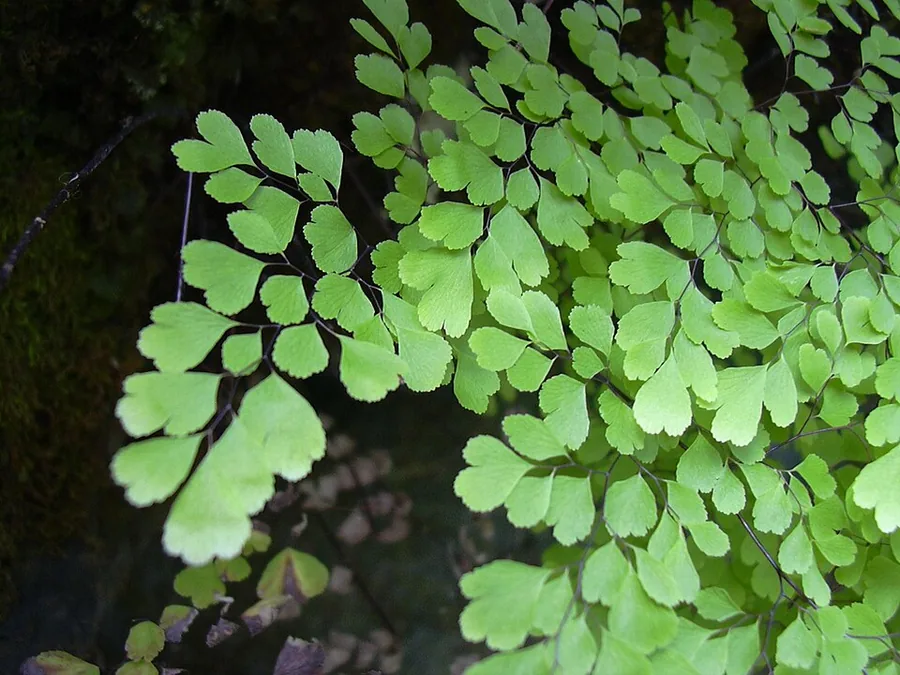
The maidenhair fern is the lace of the houseplant world, all wiry black stalks and small fan-shaped leaflets that quiver in the slightest draft. It comes from the wet tropics of the Americas, where it grows in shaded, humid spots near streams and waterfalls. That background tells you almost everything about how to keep it: shade, steady moisture, and damp air.
It has a reputation for being fussy, and the reputation is earned. Skip a single watering and the fronds can crisp brown within a day, which is why it sits at the demanding end of the houseplant scale. The good news is that the trouble is nearly always water or humidity, so once you have those two sorted the plant mostly looks after itself.
Give it the right corner and it rewards you with a soft, airy mound of green that few other plants can match. A humid bathroom or kitchen window suits it well, and so does a spot grouped with other plants where the air stays moist.
Care
The short version: bright indirect light with no direct sun, soil kept evenly moist at all times, and humidity of 50% or more. Feed lightly through the growing season and keep it warm.
Light
Give it bright, indirect light with no direct sun on the fronds, since even a few hours through glass will scorch the delicate leaflets. A north-facing window or a spot back from a brighter one is ideal, and it will cope with medium light or partial shade.
Water
This is the make-or-break part. The soil has to stay evenly moist at all times and must never dry out, because the fronds crisp and die back almost the moment the root ball goes dry. Water about every 2 to 4 days with room-temperature water, and make sure the pot drains so the mix stays damp rather than soggy.
Soil
Use a rich, humusy mix that holds moisture, such as a peat- or coir-based potting soil with compost worked in. A pH between 6.0 and 7.0 suits it, and good drainage keeps the constant moisture from turning into rot.
Temperature
Ordinary room warmth is fine, somewhere in the 50°F to 77°F (10°C to 25°C) range. Keep it clear of cold drafts and away from hot, drying air off radiators and heat vents, both of which stress the plant fast.
Humidity
Humidity matters more here than for almost any common houseplant. Aim for 50% to 80%, which usually means a humidifier, a pebble tray, a group of plants, or a naturally damp room like a bathroom. Misting alone won't hold the level long enough to help.
Feeding
Feed monthly from spring through early autumn with a balanced liquid houseplant fertilizer at half strength. Skip feeding in winter when growth slows, and go light, since salt buildup from overfeeding shows up as yellowing fronds.
Pruning
Trim dead, crisped, or yellowed fronds off at the base with clean scissors as they appear. If the whole plant browns out, cut every frond back to soil level, keep the rhizomes evenly moist, and fresh fiddleheads usually re-emerge.
Repotting
Repot every 1 to 2 years in spring, moving up just one pot size, since this fern is happy a little snug. Time to do it when roots circle the pot or poke through the drainage holes, or when the soil dries within a day of watering.
Size & spacing
Indoors it forms a tidy mound about 12 to 24 inches (30 to 60 cm) tall and 12 to 24 inches (30 to 60 cm) across. Give it room on all sides so air can move around the fronds and the foliage isn't crushed against a wall or neighbor.
Troubleshooting
Nearly every maidenhair fern problem traces back to water or air. Crisp brown fronds mean it dried out, yellow limp ones mean it stayed too wet, and the few pests it gets are easy to spot. Match what you see below and act early, while the rhizomes are still sound.
The whole plant collapses brown after a missed watering
A single dry spell can brown every frond at once when the root ball dries out completely, and a cold windowsill below 50°F (10°C) will do it too. The plant looks finished, but the rhizomes underground often are not. Cut all the dead fronds to soil level, soak the pot for 15 to 20 minutes to rehydrate it, then keep it warm, moist, and in bright indirect light while you wait for new fiddleheads.
Fix:
- Cut all dead fronds back to soil level
- Rehydrate by watering thoroughly (or soaking the pot 15-20 minutes), then keep evenly moist
- Place in bright indirect light at 60-77°F and wait several weeks for new fiddleheads from the rhizomes
Fronds turn brown and crispy, sometimes overnight
Fast browning almost always means the root ball dried out, and this fern crisps within a day of going dry. Low humidity and direct sun do the same damage from the other direction. Water until it drains, move the plant out of any sun or draft, and cut the worst fronds back to soil so fresh fiddleheads can push up.
Fix:
- Water thoroughly until it drains and resume keeping the soil evenly moist
- Cut fully crisped fronds back to soil level; new fiddleheads often regrow from the rhizomes
- Raise humidity with a pebble tray, humidifier, or by grouping plants
- Move out of direct sun to bright, diffused light
Fronds yellow slowly and the plant looks limp
Gradual yellowing with soft, floppy growth usually points to waterlogged soil that is drowning the roots, even though this fern likes to stay moist. A white crust on the soil or pot rim means fertilizer salts have built up instead. Make sure the pot drains and the saucer stays empty, flush the soil to wash out salts, and shift the plant to brighter indirect light if its spot is dim.
Fix:
- Ensure the pot drains freely and discard water standing in the saucer
- Repot into fresh, humus-rich, well-draining mix if soil is sodden or compacted
- Flush the pot with plenty of plain water to leach salts and halve fertilizer strength
- Move to brighter indirect light if the spot is dim
Sticky residue, cottony tufts, or brown bumps on the stalks
White cottony clusters are mealybugs, and dome-shaped brown bumps are soft scale, both sap-suckers that leave a sticky honeydew behind. Check the wiry black stalks and frond undersides with a magnifier to confirm. Dab the pests with alcohol on a cotton swab, pull off the worst fronds, and spot-treat rather than drench, since ferns react badly to many sprays.
Fix:
- Isolate the plant from other houseplants
- Dab pests with a cotton swab dipped in 70 percent isopropyl alcohol
- Remove heavily infested fronds at the base
- Repeat treatment weekly until no new pests appear; ferns are sensitive to many insecticidal sprays, so spot-treat rather than drenching foliage
Toxicity
Good news for pet and child households: the maidenhair fern is non-toxic across the board. The ASPCA lists it as safe for cats and dogs, and as a true fern it carries none of the toxins found in many popular houseplants. Eating a large mouthful might cause a passing stomach upset, as any plant can, but there is nothing here to fear.
Safe for
People · Cats · Dogs · Horses · Rabbits · Livestock · Birds
Cats None
The ASPCA lists this fern as non-toxic to cats, so no poisoning is expected. A cat that munches a lot of foliage might get a brief, mild stomach upset, the same as with any plant.
Dogs None
Safe for dogs too, with no toxic compounds to worry about. The main risk is a chewed-up plant rather than a sick pet, though gulping a big mouthful could pass through with a little loose stool.
Horses None
True ferns in the Adiantum group carry no toxins that trouble horses, so a curious nibble does no harm.
Rabbits None
Rabbits can sample the delicate fronds without danger. Keep it as the occasional bite rather than a staple, since their gut does best on hay and greens it knows.
Livestock None
Grazing animals such as goats and sheep face no poisoning from this fern. It simply isn't a plant they would meet in pasture, since it lives indoors in pots.
Birds None
Pet birds can perch in or peck at the fronds safely, with nothing toxic in the leaves or stalks.
People None
Handling and growing the fern is completely safe, and no part of it is poisonous to people. It isn't grown as food, so there's no reason to eat it, but a child who tastes a frond will come to no harm.
No special handling precautions are needed; as with any plant, eating large amounts of foliage could cause mild, self-limiting stomach upset in pets.
Varieties
Most of the maidenhair ferns sold are cultivars of this one species, picked for fuller fronds or a tougher constitution indoors. These are the names worth knowing.
'Fritz Luth'
This vigorous cultivar carries larger, slightly blue-green fronds and stands up to indoor air better than the plain species, which is why it's the one you'll meet most often.
'Fragrantissimum'
An older form with dense, arching, finely cut fronds that give off a faint sweet scent on the new growth.
'Pacific Maid'
It keeps a compact, upright habit with broad, overlapping fan-shaped leaflets on short fronds.
'Gracillimum'
The most finely divided form of all, its tiny leaflets pile up into an airy, lace-like cloud of foliage.
'Microphyllum'
Its unusually small leaflets give each frond an especially delicate, miniature texture.
How to propagate
The reliable way to multiply a maidenhair fern is to divide an established clump, which gives you new plants far faster and more surely than starting from spores.
DivisionModerate
Spring, ideally at repotting time · 4-8 weeks
The simplest way to make more is to split an established plant in spring, ideally when you're already repotting it. Lift it out, then tease or cut the rhizome clump into sections that each keep healthy roots and several fronds. Pot the pieces into a moist, humus-rich mix and hold them warm, humid, and evenly damp, and new fiddleheads push up over the next 4 to 8 weeks. You can also raise plants from the spores on the frond undersides, but that route is slow and best left to experienced growers.
Myths
A maidenhair fern that has dried out and gone completely brown is dead and should be thrown away.
The fronds do die back fast once the soil dries, but the rhizomes underground usually pull through. Cut the dead fronds to soil level and bring the moisture back, and a full flush of new growth often appears within weeks.
Occasional misting is enough to keep a maidenhair fern happy in a dry room.
Misting lifts the humidity for only a few minutes, then it drops right back. This fern wants steady humidity around 50% or higher, which in practice means a humidifier, a pebble tray, a cluster of plants, or a naturally damp room like a bathroom.
Like most houseplants, it should dry out a bit between waterings to prevent root rot.
This fern is the exception that proves the rule. Its soil has to stay evenly moist at all times, and letting the top of the mix dry out, the safe habit for so many other houseplants, brings on near-instant frond collapse here.