Vegetable · Brassicaceae
Kohlrabi
Brassica oleracea Gongylodes Group
Grow it fast and cool, pick it small, and kohlrabi rewards you with a crisp, sweet bulb above the soil.
Full sun
Every 3–7 days
64–75°F · 18–24°C
45–60 days
Overview
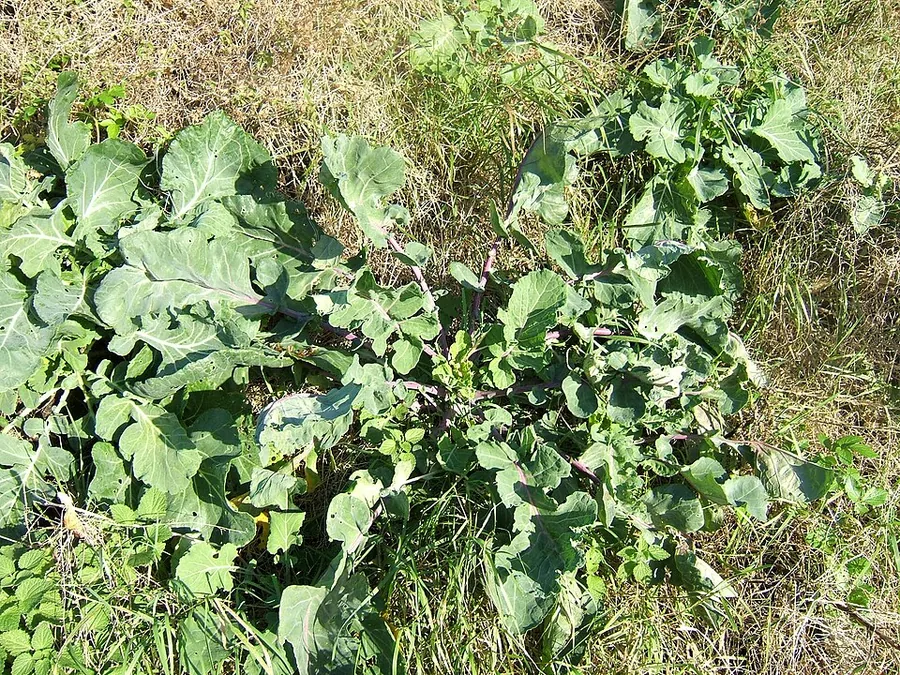
Kohlrabi is one of the odder-looking vegetables in the garden, a pale or purple globe sitting on the soil with leaves shooting straight out of it. It belongs to the cabbage family and is the same species as broccoli, kale, and cabbage, just bred to swell its stem instead of its head or leaves. The taste lands somewhere between a mild turnip and a broccoli stem, crisp and faintly sweet when eaten raw.
This is a cool-season crop that grows best in the mild stretches of spring and fall. It matures fast, often in well under two months, which is why many gardeners squeeze in two crops a year. Speed is the whole point with kohlrabi: a bulb that grows quickly and gets picked young stays tender, while one that drags through heat or sits too long turns tough and bitter.
It earns its keep for anyone short on time or space. The plants stay small, shrug off light frost, and ask for little beyond steady water and decent soil. Get the timing right and you'll pull crisp bulbs with hardly any fuss.
Care
The short version: full sun and cool weather, with steady moisture of about an inch of water a week so the bulbs stay tender, planted in rich, well-drained soil and picked young at 2 to 3 inches across.
Light
Give kohlrabi full sun, at least six hours a day, for the steadiest growth. It takes partial shade in hot weather, which actually helps in summer by keeping the plants cool and slowing them down before they bolt.
Water
Aim for even, consistent moisture, about an inch of water a week. This is the single biggest factor in bulb quality: steady water grows tender, mild stems, while a plant that dries out and recovers turns tough, woody, and bitter.
Soil
Plant in loamy, well-drained soil with plenty of organic matter worked in. A pH of 6.0 to 7.5 suits it well, and keeping toward the higher end helps hold off clubroot, the disease that haunts the cabbage family.
Temperature
Kohlrabi grows best in cool air between 64°F and 75°F (18°C to 24°C). It handles light frost without trouble, but heat is the enemy: warm spells push it to bolt and leave the bulbs tough.
Humidity
Ordinary outdoor humidity is all it needs, so there's no figure to chase. What matters far more is steady soil moisture, which does the real work of keeping the bulbs crisp.
Feeding
Mix a balanced or low-phosphorus fertilizer into the bed at planting, going by a soil test where you can. Side-dress with a little nitrogen once the plants reach about 4 inches tall to keep them growing fast.
Pruning
Kohlrabi needs no pruning at all. The only leaves to remove are any lower ones that turn ragged from pests or disease, which you should pull off and throw away rather than leave on the plant.
Size & spacing
The plants stay small, reaching just 6 to 12 inches (15 to 30 cm) tall and about as wide. Space standard varieties roughly 4 inches (10 cm) apart, leaving each room to swell its bulb without crowding.
When to plant
Kohlrabi is a cool-weather crop that hates summer heat. Sow it in early spring for a late-spring harvest, then sow again in July so the bulbs finish in the cool of fall. Both crops mature in well under two months.
Northern hemisphere
Southern hemisphere
Typical months for a temperate climate: start earlier in warm zones, later where spring frosts linger.
- Sow: early spring, 4 to 6 weeks before transplanting outdoors
- Plant: mid-April to early May for spring crop, or July for fall crop
- Harvest: harvest when the swollen stem reaches 2 to 3 inches in diameter
Hardiness
USDA hardiness zones: 3–9
Temperature: down to -40°C
Troubleshooting
Most kohlrabi problems come down to timing and the cabbage-family pests it shares with its relatives. Catch them early and they're easy to head off. Match what you see below, then act before the bulb or the leaves take real damage.
Wilting, stunted plants with damaged roots
When a plant wilts and stalls for no clear reason, the trouble is underground. Lift it and look for the tunnels of cabbage maggots or the swollen, club-shaped galls of clubroot. There's no rescuing an infected plant, so pull and destroy it, rotate brassicas on a four-year cycle, and hold the soil pH up to keep clubroot in check.
Fix:
- Remove and destroy affected plants
- Practice a 4-year rotation away from brassicas
Tough, woody bulbs that turn bitter
An overgrown bulb is the usual cause, and the fix is simply to pick it sooner. Cut one open and a stringy, fibrous interior tells you it sat too long or grew through heat and drought. Harvest at 2 to 3 inches (5 to 8 cm) across and keep the soil evenly moist so the stem stays crisp and sweet.
Fix:
- Harvest at 2 to 3 inches in diameter for best quality
- Keep soil evenly moist to maintain fast, uninterrupted growth
Ragged holes chewed through the leaves
Green caterpillars are at work here, usually imported cabbageworms, cabbage loopers, or diamondback moth larvae. Flip the leaves over and you'll find them feeding alongside dark frass. Pick them off, spray Bt where it fits, and cover young plants with a floating row cover before the moths ever land.
Fix:
- Handpick caterpillars
- Apply Bacillus thuringiensis (Bt) where appropriate
- Use floating row covers
Tiny shot-holes peppering the young leaves
Those little pits are the mark of flea beetles, which jump away the moment you disturb the plant. The damage looks alarming on seedlings but rarely sets back a vigorous plant. Cover the bed with row cover at planting and feed the plants well so they grow past the worst of it.
Fix:
- Use floating row covers at planting
- Maintain vigorous growth so plants outgrow damage
Toxicity
Kohlrabi is completely safe, a food crop with nothing toxic in it for people or animals. The bulb and the leaves are both edible, so a nibble from a curious pet is no cause for worry. The only thing to watch is quantity, since any brassica can cause gas, and a large feed isn't ideal for horses.
Safe for
People · Cats · Dogs · Horses · Rabbits · Livestock · Birds
Cats None
Kohlrabi is safe around cats. A curious nibble of leaf or stem causes no harm, though it isn't a food most cats care for.
Dogs None
Dogs can eat kohlrabi without trouble. Plain cooked or raw pieces are a fine treat, and gas is the only thing a big helping might bring on.
Horses Mild
Small amounts are fine for horses, but a large feed of any brassica can upset digestion or, over time, affect the thyroid. Keep it to an occasional treat.
Rabbits Safe
Rabbits enjoy both the leaves and the bulb. Introduce it slowly and in modest portions so their gut adjusts to a new green.
Livestock Safe
Cattle, goats, and sheep can graze kohlrabi safely. As with any brassica, bring it into the diet gradually rather than all at once.
Birds Safe
Backyard hens and other birds peck happily at the leaves and stem. There's nothing in the plant that puts them at risk.
People Safe
Kohlrabi is grown to be eaten, raw or cooked, by people of every age. Both the crisp bulb and the leafy tops are good food.
As a brassica, large quantities can cause gas or mild goitrogenic effects; horses should not be fed large amounts.
Varieties
Only a handful of kohlrabi varieties turn up in most seed catalogs, split mainly by color and size. These are the ones worth knowing.
Purple Vienna
An heirloom with deep purple skin wrapped around pale greenish-white flesh.
White Vienna
The common pale green type, prized for its crisp, mild flesh.
Kossak
A giant storage variety that stays tender at a far larger size than standard kohlrabi.
How to propagate
Kohlrabi is grown from seed and nothing else, and it's about as easy as seed-starting gets.
SeedEasy
Sow indoors in early spring 4 to 6 weeks before transplanting, or direct sow mid-April to early May and again in July for fall · 7 to 14 days to germinate, with bulbs ready 45 to 60 days from sowing
Kohlrabi grows easily from seed and asks for little. Sow indoors in early spring about 4 to 6 weeks before transplanting, or sow straight into the ground from mid-April through early May, then again in July for a fall crop. Set the seed 1/4 to 1/2 inches (5 cm) deep and thin standard plants to 4 inches (10 cm) apart. Seedlings break ground in 7 to 14 days, and the bulbs are ready to pick 45 to 60 days from sowing.
Myths
Kohlrabi is a root vegetable like a turnip.
The part you eat grows above the ground, not below it. That round bulb is a swollen stem, swelling out from the base of the plant rather than burrowing down as a root. The old name German turnip is misleading, since kohlrabi is a brassica much closer to cabbage than to any true turnip.