Ornamental · Asteraceae
Joe Pye Weed
Eutrochium purpureum
Give it full sun and damp soil, and Joe Pye weed towers over the late-summer border in a haze of pollinators.
Full sun
USDA 4–9
5–7 ft · 1.5–2.2 m
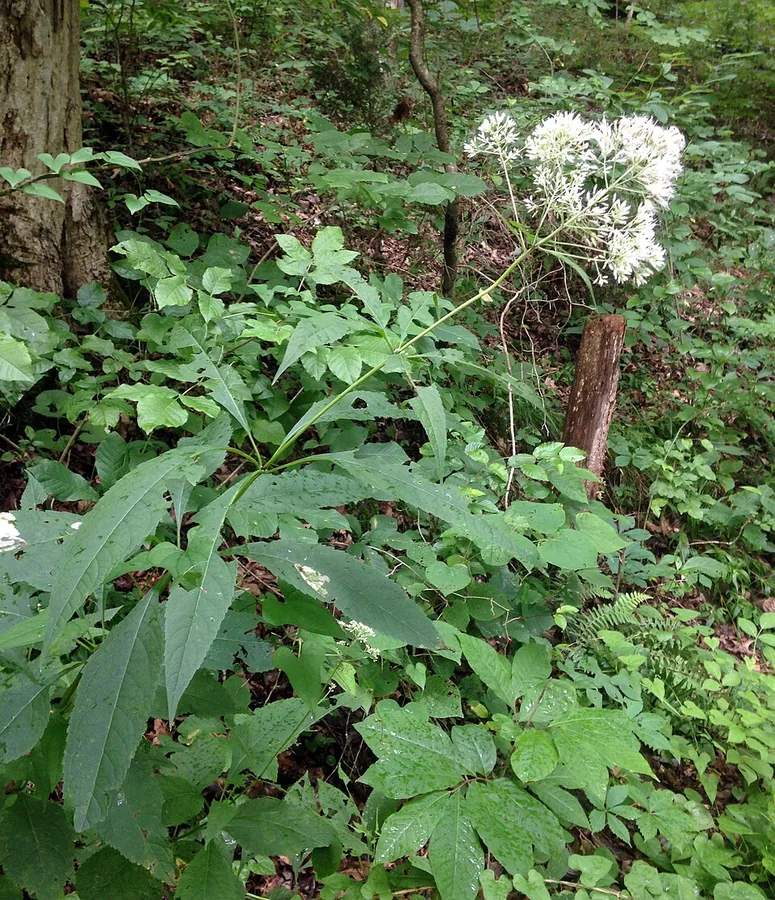
Overview
Joe Pye weed is a tall native perennial of eastern North America that earns its place at the back of a sunny, moist border. From midsummer into early fall it lifts big domed clusters of dusky mauve-pink flowers on stems that can reach 5 to 7 feet (150 to 215 cm), and the whole thing hums with butterflies and bees while it blooms.
Despite the unflattering name, this is no weed in the troublesome sense. It forms a slow-spreading clump that stays put, asks for little, and comes back bigger each year. The one thing it insists on is moisture, which makes it a natural choice for a rain garden, a pond edge, or any low spot that stays damp.
It belongs to the aster family and shares that group's knack for feeding late-season pollinators, just when nectar runs short elsewhere. Plant it where it has room to stretch, keep its feet wet, and it does the rest.
Care
The short version: full sun and consistently moist, fertile soil. Water through any dry spell, since drought is the one thing it won't tolerate, and cut the old stems to the ground in late winter.
Light
Joe Pye weed flowers best in full sun and will take partial shade, but the trade-off shows fast. Too little light and the stems stretch, lean, and flop instead of standing tall.
Water
This is a moisture lover that wants consistently damp to occasionally wet soil and has no tolerance for drought. Dry ground scorches the leaf edges, so water deeply whenever a dry spell sets in and the plant repays you with lush growth.
Soil
Plant it in moist, fertile, humus-rich ground, whether that's clay, loam, or sand, and it even handles wet sites that defeat other perennials. It's easygoing on pH, taking anything from 5.5 to 8.0.
Humidity
Outdoor humidity is never the issue with this plant. What matters far more is airflow around the leaves, since crowded, still air is what invites powdery mildew and rust.
Feeding
Rich, moist soil usually carries this plant on its own, so it needs little to no feeding. A light scattering of compost in the growing season is plenty if your ground is lean.
Pruning
Cut the old stems to the ground in late winter or early spring to clear the way for new growth. For a shorter, sturdier plant that's less prone to flopping, you can also cut it back by about half in early summer.
Size & spacing
Expect a big plant, 5 to 7 feet (150 to 215 cm) tall and 2 to 4 feet (60 to 120 cm) across at maturity. Give it room at the back of a border so air moves freely and the foliage stays clean.
When to plant
Joe Pye weed runs on the warm-season clock of a hardy perennial. Set plants out after the last spring frost, let them build through the season, and the flowers arrive from July into September before the plant dies back for winter.
Northern hemisphere
Southern hemisphere
Typical months for a temperate climate: start earlier in warm zones, later where spring frosts linger.
- Sow: Sow seed after about 3 months cold-moist stratification; germination is slow and rates are low
- Plant: After last frost in spring
- Harvest: Blooms July to September (summer to early fall)
Hardiness
USDA hardiness zones: 4–9
Temperature: down to -34°C
Troubleshooting
Most Joe Pye weed trouble traces back to one of two things: soil that dried out, or air that sat still around crowded leaves. Both show up first on the foliage. Match what you see below and fix the underlying condition rather than the symptom.
Brown, crisp edges along the leaves
This is leaf scorch, and it almost always means the soil dried out. Joe Pye weed has no tolerance for drought, so the leaf margins crisp up first in fast-draining or sun-baked spots. Water deeply through dry spells, lay down mulch, and if the site keeps baking, move the plant somewhere damp like a rain garden or pond edge.
Fix:
- Water deeply during dry periods
- Mulch to retain soil moisture
- Relocate to a moister site such as a rain garden or pond margin
A white, powdery film coating the leaves
That dusty white film is powdery mildew, a fungus that settles in when plants sit too close together with stale air around them. Give each plant room so air can move, water at the base rather than over the top, and strip off the worst of the coated leaves. It looks rough but rarely does lasting harm.
Fix:
- Improve air circulation by spacing plants
- Avoid overhead watering
- Remove affected foliage
Tall stems that stretch, lean, and flop
Stems go leggy and floppy when the plant doesn't get enough sun, reaching for light and then toppling under their own height. Give it full sun first. Cutting the plant back by about half in early summer also forces shorter, sturdier growth, and a stake will hold up the tallest stems if they still lean.
Fix:
- Site in full sun
- Cut plants back by about half in early summer to encourage sturdier, shorter growth
- Stake tall stems if needed
Rusty orange bumps on the underside of leaves
Raised orange-to-brown bumps on the leaf undersides point to rust, another fungus that spreads in damp, still air. Pick off and bin the spotted leaves as soon as you see them, open the planting up for better airflow, and keep water off the foliage so spores have nothing to grow in.
Fix:
- Remove and dispose of affected leaves
- Improve air circulation
- Avoid overhead watering
Toxicity
Good news for households with animals: Joe Pye weed is not listed as toxic to pets, livestock, or people by horticultural sources. It's a celebrated pollinator plant, safe to grow where cats, dogs, horses, and grazing animals roam.
Safe for
People · Cats · Dogs · Horses · Rabbits · Livestock · Birds
Cats None
No toxicity is on record for cats. A curious nibble shouldn't cause trouble, though a lot of any plant can leave a cat with a mild, passing upset stomach.
Dogs None
Dogs are in the clear here, with nothing toxic documented. A pup that chews a stem or leaf has no real cause for worry.
Horses Safe
Safe around horses. The plant carries no compounds known to harm them when it turns up in a pasture or border.
Rabbits Safe
Rabbits can browse the foliage without harm, since no toxins are recorded for this plant.
Livestock Safe
Grazing cattle, goats, and sheep have nothing to fear from it. There are no reports of poisoning in livestock.
Birds Safe
Birds are perfectly safe near it. The flowers draw butterflies and bees, and the plant poses no threat to backyard or wild birds.
People Safe
No toxicity is documented for people, and the plant is treated as a safe garden ornamental. Even so, it isn't grown as food, so there's no reason to eat it.
Varieties
Several species and selections go by the name Joe Pye weed, and they differ mostly in height and stem. These are the ones worth knowing.
Eutrochium maculatum (Spotted Joe-Pye weed)
You can tell this one by its purple-spotted, solid-pith stems and flat-topped flower clusters, and it shrugs off both wet ground and cold down to zone 3.
'Gateway'
A more compact spotted Joe-Pye selection that carries large dusky-pink clusters and pulls in pollinators by the dozen.
'Little Red'
A shorter form of E. purpureum that tops out around 3 to 4 feet, which makes it the one to reach for in a smaller garden.
Eutrochium fistulosum (Hollow Joe-Pye weed)
The giant of the group, with hollow stems near the base and a major nectar supply that can climb to 10 feet.
How to propagate
You can make more Joe Pye weed the slow way from seed or the easy way by splitting a clump, and most gardeners reach for the second.
DivisionEasy
Fall as the plant goes dormant, or early spring · One growing season
Division is the most reliable way to make more Joe Pye weed. Lift a clump in fall as it goes dormant, or in early spring, and split it into pieces, each of which settles in and fills out over a single growing season.
SeedModerate
After about 3 months cold-moist stratification · Slow; germination rates are low
Seed is the slower road. The seed needs about 3 months of cold, moist stratification before it will break dormancy, and even then germination is patchy and slow. If you'd rather skip the wait, stem cuttings taken in late spring root readily and give you the same plant.
Myths
Joe Pye weed is an aggressive weed that takes over the garden.
The name is misleading. This is a clump-forming native perennial that spreads slowly and stays where you put it, which is why gardeners grow it as a well-behaved ornamental and pollinator magnet rather than fight it as a weed.
It needs constantly soggy, boggy soil to thrive.
It does love moisture, but it doesn't need a swamp. The plant grows happily in an average bed as long as the soil stays evenly moist and well drained, and even tolerates the occasional wet spell. The only thing it won't forgive is drought.