Ornamental · Asteraceae
Ironweed
Vernonia noveboracensis
Give it full sun and damp ground, and ironweed crowns late summer with deep purple flowers the pollinators chase.
Full sun
Every 3–7 days
USDA 5–9
4–8 ft · 1.2–2.4 m
Overview
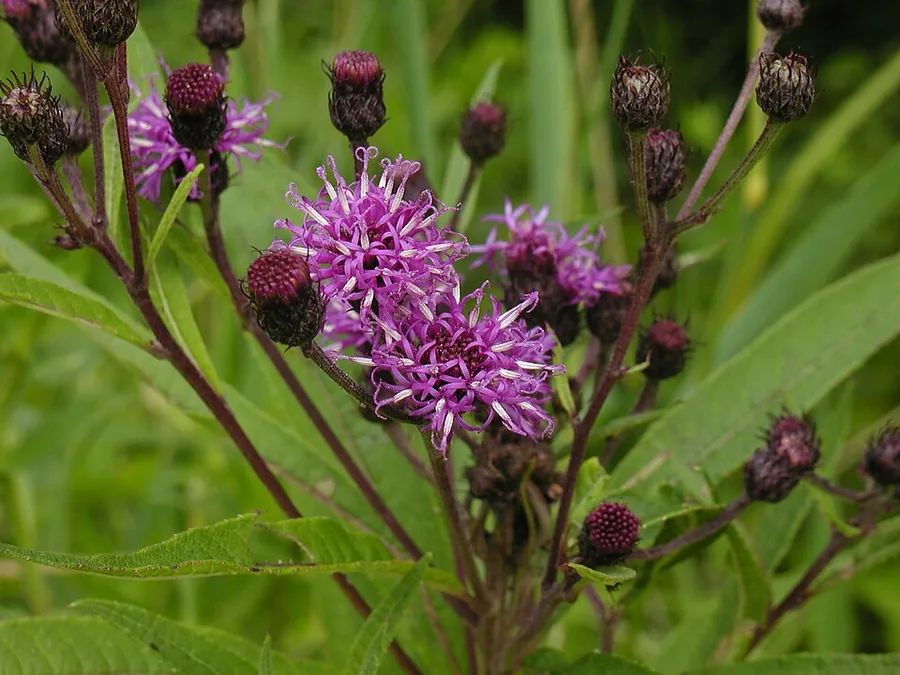
Ironweed is a tall native perennial of streambanks, wet meadows, and low ground across the eastern United States. It belongs to the daisy family, and from mid-summer into fall it lifts flat clusters of deep purple flowers well above most of the border. The name comes from how tough and wiry the stems are once they reach full height.
This is a plant for the back of a bed or a rain garden, where its 4 to 8 feet of growth won't crowd shorter neighbors. It thrives in moist to wet soil that would rot many other perennials, and it shrugs off cold down to -20°F (-29°C). Deer and livestock leave the bitter foliage alone, so it holds its ground where hungrier plants get browsed.
Few perennials pull in more late-season pollinators. The purple heads feed butterflies and bees when summer flowers are fading, and the hollow stems shelter native bees through winter if you leave them standing.
Care
The short version: full sun and steady moisture, in rich, slightly acidic soil that never fully dries out. Skip the fertilizer, cut the stems back by half in late spring to keep them upright, and leave the spent stalks standing over winter for the bees.
Light
Ironweed wants full sun to grow strong and stand tall. It will take partial shade, but the trade-off is weaker, floppier stems that lean and need cutting back.
Water
Give it steady moisture and don't let the soil dry out. This is a streambank native that's happy in medium to wet ground, even the occasional flood, so water through any dry spell rather than waiting for it to wilt.
Soil
Plant in rich, moist soil on the acidic side, with a pH of 5.0 to 6.5. It handles heavy clay and damp, rain-garden spots that would drown other perennials, which makes it a natural fit for low ground.
Temperature
Ironweed is tough across a wide range, from -20°F to 95°F (-29°C to 35°C). That cold hardiness lets it sail through hard winters and come back every spring.
Humidity
Ordinary outdoor humidity suits it fine, so there's no number to chase. What it really cares about is moisture at the roots, not in the air.
Feeding
Go light, or skip feeding altogether. Ironweed is a native that gets by on little to no fertilizer, and a yearly topdress of compost is plenty. Too much nitrogen just makes the stems flop.
Pruning
Cut the stems back by about half in late spring or early summer to keep plants shorter and less prone to leaning. Deadhead the spent flowers before they set seed if you'd rather not have volunteers. Leave the hollow dead stems standing 12 to 24 inches over winter, since native bees nest in them, then clear them once they break down.
Size & spacing
Ironweed grows 4 to 8 feet (120 to 240 cm) tall, so it belongs at the back of a bed. Give each plant 3 to 4 feet (90 to 120 cm) of room to spread into a full clump.
When to plant
Ironweed runs on the seasons. Cold-stratify the seed over winter and start it indoors in late winter, set plants or divisions out after the last spring frost, and the deep purple flowers arrive from July through September.
Northern hemisphere
Southern hemisphere
Typical months for a temperate climate: start earlier in warm zones, later where spring frosts linger.
- Sow: Sow seed and cold-stratify for about 4 to 8 weeks; start indoors in late winter, roughly 8 to 10 weeks before the last frost.
- Plant: Transplant or direct-sow after the last spring frost once soil has warmed; divide established clumps in spring.
- Harvest: Deep purple flowers from mid-summer to mid-fall, roughly July through September.
Hardiness
USDA hardiness zones: 5–9
Temperature: down to -29°C
Troubleshooting
Ironweed is an easy plant with only two real quirks, and both are easy to read. Tall stems may lean, and a generous crop of seed may sprout where you didn't plant it. Match what you see below, then step in early.
Tall stems flopping or leaning, often after rain
This is flopping, and it almost always traces back to too much shade or soil that's richer than ironweed wants. A plant reaching 4 to 8 feet bends at the base or middle, and staking only props it up for a while. Move it into full sun, hold back on feeding, and cut the stems by about half in late spring so it grows shorter and sturdier.
Fix:
- Cut stems back by about half in late spring or early summer to keep plants shorter and bushier
- Site in full sun rather than partial shade
- Avoid fertilizing rich soils
Volunteer seedlings popping up around the plant
Ironweed is a heavy self-seeder, and a mature plant scatters enough seed to fill the bed with volunteers the next spring. The fix is simple: cut off the spent flower heads before the seed ripens. Pull or move any seedlings you don't want while they're still young and easy to lift.
Fix:
- Remove flower heads before seed develops
- Pull or transplant unwanted seedlings while young
Toxicity
Good news for pet owners and gardeners: ironweed is safe all round. The ASPCA doesn't list Vernonia as toxic, and there's nothing in the leaves, stems, or flowers that will harm cats, dogs, livestock, or people. The only reason animals avoid it is the bitter taste.
Safe for
People · Cats · Dogs · Horses · Rabbits · Livestock · Birds
Cats None
Ironweed is safe around cats, with no toxic compounds to worry about. A curious nibble might cause a little stomach upset, the same as any rough plant material, but nothing more.
Dogs None
Dogs can share the garden with ironweed without any risk. The plant carries nothing poisonous, so a chewed leaf or stem is no cause for concern.
Horses Safe
Horses are in no danger from ironweed. Its bitter taste tends to put them off anyway, and what little they might eat does no harm.
Rabbits Safe
Rabbits can browse around ironweed safely. There's nothing toxic in the leaves or stems, though the bitterness usually keeps them looking elsewhere.
Livestock Safe
Cattle, goats, and sheep come to no harm from ironweed. They mostly leave it standing because the foliage is bitter, which is exactly why it lingers in overgrazed pastures.
Birds Safe
Birds are perfectly safe near ironweed, and the seed heads draw finches and other small species late in the year.
People Safe
Ironweed poses no danger to people. It isn't grown to be eaten, but handling it and gardening around it carry no risk.
Varieties
Ironweed covers a whole group of native species and a few choice cultivars. These are the ones you're most likely to meet.
Vernonia fasciculata (prairie / common ironweed)
A Midwestern prairie and wetland species that carries flat-topped clusters of purple flowers and earns a spot on the Xerces pollinator list.
Vernonia gigantea (giant ironweed)
It climbs to nearly 10 feet with purple flowers that turn white only on rare plants, and livestock leave it alone, so it thrives where pastures are grazed bare.
Vernonia lettermannii 'Iron Butterfly'
A compact threadleaf cultivar standing only 2 to 3 feet tall with fine fernlike foliage that fits a smaller garden far better than the towering species.
How to propagate
Ironweed is simple to multiply, whether you split an established clump or let its eager seed do the work.
DivisionEasy
Spring, as new growth emerges · One growing season
The easiest way to make more ironweed is to dig and split a mature clump in spring as the new growth pushes up. It also keeps a large plant in bounds. Replant the divisions right away in moist soil, and they settle in over a single growing season.
SeedEasy
Sow in fall or cold-stratify and start in late winter · Blooms typically in the second year from seed
Ironweed sows itself with ease, so seed is the other simple route. Sow in fall and let winter do the work, or give the seed a spell of cold, moist chilling and start it indoors in late winter. Plants grown this way usually wait until their second year to bloom.
Myths
Ironweed is poisonous to pets and livestock and should be kept out of pastures.
The ASPCA doesn't list Vernonia as toxic, and it's treated as a non-toxic plant. What keeps cattle and other livestock away is the bitter foliage, not poison, and that simple distaste is the very reason it persists in overgrazed pastures while everything around it gets eaten down.
Ironweed must be staked because it always flops.
Flopping comes from shade or soil that's too rich, not from the plant itself. Grow it in full sun and average ground, or cut it back by half in late spring, and it stands tall on its own with no stakes at all.