Houseplant · Dryopteridaceae
Holly Fern
Cyrtomium falcatum
Glossy, holly-shaped fronds and a pet-safe, shade-loving nature make this fern an easy keeper.
Partial shade
Every 5–7 days
50–75°F · 10–24°C
USDA 6–10
Overview
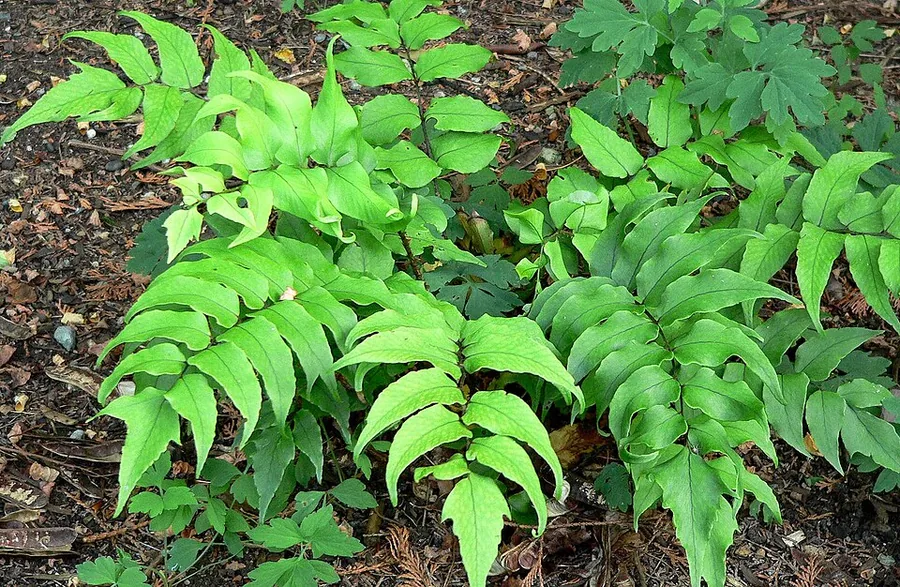
Holly fern earns its name from its fronds, which are cut into glossy, leathery leaflets that look a lot like holly leaves. It belongs to the wood fern family and comes from East Asia, where it grows in shaded, rocky ground. Despite the look-alike foliage, it is a true fern with no relation to the toxic holly shrub.
Indoors it makes a tough, forgiving houseplant. The dark green fronds arch out from a central crown into a clump that stays modest in size, and the thick texture handles dry indoor air and low light better than most ferns. It grows slowly, so a healthy plant holds its shape for years without taking over a shelf.
The plant asks for steady moisture, shade, and a bit of humidity, and it returns the favor by being safe around pets and children. That combination of good looks and an easy temperament is why it shows up on so many windowsills.
Care
The short version: part to full shade, soil kept evenly moist but never soggy, warm rooms between 50°F and 75°F (10°C to 24°C), and humid air around the fronds.
Light
Holly fern wants part to full shade and grows well in the bright to medium indirect light of a typical room. Keep it out of direct sun, which scorches the fronds and bleaches their deep green to a tired yellow.
Water
Keep the soil evenly moist but never waterlogged, watering roughly every 5 to 7 days once the top of the soil starts to dry. This fern won't forgive a long dry spell, so don't let it bake out between drinks.
Soil
Plant it in rich, humusy, well-drained loam that holds steady moisture without turning to mud. It takes a wide pH range from 5.5 to 7.5, so most general potting mixes work with a little compost worked in.
Temperature
Ordinary room warmth between 50°F and 75°F (10°C to 24°C) suits it. Keep the plant clear of cold drafts and hot radiators, both of which dry and crisp the frond edges.
Humidity
This is a humidity lover that does best at 50% to 70%. In a dry home, group it with other plants or set the pot on a pebble tray, since parched air browns the frond tips first.
Feeding
Through spring and summer, feed monthly with a balanced liquid fertilizer diluted to half strength. Ease off in fall and winter when the plant slows and barely grows.
Pruning
No regular pruning is needed. Just snip off any damaged, dead, or winter-burned fronds at the base to keep the clump looking neat and to make room for fresh growth.
Repotting
Move the plant into a slightly larger pot every 2 to 3 years, or sooner once roots push through the drainage holes and water runs straight through. The crown packing tight against the pot wall is the other sign it's time.
Size & spacing
Indoors the clump reaches 12 to 24 inches (30 to 60 cm) tall and spreads 24 to 35 inches (60 to 90 cm) wide. Give it elbow room so air moves freely around the fronds and disease stays away.
Troubleshooting
Holly fern is hard to kill, but a few problems crop up indoors. Most trace back to too much water or too little airflow, and the early signs show up on the fronds and at the crown. Match what you see below and act before it spreads.
Wilting fronds and a soft, blackened crown
When the fronds flop and the base turns black and mushy, the cause is root rot from soggy soil. Slide the plant out of its pot and check the roots, which should be firm and pale rather than brown and foul-smelling. Trim away every soft root, repot into fresh well-draining mix, and water far less from then on so the crown never sits wet.
Fix:
- Remove the plant and trim away all soft, blackened roots
- Repot into fresh, well-draining humusy mix
- Reduce watering and ensure the container drains freely
Sticky brown bumps and yellowing along the fronds
Those raised brown or tan bumps are scale insects, and the white cottony tufts tucked into the leaf axils are mealybugs. Both pierce the fronds and leave behind the sticky honeydew that draws ants and sooty mold. Wipe them off with soapy water or dab them with 70% alcohol, then follow up with horticultural oil on the frond undersides and keep the plant away from your others until it clears.
Fix:
- Wipe off insects with a cloth dipped in soapy water or 70% isopropyl alcohol
- Treat with horticultural oil or insecticidal soap, covering frond undersides
- Isolate the plant until the infestation clears
Dark spots and blotches scattered across the fronds
Discrete brown or black spots, often ringed or water-soaked, point to fungal leaf spot that takes hold in still, damp air. Pull off the marked fronds and bin them. Open up the airflow around the plant and water at the soil line so the foliage stays dry and the spores have nothing to spread on.
Fix:
- Remove and discard affected fronds
- Improve air circulation and avoid wetting the foliage when watering
- Apply a fungicide if spotting is widespread
Toxicity
Good news for pet owners: holly fern is non-toxic straight down the line. The ASPCA and extension sources list it as safe for cats, dogs, and horses, and being a true fern it carries none of the poison found in the holly shrub it resembles. Keep it anywhere a curious pet or child might reach.
Safe for
People · Cats · Dogs · Horses · Rabbits · Livestock · Birds
Cats None
The ASPCA lists holly fern as non-toxic to cats, so a curious nibble won't cause poisoning. A cat that eats a lot of any plant may cough it back up, but that's the fiber, not a toxin.
Dogs None
Dogs can chew the fronds without harm, since this true fern carries nothing poisonous. At most a greedy mouthful might pass through as a mild, short-lived stomach upset.
Horses None
No toxic effects are reported in horses. This is the safe true fern, not the toxic English holly that shares its leaf shape.
Rabbits None
The fronds hold no compounds that trouble rabbits, so the plant is safe around them.
Livestock None
Grazing animals face no poisoning risk from this fern; it carries none of the toxins found in true holly.
Birds None
Pet and backyard birds can perch and pick at the fronds with nothing to fear from them.
People None
Holly fern poses no poisoning hazard to people, including children, though it's an ornamental rather than something to eat.
No special handling required; safe to grow around pets and children.
Varieties
Most holly ferns sold are the plain species, but a couple of named forms turn up that are worth knowing apart.
'Rochfordianum'
A vase-shaped cultivar with arching, glossy fronds whose leaflets carry coarsely fringed, deeply toothed edges.
var. maritimum
A more compact form with smaller, shiny dark green fronds that suit a tighter spot.
How to propagate
Holly fern is slow but steady to multiply, and dividing an established clump is far simpler than waiting on spores.
DivisionModerate
Spring · 1-2 months
The reliable way to make more holly fern is division in spring. Lift a mature clump and split it so each piece keeps its own roots and several fronds, and the new divisions settle in over the next one to two months. The plant also drops spores from its fronds, but spore-grown ferns come slowly and far less dependably, so most growers stick with division.
Myths
Holly fern is poisonous because it has holly-like leaves.
The leaflets only look like holly, and that resemblance is where it ends. This is a true fern, Cyrtomium falcatum, while the poisonous holly is English holly (Ilex), an unrelated flowering shrub. The fern is non-toxic and safe to keep around pets and children.