Houseplant · Asphodelaceae
Haworthia
Haworthia
Give it bright indirect light and a long dry spell between drinks, and this little windowed succulent asks for almost nothing.
Bright indirect
Every 14–21 days
59–81°F · 15–27°C
USDA 9–11
Overview
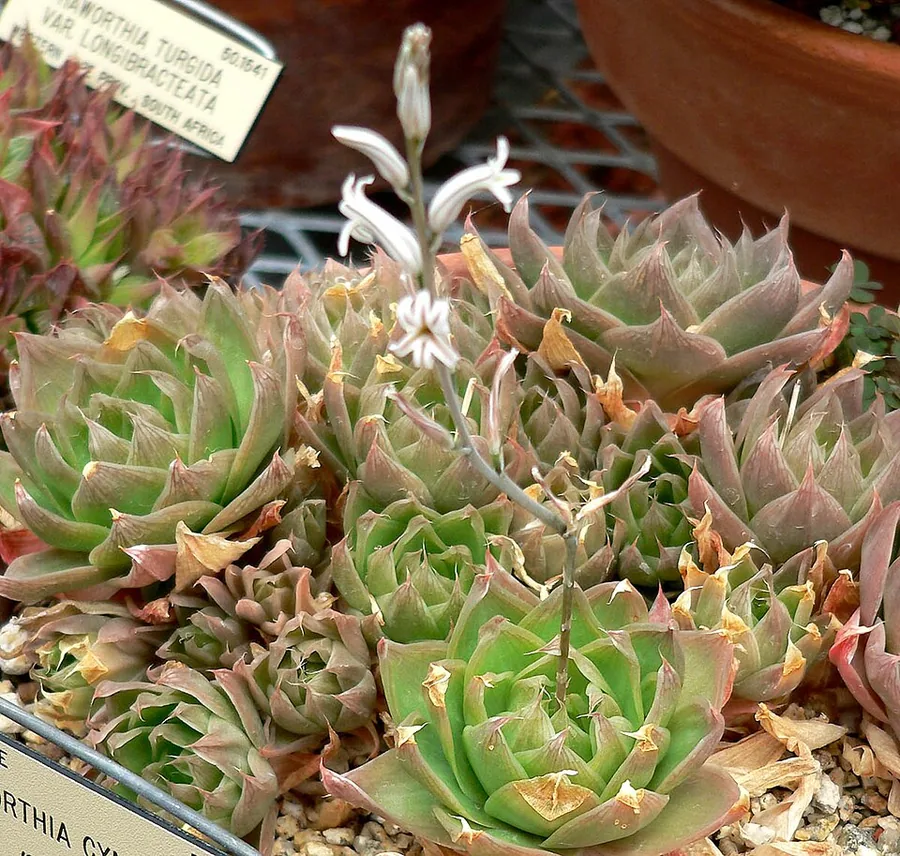
Haworthia is a small rosette succulent from the dry corners of southern Africa, and it has earned its place as one of the most forgiving houseplants you can keep. The fleshy leaves form tight little stars, many of them carrying translucent leaf windows at the tips that catch the light. It stays compact for years, topping out at just 3 to 6 inches (8 to 15 cm) across.
What sets it apart from most succulents is its patience with shade. Out in the wild it grows tucked among rocks and grasses in part shade, so it handles the medium light of an ordinary room far better than a sun-hungry echeveria would. That same toughness makes it a good first succulent for anyone who has lost plants to a dark windowsill.
The one thing it will not forgive is a soggy pot. Haworthia is built to ride out drought and stores water in its leaves, so it would rather be left dry than kept wet. Get the watering right and the rest takes care of itself, with slow, steady growth and a cluster of offset pups that turn one plant into many.
Care
The short version: bright indirect light, a gritty fast-draining mix, and a thorough watering only once the soil has dried out completely. Ease off in winter, feed lightly in the growing season, and never let it sit in water.
Light
Give it bright indirect light near a window that doesn't get harsh midday sun. It will hang on in medium or even low light better than most succulents, but too much direct sun turns the leaves red or brown.
Water
Let the soil dry out completely before you water, then soak it until water runs from the bottom. That works out to roughly every 14 to 21 days in the growing season, and far less in winter. This plant is highly prone to root rot, so when in doubt, wait.
Soil
Plant it in a gritty cactus or succulent mix that drains fast and never stays soggy. A pH anywhere from 6.0 to 7.5 suits it, and a pot with drainage holes matters more than the exact recipe.
Temperature
Ordinary room warmth is ideal, somewhere between 59°F and 81°F (15°C to 27°C). Keep it away from cold drafts and frost, since it has no tolerance for freezing.
Humidity
Low household humidity is exactly what it wants, so there's no tray or mister to bother with. Dry air suits it fine, and it actually helps keep rot at bay.
Feeding
Feed lightly through spring and summer while it's growing, using a balanced liquid fertilizer at half strength. A single feeding now and then across the season is plenty for such a slow grower, and none is needed in winter.
Pruning
There's almost nothing to do here. Just pull off the dead, dried, or damaged outer leaves and snip away spent flower stalks once they fade.
Repotting
Repot every 2 to 3 years, or sooner when offsets start to crowd and lift out of the pot. Roots poking from the drainage holes or soil that dries out unusually fast are your other cues that it's time.
Size & spacing
This is a small plant, reaching only 3 to 6 inches (8 to 15 cm) tall and about the same across. A snug pot suits it, and a cluster of plants can share one shallow dish with just a little room between rosettes.
Troubleshooting
Nearly every haworthia problem traces back to water or light, and the plant tells you which one early. Read the leaves and the rosette, then match what you see below before a small issue turns serious.
Mushy, blackened leaf bases and a collapsing crown
This is root and crown rot, the one problem that kills more haworthias than anything else. It takes hold when the roots sit in wet, slow-draining soil. Lift the plant, cut away every soft, brown root with a clean blade, let the wounds callus, and repot into dry gritty mix.
Fix:
- Stop watering immediately
- Unpot and cut away all soft, rotted roots and tissue with a clean blade
- Allow cuts to callus, then repot into fresh dry gritty mix
- Resume watering only sparingly once established
Wrinkled, shriveled leaves that feel thin
Thirst is the usual cause here, an underwatered plant pulling on its own reserves. Check that the soil is bone dry all the way through, then water thoroughly until it runs from the drainage holes. The leaves plump back up within a few days.
Fix:
- Water thoroughly until it drains from the bottom
- Allow excess to drain fully
- Return to a regular dry-then-water cycle
Leaves flushing red, orange, or brown
Too much direct sun is the culprit, and the color shift shows up first on the side facing the window. This is sun stress, not disease. Move the plant into bright indirect light, and while the marked leaves won't green up again, fresh growth comes in the right color.
Fix:
- Move the plant to bright indirect light
- Shade from intense midday sun
- Damaged leaves will not recover but new growth returns to normal color
A stretched, pale rosette with gaps between the leaves
When light runs short the plant reaches for it, a stretching habit called etiolation. The rosette pales, leans toward the window, and the once-tight leaves spread apart. Move it somewhere brighter with strong indirect light and turn the pot now and then so it grows evenly.
Fix:
- Move to a brighter spot with bright indirect light
- Rotate the pot regularly for even growth
Toxicity
Good news for a houseplant: haworthia is non-toxic and pet-safe. It isn't on the ASPCA's toxic list, and there's nothing in the leaves to harm a cat, dog, or curious child. A stray nibble might cause a brief stomach ache from the fibrous tissue, but no poisoning.
Safe for
People · Cats · Dogs · Horses · Rabbits · Livestock · Birds
Cats None
Safe to share a home with a cat. A curious nibble might cause a passing bit of stomach upset, but nothing toxic.
Dogs None
No poisoning risk for dogs. A determined chewer could get a mild tummy ache from the fibrous leaves, and that's the worst of it.
Horses None
Not toxic to horses, though it's far too small a plant for one to bother with.
Rabbits None
Harmless if a rabbit takes a bite. The thick succulent leaves hold no toxins.
Livestock None
Carries no risk for grazing animals, and as an indoor pot plant it rarely crosses their path.
Birds None
Safe around pet birds. There are no toxic compounds in the leaves to worry about.
People None
Not poisonous to people, including children. It isn't grown to eat, so there's no reason to taste it, but a stray nibble does no harm.
Varieties
The genus runs to dozens of species, but a few show up again and again on windowsills. These are the ones worth knowing by name.
Haworthia cooperi
Its plump, rounded leaves are tipped with translucent windows that glow when the light hits them from behind.
Haworthia cymbiformis
Boat-shaped leaves pack into a tight rosette, each one carrying faint window markings near the tip.
Haworthia retusa
A star-shaped rosette of triangular leaves whose flattened upper faces stay clear and translucent.
Haworthia truncata
Its leaves look sliced off flat across windowed tops, lined up like a row of horse's teeth.
How to propagate
Haworthia makes more of itself with very little help, and most gardeners never need to buy a second plant once they have one going.
Offsets & pupsEasy
Spring to summer during active growth · 4 to 8 weeks to root
The easiest route is to lift the offsets, the little pups that crowd around the base, during spring or summer when the plant is growing. Pull them away from the parent, let the cut ends callus for a day or two, then settle each one into dry gritty mix. They root in about 4 to 8 weeks.
DivisionEasy
Spring, often at repotting · 4 to 8 weeks
When a clump has grown into several crowded rosettes, split it in spring while you're repotting anyway. Tease the roots apart so each rosette keeps its own, then pot them up separately. Expect them to settle in over roughly 4 to 8 weeks.
Leaf cuttingsModerate
Spring to summer · Several weeks to a few months
You can also start a new plant from a single leaf in spring or summer. Pull off a whole healthy leaf, let it callus, and lay it on dry mix. It's a slower, less reliable path than offsets and can take several weeks to a few months to show roots.
Myths
Haworthia needs full, direct sun all day like a desert cactus.
In the wild it grows tucked in part shade among rocks and grasses, not baking in the open. It does best in bright indirect light, and harsh direct sun will scorch and discolor the leaves.
Haworthia is a kind of aloe.
The two were once lumped together and still share the family Asphodelaceae, which is where the confusion starts. Haworthia is its own genus of small rosette succulents, separate from true aloes.