Ornamental · Polemoniaceae
Garden Phlox
Phlox paniculata
Give it sun, room to breathe, and steady moisture, and garden phlox crowns the border with color from midsummer on.
Full sun
Every 3–7 days
USDA 4–8
2–4 ft · 0.6–1.2 m
Overview
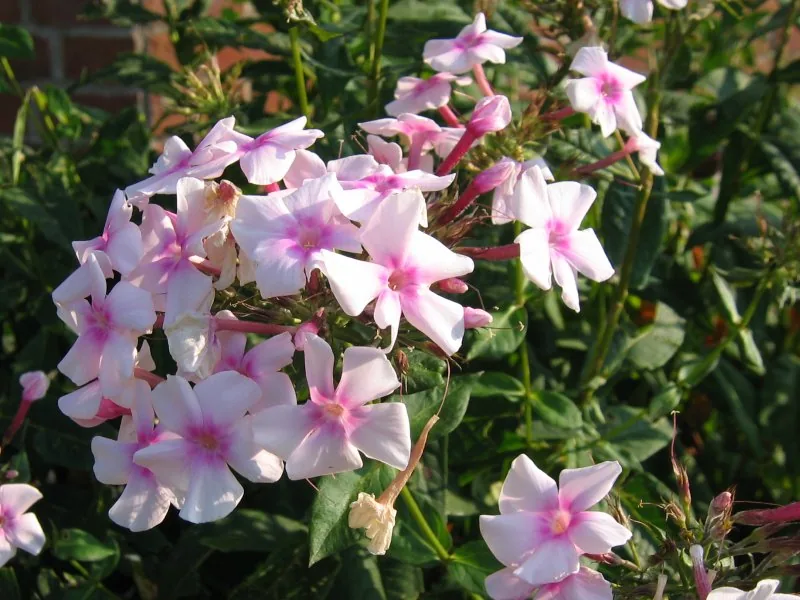
Garden phlox is one of the workhorses of the summer border, sending up tall stems topped with broad heads of fragrant bloom. It's a hardy perennial native to the eastern United States, and it comes back bigger each year once it settles in. The flowers open in shades of pink, white, lavender, and red, and they pull in butterflies and other pollinators all season.
What makes phlox so useful is its timing. It hits its stride in midsummer to fall, just as many spring perennials fade, and it keeps the color going for weeks. The clumps spread slowly outward, so a single plant grows into a full, leafy stand that anchors the back of a bed.
The one catch is powdery mildew, which loves the same crowded, still air that a packed border tends to create. Give each plant space, water at the roots rather than over the leaves, and the disease mostly stays away. Choose a mildew-resistant variety and you can almost forget about it.
Care
The short version: full sun to part shade, with rich, moist, well-drained soil and steady water through dry spells. Give each clump room for air to move, water at the base, and divide it every few years to keep it blooming strong.
Light
Garden phlox flowers best in full sun, though it takes partial shade and partial sun in stride. Too much shade thins the bloom and makes the plant lankier and more prone to mildew.
Water
Keep the soil evenly moist, watering every 3 to 7 days and more often through a dry summer. Phlox has no tolerance for drought, so a layer of mulch helps hold moisture and keeps the roots cool. Water at the base rather than over the leaves to head off powdery mildew.
Soil
Plant in moist, fertile, well-drained ground rich in organic matter, whether that's loam or a heavier clay. It handles a wide pH band from 6.0 to 8.0, so most garden soil suits it once you work in some compost.
Temperature
Garden phlox is fully hardy, taking winter lows down to -29°F (-34°C) and summer heat up to 95°F (35°C). That range covers a lot of climates, which is why it's such a dependable border perennial.
Humidity
Average outdoor humidity is fine, so there's no figure to aim for. Air movement matters far more than the moisture in the air, since still, crowded conditions are exactly what powdery mildew needs.
Feeding
Feed in spring with a balanced fertilizer or a good helping of compost worked into the soil. One seasonal feeding into already fertile ground is enough to carry the plant through its long bloom.
Pruning
Deadhead the faded flower heads to keep the bloom coming and to stop unwanted self-seeding. Thin out crowded stems early for better airflow, then cut the whole plant to the ground in winter and clear away the debris so disease can't overwinter.
Repotting
Garden phlox grows in the ground rather than a pot, but it does need dividing. Lift and split each clump every 2 to 4 years in spring or fall, since a crowded center with smaller blooms and weaker stems is the sign it's overdue.
Size & spacing
Plants reach 2 to 4 feet (61 to 122 cm) tall and form clumps 2 to 3 feet (61 to 91 cm) wide. Give each one that full spread of room so air can move freely and mildew has less of a foothold.
When to plant
Garden phlox is a perennial that returns on its own each year, so the planting itself is a one-time job done in spring after the last frost or in early fall. From there it follows the calendar without much help, sending up fresh growth in spring and flowering from midsummer into fall.
Northern hemisphere
Southern hemisphere
Typical months for a temperate climate: start earlier in warm zones, later where spring frosts linger.
- Sow: Late winter to early spring (species seed; cultivars do not come true from seed)
- Plant: Spring after last frost or early fall
- Harvest: Mid-summer to mid-fall (July to September)
Hardiness
USDA hardiness zones: 4–8
Temperature: down to -34°C
Troubleshooting
Most trouble with garden phlox shows up on the leaves, and powdery mildew leads the list by a wide margin. Catch the early signs and you can usually stop a problem before it spoils the display. Match what you see below, then act while it still does some good.
Stems wilting and collapsing from a rotted crown
When the soil stays waterlogged, crown and root rot sets in and the base of the plant turns brown and mushy. The giveaway is a plant that wilts even though the ground is wet. There's no saving a badly hit clump, so pull it, fix the drainage, and ease off the watering before it spreads.
Fix:
- Remove and destroy severely affected plants
- Improve soil drainage
- Avoid overwatering and waterlogged sites
White powdery film spreading across the leaves
This is powdery mildew, the disease garden phlox is best known for, and it takes hold when the air sits still and the leaves stay damp. Thin the stems so air can move through the clump, water at the base instead of over the top, and strip off the worst leaves. Picking a resistant cultivar like David or Jeana saves you the fight in the first place.
Fix:
- Thin stems to improve air circulation
- Avoid overhead watering and water at the base
- Remove and destroy infected foliage
- Cut plants to the ground in winter and clear debris
Speckled, bronzed leaves with fine webbing in the heat
Spider mites move in during hot, dry spells and feed on the undersides of the leaves until the foliage looks dusty and bronzed. Blast them off with a strong jet of water and keep the soil moist so the plant never goes thirsty. If they hang on, insecticidal soap or horticultural oil clears them out.
Fix:
- Spray foliage with a strong stream of water to dislodge mites
- Keep plants well watered during heat
- Apply insecticidal soap or horticultural oil if needed
Toxicity
Garden phlox is safe to grow around the whole household. The ASPCA lists it as non-toxic, with no harmful compounds in any part of the plant, so pets, livestock, and children can share the garden with it freely. A stray nibble of leaf or flower won't cause any harm.
Safe for
People · Cats · Dogs · Horses · Rabbits · Livestock · Birds
Cats None
Garden phlox is safe for cats, and the ASPCA lists it with no toxic principles. A curious nibble of leaf or flower won't cause harm.
Dogs None
Dogs can share the garden with phlox without any worry. Even if one chews a stem or a bloom, there's nothing toxic in it to upset them.
Horses Safe
Phlox holds no compounds that trouble horses, so a grazing mouthful is harmless.
Rabbits Safe
Rabbits often browse phlox foliage, and it does them no harm. The plant carries no toxins for them.
Livestock Safe
Cattle, goats, and sheep can be around garden phlox safely, since none of its parts are poisonous.
Birds Safe
Birds face no danger from phlox, and the flowers draw in pollinators rather than threaten any visitor.
People Safe
Garden phlox poses no poisoning risk to people, including children who might pick at the bright blooms.
Safe to grow where pets have access; no special handling required for toxicity.
Varieties
Hundreds of garden phlox cultivars exist, bred for color, fragrance, and resistance to mildew. These are a few worth knowing by name.
David
A favorite for its pure white panicles and its well-earned reputation for shrugging off powdery mildew.
Jeana
Carries dense clusters of lavender-pink bloom, resists mildew strongly, and pulls in pollinators better than most.
Eva Cullum
Shows off clear pink flowers set against a darker red eye at the center of each bloom.
Companions
Garden phlox pairs well with other sun-loving perennials that share its taste for moist, fertile soil and add their own form to the summer border.
How to propagate
Garden phlox is easy to multiply, and how you do it depends on what you want. Division and cuttings both copy a named variety exactly, while seed gives you the wild species and a grab bag of colors.
DivisionEasy
Spring or fall · One growing season
Division is the simplest way to multiply garden phlox and keep it healthy. Lift a mature clump in spring or fall, split it into pieces, and replant; each division roots in over a single growing season. Doing this every 2 to 4 years also keeps the center of the clump from dying out.
Stem cuttingsModerate
Late spring to summer · Several weeks to root
Softwood cuttings let you copy a named cultivar exactly, which seed never will. Take them from new growth in late spring or summer, and they take several weeks to put down roots before you can pot them on.
SeedModerate
Late winter to spring · One season or more to flowering
You can raise the wild species from seed sown in late winter or spring, though it takes a season or more to reach bloom. Named cultivars won't come true this way, so save seed only if you're happy with whatever colors turn up.
Myths
All phlox is poisonous to cats and dogs.
The ASPCA lists phlox as non-toxic to both cats and dogs, with no harmful compounds on record. A pet that nibbles a leaf or a flower should be perfectly fine.
Garden phlox cultivars grow true from seed.
Named cultivars do not come back true from their own seed, so a seedling rarely matches its parent. Deadhead the spent panicles to stop unwanted self-seeding, and propagate the varieties you want by division or cuttings instead.