Houseplant · Araliaceae
English Ivy
Hedera helix
Tough, shade-loving, and fast to fill a pot, English ivy trails or climbs wherever you point it.
Bright indirect
50–70°F · 10–21°C
USDA 4–13
20–79 ft · 6–24 m
Overview
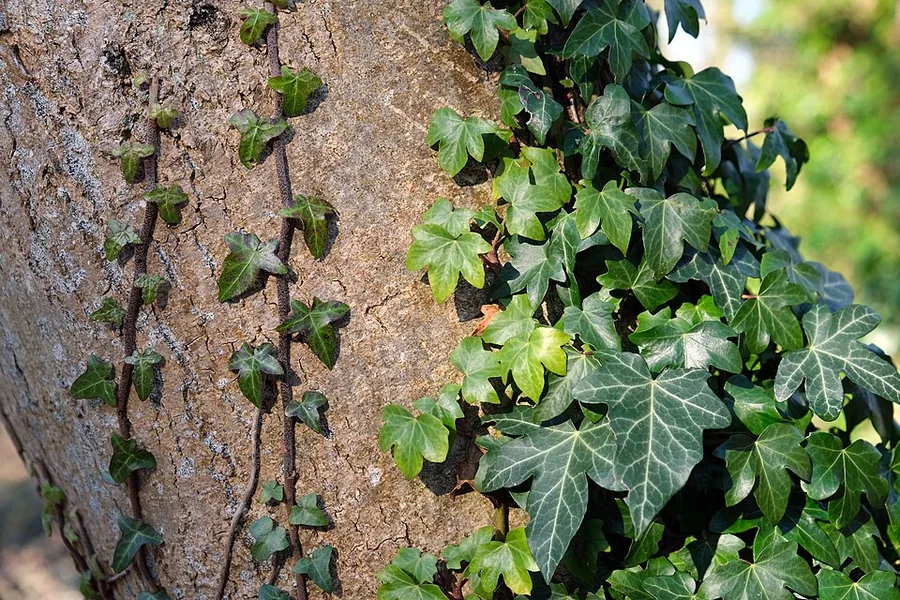
English ivy is the trailing evergreen vine you see spilling from hanging baskets and climbing brick walls. It belongs to the aralia family and comes from Europe, where it has cloaked woods and old buildings for centuries. Indoors it stays a manageable houseplant, sending out long, leafy stems that drape over a shelf or wrap a trellis.
What makes it easy is how little it asks. It takes bright indirect light but puts up with low light and partial shade, and it grows fast enough to fill a pot in a season. Train it up a moss pole, clip it into a topiary shape, or just let it hang, since it takes pruning without complaint.
The catch is that the same vigor turns into a problem outdoors. English ivy is toxic to pets and an invasive weed in much of the US, where it smothers native plants and climbs into siding and gutters. Grown as a houseplant and kept off walls and out of reach, it stays a handsome, low-effort plant.
Care
The short version: bright indirect light but happy in shade, water only after the top half inch dries out, keep it cool with decent humidity, and prune whenever you like to keep it in bounds.
Light
English ivy does best in bright, indirect light, which keeps variegated types colorful. It also tolerates medium light, low light, and partial shade, so it works in spots where fussier plants sulk. Deep shade slows it down and fades the markings, but it won't die there.
Water
Water thoroughly, then wait until the top half inch (about 3 cm) of soil has dried before watering again. Ivy hates wet feet, so never leave the pot standing in a saucer of water, which rots the roots. When in doubt, let it run a touch dry rather than soggy.
Soil
Use a quality houseplant potting mix with excellent drainage, since standing moisture is the main thing ivy can't forgive. Planted outdoors it is far less picky and takes clay, loam, sand, and even rocky ground in stride.
Temperature
Ivy likes it on the cool side, 50°F to 70°F (10°C to 21°C), which suits most homes well. It struggles in hot, stuffy rooms, where the dry warmth also brings on spider mites.
Humidity
Average household humidity is fine for ivy. It does appreciate a little extra moisture in the air, and raising humidity helps keep spider mites away, so a pebble tray or the occasional misting pays off in dry winter rooms.
Feeding
Feed monthly with a foliage houseplant fertilizer while the plant is actively growing. Ease off when growth slows in summer heat or cold weather, since a resting plant can't use the extra food.
Pruning
Prune as hard and as often as you like, because ivy bounces back fast. Pinching and trimming keeps it full and stops it from getting leggy, and you can pin the stems to a trellis or topiary frame to train the shape you want.
Repotting
Ivy is happy a little snug, so only repot when it turns top-heavy, fills the pot with roots, or dries out too fast after watering. When you do move it up, go no more than an inch in pot diameter so the fresh soil doesn't stay wet and rot the roots.
Size & spacing
As a houseplant the trailing stems are easy to keep short, but left to run, the vine reaches from 20 to 80 feet (6 to 24 m) and spreads 3 to 49 feet (90 cm to 15 m) outdoors. That reach is exactly why it climbs into trees and structures and why you keep it contained.
Troubleshooting
English ivy is hardy, so when it sulks the cause is usually one of two things. Dry indoor air invites spider mites and browns the leaf edges, while harsh winter sun and wind scorch plants left outside. Match what you see below and adjust the conditions before the damage spreads.
Speckled, bleached leaves with faint webbing
This is the calling card of spider mites, the most common pest on indoor ivy. They thrive in warm, dry rooms, so tap a leaf over white paper and watch for tiny specks that move. Blast the plant with water, treat the undersides with insecticidal soap, and keep the air cooler and more humid.
Fix:
- Spray plants forcefully with water, including leaf undersides, to dislodge mites
- Treat with insecticidal soap, repeating as needed
- Dunk foliage upside-down in an insecticidal soap solution to wash pests off
Browning, dried-out, or scorched leaves
Outdoors this is usually winter scorch, where cold sun and wind dry out the evergreen leaves faster than the roots can replace the moisture. Indoors the cause is dry, heated air and soil that runs too dry, which browns the leaf edges. Shelter outdoor plants from harsh winter sun and wind, and raise the humidity around indoor ones with a wet pebble tray.
Fix:
- Site plants out of harsh winter sun and drying wind
- Raise humidity with a wet pebble tray and avoid letting soil dry out completely
Toxicity
Treat English ivy as a plant to keep out of reach, not one to share. Every part holds triterpenoid saponins, with the berries the most dangerous if swallowed, and the sap irritates skin on contact. It is toxic to cats, dogs, horses, and other animals, and no part is safe to eat, so site it away from pets and children and wear gloves when you prune.
Toxic to
Cats · Dogs · Horses · Rabbits · Livestock · Birds · People
Cats Moderate
A cat that chews the leaves usually drools, throws up, and gets diarrhea, often with belly pain. The leaves carry more of the toxin than the berries do.
Dogs Moderate
Expect heavy drooling, vomiting, and a runny stomach soon after a dog nibbles the foliage. Curious puppies that strip a trailing stem tend to react the hardest.
Horses Moderate
The saponins irritate a horse's gut, bringing on drooling, colic-like pain, and loose droppings. Keep clippings and climbing stems well away from paddocks.
Rabbits Toxic
The leaves and berries are not safe for rabbits and can leave them drooling, off their food, and with an upset stomach. Don't offer any part as forage.
Livestock Toxic
Cattle, goats, and sheep that browse ivy can suffer digestive upset and worse from the same saponins. Pull it from pastures and fence lines before grazing animals reach it.
Birds Caution
Wild birds spread ivy by eating the ripe berries with no harm, but the raw foliage is a different matter, so treat pet birds with care and keep cuttings out of the cage.
People Caution
No part of ivy is food, and the berries are the most dangerous if swallowed, causing a burning mouth, vomiting, and cramps. The sap is a skin irritant too, so wear gloves when you prune.
Wear gloves when pruning or removing ivy, as the cell sap can cause skin redness, itching and blisters.
Helpline numbers

United States
ASPCA Animal Poison Control: (888) 426-4435 (fee applies)
Poison Control: (800) 222-1222



Canada
Poison Centres: 1-844-764-7669
Varieties
Most ivy sold for the home is a named cultivar chosen for leaf shape or color. A few turn up again and again.
'Gold Child'
Each leaf is edged in cream-yellow to gold, which brightens a shady corner where plain green ivy would disappear.
'Needlepoint'
Its narrow bird's-foot leaves give it a fine, delicate look that makes it a favorite for trained topiary shapes.
'Glacier'
The gray-green leaves are washed with silvery-white variegation for a cool, frosted effect.
'Baltica'
A tough, cold-hardy form often planted outdoors to hold soil and control erosion on slopes.
How to propagate
English ivy practically multiplies itself, rooting from cuttings in a glass of water or layering wherever a stem touches damp soil.
Stem cuttingsEasy
Any time during active growth · Roots typically form in a few weeks
Ivy is one of the easiest plants to clone. Take a stem or tip cutting any time the plant is actively growing, stand it in a glass of water, and roots form within a few weeks. Once a small cluster of roots has filled out, pot the cutting up into fresh mix.
LayeringEasy
During the growing season · Several weeks to a few months
Trailing stems root on their own wherever a node rests against moist soil. During the growing season, pin a stem down and leave it, and over the next several weeks to a few months it sets its own roots. Cut the rooted section free from the parent and move it where you want it.
Myths
Only the berries are dangerous, so the leaves are safe to handle and have around pets.
Both the leaves and the berries hold the same triterpenoid saponins, and the ASPCA puts the foliage as the more toxic part for animals that chew it. The berries are the bigger risk if a person swallows them, but no part of the plant is harmless.
English ivy is just a harmless ornamental groundcover.
It is a documented invasive species across much of the US and a listed noxious weed in Oregon. Left alone it smothers native plants and climbs into siding and gutters, so check local rules before you plant it.