Shrub · Apocynaceae
Dipladenia
Mandevilla sanderi
Give it full sun, warmth, and sharp drainage, and dipladenia pours out trumpet flowers from early summer to fall.
Full sun
Every 3–7 days
45–84°F · 7–29°C
USDA 9–11
Overview
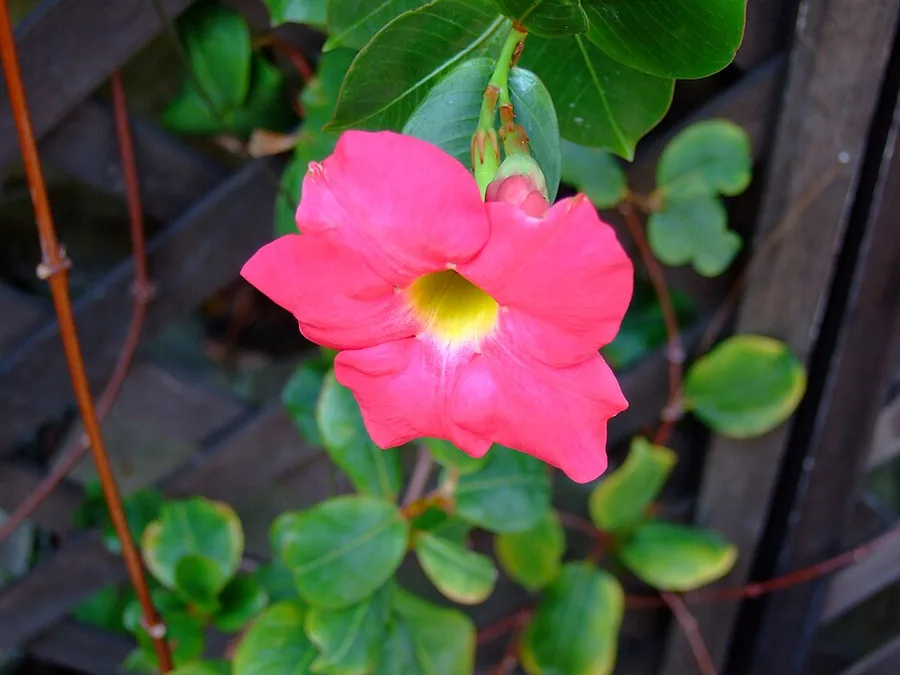
Dipladenia is the bushy, mounding face of Mandevilla sanderi, a tropical vine from Brazil grown for its glossy leaves and a steady run of trumpet-shaped flowers. It belongs to the dogbane family, the same group that gives us oleander and periwinkle, and like its cousins it carries a milky sap in every stem. Gardeners reach for it as a patio and container plant that flowers without a pause once the weather warms.
The name is mostly a matter of trade and habit. Plants sold as Dipladenia stay compact and bushy with a tendency to trail, which suits pots, baskets, and window boxes, while those sold as Mandevilla climb harder and grow larger. Hardy only in zones 9 to 11, it lives outdoors year-round in the warmest gardens and is grown as a summer annual or wintered indoors everywhere else.
It rewards a sunny spot and punishes wet feet. Give it heat, light, and soil that drains fast, and it blooms hard right through fall. Let the roots sit in soggy soil or catch a cold snap, and you trade those flowers for yellow leaves and dropped buds.
Care
The short version: full sun and warmth, soil that drains fast so the roots never sit wet, a high-phosphorus bloom feed through the growing season, and gloves on whenever you prune the sappy stems.
Light
Dipladenia flowers best in full sun, and the more direct light it gets, the more buds it sets. It will hold on in partial shade or bright indirect light indoors, but the flush of bloom thins out fast without strong sun.
Water
Keep the soil moist but never soggy through summer, letting the top of the pot dry out between drinks. This plant hates wet feet and rots at the root if it stays waterlogged, so back the watering right off in winter when growth slows.
Soil
Plant it in rich, sharp-draining soil, either a sandy mix with humus or a peat-based potting medium. It is easygoing about acidity and grows well anywhere from pH 6.0 to 8.0, but fast drainage matters far more than the exact number.
Temperature
It runs happily between 45°F and 84°F (7°C to 29°C) and wants steady warmth to keep blooming. Nights below about 50°F (10°C) stall it, and frost will kill it outright, so bring it in before the cold arrives.
Humidity
Dipladenia likes high humidity and shows its dislike of dry air by dropping to spider mites indoors. Group it with other plants or set it over a pebble tray through winter to keep the air around it moist.
Feeding
Through spring and summer, feed every two weeks with a high-phosphorus bloom fertilizer such as a 10-20-10. The extra phosphorus pushes flowers rather than leaf, which is exactly what you want from this plant.
Pruning
Pinch back the tips of new shoots to keep it bushy and compact, and trim lightly to shape it and clear away spent blooms. Wear gloves for the job, since the cut stems weep an irritating milky sap.
Repotting
Move it up a pot size every 1 to 2 years in spring. Roots circling out the drainage holes, water running straight through, or growth and flowering that have slowed all tell you it's time.
Size & spacing
12–59 in (30–150 cm) tall
When to plant
Dipladenia is a warmth-lover with no tolerance for frost. Hold it indoors or under cover until the cold has truly passed and nights stay above about 50°F (10°C), set it out for the season, and it flowers from early summer right through fall.
Northern hemisphere
Southern hemisphere
Typical months for a temperate climate: start earlier in warm zones, later where spring frosts linger.
- Plant: After all danger of frost has passed and nights stay above about 50 degrees F
- Harvest: Early summer through fall
Hardiness
USDA hardiness zones: 9–11
Temperature: down to -7°C
Troubleshooting
Most dipladenia trouble shows up on the leaves, either from sap-feeding pests or from roots kept too wet. Catch the early signs and the fix is simple. Match what you see below, then act before it spreads.
Fine webbing and a pale, stippled look on the leaves
This points to spider mites, which thrive in the hot, dry air around a plant brought indoors for winter. Turn a leaf over and look for tiny moving dots and thin webbing, or tap it over white paper to catch them. Rinse the foliage hard with water, treat with insecticidal soap or horticultural oil, and raise the humidity to make the plant a poor home for them.
Fix:
- Rinse foliage with a strong spray of water
- Treat with insecticidal soap or horticultural oil, repeating per label
- Raise humidity around the plant
Cottony white tufts and sticky residue on stems and leaf joints
This is the calling card of mealybugs or scale, with whitefly or aphids sometimes joining in. Check the leaf axils and stems for the cottony bugs, the hard immobile bumps of scale, or a cloud of whiteflies that lifts when you brush the plant. Dab small outbreaks with an alcohol-soaked swab, follow up with insecticidal soap or oil, and move the plant away from the others so it can't spread.
Fix:
- Wipe off light infestations with an alcohol-dipped cotton swab
- Apply insecticidal soap or horticultural oil and repeat as needed
- Isolate affected plants to prevent spread
Yellow, wilting leaves and buds dropping before they open
This usually traces back to root rot from soggy soil, or a cold draft that has shocked the plant. Slide it out of the pot and feel the roots: healthy ones are firm and white, while rotting ones turn brown and mushy. Let the top of the soil dry before the next drink, fix the drainage, and keep the plant in a warm spot above about 50°F (10°C), clear of cold drafts.
Fix:
- Let the top of the soil dry before watering again
- Improve drainage and ensure pots have drainage holes
- Move the plant to a warm spot above about 50 degrees F away from cold drafts
Tan to brown spots that yellow and then drop the leaf
This is anthracnose, a fungus that takes hold when the leaves stay wet too long. Watch for tan to brown spots that spread, turn the leaf yellow, and finally drop it. Pick off and bin the marked leaves, keep water off the foliage, and reach for a labeled fungicide only if it keeps coming back.
Fix:
- Remove and dispose of affected leaves
- Avoid overhead watering and keep foliage dry
- Apply a labeled fungicide if the problem persists
Toxicity
Treat this plant with a little care. Every part holds a milky latex sap that can irritate skin and eyes and upset the stomach if chewed, and nothing on the plant is safe to eat. Wear gloves when you prune, and keep the foliage out of reach of pets, livestock, and small children.
Toxic to
Cats · Dogs · Horses · Rabbits · Livestock · Birds · People
Cats Mild
A cat that chews the leaves may drool and have an upset stomach, sometimes with vomiting. The trouble stays mild and tends to pass on its own.
Dogs Mild
Expect a little drooling and a queasy stomach, with the odd bout of vomiting, after a dog mouths the foliage. Signs are usually short-lived.
Horses Caution
The bitter milky sap puts most horses off, but a mouthful can still irritate the mouth and gut. Keep the plant out of the paddock to be safe.
Rabbits Caution
This isn't safe browse for a rabbit. The irritant latex can sting the mouth and unsettle the gut, so leave it off the menu entirely.
Livestock Caution
Goats, sheep, and cattle rarely seek it out, yet the same sap can irritate the mouth and digestion if they nibble. Fence it away from grazing animals.
Birds Caution
There's no good reason to let a pet bird at the leaves or sap, and the irritant latex could upset a small bird quickly. Keep it well out of reach.
People Caution
No part of this plant is food. The milky sap can redden and irritate skin and sting the eyes, so wear gloves when you prune and keep curious children from chewing it.
Wear gloves when pruning, as cut stems release a milky latex sap that can irritate skin and eyes; wash hands afterward and keep sap away from the face.
Helpline numbers

United States
ASPCA Animal Poison Control: (888) 426-4435 (fee applies)
Poison Control: (800) 222-1222



Canada
Poison Centres: 1-844-764-7669
Varieties
Most dipladenia sold today comes from a few breeding series, each picked for compact, free-flowering plants that suit pots and baskets. These are the names you'll meet most often.
'Rio' series
A compact, bushy, free-flowering Dipladenia type bred for containers and baskets, with blooms in red, pink, and white.
'Sundaville' (Sun Parasol)
A mounding-to-trailing series that carries glossy leaves and trumpet flowers all summer, with compact picks made for hanging baskets and window boxes.
'Madinia' series
A well-branched, bushy Dipladenia type sold for patios and pots, prized for its large flowers and dark glossy foliage.
How to propagate
You can make more dipladenia from the plant you already have, either by rooting a cutting or by layering a stem while it's still attached. Both ask for patience, and both leak the same irritating sap, so keep gloves handy.
Stem cuttingsModerate
Spring to summer · 4 to 8 weeks to root
Take tip cuttings from non-flowering shoots in spring or summer, and wear gloves because the cut stems weep an irritating milky sap. Stand them in a moist, well-drained medium with warmth and bright indirect light, and roots form over the next 4 to 8 weeks.
LayeringModerate
Spring to summer · Several weeks to months
In spring or summer, pin a low, flexible stem down onto moist soil and wait for it to root in place, which takes anywhere from several weeks to a few months. Once the new roots hold, cut the rooted section free from the parent plant.
Myths
Dipladenia and Mandevilla are two different plants.
They belong to the same genus, and Dipladenia is just an old trade name for the bushier forms of Mandevilla sanderi. The real difference is habit, with Dipladenia staying bushy and mounding while the plants kept under the Mandevilla name climb hard and grow larger. Botanically they are one and the same, and the genus Mandevilla takes in everything once called Dipladenia.