Ornamental · Apocynaceae
Butterfly Weed
Asclepias tuberosa
Plant it in full sun and poor, dry soil, then leave it alone and let the monarchs find it.
Full sun
USDA 3–9
1–3 ft · 0.3–0.9 m
Overview
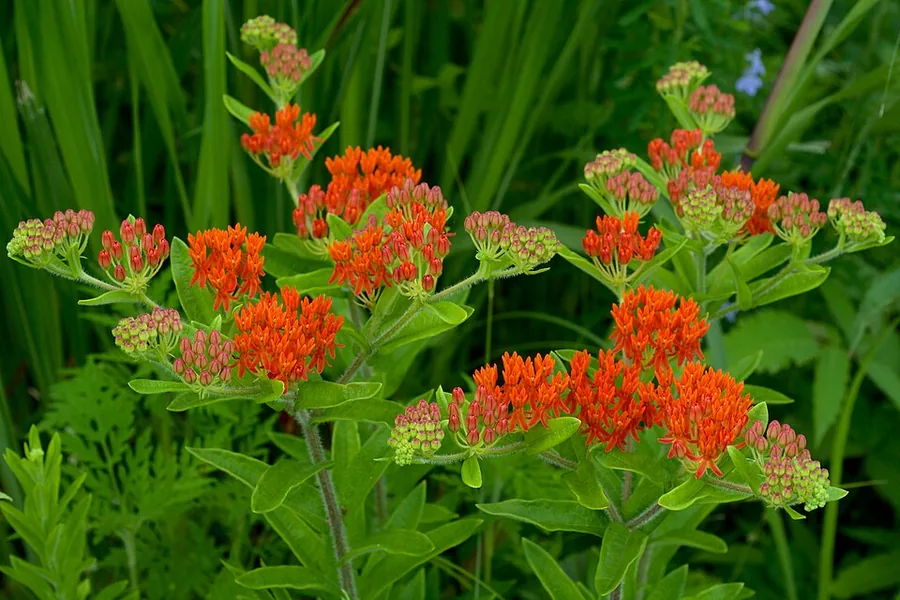
Butterfly weed is the orange-flowered milkweed that thrives on neglect. It is a tough native perennial of dry meadows and roadsides, built for lean soil and full sun, and it asks for almost nothing once it takes hold. The flat-topped clusters of orange bloom from late spring into summer and pull in butterflies, bees, and other pollinators all season.
What sets it apart is its job in the food web. Like its milkweed cousins, it is a host plant for monarch caterpillars, who eat the leaves and store the plant's bitter compounds as their own defense. That same chemistry is why every part of the plant is toxic if eaten, even though it earns its keep in a wildlife garden.
Growing it is mostly about patience and restraint. It puts down a deep taproot, takes a couple of years to settle and flower, and resents being moved or pampered. Give it the dry, sunny spot it wants from the start, skip the fertilizer and the extra water, and it will come back stronger every year.
Care
The short version: full sun, lean and dry well-drained soil, and very little water once it's established. Skip the fertilizer, leave the deep taproot undisturbed, and let it settle in for a year or two before it really blooms.
Light
Give butterfly weed full sun, at least six hours a day. It will limp along in part shade, but you trade away the upright habit and most of the flowers, so a bright, open spot is the only place it really shines.
Water
Water young plants until they root in, then water rarely. Once established it is drought tolerant and far happier dry than wet, since soggy ground rots the crown. Let the soil dry out completely between any drinks.
Soil
Lean is better than rich here. It thrives in average to poor, dry to medium, well-drained soil and shrugs off clay, sand, loam, or shallow rocky ground, as long as the drainage is sharp. A pH between 6.0 and 7.0 suits it well.
Temperature
This is a cold-hardy native that takes a wide swing in temperature, from -40°F to 100°F (-40°C to 38°C), which carries it through USDA zones 3 to 9. It dies back to the ground each winter and returns from the taproot in spring.
Humidity
Ordinary outdoor air is all it needs, so there is no figure to aim for. Good air movement matters more than any humidity reading, since still, damp air around the leaves is what invites rust and leaf spot.
Feeding
Don't feed it. Butterfly weed evolved on poor, lean soils, and extra fertility backfires, giving you floppy growth and fewer flowers. Skip the fertilizer and let the plant do its own thing.
Pruning
Pruning is light work. Cut the spent stems to the ground in late fall or early spring, and snip off the seed pods before they split if you would rather it not self-sow. Leave established plants where they are, since the taproot won't forgive a move.
Size & spacing
A mature plant reaches 1 to 3 feet (30 to 91 cm) tall and forms a clump about 12 to 18 inches (30 to 46 cm) wide. Give it that much room so air moves freely and the foliage stays dry.
When to plant
Butterfly weed runs on the seasons and on a slow clock. Start seed in late winter after a cold chilling spell, or sow it in fall and let winter do that work, then set young plants out in spring once frost has passed. Flowers come in late spring through summer, though a plant grown from seed often takes 2 to 3 years to reach its first real bloom.
Northern hemisphere
Southern hemisphere
Typical months for a temperate climate: start earlier in warm zones, later where spring frosts linger.
- Sow: Late winter, about 8 to 10 weeks before last frost, after 30 days cold moist stratification
- Plant: Spring after last frost, or direct sow in fall to allow natural cold stratification
- Harvest: Late spring through summer (roughly May to August)
Hardiness
USDA hardiness zones: 3–9
Temperature: down to -40°C
Troubleshooting
Butterfly weed has few real problems, and most of them come from kindness rather than neglect. Too much water and too rich a soil cause more trouble here than any pest. Match what you see below, then ease off the watering can before you reach for anything stronger.
Soft, blackened stem bases and a collapsing plant
This is crown and root rot, and it nearly always traces back to soil that stays too wet. Butterfly weed wants lean, sharp-draining ground and dry feet, so stop watering and fix the drainage before the crown turns to mush. Once the rot reaches the soil line there is no saving that plant, so the answer is to site the next one in full sun on poor, gritty soil.
Fix:
- Improve drainage and stop supplemental watering
- Plant in lean, well-drained or rocky soil in full sun
A moved or transplanted plant that sulks and dies back
Butterfly weed grows from a long, fleshy taproot that hates being disturbed, so digging up an established clump usually kills it. Pick the permanent spot at planting time and leave it there. When you want more plants, start them from seed right where they are to grow instead of lifting and moving them.
Fix:
- Leave established plants undisturbed
- Start new plants from seed in place rather than transplanting
Yellow-orange insects swarming the stem tips
Those bright clusters are oleander aphids, and they head straight for the soft new growth. Blast them off with a strong jet of water every couple of days for about a week. If the numbers are small, leave them be, since spraying anything stronger also kills the monarch caterpillars and ladybugs the plant is there to feed.
Fix:
- Knock aphids off with a strong spray of water every two or three days for about a week
- Tolerate minor infestations to protect monarch larvae and beneficial insects
Orange pustules or dark spots scattered across the leaves
Raised orange bumps that rub off as powder mean rust, while flat dark blotches point to a leaf spot fungus. Both take hold when the leaves stay damp and the air sits still. Pull off the marked foliage, water at the base rather than overhead, and give each plant room so the breeze can dry the leaves.
Fix:
- Remove and discard affected foliage
- Improve air circulation by spacing plants
Toxicity
This is a milkweed, and that comes with a real warning. Every part of the plant holds cardiac glycosides that upset the stomach and, in larger amounts, disturb the heart, so it is toxic to cats, dogs, horses, rabbits, livestock, birds, and people alike. The plant is still a vital host for monarch caterpillars, so the goal is to grow it for the wildlife while keeping pets, grazing animals, and children from eating it.
Toxic to
Cats · Dogs · Horses · Rabbits · Livestock · Birds · People
Cats Mild
Vomiting, diarrhea, loss of appetite, lethargy, and weakness; with large ingestion, seizures, breathing difficulty, weak or rapid pulse, dilated pupils, and cardiac effects
Dogs Mild
Vomiting, diarrhea, loss of appetite, lethargy, and weakness; with large ingestion, seizures, breathing difficulty, weak or rapid pulse, dilated pupils, and cardiac effects
Horses Moderate
Depression, weakness, vomiting and diarrhea; larger doses can cause staggering, seizures, weak or rapid pulse, respiratory difficulty, and cardiac failure
Rabbits Toxic
Don't let rabbits nibble it. The same cardenolides that trouble cats and dogs reach a small grazing animal fast, bringing on gut upset, weakness, and a faltering heartbeat.
Livestock Severe
In cattle and sheep, weakness, staggering, posterior paresis, seizures, and coma within hours, potentially followed by death from cardiac and respiratory failure
Birds Toxic
Keep poultry and pet birds well away. The plant holds the same heart-affecting compounds, which hit a small bird hard, so any pecking at the leaves or seeds is a real risk.
People Caution
No part of this plant belongs on the table. Eating it in any quantity can churn the stomach and disturb the heart, and the sap may sting bare skin and eyes, so wear gloves and keep children from chewing the leaves or pods.
Keep grazing animals away from the plant, as livestock such as cattle, sheep, and horses can be seriously poisoned. Wear gloves when handling, as sap may cause skin and eye irritation.
Helpline numbers

United States
ASPCA Animal Poison Control: (888) 426-4435 (fee applies)
Poison Control: (800) 222-1222



Canada
Poison Centres: 1-844-764-7669
Varieties
Most gardeners grow the wild orange form, but a few named selections turn up at nurseries. These are the ones worth knowing.
Hello Yellow
A bright selection that trades the usual orange for clear, glowing yellow flowers.
Blonde Bombshell
A yellow-flowered cultivar bred for an upright, vigorous habit and heavy bloom.
subsp. interior
The wild interior subspecies of the central United States, set apart by its leaf shape and base.
How to propagate
Butterfly weed is grown almost entirely from seed, since its deep taproot makes the usual cloning tricks difficult. Start it where it is to stay and give it time.
SeedModerate
Sow after about 30 days of cold moist stratification in late winter, or direct sow in fall for natural stratification · Typically 2 to 3 years from seed to first flowering
Seed is the usual way to grow butterfly weed, though it asks for patience. Give the seed about 30 days of cold, moist chilling first, either by starting it in late winter or by sowing in fall and letting the cold do the work, and germination jumps. Sow it straight into its final spot, because the deep taproot hates being moved, and expect 2 to 3 years before the first flowers open.
DivisionModerate
Early spring, only on younger plants if at all · Slow; the deep taproot resents disturbance
Splitting a clump rarely works and usually isn't worth trying. The long taproot resents any disturbance, so division is slow to recover and best limited to young plants in early spring, if you attempt it at all. Root cuttings are the more dependable way to make new plants without lifting an established crown.
Myths
Butterfly weed oozes milky sap and leaves a sticky mess like other milkweeds.
This is the one milkweed that breaks the rule. Its sap runs clear rather than milky, so handling it stays clean. It still carries cardenolides and can sting skin and eyes, so it pays to wear gloves anyway.
Every milkweed is equally and dangerously toxic.
The amount of cardenolide swings widely from one milkweed to the next. Butterfly weed sits near the bottom of that range, so it is far milder than most of its relatives, but milder is not safe, and it stays toxic to pets and grazing animals.