Ornamental · Scrophulariaceae
Diascia
Diascia barberae
Give twinspur full sun, cool roots, and steady moisture, and it spills coral and pink from spring to frost.
Full sun
Every 2–4 days
USDA 8–11
8–12 in · 20–30 cm
Overview
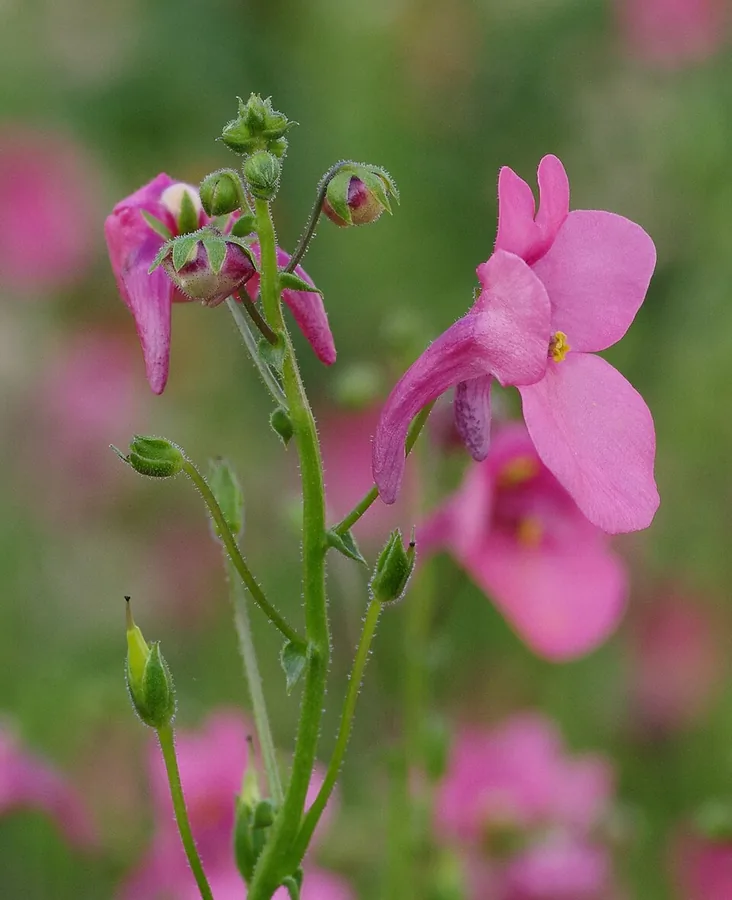
Diascia, better known as twinspur, is a low, spreading plant from South Africa that carries loose sprays of small, spurred flowers in coral, pink, rose, and orange. It earns its keep in the front of a border, tumbling over the edge of a container, or spilling out of a hanging basket. Each bloom holds a pair of backward-pointing spurs, which is where the common name comes from.
It's a tender perennial that most gardeners treat as an annual. In USDA zones 8 to 11 it can come back year after year, but anywhere colder the winter ends it, so you replant in spring or carry a plant over from cuttings. The growth stays compact, reaching about 8 to 12 inches (20 to 30 cm) tall and spreading a bit wider.
What twinspur really wants is cool weather. It flowers hardest in the mild stretches of spring and fall and tends to pause when high summer heat sets in. Keep its roots moist and give it a haircut when bloom fades, and it picks right back up as the season cools.
Care
The short version: full sun with afternoon relief where summers are hot, soil that stays evenly moist but drains well, and regular pinching and deadheading to keep the flowers coming.
Light
Diascia flowers best in full sun, though it appreciates a little afternoon shade where summers run hot. Too much shade thins the bloom and leaves you with stretched, floppy stems.
Water
Keep the soil evenly moist and never let it dry out, especially in pots and hanging baskets, which lose water fast. Watering every 2 to 4 days suits most plantings, more in heat. Dry roots are one of the quickest ways to shut down the flowers.
Soil
Plant in moderately fertile, well-drained soil enriched with some organic matter, and keep it consistently moist. Twinspur is easygoing about pH and handles anything from 6.0 to 8.0, slightly acidic right through to alkaline.
Temperature
This is a cool-weather plant that tolerates a wide range, roughly 10°F to 90°F (-12°C to 32°C). It blooms hardest in mild spring and fall weather and tends to pause when summer turns hot.
Humidity
Ordinary outdoor humidity is all it needs, so there's no level to chase. Good airflow matters more than any humidity reading, since it keeps the foliage dry and discourages the slugs and snails that like damp, still corners.
Feeding
Feed monthly through the growing season with a balanced general-purpose fertilizer made for container and bedding plants. Steady, light feeding keeps a basket or pot blooming without pushing soft, leggy growth.
Pruning
Pinch young plants early to build a bushy, branching shape, and deadhead spent flowers to keep the bloom going. When flowering fades in summer heat, shear the whole plant back and it returns with a fresh flush in fall.
Size & spacing
Plants stay low at 8 to 12 inches (20 to 30 cm) tall and spread 12 to 18 inches (30 to 46 cm) wide. Give each one room to mound and trail so the planting fills in without crowding.
When to plant
Diascia is a cool-season bloomer that won't take frost. Start seed indoors in late winter or sow it outdoors right before the last frost, set plants out once the cold has passed, and enjoy flowers from spring through fall with a likely lull in the heat of midsummer.
Northern hemisphere
Southern hemisphere
Typical months for a temperate climate: start earlier in warm zones, later where spring frosts linger.
- Sow: 6-8 weeks before the last spring frost; seed may also be sown outdoors 1-2 weeks before the last frost date
- Plant: After danger of frost has passed in spring
- Harvest: Spring through summer to fall (April to frost)
Hardiness
USDA hardiness zones: 8–11
Temperature: down to -12°C
Troubleshooting
Diascia is an easy plant, and most of its troubles are cosmetic rather than serious. A midsummer slump, a few chewed leaves, or stretched stems are the usual complaints. Match what you see below and the fix is almost always simple.
Flowering stalls and the plant looks tired by midsummer
This is the summer heat pause, not a sickness, and the foliage usually stays healthy through it. Diascia comes from cooler conditions and slows or quits blooming once the weather turns hot. Shear the planting back and keep the soil moist, and it returns with a fresh flush of flowers in fall.
Fix:
- Shear the planting back to encourage a fresh flush of fall bloom
- Keep soil consistently moist during heat
Ragged holes in the leaves and flowers, with silvery trails
Snails and slugs are the culprits, and they feed at night or after rain. Look for shiny slime trails near the damage to confirm them. Hand-pick them in the evening, set out traps or bait, and clear away the damp debris where they shelter.
Fix:
- Hand-pick snails and slugs in the evening
- Use traps or appropriate slug baits
Stretched, sparse stems carrying few flowers
Leggy growth comes down to two things: not enough pinching and not enough sun. Stems stretch with wide gaps between the leaves and the bloom thins out. Pinch young plants to push branching, deadhead as you go, and move container plants somewhere brighter.
Fix:
- Pinch young plants to promote branching
- Deadhead spent flowers regularly
- Move container plants to a sunnier location
Toxicity
Good news for pet owners and parents: diascia is not toxic. Twinspur isn't on the ASPCA's list of harmful plants, and there are no recorded cases of it poisoning animals or people. You can grow it anywhere cats, dogs, rabbits, or children might wander.
Safe for
People · Cats · Dogs · Horses · Rabbits · Livestock · Birds
Cats None
Twinspur is not listed as toxic to cats, so a nibbled leaf is no cause for worry. A cat that eats a lot of any plant might get a brief upset stomach, which is true of most greenery.
Dogs None
Dogs can be around diascia without any risk of poisoning. The worst a curious chewer faces is mild, passing stomach upset from the roughage, nothing tied to the plant itself.
Horses Safe
Diascia carries no known toxins for horses, so it poses no danger near a paddock or in a mixed border they can reach.
Rabbits Safe
Rabbits can graze the foliage without harm. They often find the soft leaves tempting, and there's nothing in the plant that should worry you.
Livestock Safe
Grazing animals such as goats, sheep, and cattle can browse twinspur safely, as it holds no compounds known to trouble livestock.
Birds Safe
Both wild and backyard birds are fine around diascia. Neither the flowers nor the seed pose any threat.
People Safe
Diascia is harmless to handle and is not known to poison people. It isn't grown to be eaten, but a child who tastes a flower comes to no harm.
Varieties
Breeders have given twinspur a wider range of colors and tougher, more compact plants. These are the names worth looking for.
Coral Canyon
A hardier selection grown for its sheets of coral-pink flowers and tougher garden performance.
Flirtation Orange
A bedding and container favorite that swaps the usual pink for warm orange blooms.
Diamonte series
A compact, mounding hybrid series bred for dense flowering in pots and hanging baskets.
Darla Rose
A vigorous grower carrying bright rose-pink flowers and chosen for its heavy bloom.
How to propagate
Twinspur is easy to multiply, whether you start fresh from seed each year or take cuttings to keep a named variety exactly as it is.
SeedEasy
Start indoors 6-8 weeks before the last frost, or sow outdoors 1-2 weeks before the last frost date · Several weeks to germinate and establish before blooming the same season
Seed is the simplest route, and you have two windows. Start it indoors 6 to 8 weeks before your last frost, or sow it straight into the ground a week or two before that frost date. Either way it takes a few weeks to come up and settle in, then flowers the same season.
Stem cuttingsEasy
Take softwood cuttings during the active growing season in spring or summer · Roots in roughly 2-4 weeks under warm, moist conditions
Cuttings are how you keep a named hybrid true to type. Take softwood cuttings during active growth in spring or summer, and they root in about 2 to 4 weeks if you keep them warm and moist. It's also the best way to carry a favorite plant through winter in a cold climate.
Myths
Diascia is poisonous to cats and dogs and must be kept away from pets.
Twinspur is not on the ASPCA's toxic list and counts as a pet-safe plant. There are no documented cases of it poisoning a cat or dog. You can plant it freely around animals.
Diascia is a hardy perennial everywhere and will overwinter in any garden.
It only survives the winter outdoors in USDA zones 8 to 11. Everywhere colder, gardeners grow it as an annual and either replant each spring or root cuttings to carry a favorite over.