Shrub · Scrophulariaceae
Butterfly Bush
Buddleja davidii
Give it full sun and a hard spring cut, and the butterfly bush fills with flowers and wings all summer.
Full sun
Every 7–14 days
USDA 5–9
6–12 ft · 1.8–3.7 m
Overview
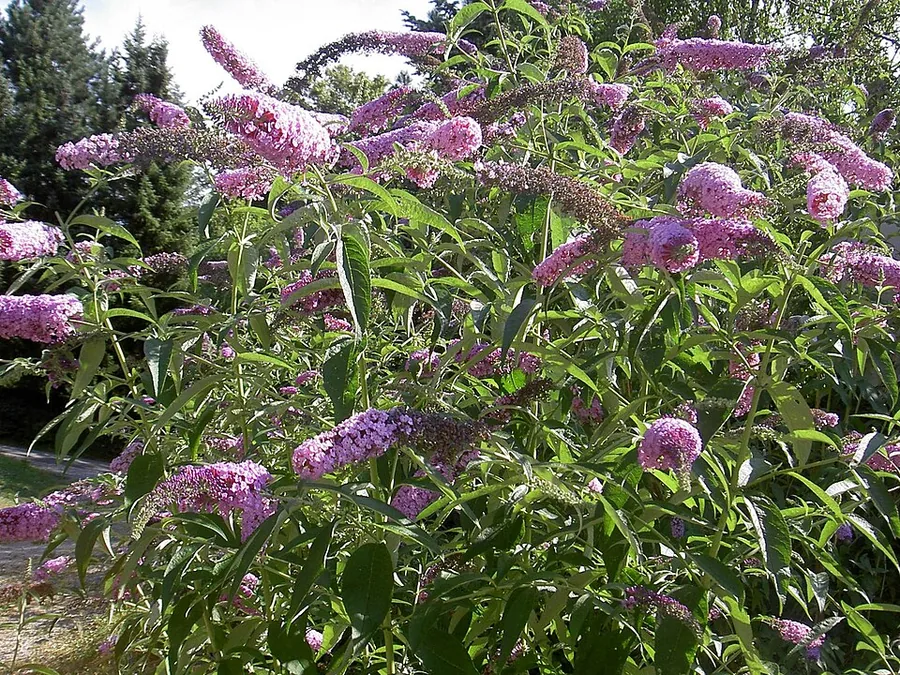
Few shrubs pull in pollinators like a butterfly bush in bloom. Long, tapering flower spikes open from summer into early fall and hum with butterflies, bees, and hummingbirds drawn to the nectar. It grows fast and easy in full sun, shrugs off drought once its roots take hold, and asks very little in return.
This is a big, loose shrub. Plants reach 6 to 12 feet (1.8 to 3.7 m) tall and can spread even wider, with arching stems that bloom on the current season's growth. That habit is the key to keeping it: cut it back hard each spring and it answers with vigorous new shoots and the largest flower display.
The plant has a real downside worth knowing before you dig the hole. The common species seeds itself with abandon and has escaped gardens to become a regulated noxious weed in states like Oregon and Washington. You can still grow it well by choosing a low-seed cultivar and cutting off spent flowers before they set seed.
Care
The short version: full sun and average, well-drained soil, a deep watering only now and then once it's established, a hard cut back in late winter, and deadheading through summer to keep the flowers coming and the seed in check.
Light
Butterfly bush wants full sun, ideally 6 or more hours a day. It will hang on in part shade, but the payoff is thin: leggy, sparse growth and far fewer of the flower spikes that draw the pollinators.
Water
Water new plants regularly through their first season to settle the roots, then ease off. Once established it is drought tolerant and needs only a moderate soak every 7 to 14 days. Keep the soil on the dry side rather than soggy, since wet feet invite root rot.
Soil
It takes almost any average, well-drained soil and tolerates a wide pH from 6.0 to 8.0. The one thing it won't forgive is poor drainage, so dig grit or compost into heavy clay before planting.
Temperature
This is a tough, cold-hardy shrub that handles roughly -20°F to 100°F (-29°C to 38°C) across zones 5 to 9. In the colder end of that range it often dies back to the ground each winter, then resprouts from the base in spring.
Humidity
Ordinary outdoor air suits it, so there's no humidity target to hit. Good airflow does more good than any number, helping keep mites and leaf problems at bay.
Feeding
Go light. A single feeding in spring is plenty, and too much fertilizer pushes leafy growth at the expense of flowers. In decent soil it often needs nothing at all.
Pruning
Because it blooms on new wood, cut it back hard in late winter or early spring, to within about a foot of the ground, for the strongest growth and biggest flowers. Then deadhead the spent spikes through summer to keep new blooms coming and to stop the plant from seeding itself around.
Repotting
Butterfly bush is a large shrub that's rarely grown in a pot for long. If you do container one, repot only when roots circle the pot, emerge from the drainage holes, or water runs straight through, all signs it has outgrown its home.
Size & spacing
Give this shrub real room. Plants reach 6 to 12 feet (1.8 to 3.7 m) tall and spread 4 to 15 feet (1.2 to 4.5 m) wide, so set them well apart and away from paths and smaller plants they would shade out.
When to plant
Butterfly bush runs on a simple yearly rhythm. Set new plants out in spring once the frost has passed, cut established shrubs back hard before growth starts, and the flower spikes carry from summer into early fall.
Northern hemisphere
Southern hemisphere
Typical months for a temperate climate: start earlier in warm zones, later where spring frosts linger.
- Sow: Late winter to early spring (8-10 weeks before last frost) if growing sterile-permitting seed; species seeding is discouraged where invasive.
- Plant: Spring after last frost
- Harvest: Summer through early fall (June to September)
Hardiness
USDA hardiness zones: 5–9
Temperature: down to -29°C
Troubleshooting
A healthy butterfly bush has few real troubles, and most come down to wet feet, drought stress, or a missed spring pruning. Match what you see below to the cause and step in before it sets the plant back.
Wilting and dieback in soil that stays wet
Soggy ground brings on root rot, which rots the roots from below and leaves the top looking starved no matter how much you water. Fix the drainage first and stop overwatering, then dig in plenty of grit if the bed runs to heavy clay. In sandy coastal soils, nematodes can do the same damage, and badly affected plants are best pulled and replaced.
Fix:
- Improve drainage and stop overwatering
- Plant in well-drained soil; amend heavy clay before planting
- Remove and replace severely affected plants in infested ground
Speckled, bronzed leaves wrapped in fine webbing
This is a spider mite attack, and it flares up when a plant is hot, dry, and stressed for water. Blast the leaves with a hard spray of water to knock the mites loose, then keep the roots watered through the dry spell. If they hang on, treat the foliage with insecticidal soap or horticultural oil.
Fix:
- Spray foliage with a strong jet of water to dislodge mites
- Keep plants adequately watered to reduce drought stress
- Apply insecticidal soap or horticultural oil to affected foliage if needed
Sparse bloom on long, leggy stems
A butterfly bush that flowers poorly is usually short on sun or stuck on old wood. Give it a spot with at least 6 hours of direct sun, then cut it back hard in late winter or early spring, since it blooms on new wood. Deadheading the spent spikes through summer keeps fresh flowers coming.
Fix:
- Move or site in full sun
- Cut back hard in late winter or early spring since it blooms on new wood
- Deadhead spent spikes to encourage continued bloom
Toxicity
Good news for a pet owner: the butterfly bush is not poisonous to cats, dogs, horses, or people, and it's absent from the ASPCA toxic-plant lists. The catch isn't toxicity but invasiveness, since the common species spreads into the wild and is a regulated weed in some states. The sap can irritate skin, so wear gloves when you prune.
Safe for
People · Cats · Dogs · Horses · Rabbits · Livestock · Birds
Cats Safe
Butterfly bush isn't on the ASPCA toxic list, so a curious cat that nibbles a leaf has nothing to fear. A big mouthful of any plant can still bring on a little drooling or a stomach upset, but that passes on its own.
Dogs Safe
Dogs can chew the foliage without harm, since the shrub carries no known toxin for them. The only real risk is the usual one with any plant, a mild upset stomach if a dog wolfs down a large amount.
Horses Safe
No toxicity is reported in horses. They tend to leave the woody, bitter stems alone and graze elsewhere.
Rabbits Safe
A rabbit that samples the leaves should be fine, as the plant holds no poison for them. Keep any green treat to a small portion so it doesn't crowd out hay and pellets.
Livestock Safe
Cattle, goats, and sheep can browse near a butterfly bush without poisoning, and the woody growth rarely tempts them in the first place.
Birds Safe
The plant poses no toxic threat to birds. Its nectar draws butterflies and hummingbirds, though the seed it scatters is what spreads it into the wild where it isn't wanted.
People Safe
No part of the butterfly bush is meaningfully poisonous to people, and there's no edible crop here to eat either. The sap can irritate sensitive skin, so pull on gloves before a hard pruning session.
No special toxicity handling required; wear gloves if pruning to avoid skin irritation from sap.
Varieties
Many butterfly bush cultivars exist, and the ones worth seeking out either bring a standout flower color or set little seed so they stay put. These are a few to know by name.
Black Knight
A classic, long-popular cultivar prized for its deep, near-black purple flower spikes.
Lo & Behold 'Blue Chip'
A dwarf, compact form that sets very little viable seed, which is why it clears Oregon's seedless butterfly bush rules.
Miss Molly
An interspecific hybrid with rich red-purple flowers that is verified as non-davidii and so escapes Oregon's noxious weed regulation.
How to propagate
Butterfly bush multiplies with ease, both from cuttings you take on purpose and from seed you usually want to prevent.
Stem cuttingsEasy
Softwood cuttings in spring to early summer; hardwood cuttings during dormancy in late fall through early spring · Softwood cuttings root in about 2-5 weeks
Cuttings are the dependable way to copy a butterfly bush, and they give you the exact cultivar you started with. Take soft green tips in spring or early summer, or woody pieces while the plant is dormant from late fall into early spring. Dip the cut end in rooting hormone, keep the soil moist, and softwood cuttings strike roots in about 2 to 5 weeks.
SeedEasy
Self-seeds readily in the garden · One growing season to a small plant
Left to its own devices the species seeds itself everywhere, and a stray seed grows into a small plant within a single season. That ease is the catch, since the wild species is invasive and regulated in parts of the country. Don't sow the straight species where it's a noxious weed, and deadhead so it can't seed itself into the wild.
Myths
Butterfly bush is always a harmless choice for the butterfly garden.
The flowers feed adult butterflies, but the plant is no host for their caterpillars, so it supports only half their life. Worse, the common species is a heavy self-seeder, with a single flower cluster throwing over 40,000 seeds, and it has escaped into the wild enough to be a regulated noxious weed in Oregon and Washington. Plant a sterile or seedless cultivar, or a native nectar shrub, and deadhead the spent spikes so it can't seed itself across the landscape.
Butterfly bush blooms on old wood, so you should never cut it back hard.
It flowers on new, current-season wood, which is exactly why a hard cut helps rather than hurts. Take it back close to the ground in late winter or early spring and you get vigorous fresh shoots and bigger flower spikes. In the coldest zones the plant often dies back to the ground on its own anyway.