Bulb · Asteraceae
Dahlia
Dahlia × hybrida
Give it full sun, rich soil, and steady water, and the dahlia blooms hard from midsummer to frost.
Full sun
Every 2–4 days
50–84°F · 10–29°C
90–120 days
Overview
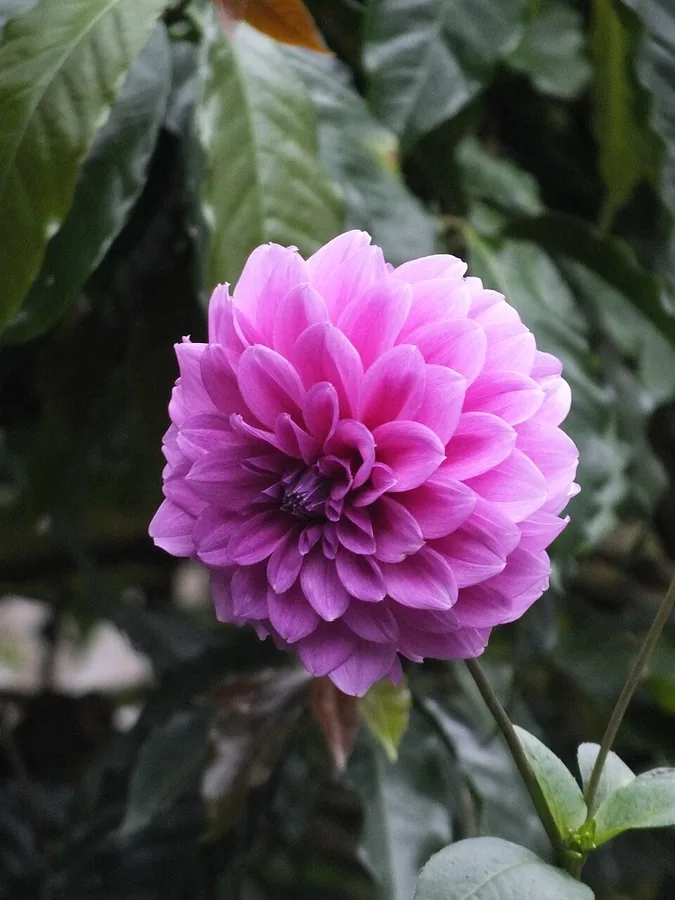
Few flowers carry a late-summer border like the dahlia. It belongs to the daisy family and grows from a fleshy tuber, sending up fast, bushy growth that flowers from midsummer right up to the first frost. The blooms range from tidy little pompons to plates the size of a dinner plate.
Choice is the fun part. Decorative, cactus, pompon, ball, and dwarf bedding forms give you a huge spread of shape and size, with plants running anywhere from 1 to 6 feet (30 to 183 cm) tall. Taller kinds make superb cut flowers and want staking, while the dwarf seed-grown types slot into the front of a bed.
Dahlias reward attention without demanding much skill. Give them sun, rich soil, and water that never quite runs dry, and they flower for months. The two things to stay ahead of are soggy soil, which rots the tubers, and the winter cold, which means digging and storing the tubers anywhere colder than zone 7.
Care
The short version: full sun, rich and well-drained soil kept evenly moist, a low-nitrogen feed through summer, and a fall lift of the tubers wherever winters drop below zone 7.
Light
Dahlias want full sun, ideally 6 or more hours a day, to bloom their hardest. They take a little afternoon shade where summers run hot, but deep shade gives you leggy plants and few flowers.
Water
Keep the soil evenly moist through the growing season and never let it dry out, watering deeply every 2 to 4 days and mulching to hold it in. Stop short of soggy ground, though, because waterlogged soil rots the tubers.
Soil
Plant in rich, well-drained soil loaded with organic matter. Drainage is the part that matters most, since tubers sitting in wet ground rot, so work in compost and raise the bed if your soil holds water.
Temperature
Dahlias grow well from about 50°F to 84°F (10°C to 29°C) and bloom through the warm months. They have no tolerance for frost, which kills the top growth and threatens the tubers below.
Humidity
Ordinary outdoor humidity suits them, so there's no number to hit. Good airflow counts for more, since crowded, still air is what lets powdery mildew settle on the leaves.
Feeding
Feed monthly through summer with a low-nitrogen fertilizer such as 5-10-10 or 5-20-20. Too much nitrogen pushes leafy growth at the expense of flowers and leaves the tubers more likely to rot.
Pruning
Pinch back the taller varieties while they're young to force bushier, sturdier growth. Then deadhead spent blooms as they fade to keep new flowers coming until frost.
Repotting
Lift and divide the tubers every 2 to 3 years to keep them vigorous. Clumps that grow congested flower less and throw smaller blooms, so dividing renews them.
Size & spacing
Plants run from 1 to 6 feet (30 to 183 cm) tall with a spread of 1 to 3 feet (30 to 91 cm). Give each one room so air moves freely and mildew has less of a chance.
When to plant
Dahlias are warm-season tubers that won't tolerate frost. Start them indoors in late winter if you want a head start, set them out once the soil has warmed past 60°F (16°C), and they bloom from midsummer until frost cuts the season short.
Northern hemisphere
Southern hemisphere
Typical months for a temperate climate: start earlier in warm zones, later where spring frosts linger.
- Sow: Start tubers or seed indoors 4 to 6 weeks before the last spring frost in colder zones.
- Plant: Plant tubers outdoors in spring after the last frost once soil has warmed to at least 60 degrees F.
- Harvest: Mid-summer through first fall frost (roughly July to first frost).
Hardiness
USDA hardiness zones: 7–10
Temperature: down to -18°C
Troubleshooting
Most dahlia trouble shows up on the leaves above ground or on the tubers below it. Catch the early signs and you can step in before a small problem spreads through the clump. Match what you see below, then act while it still helps.
Soft, mushy tubers that never sprout
Tuber rot sets in when the soil stays wet and the drainage is poor, and damaged or over-fed tubers rot faster in storage. The clue is a mushy, discolored tuber with a foul smell, or a plant that wilts at the base and never emerges. Throw out any soft tubers, work organic matter into the bed to drain it, and store cured tubers dry and cool over winter.
Fix:
- Discard rotted tubers and avoid replanting in the same wet spot
- Improve soil drainage with organic matter and raised beds
- Store cured tubers dry at 35 to 45 degrees F in vermiculite or dry sand
Dusty white film spreading over the leaves
This is powdery mildew, a fungus that takes hold when plants crowd each other and the air sits still. It shows up late in the season and rubs off the leaf surface like flour. Open the planting up for better airflow, water at the base, and clear away the worst of the marked foliage.
Fix:
- Improve air circulation by proper spacing and thinning
- Avoid overhead watering and water at the base
- Remove and dispose of severely affected foliage
Curled, mottled leaves on a stunted plant
Look under the leaves for aphids and leafhoppers, the small soft-bodied insects that suck sap and carry mosaic virus from plant to plant. A mottling that won't wash off points to virus rather than feeding damage alone. Knock light infestations off with a strong jet of water, pull and destroy any plant with stubborn viral symptoms, and keep the insect carriers in check.
Fix:
- Spray off light aphid infestations with a strong stream of water
- Remove and destroy plants showing persistent viral symptoms
- Control insect vectors to limit virus spread
Toxicity
Dahlias are only mildly toxic, so they don't pose the danger that some garden plants do. A pet that chews the foliage may get a mild stomach upset, and the sap can irritate skin on contact, but people are essentially safe and the tubers are even edible once cooked. Still, keep curious pets from grazing on the leaves and tubers.
Toxic to
Cats · Dogs · Horses · Rabbits · Livestock · Birds
Safe for
People
Cats Mild
A cat that nibbles the foliage may drool or vomit and feel briefly off its food. Brushing against the plant can leave a patch of mild skin irritation.
Dogs Mild
Expect a mild upset stomach and a little drooling if a dog chews the leaves or stems, and the sap can redden the skin on contact.
Horses Mild
Grazing on the foliage tends to bring on no more than a passing stomach upset, with the chance of mild skin irritation where the plant touches.
Rabbits Mild
The same irritant compounds upset a rabbit's gut, so keep the plant out of the hutch and the run rather than letting it browse.
Livestock Mild
Cattle, goats, and sheep usually leave dahlias alone, but a hungry animal that eats a quantity of foliage can end up with a mild digestive upset.
Birds Caution
There is little firm data on birds, so treat the plant as a caution and keep pet birds from pecking at the leaves and stems.
People Low risk
People are essentially safe, and the tubers are even edible once cooked. The main nuisance is contact dermatitis, so wear gloves if your skin reacts to the sap.
Wear gloves when handling foliage if you are prone to contact dermatitis, and keep tubers and cuttings out of reach of pets.
Helpline numbers

United States
ASPCA Animal Poison Control: (888) 426-4435 (fee applies)

United Kingdom
Animal PoisonLine: 01202 509000 (fee applies)

Australia
Animal Poisons Helpline: 1300 869 738
Varieties
Dahlias come in thousands of named cultivars, but growers sort them into a few broad groups by flower shape. These are the ones worth knowing.
Decorative dahlias
Fully double blooms with broad, flat-tipped ray florets, and the most common type you'll meet in gardens and as cut flowers.
Cactus dahlias
Double flowers whose narrow, rolled, pointed florets give the bloom a spiky, star-like look.
Pompon and ball dahlias
Small, rounded, tightly packed globes built from neatly cupped petals.
Dwarf bedding dahlias
Compact seed-grown plants around a foot tall that suit bedding, though they cope poorly with real heat.
How to propagate
Dahlias multiply readily, whether you split an existing clump, root spring cuttings, or sow seed for a fresh mix of plants.
DivisionModerate
Divide tuber clumps in fall after digging or in spring once eyes begin to sprout. · Several weeks to emerge after planting in warm soil
Division is the usual way to multiply a favorite dahlia. Split the clump in fall after you lift it, or wait until spring when the eyes start to swell, and make sure every piece carries part of the crown with at least one live eye. Planted into warm soil, the divisions take several weeks to push up.
Stem cuttingsModerate
Take basal cuttings in spring from sprouted tubers. · 2 to 4 weeks to root
You can also clone a variety from cuttings. In spring, take the basal shoots rising off a sprouting tuber and root them, which takes about 2 to 4 weeks, to build up more plants of the kind you want.
SeedEasy
Start seed indoors 4 to 6 weeks before last frost. · 1 to 2 weeks to germinate
Seed is the easy route, sown indoors 4 to 6 weeks before your last frost, with sprouts up in a week or two. The catch is that seedlings don't come true to the parent and mostly turn out as dwarf bedding plants.
Myths
Dahlias are completely safe around pets because they are common garden flowers.
Being a common garden flower says nothing about whether it's safe to chew. The ASPCA lists dahlia as toxic to cats, dogs, and horses, with mild stomach upset and possible skin irritation. The signs stay mild, but the plant still belongs out of a pet's reach.
Dahlia tubers can be left in the ground over winter anywhere.
They are hardy only to about zone 7, so the ground freeze in colder regions kills the tubers outright. In those zones you dig the tubers in fall and store them cool and dry, or you start over with new ones each spring.