Ornamental · Caryophyllaceae
Carnation
Dianthus caryophyllus
Give it cool air, full sun, and sharp drainage, and the carnation pays you back with fragrant, ruffled bloom.
Full sun
USDA 4–9
0–4 ft · 0.2–1.2 m
Overview
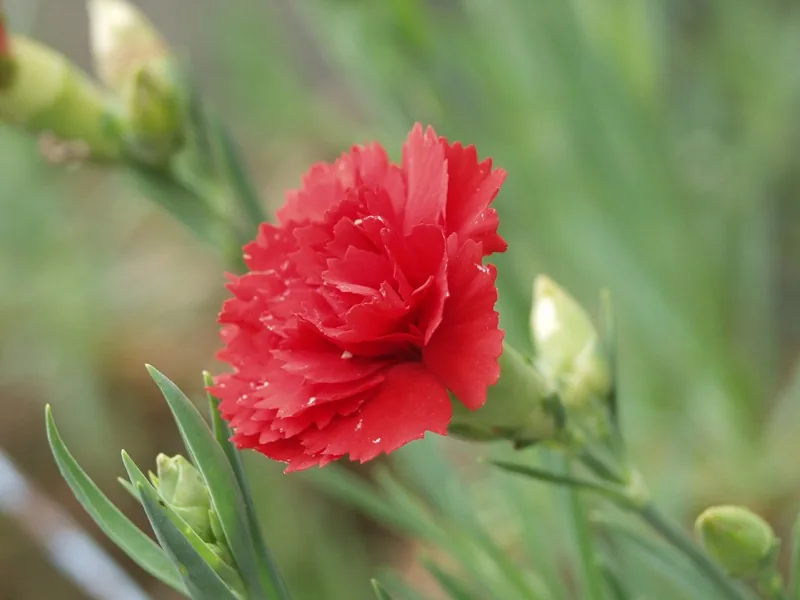
Carnations and their cousins the garden pinks belong to the dianthus clan, grown for centuries for their ruffled, clove-scented flowers. They run from low cushions a few inches tall to long-stemmed border types good for cutting, so there's a form for the front of a bed and another for the vase.
These are cool-weather plants at heart, happiest in full sun with their roots in gritty, fast-draining soil. They lean toward the alkaline side, taking a pH anywhere from 6.0 to 8.0, which sets them apart from most of what shares the border.
They are easy to grow but short-lived, fading after a few seasons unless you keep fresh plants coming along. Feed them lightly and keep their crowns dry, and they reward you with weeks of fragrant bloom from late spring into summer.
Care
The short version: full sun, cool conditions, and gritty, well-drained soil on the neutral-to-alkaline side. Keep the soil evenly moist but never soggy, feed only lightly, and deadhead spent blooms to keep the flowers coming.
Light
Carnations want full sun, a good six hours or more a day, to bloom their best and stand up without flopping. They'll take a little afternoon shade where summers turn hot, which also helps them cope with the heat they dislike.
Water
Aim for soil that stays evenly moist but never soggy, and water through any long dry spell. Wet feet are the fast track to crown rot, so let the surface dry between drinks and keep the crown itself on the dry side.
Soil
Plant in gritty, well-drained loam with some organic matter worked in. Carnations are unusual in liking neutral to slightly alkaline ground, a pH of 6.0 to 8.0, and sharp drainage matters more than richness.
Humidity
Ordinary outdoor air suits them, so there's no number to chase. Airflow counts for more than humidity, since crowded, damp foliage is what invites rust to settle in.
Feeding
Feed only lightly through the growing season and resist the urge to do more. Too much fertilizer grows a floppy, gappy plant with weak stems rather than more flowers.
Pruning
Deadhead spent blooms to keep new ones coming, and pinch out the growing tips early to push bushier growth. After the main flush, shear the mat-forming pinks back for a scattering of repeat bloom.
Size & spacing
Plants range from low cushions about 6 inches (15 cm) tall to border types reaching 4 feet (120 cm), spreading 6 to 30 inches (15 to 76 cm) across. Give each one room so air moves freely and rust stays away.
When to plant
Carnations follow the cool end of the season. Start seed indoors in late winter, set plants out in spring once hard frost has passed, and look for fragrant bloom from late spring through summer, stretched longer if you keep deadheading.
Northern hemisphere
Southern hemisphere
Typical months for a temperate climate: start earlier in warm zones, later where spring frosts linger.
- Sow: Late winter to early spring, about 8 weeks before last frost
- Plant: Spring after danger of hard frost; mat-forming pinks can also be set out in early spring
- Harvest: Late spring through summer (roughly May to July), prolonged by deadheading
Hardiness
USDA hardiness zones: 4–9
Temperature: down to -34°C
Troubleshooting
Most carnation trouble starts at the roots or in the heat. Watch the crown, the lower stems, and the new growth, and you can step in before a small problem spreads. Match what you see below, then act while it still helps.
Black, mushy stem base and a collapsing plant
This is crown or root rot, and it comes from soil that stays too wet, especially over a soggy winter. There's no saving a plant once the crown turns soft and dark, so dig it out and bin it. Fix the drainage and ease off the water before you replant.
Fix:
- Remove and discard severely affected plants
- Improve soil drainage
- Reduce watering and avoid wet, soggy soil
Rusty orange pustules on leaves and stems
This is rust, a fungus that takes hold when foliage stays wet and air can't move. Pull off the spotted leaves as soon as you see them, give each plant more room, and keep water off the leaves by aiming the hose at the soil.
Fix:
- Remove and discard affected foliage
- Improve air circulation by spacing plants
- Avoid overhead watering to keep foliage dry
Yellowing leaves and decline in the heat of summer
Carnations hate heat, so a plant that fades during a hot spell is usually showing heat stress rather than any pest or disease. Give it afternoon shade, keep the soil evenly moist through the worst of it, and reach for heat-tolerant pinks like the cheddar types if you garden somewhere warm.
Fix:
- Provide afternoon shade in hot regions
- Maintain even soil moisture during heat
- Choose heat-tolerant pinks such as cheddar pinks in warm climates
Curled new growth crawling with tiny insects
Those soft-bodied bugs clustered on the buds and stems are aphids, and the sticky film they leave behind is honeydew. Blast them off with a strong jet of water, cut out any badly infested shoots, and follow up with insecticidal soap if they keep coming back. Go easy on feeding, since lush new growth is exactly what draws them in.
Fix:
- Spray plants with a strong stream of water
- Remove heavily infested shoots
- Use insecticidal soap if needed
Toxicity
Carnations are only mildly toxic, so they're a low-risk plant to keep around. A curious cat or dog that chews the leaves may get a brief upset stomach and the sap can leave a mild skin rash, but the petals are even used as an edible garnish for people. Keep pets from making a meal of the foliage and you have little to worry about.
Toxic to
Cats · Dogs · Horses · Rabbits · Livestock · Birds
Safe for
People
Cats Mild
A cat that nibbles the leaves or flowers may drool, vomit, or get a bout of diarrhea, and brushing against the sap can leave a mild skin rash. The signs are mild and tend to clear on their own.
Dogs Mild
Dogs react much the same way, with a little vomiting or loose stool after a chew and sometimes mild skin irritation from the sap. Nothing here is dangerous, but it's worth a call to the vet if it drags on.
Horses Caution
There's no specific report of poisoning in horses, though the same mild irritant could upset the stomach. Best to keep them from grazing on it.
Rabbits Caution
Rabbits aren't known to be harmed, but the plant isn't a food for them either, so it's safer left off the menu.
Livestock Caution
Cattle, goats, and sheep have no documented poisoning from carnations, yet the irritant compound could still cause mild stomach upset if they graze a patch.
Birds Caution
Carnations aren't flagged as a bird hazard, but with little known about how they affect birds, it's wise to keep pet birds away from the foliage.
People Petals safe
The petals are edible and turn up as a garnish, so a carnation poses no real risk to people. The only catch is that the sap can leave sensitive skin a touch irritated, so rinse your hands after a long handling session.
Sap may cause mild skin irritation in sensitive people; wash hands after handling.
Helpline numbers

United States
ASPCA Animal Poison Control: (888) 426-4435 (fee applies)

United Kingdom
Animal PoisonLine: 01202 509000 (fee applies)

Australia
Animal Poisons Helpline: 1300 869 738
Varieties
Carnations and pinks come in hundreds of forms, from tall florist types to low fragrant mats. These few are worth knowing by name.
Clarion
A border carnation that carries clear yellow double flowers on strong upright stems above gray-silver foliage.
Bath's Pink
A mat-forming cheddar pink with fragrant fringed soft-pink blooms that shrugs off heat, humidity, and drought better than most dianthus.
Firewitch
A cheddar pink prized for its vivid magenta single flowers, blue-gray foliage, strong fragrance, and real cold hardiness.
How to propagate
Because carnations are short-lived, it pays to keep new plants coming, whether you split an old clump or root a few cuttings.
Stem cuttingsModerate
Take terminal cuttings in early summer · Several weeks to root
Cuttings are the way to copy named cultivars, since those don't come true from seed. Snip a healthy shoot tip in early summer and stand it in moist mix, and it takes several weeks to root into a plant identical to its parent.
DivisionEasy
Early spring as new growth begins · One growing season
Carnations are short-lived, so splitting clumps every few years keeps them going. Lift and divide in early spring as new growth starts, and the pieces settle in over a single growing season.
Myths
Carnations are tough plants that thrive in hot summer climates.
It's the other way around. Carnations want cool weather and struggle through high heat, which makes them a shaky bet for hot southern gardens. Reach for heat-tolerant pinks like the cheddar types if your summers run warm.
Feed carnations heavily and you'll get the best blooms.
Pile on the fertilizer and you get tall, floppy stems and gaps in the plant, not more flowers. A light hand at feeding gives you the sturdiest growth and the best bloom.