Houseplant · Zamiaceae
Cardboard Palm
Zamia furfuracea
A tough, sculptural cycad that asks for little, but its every part is dangerously toxic.
Full sun
50–84°F · 10–29°C
USDA 9–11
2–5 ft · 0.6–1.5 m
Overview
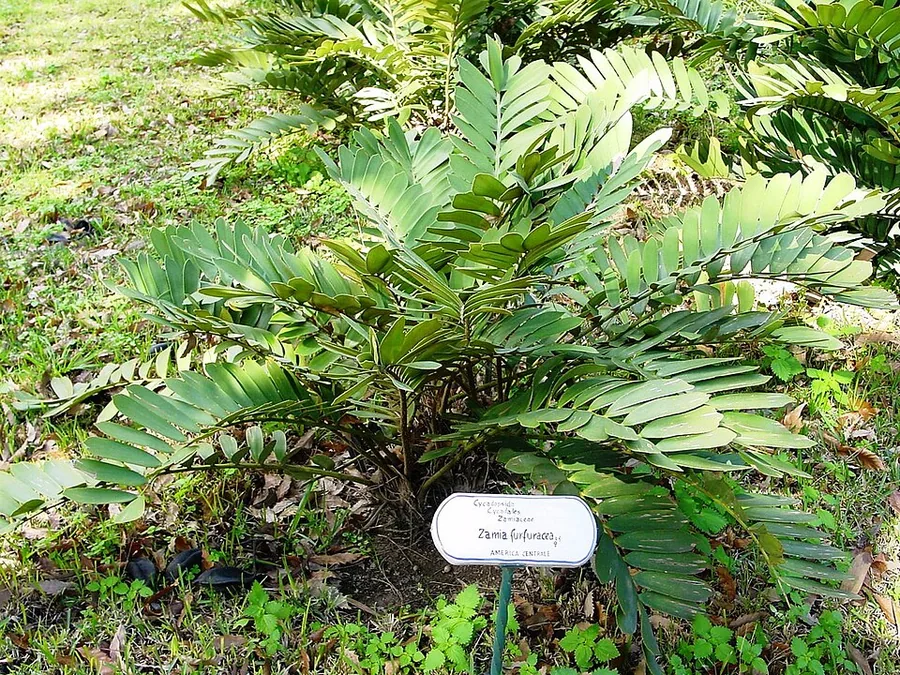
The cardboard palm earns its name from the stiff, fuzzy leaflets that feel like thick paper, yet it is not a palm at all. It is a cycad, an ancient group of plants closer to conifers than to anything in the palm family, native to Veracruz in eastern Mexico. Grown as a houseplant it stays low and wide, sending out arching fronds from a squat trunk for years on end.
Part of its appeal is how little it demands. It stores water in a tuberous underground stem, shrugs off drought and salt spray, and asks only for bright light and soil that drains fast. The trade-off is patience, since it is a slow grower that puts out new fronds in no hurry and resents being shifted around.
The one thing to know before you bring it home is the danger. Every part holds cycasin, and the bright seeds are the most poisonous of all, enough that one or two can kill a dog. It belongs in a household that can keep it well out of reach of pets and children.
Care
The short version: bright light, ideally full sun, in sandy, fast-draining soil that you let dry out between waterings, with only sparing feeding in the growing season and a careful eye on where it sits so no pet or child can reach it.
Light
Give it as much light as you can, with full sun the ideal. It will get by in partial sun, partial shade, or bright indirect light, but too little and the fronds stretch pale and weak as the plant leans toward the window.
Water
Let the soil dry out completely between waterings, since the tuberous stem stores its own reserve and rots if kept wet. Water regularly through the growing season, then ease off and keep it on the dry side during its winter rest. Overwatering is the fastest way to kill it.
Soil
Plant it in sandy, coarse, fast-draining soil, something like a well-drained sandy loam. Sharp drainage is the single most important thing, because soggy roots are what bring on rot.
Temperature
It is happiest between 50°F and 84°F (10°C to 29°C) and cannot take a hard frost. In a cold climate that means growing it as an indoor plant or bringing it inside well before the first freeze.
Humidity
Average household humidity suits it fine, so there is no number to chase. Coming from a dry Mexican habitat, it handles ordinary indoor air without any fuss.
Feeding
Feed it lightly, using a balanced general-purpose fertilizer applied sparingly through spring and summer. As a slow grower it needs very little, and a heavy hand does more harm than good.
Pruning
There is almost nothing to do here. Cut away only dead, damaged, or yellowed fronds at the base, and always wear gloves while you do it, since every part is toxic and contact with the seeds is best avoided.
Repotting
Repot only every few years, because this slow grower resents disturbance and prefers to sit slightly pot-bound. Move it up a size when the roots crowd the pot or the plant turns top-heavy, and handle the toxic tissue with gloves.
Size & spacing
Indoors it reaches about 2 to 5 feet (61 to 152 cm) tall but spreads far wider, from roughly 5 to 8.5 feet (152 to 259 cm) across. Give it plenty of elbow room so the broad arching fronds can fan out.
Troubleshooting
The cardboard palm rarely gives trouble, and the two problems it does run into are easy to read. One comes from too much water, the other from too little light. Match what you see below and adjust before the plant declines.
Soft, mushy base with yellowing fronds and collapse
This is root and caudex rot, almost always from too much water in soil that drains poorly. The tuberous stem stores its own water, so it rots fast when it sits wet. Cut the watering back at once, lift the plant, trim away any brown, foul-smelling tissue, and repot into a fresh sandy, fast-draining mix in a pot with drainage holes.
Fix:
- Reduce watering immediately
- Remove from soil and cut away rotted tissue
- Repot into fresh sandy, fast-draining mix in a pot with drainage holes
Stretched, pale fronds leaning toward the window
This is etiolation, the sign of a plant reaching for more light. New fronds come in sparse, long, and weak instead of stiff and compact. Move it somewhere brighter, anywhere from full sun to partial shade, and give the pot a quarter turn now and then so it grows evenly rather than tipping to one side.
Fix:
- Move to a brighter location with full sun to partial shade
- Rotate the plant periodically for even growth
Toxicity
This is one of the most dangerous houseplants you can own. It is a cycad, not a true palm, and every part carries cycasin, a toxin that attacks the liver. The brightly colored seeds are the worst, and just one or two can be fatal to a dog. Keep it well out of reach of pets, livestock, and children, wear gloves whenever you handle it, and treat any swallowed piece as an emergency.
Toxic to
Cats · Dogs · Horses · Rabbits · Livestock · Birds · People
Cats Severe
Even a nibble is dangerous. Watch for vomiting that may turn bloody, dark stools, increased thirst, and the yellow tinge of jaundice as the liver begins to fail. Without fast treatment this is often fatal.
Dogs Severe
Dogs are drawn to the plant and the seeds, and as little as one or two seeds can kill. Bloody vomiting, bloody diarrhea, bruising, and jaundice point to liver damage already underway. Get to an emergency vet at the first sign.
Horses Severe
The same cycasin that poisons pets attacks a horse's liver. Expect vomiting, dark stools, jaundice, and weakness, with liver failure and death following in serious cases.
Rabbits Severe
A rabbit cannot vomit out a toxin this strong, which makes any amount eaten especially dangerous. The cycasin drives the same liver injury seen in other animals, so keep the plant entirely out of reach.
Livestock Severe
Grazing cattle, goats, and sheep are at real risk, and cattle face an added unidentified neurotoxin on top of the cycasin. Liver failure and death can follow, so never let stock browse the fronds or fallen seeds.
Birds Severe
A curious bird that pecks at a frond or a bright seed takes in the same liver toxin. Their small size means even a little goes a long way, so keep cages and perches well clear of the plant.
People Caution
This is no plant to eat. Children are most at risk from the colorful seeds, and swallowing any part can cause severe liver damage, so handle it with gloves and treat any ingestion as a medical emergency.
Keep well out of reach of pets and children; wear gloves when handling, pruning, or repotting, and avoid contact with the brightly colored seeds. Dispose of trimmings and fallen seeds where animals cannot reach them.
Helpline numbers

United States
ASPCA Animal Poison Control: (888) 426-4435 (fee applies)
Poison Control: (800) 222-1222



Canada
Poison Centres: 1-844-764-7669
Varieties
Cardboard palm is grown almost entirely as the wild species, with the female plant being the one most people picture.
Zamia furfuracea (species, female)
Female plants stand out for the showy reddish-orange seed cone they carry, packed with bright fleshy seeds, while the stiff arching fronds wear the coarse, fuzzy, cardboard-like leaflets that give the plant its name.
How to propagate
There are two ways to make more cardboard palms, both slow and both demanding care because the seeds and tissue are toxic. Neither is quick, so this is a project for a patient grower.
SeedModerate
When ripe seed is available, sown in a warm, well-draining medium · Several months to over a year; germination and growth are slow
You can raise new plants from ripe seed sown into a warm, well-draining mix, but it tests your patience, since germination and early growth crawl along over several months to more than a year. The seeds are the most poisonous part of the whole plant, carrying a heavy dose of cycasin, so wear gloves while you sow and keep them well away from pets and children.
Offsets & pupsModerate
Growing season, by separating offsets from the parent · Several months as a slow grower
During the growing season you can sometimes lift offsets, the small pups that form around the base, and pot them on their own. Expect them to settle in slowly over several months, and disturb the roots as little as you can, because this slow grower resents being moved.
Myths
The cardboard palm is a true palm and is harmless like other palms.
Despite the name, it is a cycad, not a palm, and that distinction matters. Every part holds cycasin, and a curious pet or child that swallows even a seed or two can suffer fatal liver failure. Treat it with the same caution you would give a sago palm.