Ornamental · Papaveraceae
Bleeding Heart
Lamprocapnos spectabilis
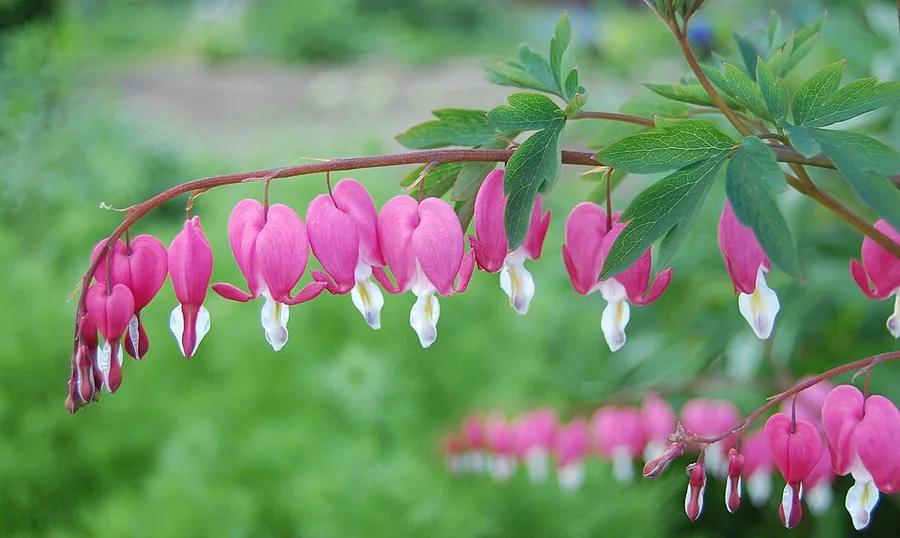
Give it shade, steady moisture, and rich soil, and bleeding heart hangs its rows of pink hearts every spring.
Partial shade
Every 3–7 days
USDA 3–9
2–3 ft · 0.6–0.9 m
Overview
Bleeding heart is the classic spring shade plant, named for the row of plump, heart-shaped flowers that dangle along each arching stem with a small white drop at the tip. It belongs to the poppy family and traces back to the woodlands of eastern Asia, where it grows in the cool, dappled light beneath taller trees. In the garden it brings that same soft, woodland feel to a shady corner.
This is a hardy perennial that comes back on its own for years, surviving winters down to USDA zone 3. The flowers open in spring, often before the leaves have fully unfurled, and the show runs through April and May. By midsummer the plant does something that catches new gardeners off guard.
As the heat builds, the foliage yellows and dies back, and the plant slips into summer dormancy until the next spring. The roots stay alive and well underground the whole time. Plan for that gap and pair it with later-rising neighbors, and you get a plant that asks for very little once it's settled in.
Care
The short version: plant it in partial to full shade in rich, humus-filled soil, keep that soil evenly moist through spring and summer, and don't let it sit in soggy ground over winter.
Light
Bleeding heart wants partial to full shade, the kind of cool, dappled light it would get under trees in the wild. A little morning sun is fine, but hot afternoon sun scorches the leaves and pushes the plant into dormancy early.
Water
Keep the soil evenly moist through spring and summer, since this plant can't take summer drought. Steady moisture also holds the foliage longer before it fades. Just don't let it sit in soggy, waterlogged ground, especially over winter, or the roots rot.
Soil
Plant it in moist, well-drained soil rich in humus, the loose, leafy kind of ground you'd find on a woodland floor. It isn't fussy about acidity and grows well anywhere from pH 6.0 to 8.0, so work in plenty of compost and you're set.
Humidity
Ordinary garden humidity suits it fine, so there's no level to chase. What the plant really cares about is moisture in the soil, not moisture in the air.
Feeding
A light feeder, it does well with compost or organic matter worked in each spring, or a balanced fertilizer through the growing season. Rich, humus-filled soil often covers its needs with no extra help.
Pruning
There's no real shaping to do here. Snip off the spent flower stems to keep the plant tidy, then cut back the yellowing foliage as it dies down in midsummer. Leave the roots in place and growth returns next spring.
Size & spacing
A mature clump reaches 2 to 3 feet (61 to 91 cm) tall and spreads 18 to 30 inches (46 to 76 cm) wide. Give each plant that much room, and remember the gap it leaves behind once it goes dormant in summer.
When to plant
Bleeding heart runs on a spring schedule. Set out dormant roots or divisions in spring or fall, watch the flowers arrive in April and May, and expect the foliage to fade by midsummer as the plant goes dormant for the year.
Northern hemisphere
Southern hemisphere
Typical months for a temperate climate: start earlier in warm zones, later where spring frosts linger.
- Sow: Seed is slow and difficult; division is preferred over indoor sowing.
- Plant: Plant dormant roots or divisions in spring or fall in a shaded, woodland-type site.
- Harvest: Blooms in spring, typically April to May, often before leaves fully emerge.
Hardiness
USDA hardiness zones: 3–9
Temperature: down to -40°C
Troubleshooting
Bleeding heart is an easy plant with only a few quirks, and most of them aren't really problems at all. The big one, summer dieback, is normal and nothing to fix. Match what you see below before you reach for the trowel.
Plant rotting, collapsing, or never coming back
When the roots turn soft and mushy, the cause is almost always wet feet from soggy, poorly drained ground, and winter wet is the worst offender. Work in plenty of organic matter to open the soil up, and move the plant somewhere it never sits in standing water. Bleeding heart wants steady moisture in the growing season but sharp drainage the rest of the year.
Fix:
- Improve drainage by amending with organic matter
- Relocate to a well-drained site
Leaves yellowing and dying back in midsummer
This is summer dormancy, not death. After bloom, rising heat and dry soil tell the plant to retreat underground, and it does this every year on schedule. Keep the soil moist to hold the foliage longer, tuck hostas or ferns in to fill the gap, and leave the roots alone so growth returns next spring.
Fix:
- Keep soil moist to prolong foliage
- Interplant with hostas or ferns to fill the gap
- Leave roots undisturbed; growth resumes the following spring
Sticky, twisted new growth with tiny insects on the stems
Those soft little bugs clustered on the tender spring shoots are aphids, and the sticky film they leave behind is honeydew. Blast them off with a strong jet of water, and reach for insecticidal soap if they keep coming back. Going light on nitrogen keeps the lush new growth they love from getting out of hand.
Fix:
- Spray off with a strong stream of water
- Apply insecticidal soap if needed
Toxicity
This is a plant to keep away from mouths. Every part holds isoquinoline alkaloids, with the most in the roots and foliage, and it's listed as toxic to cats, dogs, and horses and a known poison for grazing livestock. People shouldn't eat it either, and even handling the leaves can irritate sensitive skin, so wear gloves and keep children and animals from chewing it.
Toxic to
Cats · Dogs · Horses · Rabbits · Livestock · Birds · People
Cats Mild
A cat that nibbles the leaves usually drools and brings up its food, with diarrhea to follow. A bigger mouthful can push things further into tremors and even convulsions.
Dogs Mild
Dogs tend to drool, vomit, and get loose stools after chewing the foliage. Eat enough and the alkaloids can set off shaking and seizures, so a large dose is worth a vet call.
Horses Moderate
Horses react more sharply than the small pets. Grazing the plant brings drooling, an upset gut, and diarrhea, and a heavier feed can trigger trembling and convulsions.
Rabbits Toxic
Rabbits often leave bleeding heart alone, but the same alkaloids fill the leaves and roots, so treat it as off-limits and keep it out of reach.
Livestock Toxic
This is a documented poison for grazing stock such as cattle, sheep, and goats. Animals that work through a quantity can show staggering and convulsions, so keep it well clear of pasture.
Birds Toxic
The alkaloids that harm mammals make the foliage and roots a poor bet for birds too. Keep poultry and pet birds from pecking at any part of the plant.
People Caution
No part of bleeding heart is food, and eating it in quantity can make a person sick from the isoquinoline alkaloids. Just handling the foliage can irritate sensitive skin, so wear gloves and keep curious children from putting it in their mouths.
Contact with the foliage can cause skin irritation in sensitive people; wear gloves when handling.
Helpline numbers

United States
ASPCA Animal Poison Control: (888) 426-4435 (fee applies)
Poison Control: (800) 222-1222



Canada
Poison Centres: 1-844-764-7669
Varieties
The species itself is the one most gardeners grow, but a few named selections offer a different color or a touch more heat tolerance. These are the ones worth knowing.
Alba
A pure white form that handles summer heat a little better than the species.
Gold Heart
Grown for its golden-yellow leaves, which throw the rose-pink flowers into sharp relief.
Valentine
Carries red-and-white flowers on dark red stems for a deeper, moodier look.
How to propagate
Bleeding heart is grown from division rather than seed, which is slow and fussy. Splitting an established clump gives you ready-made plants that flower far sooner.
DivisionModerate
Divide the clump in spring or fall while dormant or just emerging. · Reaches mature size within about 2 to 3 seasons.
Division is the reliable way to make more plants, done in spring or fall while the clump is dormant or just breaking ground. The roots are brittle and fleshy, so lift and split them with care, then replant straight away in moist, shaded, humus-rich soil. Give the new divisions 2 to 3 seasons to settle in and reach full size.
Myths
Bleeding heart is harmless around pets because it's only an ornamental flower.
Every part of the plant holds isoquinoline alkaloids, and the ASPCA lists it as toxic to cats, dogs, and horses. Chewing it brings drooling, vomiting, and diarrhea, and a large dose can lead to tremors and convulsions. Pretty does not mean safe, so keep pets and livestock from grazing it.
The plant has died if its leaves yellow and vanish in summer.
That dieback is the plant's normal habit, not its end. The roots stay alive underground through the dormant stretch, and the whole plant re-emerges the following spring as if nothing happened.