Houseplant · Aspleniaceae
Bird's Nest Fern
Asplenium nidus
Give it warmth, steady moisture, and humid air, and this shade-loving fern unfurls glossy fronds for years.
Bright indirect
Every 5–9 days
55–75°F · 13–24°C
USDA 11–12
Overview
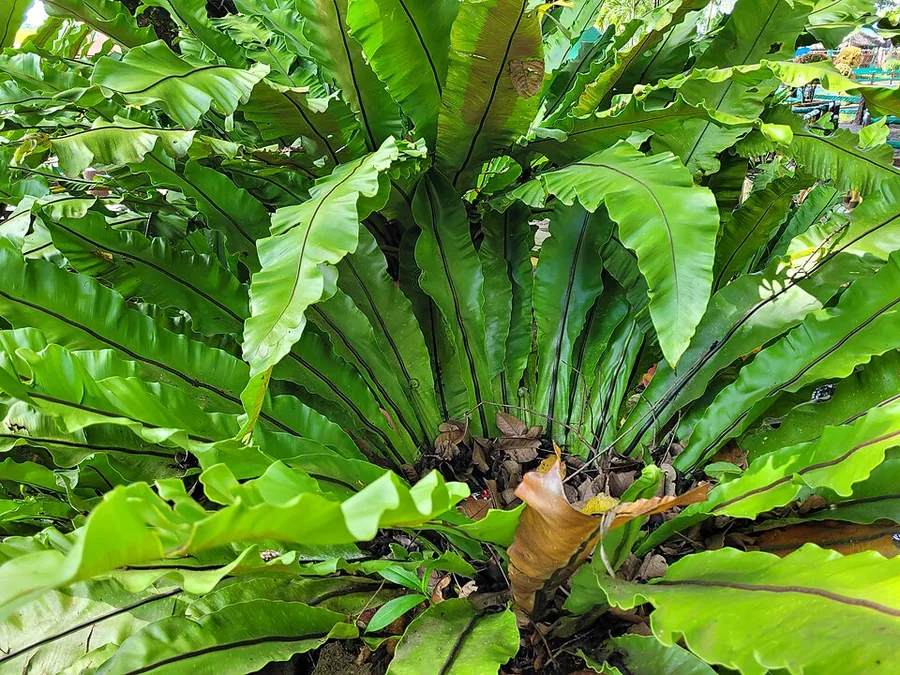
The bird's nest fern earns its name from the way its glossy fronds spiral out of a central rosette that looks just like a nest. In the wild it grows as an epiphyte, perched on tree trunks and branches rather than rooted in the ground, which tells you a lot about what it wants at home. Give it the warm, humid, shaded conditions of a forest understory and it settles in for the long haul.
Unlike the lacy, finely cut ferns most people picture, this one carries broad, undivided fronds with a bright apple-green sheen. New growth pushes up from the heart of the rosette, so the crown is the part to protect. It grows slowly, but a healthy plant is a perennial that lasts for years and steadily widens into a striking specimen.
None of this makes it fussy, only specific. Keep the mix evenly moist, the air humid, and the light soft, and the bird's nest fern asks for little else. The two things it won't forgive are water sitting in its crown and a spot baked by direct sun.
Care
The short version: bright indirect light, evenly moist (not soggy) soil watered around the crown rather than into it, warm rooms, and humidity on the high side.
Light
Give it bright, indirect light, the kind near an east or north window. It puts up with medium light and even deeper shade, but direct sun scorches the fronds and turns them pale.
Water
Keep the potting mix evenly moist but never waterlogged, watering roughly every 5 to 9 days as the top layer starts to dry. Pour the water onto the soil and never into the central nest, since trapped water there leads straight to crown rot.
Soil
Plant it in a rich, peaty fern mix that holds moisture yet drains freely. A slightly acidic pH between 5.0 and 6.0 matches the organic, airy conditions it grows in on tree bark.
Temperature
Warm rooms suit it best, between 55°F and 75°F (13°C to 24°C). Keep it clear of cold drafts and sudden chills, which brown the frond edges fast.
Humidity
This is the make-or-break factor. The fern wants high humidity of 60% to 80%, so a bathroom, a kitchen, a pebble tray, or a humidifier all help it thrive where ordinary room air would leave the tips crispy.
Feeding
Feed only during the spring and summer growth, about once a month, with a balanced liquid fertilizer diluted well. The fronds are sensitive, so a weak dose beats a strong one.
Pruning
There's very little to do here. Cut away old, browned, or damaged outer fronds at their base with clean shears, but never cut into the central rosette where new growth forms.
Repotting
Repot only every 2 to 3 years, or when roots push out the drainage holes and the rosette looks crowded. The fronds bruise easily, so handle the plant as little as you can during the move.
Size & spacing
Indoors it reaches about 18 to 35 inches (45 to 90 cm) tall with a similar spread of 24 to 35 inches (60 to 90 cm). Give the arching fronds open room so they can fan out without catching on anything.
Troubleshooting
Most bird's nest fern problems trace back to one of a few things: water in the crown, dry air, or too much sun. The fronds tell you which one, so read the signs below and match them to what your plant is showing before you change anything.
A mushy, browning center where the fronds meet
This is crown rot, and it sets in when water collects and sits in the central nest instead of draining away. Overwatering or a pot that holds too much moisture makes it worse. Water the potting mix directly from now on, cut out the affected tissue, and give the plant more air around the crown.
Fix:
- Stop watering into the central nest and water the potting mix instead
- Improve drainage and reduce watering frequency
- Remove affected tissue and increase air circulation
Pale, yellowing fronds on the bright side
Too much direct sun scorches this shade-loving fern and washes the fronds pale, worst on the side facing the window. Move it into bright indirect light or light shade, where a north-facing window or filtered light suits it well.
Fix:
- Move to bright indirect light or light shade
- Provide a north-facing window or filtered light
Sticky residue, white fluff, or brown bumps on the fronds
Those signs point to scale insects or mealybugs feeding on the fronds and leaving honeydew behind. Wipe them off by hand or with a damp cloth and move the plant away from your others until it's clean. Skip the chemical sprays, since they burn these delicate fronds.
Fix:
- Wipe pests off gently by hand or with a damp cloth
- Isolate the affected plant
- Avoid chemical insecticides, which can damage the delicate fronds
Crispy brown tips and edges on the fronds
Dry air is almost always the culprit, and cold drafts or a nearby heat source push it along. Bird's nest ferns want high humidity of 60% to 80%, so set the pot on a pebble tray or run a humidifier and move it away from vents and drafty windows. Trim the worst of the browned tips to tidy things up.
Fix:
- Raise humidity with a pebble tray or humidifier
- Move the plant away from heat vents, radiators, and drafty windows
- Trim badly browned frond tips
Toxicity
Good news for pet owners: the bird's nest fern is non-toxic across the board. The ASPCA lists it as safe for cats and dogs, and there are no known poisoning risks to other animals or to people. The only real caution is the fronds themselves, which are fragile and tear easily under curious paws.
Safe for
People · Cats · Dogs · Horses · Rabbits · Livestock · Birds
Cats None
The ASPCA lists this fern as non-toxic to cats, so a curious nibble is nothing to worry about.
Dogs None
Dogs can chew a frond without harm, since nothing in the plant is poisonous to them.
Horses Safe
No toxins here that would trouble a horse.
Rabbits Safe
Safe around rabbits, though the fragile fronds won't last long within reach of a determined chewer.
Livestock Safe
Grazing animals face no poisoning risk from this fern.
Birds Safe
Pet birds can perch and pick at it without any danger.
People Safe
Harmless to people, including children, with no known poisoning risk.
Fronds are delicate and best handled minimally, but the plant poses no known poisoning risk to pets.
Varieties
A few named cultivars stand out, mostly distinguished by how their fronds ripple, wave, or spread. These are the ones you're most likely to find for sale.
'Crispy Wave'
Its upright fronds carry heavily ruffled, rippling margins that give it a crested, wavy look.
'Antiquum'
Broad, strap-shaped fronds with gently undulating edges make this one the classic nest form.
'Osaka'
Narrow, strap-like fronds run along a crinkled, rippled edge for a finer texture.
'Victoria'
Long, tongue-shaped fronds taper to pronounced wavy edges down their length.
How to propagate
Multiplying a bird's nest fern is honest work, not a quick win. It spreads by spores rather than the easy divisions or cuttings of many houseplants, so most growers simply buy a new plant.
DivisionDemanding
Spring · Several months to over a year
This is not an easy plant to multiply at home. Ferns reproduce by spores rather than seed, and spore propagation is slow and fussy, needing controlled humidity and sterile conditions. True bird's nest ferns rarely divide cleanly either, and even a successful start can take anywhere from several months to over a year to establish.
Myths
You should keep the central nest of the fern filled with water.
This is the fastest way to kill the plant. Water pooling in the central rosette invites crown rot, the one problem that can take the whole fern down. Water the potting mix instead and keep the crown dry.
Bird's nest fern is toxic to pets like many common houseplants.
The ASPCA lists it as non-toxic to both cats and dogs. A curious pet can nibble a frond without harm, which makes this one of the safer ferns to keep in a home with animals.