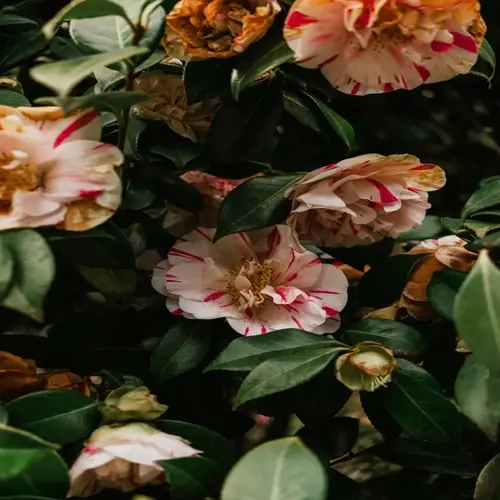

Most gardeners find camellias hard to grow because their soil isn't acidic enough. Camellias need a pH between 5.5 and 6.5 to thrive, and most garden soils sit above that range. Get the soil wrong and your camellia will yellow, drop its buds, and look sick no matter what else you do right.
I learned this the hard way with my first japonica. The leaves turned pale yellow between the veins within two months of planting. I thought it needed more fertilizer, so I added a general purpose blend. The plant got worse. A soil test showed my pH sat at 7.2, which was too high for any camellia to pull iron from the ground. That iron lockout caused the yellow leaves, not a lack of food. Most camellia growing problems start with this same mistake.
The reason why camellias struggle in normal garden soil goes back to where they came from. These plants evolved in the acidic forest floors of southern Japan. Layers of rotting leaves kept the soil pH low for thousands of years. Your camellias still depend on that same acid environment to absorb iron and manganese from the dirt. Without those two nutrients, the leaves fade and growth stops cold.
Soil pH isn't the only trap. Clemson Extension names three serious diseases that hit camellias hard. Dieback and canker cause branches to die from the tips down. Flower blight turns your blooms brown and mushy. Root rot from wet soil kills the plant below ground before you even notice a problem above.
The good news is that you can dodge two of those three diseases by picking the right species. Sasanqua camellias resist root rot and skip flower blight on their own. Japonicas catch both of those diseases with ease. If your yard has heavy or wet soil, a sasanqua will save you years of headaches that a japonica would cause.
Watering trips up a lot of growers too. Camellias form their flower buds during July through September, and they need steady moisture during that window. I skipped watering during a dry August one year and every bud on my Yuletide dried up before fall. The plant looked fine from the leaves, but not a single flower opened that season. Your camellias need about one inch of water per week during bud set to keep those flowers coming.
You can fix most of these issues before you even put a plant in the ground. Test your soil pH first and amend with sulfur or pine bark to bring the number down to 6.0 or below. Mix in 3 to 4 inches of composted pine bark when you dig your planting hole. Spread pine straw mulch around the base every year to keep the acid level steady as it breaks down.
Choose a sasanqua over a japonica if you want the easiest path forward. Feed once in spring with an acid fertilizer, water well during summer, and mulch each fall. These simple steps turn a "hard" plant into one of the most rewarding shrubs in your yard. Camellias aren't tough to grow once you know what they need from the soil under their roots.
Read the full article: Camellia Sasanqua Varieties and Care