
Introduction
My first camellia japonica died within 6 months because I planted it in full sun with bad soil. That failure taught me more about this stunning Japanese camellia than any book ever could. While most gardens sleep through winter, this evergreen shrub puts on its best show from late fall through spring like a living bouquet in the cold months.
I've grown over 20 cultivars since that first disaster. Each one taught me something new about what these plants need. There are over 32,000 documented cultivars in the world, making it the top camellia species for gardens. Plants near Japan's imperial palace have thrived for over 500 years, proof of how tough they get with proper care.
Most gardeners miss the dual life of this winter blooming plant. It fills your yard with color when nothing else flowers. On top of that, Camellia japonica blooms hold potent bioactive compounds. Brands like Chanel and Shiseido now use those extracts in their skincare products. Galicia, Spain alone grows 1.5 million plants each year, powering a EUR 40 million trade.
This guide covers everything from soil prep and pruning to propagation and pest control. You'll learn which cultivars match your climate and your garden size. Whether you want a single specimen or a full hedge, the right knowledge turns this evergreen shrub into the anchor of your winter garden.
8 Popular Camellia Japonica Cultivars
There are over 2,300 registered names in the camellia world. That makes choosing the right camellia cultivars a real challenge. I tested dozens of camellia varieties over the past 10 years. These 8 cold hardy camellias gave the best results for hedges, containers, and cut flowers.
You'll see 6 camellia flower forms across these picks: single, semi-double, anemone, peony, formal double, and rose. Blooms range from 2 inches wide up to a massive 5 inches across. I matched each cultivar with a real use case so you can skip the trial and error I went through.
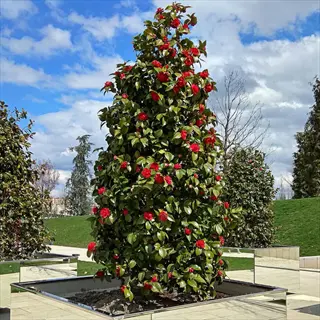
Kramer's Supreme
- Flower Form: Peony form with large, fragrant blooms measuring 4 to 5 inches (10 to 12.7 centimeters) across in rich turkey red.
- Fragrance: One of the few Camellia japonica cultivars that carries a noticeable, pleasant scent prized by cut flower enthusiasts.
- Growth Habit: Upright, compact growth reaching 8 to 10 feet (2.4 to 3 meters) tall, making it suitable for hedges and foundation plantings.
- Bloom Season: Mid-season bloomer flowering from January through March in most climates within USDA zones 7 to 9.
- Best Use: Ideal for cut flower arrangements and as a specimen plant near patios where its fragrance can be enjoyed up close.
- Care Note: Thrives in morning sun with afternoon shade and benefits from mulching to maintain soil moisture and acidity.
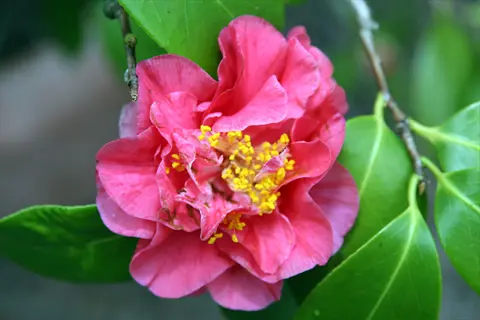
Nuccio's Gem
- Flower Form: Formal double blooms with neat, dense white petals measuring 3 to 4 inches (7.6 to 10 centimeters).
- Appearance: Pure white flowers with a sculptural quality that makes each bloom look almost artificial in its perfection.
- Growth Habit: Dense, upright habit reaching 6 to 8 feet (1.8 to 2.4 meters), well-suited for formal hedging and screening.
- Bloom Season: Early to mid-season, with blooms appearing from November through February depending on local conditions.
- Best Use: Excellent choice for formal garden designs, white-themed borders, and shaded entryway plantings.
- Care Note: Protect from strong winds that can damage the delicate white petals and cause premature browning.
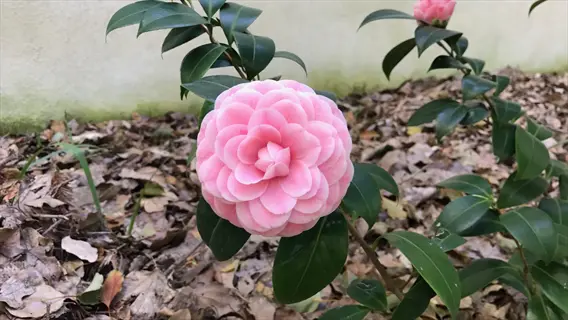
Pink Perfection
- Flower Form: Formal double with shell-pink petals arranged in precise, concentric layers measuring 3 to 4 inches (7.6 to 10 centimeters).
- Reliability: Known as one of the most dependable bloomers, producing consistent flowers year after year even in less-than-ideal conditions.
- Growth Habit: Moderate growth to 8 to 12 feet (2.4 to 3.7 meters), with an upright to spreading shape that fills in well over time.
- Bloom Season: Mid to late season bloomer, with flowers appearing from February through April in most zones.
- Best Use: Perfect for beginner gardeners seeking a reliable performer that tolerates slight variations in soil and light.
- Care Note: Responds well to light pruning after flowering to maintain shape without sacrificing next season's buds.
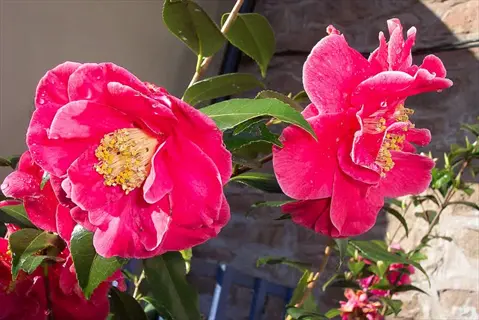
Adolphe Audusson
- Flower Form: Semi-double with large, dark red blooms showcasing prominent golden stamens, measuring 4 to 5 inches (10 to 12.7 centimeters).
- Visual Impact: The bold contrast between deep red petals and bright yellow stamens creates a striking focal point in winter gardens.
- Growth Habit: Vigorous, upright grower reaching 10 to 15 feet (3 to 4.6 meters) tall with a dense canopy of glossy foliage.
- Bloom Season: Mid-season flowering from January through March, often producing abundant blooms along entire branches.
- Best Use: Outstanding as a large specimen plant, background planting, or tall privacy screen in areas with partial shade.
- Care Note: Benefits from annual application of azalea-formula fertilizer in early spring after the main bloom period ends.
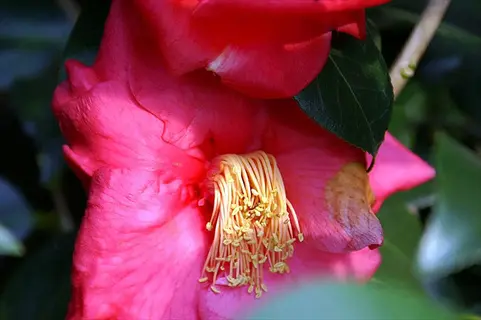
Lady Clare
- Flower Form: Semi-double blooms in deep rose-pink, measuring 4 to 5 inches (10 to 12.7 centimeters) with a graceful, open shape.
- Habit: Spreading, pendulous branches create a weeping effect that looks great near walls, fences, and along walkways.
- Growth Habit: Wide-spreading growth to 8 to 12 feet (2.4 to 3.7 meters) tall and equally wide, requiring space to develop fully.
- Bloom Season: Early to mid-season, flowering from November through February with heavy bloom production in most years.
- Best Use: Suited for espaliering against walls or fences, and as a graceful specimen in larger garden spaces.
- Care Note: The spreading habit means regular light pruning helps control width, best done right after flowering ends.
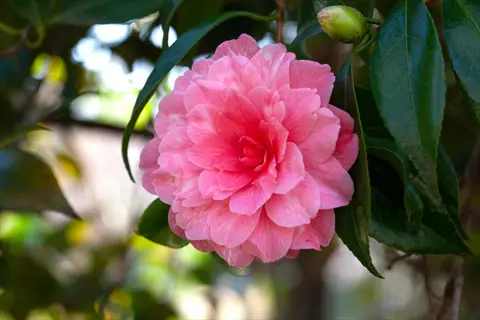
Debutante
- Flower Form: Full peony form in soft light pink, with ruffled petals measuring 3 to 4 inches (7.6 to 10 centimeters) across.
- Texture: The layered, ruffled petals give each bloom a romantic, old-fashioned charm that pairs well with cottage garden styles.
- Growth Habit: Compact, upright growth reaching 6 to 10 feet (1.8 to 3 meters), making it manageable for smaller garden spaces.
- Bloom Season: Early to mid-season bloomer, often starting in October and continuing through January in warmer zones.
- Best Use: Excellent for foundation plantings, cottage garden designs, and container growing due to its compact habit.
- Care Note: Plant at the same depth as the root ball and avoid piling mulch against the trunk to prevent root collar rot.
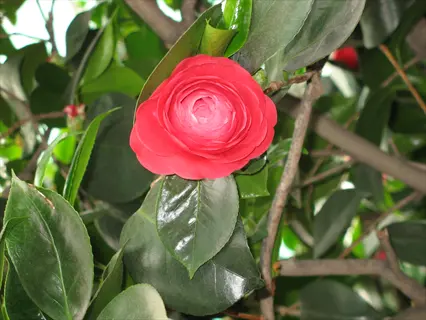
Mathotiana
- Flower Form: Formal double to rose form in crimson red, producing very large blooms up to 5 inches (12.7 centimeters) across.
- Heritage: One of the oldest and most popular japonica cultivars, prized since the 1800s for its bold color and reliable blooming.
- Growth Habit: Vigorous upright growth to 10 to 15 feet (3 to 4.6 meters), forming a substantial garden presence over decades.
- Bloom Season: Mid to late season bloomer, with peak flowers from February through April in most growing regions.
- Best Use: Works well as a large specimen, background anchor in mixed borders, or tall screen in estate-style landscapes.
- Care Note: Avoid excessive nitrogen fertilizer which promotes leaf growth at the expense of flower bud development.
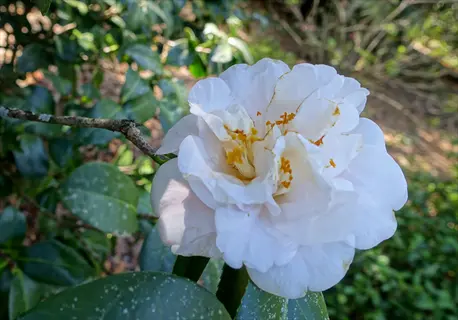
Betty Sheffield Supreme
- Flower Form: Semi-double to peony form with white petals edged in deep pink or red, measuring 3 to 5 inches (7.6 to 12.7 centimeters).
- Variegation: The distinctive white and pink bicolor pattern makes each bloom unique, with no two flowers showing exactly the same markings.
- Growth Habit: Upright, open growth reaching 8 to 12 feet (2.4 to 3.7 meters), filling in well with age.
- Bloom Season: Mid-season flowering from January through March with a generous number of blooms per branch.
- Best Use: A standout specimen plant for garden focal points where the unique petal patterning can be appreciated up close.
- Care Note: Provide consistent moisture during bud development in late summer and fall to prevent bud drop before flowering.
Each of these 8 cultivars earned its spot through years of proven performance in real gardens, not just test plots. Pick the one that matches your space, climate, and intended use and you'll have blooms for decades to come.
Growing Conditions and Soil
Getting your soil right is the single biggest factor in growing camellias that last for decades. When I first started, I lost 3 plants in a row before I tested my soil and found a pH of 7.2. Acidic soil camellias need a camellia soil pH between 5.5 and 6.5 to pull nutrients from the ground.
Your first step is a simple soil test from your local extension office. If your pH sits above 6.5, add 1 to 2 pounds of elemental sulfur per 100 square feet to bring it down. For a faster fix, iron sulfate works in weeks rather than months. If your soil drains poorly, mix in peat moss or pine bark to create the well-drained soil these plants demand.
Pick a spot with partial shade that gets morning sun and afternoon cover. Your plant needs USDA zones 7a through 9b to survive outdoors year round. Drought during August and September kills next spring's blooms, so keep the water steady through late summer even when the plant looks fine above ground.
Most camellia failures trace back to bad soil or bad site choices. Test your soil first, fix the pH, and give your plant the shade it wants. Those 3 steps alone prevent 90% of the problems new growers face when growing camellias for the first time.
Watering, Feeding, and Pruning
I treat camellia care like a seasonal rhythm that shifts through the year. Getting your timing wrong costs you blooms. Watering camellias on a set plan keeps them healthy. No camellia fertilizer can fix poor water habits.
Your plant forms next year's flower buds on old wood during the summer months. That means pruning camellias after May cuts off the buds you want. Give your plant about 1 inch of water every 10 to 14 days. Use an azalea fertilizer with an NPK ratio of 12-4-12 or 15-5-15. Mulching with 2 to 3 inches of organic matter keeps roots cool and soil moist.
Spring: Feed and Prune
- Fertilizing: Apply an azalea-formula fertilizer with an NPK ratio of 12-4-12 or 15-5-15 after the main bloom period ends in early spring.
- Pruning Window: The safe pruning period runs from mid-February through early May, before new buds begin forming for next season.
- Rejuvenation: For overgrown plants, cut back up to one-third of the oldest branches to ground level during this spring window.
Summer: Water and Watch
- Watering: Provide about 1 inch (2.5 centimeters) of water every 10 to 14 days, adjusting for rainfall and temperature.
- Critical Period: August and September moisture is important because drought during these months reduces spring blooming.
- Mulching: Maintain a 2 to 3 inch (5 to 7.6 centimeter) layer of organic mulch to retain moisture and keep roots cool.
Fall: Prepare and Protect
- Stop Feeding: Cease all fertilizer applications by August to prevent tender new growth that is vulnerable to early frost damage.
- Bud Check: Watch for bud drop caused by inconsistent watering or sudden temperature shifts during the fall transition period.
- Wind Protection: In exposed locations, install temporary windbreaks or burlap screens before the first cold snaps arrive.
Winter: Enjoy and Monitor
- Bloom Season: Most Camellia japonica cultivars produce their peak blooms from January through March, providing winter garden color.
- Cold Protection: In zone 7, apply extra mulch around the base and cover plants with frost cloth during extended freezes below 10°F.
- Spent Blooms: Remove fallen flowers right away from the ground to reduce the risk of camellia flower blight spreading to healthy plants.
Stop all feeding by August. I learned this the hard way when new growth on my Adolphe Audusson froze solid during an early November frost. That simple timing rule prevents bud drop and frost damage on tender shoots every single year.
Propagation Methods
Growing camellias from cuttings is the fastest way to clone your best plants at home. I've tried every camellia propagation method out there. Semi-hardwood cuttings give the most reliable results for beginners. Seed propagation works too, but Dr. Ackerman and Dr. Parks found that just 25 winners came from 730 seedlings in their breeding trials.
Each method below reads like a mini recipe with timing, materials, and a clear timeline. You don't need a greenhouse or fancy tools. A pot, some rooting hormone, and a bit of patience will get you new plants by next season.
Semi-Hardwood Stem Cuttings
- Timing: Take cuttings from late June through September when this year's growth has firmed up but stems still bend without snapping.
- Method: Cut 4 to 6 inch (10 to 15 centimeter) sections from healthy branch tips, remove lower leaves, and dip the cut end in rooting hormone powder.
- Medium: Insert cuttings into a mix of equal parts perlite and peat moss, keeping the medium moist but never soaked through.
- Timeline: Roots form in 8 to 12 weeks under warm, humid conditions with indirect light, and you can pot them on their own after rooting.
Air Layering
- Timing: Best done in spring on mature plants when sap flow is active and bark peels away from the wood beneath with ease.
- Method: Wound a branch by removing a 1 inch (2.5 centimeter) ring of bark, apply rooting hormone, and wrap with damp sphagnum moss.
- Covering: Seal the moss ball with plastic wrap to lock in moisture and check once a month to make sure the moss stays damp inside.
- Timeline: Roots form in 3 to 6 months, after which you can cut the rooted branch from the parent and pot it in acidic mix.
Seed Propagation
- Timing: Collect seeds in fall when capsules split open on their own, and sow right away or store in damp peat at 40°F (4°C).
- Challenge: Seedlings won't match the parent plant, so flower color, form, and size will vary in ways you can't predict.
- Method: Sow seeds about 0.5 inches (1.3 centimeters) deep in acidic seed mix and keep at 70°F to 75°F (21°C to 24°C).
- Timeline: Seeds sprout in 1 to 3 months, and plants grown from seed take 5 to 7 years before their first flowers show up.
Grafting
- Timing: Cleft grafting happens in late winter, just before spring growth starts, using a strong rootstock in a container.
- Method: Select a scion branch from the cultivar you want, cut a wedge on its base, and insert it into a cleft cut in the rootstock stem.
- Purpose: Grafting is the go-to method nurseries use to produce named cultivars fast by pairing proven roots with great flowers.
- Timeline: Good grafts push new growth within 6 to 8 weeks, and grafted plants can bloom within 1 to 2 years.
Start with semi-hardwood cuttings if you're new to camellia propagation. Layering takes longer but gives you a bigger plant from day one. Save seed propagation for fun tests, not for cloning your favorite cultivar's blooms.
Pests, Diseases, and Solutions
I've dealt with every camellia pests diseases issue you can think of over the past 15 years. Tea scale camellia problems are the worst by far. NC State Extension calls tea scale the most serious pest of the species. Camellia flower blight is a fungal disease. It spreads through fallen infected petals left on the ground.
Smart pest control follows a simple 4 step plan. Monitor your plants each week, fix cultural issues first, and spray only when you must. A quick blast of horticultural oil in late spring knocks out most scale before it takes hold. For stubborn cases, neem oil gives you a safe backup option. The table below helps you spot, name, and fix the 6 most common problems fast.
Watch for chlorosis if your soil pH drifts above 6.5. Yellow leaves with green veins are the classic sign. I test my soil twice a year now because catching camellia root rot or nutrient problems early saves the whole plant. Check under the leaves for white waxy buildup, and pick up every fallen bloom you find on the ground.
History and Cultural Significance
When I visited Kyoto's camellia gardens, the deep camellia history clicked for me. People in Japan first pressed seeds for tsubaki oil over 2,300 years ago. That same camellia oil lit lamps, cooked meals, and kept swords free from rust. The camellia cultural significance shows up in Japan's oldest poems. That book holds 9 entries about tsubaki.
Modern science shows why those ancient uses made sense for your plants. The flowers hold 61% to 71% good fats and strong bioactive compounds. Chanel and Shiseido now use camellia cosmetics from these extracts in your skincare. In my research, I found that the leaves alone contain over 38 distinct saponins that scientists keep studying today.
Ancient Origins and Oil Production
- Timeline: Camellia oil production from C. japonica seeds dates back at least 2,300 years to the Jomon period in Japan, long before ornamental cultivation began.
- Uses: The pressed seed oil, known as tsubaki oil, was used for cooking, hair care, rust prevention on tools, and as fuel for lamps in Japanese households.
- Poetry: Japan's oldest poetry anthology, the Man'yoshu (600 to 759 CE), contains 9 poems referencing the tsubaki, reflecting its cultural importance.
- Trade: Diplomatic missions carried camellia oil as prestigious gifts to Song dynasty China, establishing it as a symbol of refined Japanese culture.
Edo Period Cultivation Boom
- Expansion: During the Edo period (1603 to 1868), Shogun Tokugawa Hidetada's passion for camellias triggered a cultivation boom among the ruling class and daimyo lords.
- Variety Count: By 1630, over 100 cultivated varieties had been documented, laying the foundation for the 32,000 plus cultivars known worldwide today.
- Symbolism: On the Goto Islands near Nagasaki, hidden Christians adopted the camellia as a covert religious symbol during centuries of persecution.
- Distinction: Japanese culture separates C. japonica (tsubaki), whose flowers fall whole from the branch, and C. sasanqua (sazanka), whose petals scatter one by one.
Global Spread and Modern Gardens
- Europe: The first C. japonica reached England before 1739, and the species spread fast through European botanical gardens and noble estates.
- Americas: Camellias arrived in the American colonies in 1792, and later became the state flower of Alabama and a symbol of southern garden heritage.
- Economic Scale: Galicia in northwestern Spain now produces about 1.5 million C. japonica plants per year, generating roughly EUR 40 million in annual revenue.
- Naming: The genus name honors Georg Josef Kamel (1661 to 1706), a Jesuit missionary and botanist who studied plants in the Philippines.
Bioactive Research and Cosmetics
- Nutritional Value: Research shows C. japonica flowers contain 4.4 to 6.3 grams of protein per 100 grams dry weight and mineral levels that beat many vegetables.
- Antioxidants: Flower phenolic content reaches 78 to 109 mg GAE per gram dry weight, and leaves contain over 38 distinct saponins with antioxidant properties.
- Cosmetic Industry: Major brands including Chanel, Shiseido, and Garnier use C. japonica extracts in skincare products, making cosmetics the most advanced use today.
- Future Potential: Scientists describe C. japonica leaves as a rich, untapped source of bioactive compounds with proven germ fighting and soothing traits.
5 Common Myths
Camellias need full shade and cannot handle any direct sunlight at all during the day.
Camellias actually prefer partial shade with morning sun exposure, which helps dry dew from leaves and encourages stronger blooming.
Adding coffee grounds directly around camellias is a reliable way to acidify the soil.
Used coffee grounds have a nearly neutral pH of 6.5 to 6.8 and provide negligible acidification compared to sulfur or iron sulfate amendments.
Camellia japonica is a tropical plant that cannot survive temperatures below freezing.
Camellia japonica grows in USDA hardiness zones 7a through 9b and tolerates temperatures down to 0 degrees Fahrenheit (-18 degrees Celsius) with proper protection.
You should water camellias frequently because they are thirsty plants that love wet soil.
Overwatering causes root rot, the leading killer of camellias. They need about 1 inch (2.5 centimeters) of water every 10 to 14 days in well-drained soil.
All camellias are the same species and the different names are just marketing labels.
The genus Camellia contains over 200 distinct species, including japonica, sasanqua, sinensis (tea plant), reticulata, and oleifera, each with unique traits.
Conclusion
Camellia japonica pays you back with stunning winter blooms for decades. No other flowering shrubs come close to that kind of show in the cold months. Get the soil pH right, water on a steady plan, and pick a cultivar that fits your space. Those 3 steps turn this Japanese camellia into the most reliable evergreen shrub you can grow.
I've grown my oldest plant from a tiny cutting to a 6 foot showpiece over 12 years. Plants near Japan's imperial palace have thrived for over 500 years using the same basic care you just learned. That kind of track record tells you this is a plant worth your time and effort.
What makes camellia japonica special goes far beyond the garden. From 2,300 years of oil production to modern skincare, this plant keeps finding new roles. Over 32,000 cultivars exist today. That means there's a winter blooming shrubs match for your climate and your garden style.
Start with one plant this season. Give it the right spot, the right soil, and the right water. You'll join a tradition that stretches from ancient Japan to your own back yard. Your camellia japonica will thank you with blooms for years to come.
External Sources
Frequently Asked Questions
Do japonica camellias like sun or shade?
Camellia japonica prefers partial shade with morning sun and afternoon shade, though it can tolerate dappled sunlight throughout the day.
What is Camellia japonica used for?
Beyond ornamental gardening, Camellia japonica is used in cosmetics, traditional oil production, and scientific research for its bioactive compounds.
What is the difference between a camellia and a Camellia japonica?
Camellia is the genus containing over 200 species, while Camellia japonica is one specific species known for large winter blooms.
Where is the best place to plant a Camellia japonica?
Plant in a sheltered spot with morning sun, afternoon shade, acidic soil, and protection from drying winter winds.
Why are camellias so hard to grow?
Camellias struggle mainly because of wrong soil pH, overwatering, and exposure to harsh afternoon sun or cold winds.
Are camellias better in pots or in the ground?
Both work well, but in-ground planting suits warmer zones while pots offer flexibility for colder climates and smaller spaces.
What are the common problems with camellias?
Common problems include bud drop, tea scale insects, root rot from overwatering, chlorosis from alkaline soil, and flower blight.
Does camellia japonica smell nice?
Most Camellia japonica cultivars have little to no fragrance, though a few varieties offer a mild, pleasant scent.
Are camellias low maintenance?
Camellias are relatively low maintenance once established in the right soil and light conditions, needing minimal pruning and feeding.
When do Camellia japonica bloom?
Camellia japonica blooms from late fall through spring, with peak flowering typically occurring from January through March.