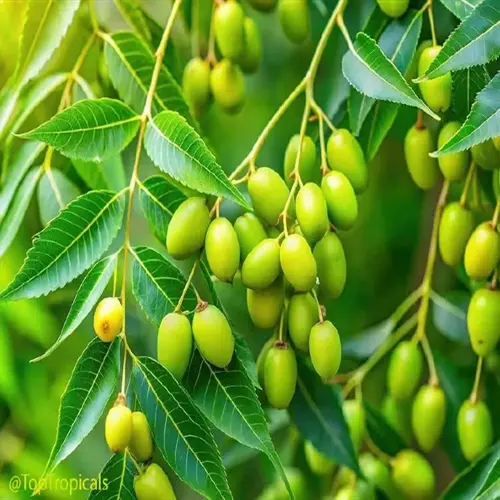

India is the main country grows neem tree in large numbers today. But this species now lives across over 30 African nations, Southeast Asia, and the Caribbean too. The tree left its home soil ages ago. It found a way to grow in warm climates on almost every land mass where frost doesn't reach.
I think of neem as a plant that refuses to stay in one place. It traveled from India to Africa, then to the Americas, and kept going from there. Anywhere the weather stays warm and wet enough, neem puts down roots and thrives with very little help from people.
The neem tree native country is the Indian land mass, where it has grown wild for thousands of years. India still leads the world in neem output, with about 14 million neem trees spread from dry Rajasthan to humid Tamil Nadu. Myanmar, Sri Lanka, and Pakistan share the tree's home range too. Every part of rural India uses neem for something, from pest control in rice fields to shade along dusty village roads.
Africa is the biggest neem success story outside India. The National Research Council said in 1992 that neem had taken root in at least 30 African nations. That range runs from Senegal to Somalia and down to Mozambique. Nigeria, Ghana, and Niger planted huge groves in the 1970s and 1980s to stop desert spread. The Swahili name Mwarobaini means "tree of forty cures." That tells you how fast African people took to this Indian tree.
I like to think of neem as a global traveler that keeps finding new homes. The USDA tracked neem tree distribution to Caribbean islands. Haiti, Jamaica, and Puerto Rico all have neem now. People there planted it for shade and firewood. Brazil now grows neem on big farms for organic bug spray. Australia has neem across its warm northern areas. Even southern Florida and parts of Texas host neem trees that have settled into the warm local climate.
The neem tree distribution pattern follows climate rules that are easy to grasp. The tree needs warm or hot weather with at least 400 millimeters (16 inches) of rain per year. It does best between 70°F and 100°F (21°C to 38°C) and cannot live through a freeze. One hard frost will kill a young neem tree. That's why you won't find neem growing outside in northern Europe, Canada, or most of the US beyond the Deep South and Hawaii.
If you live in USDA zones 10 to 12, you can plant a neem tree in your yard and watch it thrive with little work once it takes hold. The tree handles drought well and grows fast in sandy or loamy dirt. If you live somewhere cooler, grow neem in a big pot and bring it inside before your first frost hits. A potted neem tree won't give you fruit like an outdoor one. But you can still pick its leaves for your tea or homemade pest spray all through the warm months.
Your best bet is to buy a young neem seedling from a tropical plant nursery. Place it where it gets full sun for most of your day. Water it once a week until the roots take hold. After that first year, your neem tree will need almost no help from you. It's one of the easiest tropical trees you can grow when your climate allows it.
Read the full article: Neem Tree Benefits, Uses and Care