
Introduction
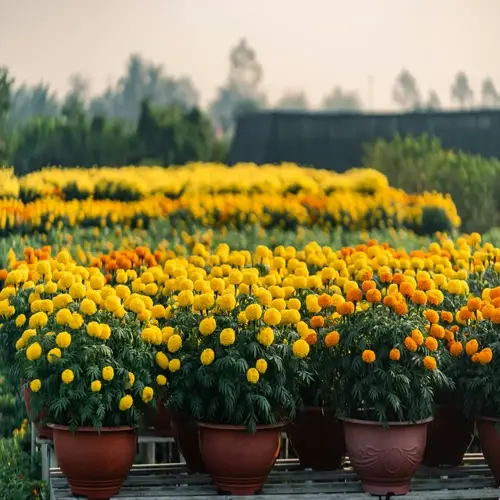
The mum flower stands as the queen of fall gardens for good reason. Growers in China started raising chrysanthemums over 3,000 years ago. This flower still rules autumn displays around the world. No other fall flowers give you the same range of colors, shapes, and sizes in one plant family.
In my experience growing garden mums for over 12 years, they still surprise me each season with new blooms. Chrysanthemums rank as the second most valued cut flower right behind roses. Over 20,000 varieties exist for growers to choose from, which makes sense once you start to explore the petal forms.
Think of mums as the Swiss Army knife of fall gardening. They work in beds, borders, and containers. They even last up to 3 weeks as cut flowers on your kitchen table. The chrysanthemum is the November birth flower. It also holds the title of Imperial flower of Japan.
This guide covers mum flower types, planting, care, and how to grow more plants from the ones you have. Whether you want bold fall color or a year round plan, the answers start right here.
8 Popular Mum Flower Types
You will find 8 main types of mums at your local nursery or garden center. There are 13 official classes, but these 8 are what you need to know as a home grower. I tested dozens of mum varieties in my own beds and learned that your choice of type matters just as much as good soil or water.
Your options range from tiny pompon mums under 2 inches wide to bold decorative mums that stretch past 4 inches across. You will also spot spider mums with long petals that curl at the tips like tendrils. Cushion mums give you low mounds of dense color, while anemone mums show off raised button centers. Quill petals roll into tight tubes like tiny straws. Once you know your options, you can mix these types in your beds for a richer fall display.
No other guide pairs visual descriptions with growing tips for each of these mum classifications. Below you will find the details on each type. Use them to match the right mum varieties to your garden style and your local growing zone.
Single Mums
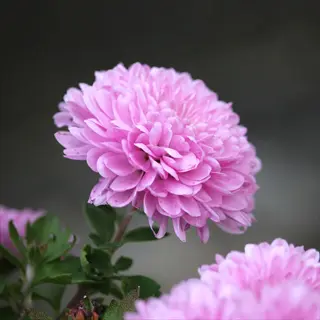
- Petal Form: Single mums feature one to two rows of flat ray petals surrounding a visible central disc, giving them a daisy-like appearance that attracts pollinators to the garden.
- Height Range: These mums tend to grow between 1.5 and 2.5 feet (45 to 76 centimeters) tall, making them a versatile mid-height option for garden borders and mixed beds.
- Bloom Size: Individual flowers measure about 2 to 3 inches (5 to 7.5 centimeters) across with an open center that provides nectar for butterflies and bees visiting fall gardens.
- Best Uses: You can grow single mums in cottage gardens and naturalized plantings where the simple form blends with coneflowers, asters, and other daisy-family companions in your beds.
- Color Range: Available in yellow, white, red, bronze, and lavender shades, single mums offer warm fall tones that pair well with autumn foliage and seasonal displays.
- Care Tip: Pinch stems back every four weeks starting when the plant reaches 6 inches (15 centimeters) tall until mid-summer to encourage compact, bushy growth.

Pompon Mums
- Petal Form: Pompon mums produce small, globe-shaped flower heads with tightly packed incurving petals that create a perfect ball shape, most under 2 inches (5 centimeters) in diameter.
- Height Range: These compact plants often stay under 18 inches (45 centimeters) tall, making them ideal for front-of-border placement and container arrangements.
- Bloom Density: Each plant produces dozens of small rounded blooms that create a dense carpet of color, often covering the foliage in full during peak bloom season.
- Best Uses: You can use pompon mums for formal garden edging, window boxes, and mass plantings where the uniform shape creates a tidy and polished look in your fall garden.
- Color Range: Available in bright yellows, whites, lavenders, and deep reds, pompon mums hold their color well and resist fading in both sun and rain.
- Care Tip: Space pompon mums 18 inches (45 centimeters) apart to allow good air circulation, which helps prevent powdery mildew on their dense foliage.
Cushion Mums
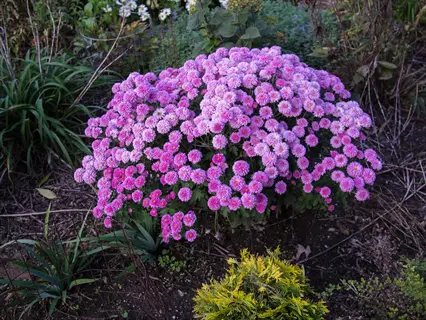
- Petal Form: Cushion mums grow in a low, rounded mound shape with dense packed double blooms that completely cover the plant in a pillow-like mass of color during fall.
- Height Range: These mums stay compact at 12 to 18 inches (30 to 45 centimeters) tall with an equal or wider spread, forming a natural dome without extensive pinching.
- Cold Hardiness: Cushion mums rank among the hardiest chrysanthemum types and perform well in USDA Zones 5 through 9, producing underground stolons that help them survive winter.
- Best Uses: You can place cushion mums as ground cover, in rock gardens, and at the front edge of your flower beds where taller plants would block the view.
- Color Range: Cushion mums come in warm shades of gold, bronze, rust, and deep burgundy that complement pumpkins, ornamental grasses, and fall decorations.
- Care Tip: Divide cushion mums every two to three years in spring when new shoots reach 1 to 3 inches (2.5 to 7.5 centimeters) to maintain plant vigor and bloom quality.
Anemone Mums
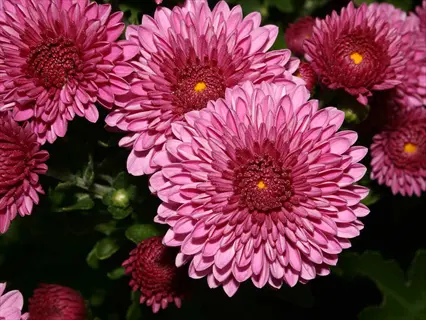
- Petal Form: Anemone mums have a raised cushion-like center disc surrounded by one or more rows of flat ray petals, creating a distinctive two-toned button center appearance.
- Height Range: These mums grow between 1.5 and 2.5 feet (45 to 76 centimeters) tall with a moderate spread, providing a mid-height option for garden bed layering.
- Visual Impact: The contrasting raised center and flat outer petals give anemone mums a sculptural quality that stands out in mixed plantings and cut flower arrangements.
- Best Uses: Anemone mums work great in cutting gardens since their unusual form adds texture and depth to fall bouquets, lasting 7 to 10 days in a vase.
- Color Range: Available in combinations of yellow, bronze, purple, and white, anemone mums often feature contrasting center and petal colors for added visual interest.
- Care Tip: Feed anemone mums weekly with a soluble fertilizer during the growing season since chrysanthemums are heavy feeders that need consistent nutrition for strong blooms.
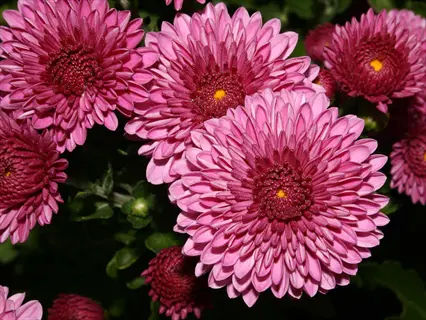
Decorative Mums
- Petal Form: Decorative mums produce large, fully double blooms with broad flat petals that curve a bit inward, creating a lush layered look that can reach 4 inches (10 centimeters) across.
- Height Range: These taller mums grow over 18 inches (45 centimeters) and can reach up to 3 feet (91 centimeters) tall, requiring staking in windy locations to keep stems upright.
- Bloom Size: Among the largest-flowered mum types, decorative varieties produce show-stopping individual blooms that serve as focal points in garden beds and floral displays.
- Best Uses: You can grow decorative mums as specimen plants in your borders, large containers, and exhibition displays where the oversized blooms grab attention up close.
- Color Range: Available in almost every chrysanthemum color including bicolored options, decorative mums offer the widest palette for gardeners seeking specific color combinations.
- Care Tip: Remove side buds early to direct energy into fewer but larger terminal blooms, a technique called disbudding that exhibition growers use for maximum flower size.
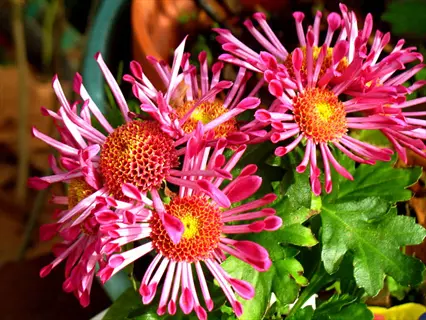
Spoon Mums
- Petal Form: Spoon mums have tubular ray petals that flatten at the tips into a distinct spoon or paddle shape, creating a whimsical textured appearance unlike any other flower type.
- Height Range: These mums grow to about 1.5 to 2.5 feet (45 to 76 centimeters) tall and benefit from regular pinching to maintain a compact bushy form through the growing season.
- Visual Impact: The spoon-shaped petal tips catch light in a unique way compared to flat petals, giving the blooms a dimensional sparkle effect that changes as you view them from different angles.
- Best Uses: You can use spoon mums as conversation starters in your cutting gardens and mixed containers, where the unusual petal shape draws attention and fits both modern and cottage styles.
- Color Range: Available in yellow, pink, white, and bronze tones, spoon mums often feature lighter-colored spoon tips against darker tubular bases for a two-toned effect.
- Care Tip: Provide at least 5 to 6 hours of morning sun daily for spoon mums, as insufficient light leads to weak stems and fewer of those distinctive spoon-shaped petal tips.
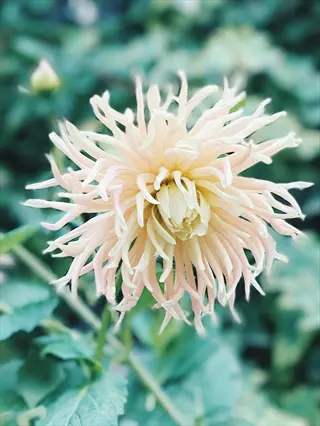
Spider Mums
- Petal Form: Spider mums feature long, thin tubular petals that extend outward and curl at the tips like delicate tendrils, creating a dramatic starburst effect measuring 4 to 6 inches (10 to 15 centimeters) across.
- Height Range: These striking mums grow 2 to 3 feet (60 to 91 centimeters) tall and produce some of the most dramatic blooms in the chrysanthemum family with their spiky silhouette.
- Visual Impact: The elongated curling petals give spider mums an exotic appearance that makes them a favorite for professional floral arrangements and fall wedding centerpieces.
- Best Uses: You will prize spider mums as cut flowers with a vase life of 7 to 10 days, and they serve as dramatic focal points in your large containers and garden borders.
- Color Range: Available in white, yellow, pink, lavender, and bronze shades, spider mums create a bold textural contrast when mixed with rounder flower forms in arrangements.
- Care Tip: Stake spider mum stems early in the growing season since their large heavy flower heads can cause stems to bend or snap during wind and rain events.
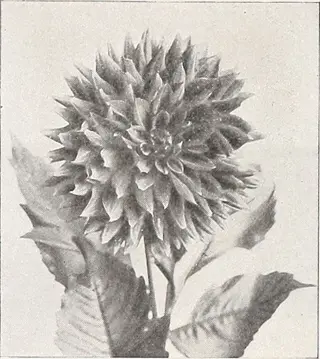
Quill Mums
- Petal Form: Quill mums have narrow tubular petals that remain rolled along their entire length without opening at the tips, resembling tiny drinking straws radiating from the center.
- Height Range: These mums grow 1.5 to 2.5 feet (45 to 76 centimeters) tall and produce medium to large blooms that add fine-textured elegance to any garden setting or bouquet.
- Visual Impact: The tightly rolled tubular petals create a refined spiky texture that falls between the drama of spider mums and the compactness of pompon mums in visual weight.
- Best Uses: You can add quill mums to your mixed borders and cut flower arrangements where the fine texture contrasts well with broader petaled flowers and foliage.
- Color Range: Available in yellow, white, pink, and lavender tones, quill mums offer a softer color palette that blends well with ornamental grasses and late-season perennials.
- Care Tip: Stop pinching quill mums at least 100 days before your target bloom date, as late pinching delays flowering and may prevent buds from opening before the first frost.
Planting Mums in Your Garden
When to plant mums makes all the difference in how long your plants survive. Spring planting gives your mum roots a full season to grow strong before winter hits. Fall planted mums in full bloom spend their energy on flowers rather than building roots underground. I lost a whole row of mums my first year because I bought them in October when they looked great but had no root strength.
Pick a spot in your garden that gets full sun for 5 to 6 hours each morning. Your mums need that light to grow thick stems and set plenty of buds for fall. Make sure the site has well-drained soil so water does not pool around the roots after a heavy rain. Wet roots lead to rot faster than almost any other problem you will face with these plants.
Get your soil ready 10 days to 2 weeks before planting mums in the ground. Work compost into the top 6 inches of soil and aim for a pH between 6.0 and 6.5 for the best nutrient uptake. Set your plant spacing at 18 to 30 inches apart so air can flow between each mum and keep fungal issues away. Penn State Extension also warns you not to grow mums in the same spot for more than 3 years in a row to avoid disease buildup.
Mum Care and Maintenance
Good mum care starts the moment your plants hit 6 inches tall. That is when you begin pinching mums by snipping the top half inch off each stem every 4 weeks. In my experience, this one habit turns a tall floppy plant into a thick bush covered in buds come fall. I skipped pinching my first year and ended up with leggy stems that fell over before the blooms even opened.
Your mums are heavy feeders that need a weekly dose of soluble fertilizer through the growing season. The best fertilizer for mums is a balanced formula like 10-10-10 during active growth. Switch to a low nitrogen bloom mix once you spot buds in late summer. When watering mums, give them a deep soak once or twice a week and let the soil dry a bit between sessions.
The 100 day rule is the best trick I know for timing your pinching schedule. Count 100 days back from when you want blooms and stop pinching on that date. For early varieties that means June 10, mid season types need a June 20 cutoff, and late varieties get until July 1. Mark these dates on your calendar like a countdown to fall color. Once buds form, deadhead mums as blooms fade to push energy into the remaining flowers.
One thing most guides skip is the role of light in triggering your mum blooms. Mums start setting buds when the day drops below 12 hours of light. A street light or security lamp shining on your mums at night can delay or even stop flowering. Keep your mum beds away from strong outdoor lights if you want blooms on schedule.
Spring: Planting and Division
- March to April: Divide established mum clumps when new shoots emerge at 1 to 3 inches (2.5 to 7.5 centimeters) tall, discarding the woody center and replanting vigorous outer sections.
- Soil Preparation: Work compost into the top 6 inches (15 centimeters) of soil at least 10 days before planting, and apply 1 to 1.5 pounds (0.45 to 0.68 kilograms) of 5-10-5 fertilizer per 100 square feet (9.3 square meters).
- First Pinch: Begin pinching stem tips when plants reach 6 inches (15 centimeters) tall, removing the top half inch to encourage branching and bushier growth throughout the season.
Summer: Pinching and Feeding
- May to July: Continue pinching stems every four weeks, leaving four leaves on each pinched stem so the plant has enough foliage to support new branch growth and future blooms.
- Fertilizing Schedule: Apply a balanced soluble fertilizer weekly during the active growing season, switching to a low-nitrogen bloom formula once flower buds begin forming in late summer.
- Pinching Deadlines: Stop pinching early varieties by June 10, mid-season varieties by June 20, and late varieties by July 1 to allow 100 days of uninterrupted bud development before fall bloom.
Fall: Blooming and Harvest
- September to November: Enjoy peak mum blooms from mid-September through the first killing frost, with bloom timing triggered naturally when day length drops below 12 hours.
- Deadheading: Remove spent flower heads regularly to redirect energy into remaining buds and extend the overall bloom period by two to three additional weeks in mild climates.
- Cut Flowers: Harvest mum stems for indoor arrangements in the morning when blooms are about three-quarters open, cutting at an angle and placing immediately in water for a vase life of 7 to 10 days.
Winter: Protection and Rest
- After First Frost: Leave dead stems standing through winter rather than cutting them back, as the dried foliage provides natural insulation for the crown and root system below.
- Mulching: Apply 4 to 6 inches (10 to 15 centimeters) of loose straw or shredded bark mulch around the base after the ground freezes to prevent frost heaving from freeze-thaw cycles.
- Container Mums: Move potted mums to an unheated garage or sheltered area where temperatures stay between 32 and 50 degrees Fahrenheit (0 to 10 degrees Celsius) through winter.
Overwintering Your Mums
Overwintering mums comes down to one big question: did you plant a hardy garden mum or a florist mum? Garden mums are hardy perennials that grow underground stolons, which act like a survival vault beneath the soil. Florist mums produce few or no stolons, and that is why they often die after one season. I learned this the hard way when every florist mum I bought in fall was gone by spring.
A garden mum you plant in April builds a strong root network and stolons by October. A store bought mum in full September bloom has spent all its energy on flowers instead of roots. That is why Penn State Extension says fall purchased mums in bloom may not make it through winter. Your best move for winter care mums is to plant them in spring so they have months to settle in.
To protect your mums from frost heaving, mulch mums with 4 to 6 inches of loose straw or bark after the ground freezes. Leave the dead stems standing through winter because they add extra insulation for the crown below. Don't cut your mums back until you see new spring growth at 1 to 3 inches tall. These steps give your plants the best shot at coming back strong in zones 5a through 9b.
Propagation Methods for Mums
You have 3 ways to grow more mums from the plants you own: division, mum cuttings, and seed starting chrysanthemum plants from scratch. Most guides cover just one method, but in my experience all 3 have a place in your garden toolkit. Propagation mums is one of the most rewarding parts of growing these plants.
Dividing mums is the easiest path for beginners since you are pulling apart a plant that already thrives. Mum cuttings let you clone your favorite variety so every new plant matches the parent. Seeds offer the fun of growing something brand new, but you need soil temps of 70 to 75°F and about 1 to 3 weeks for sprouts to show. Dip your cuttings in rooting hormone before you plant them to boost your success rate.
Stem Cuttings
- When to Take Cuttings: Take stem cuttings in late spring or early summer from healthy non-flowering shoots, choosing stems that are firm and green rather than woody or discolored.
- Cutting Length: Snip 4 to 6 inch (10 to 15 centimeter) sections just below a leaf node using clean sharp pruners, and remove the lower leaves to expose two to three bare nodes for rooting.
- Rooting Process: Dip the cut end in rooting hormone powder, then insert into a moist mix of sand and vermiculite or sterile potting soil, keeping the medium damp but not waterlogged.
- Timeline: Expect new roots to form within two to four weeks when kept in a warm spot with bright indirect light and consistent moisture around the base of each cutting.
Crown Division
- When to Divide: Divide mum clumps in early spring when new shoots are 1 to 3 inches (2.5 to 7.5 centimeters) tall, before the plant puts energy into upward stem growth for the season.
- How to Divide: Dig up the entire clump, shake off excess soil, and separate the outer sections with healthy shoots and roots while discarding the woody dying center portion of the plant.
- Replanting Depth: Set divisions at the same soil depth they were growing before, spacing them 18 to 30 inches (45 to 76 centimeters) apart in amended soil with added compost.
- Division Frequency: Plan to divide mum clumps every two to three years to maintain plant vigor, prevent overcrowding, and ensure strong bloom production from each section of your garden.
Growing from Seed
- Starting Indoors: Sow chrysanthemum seeds indoors 8 to 10 weeks before your last expected frost date, pressing seeds into moist sterile mix without covering them since they need light to sprout.
- Temperature Needs: Maintain soil temperature between 70 and 75 degrees Fahrenheit (21 to 24 degrees Celsius) for good germination, which takes about 1 to 3 weeks under proper conditions.
- Transplanting Outdoors: Harden off your seedlings over 7 to 10 days before transplanting outdoors after the last frost date, spacing plants 18 to 24 inches (45 to 60 centimeters) apart.
- Bloom Timeline: Seed grown mums may not bloom until the second year and will show natural variation in flower color and form, making each seedling a surprise compared to cloned cuttings.
Tips for All Methods
- Sterile Tools: Always use clean sharp tools and fresh potting media to prevent the spread of bacterial and fungal diseases between mother plants and new propagation material.
- Labeling: Mark each propagated plant with the parent variety name and date so you can track performance, bloom time, and cold hardiness of specific cultivars across growing seasons.
- First Year Care: Give your new mums extra attention with consistent watering and half strength fertilizer during the first growing season to encourage strong root development.
- Best Success Rate: Division offers the highest success rate for home gardeners at about 90%, followed by stem cuttings at 70 to 80%, while seed germination rates vary a lot by variety.
Pests and Diseases of Mums
Most mum diseases and chrysanthemum pests show up when your plants sit too close together or get too much water on their leaves. I dealt with powdery mildew on my first batch of mums and the fix was simple. I spaced my plants 18 inches apart and stopped watering from above. That alone solved the white dusty patches on the leaves within a few weeks.
Aphids and spider mites are the 2 bugs you will run into most often on your mums. A quick spray of insecticidal soap or neem oil knocks them down fast without harsh chemicals in your garden. Check the undersides of your leaves every week because that is where these pests hide first. Leaf nematodes are a bigger threat since they can survive 3 or more years in dead leaves and soil around your plants.
Verticillium wilt is the worst mum disease because there is no cure for it. If you see one sided wilting on your stems, pull those plants out right away and never plant mums in that spot again. Penn State Extension says you should rotate your mum beds to a new location every 3 years to cut down on disease pressure in the soil. The table below shows you what to watch for and how to respond.
5 Common Myths
Mums bought in fall bloom are perennials that will always come back the next year without extra care.
Fall-purchased mums in full bloom put energy into flowers rather than roots, making winter survival unlikely without early spring planting and root establishment.
All chrysanthemums are the same type of flower with just different colors to choose from.
There are 13 official flower form classes of chrysanthemums including pompon, spider, quill, spoon, and anemone types, each with distinct petal shapes and growth habits.
You should cut mum stems all the way back to the ground right after the first fall frost.
Leaving dead stems intact through winter provides insulation for the crown; cutting back should wait until new spring growth appears at one to three inches tall.
Mum flowers only grow outdoors and cannot survive as houseplants in pots inside your home.
Mums can thrive indoors near a bright window with at least five hours of sunlight daily, though they need a natural drop in day length to trigger blooming.
Chrysanthemums need constant watering every day to stay healthy and produce blooms in the fall.
Overwatering causes root rot in mums; they prefer deep watering once or twice a week, allowing soil to dry slightly between sessions for healthy root development.
Conclusion
Your mum flower success starts with one choice: plant in spring, not fall. Every section of this guide points back to that same truth. Spring planting gives your garden mums the root strength they need to survive winter and bloom strong for years. In my experience, that single timing shift changed everything about how my mums perform each season.
Two rules will serve you best as you plan your fall garden. First, follow the 100 day pinching rule so your buds have enough time to develop before the first frost arrives. Second, feed your mums a weekly dose of fertilizer through the growing season because these plants are heavy feeders that need constant fuel. Good chrysanthemum care comes down to staying on schedule with these 2 habits.
You might divide a mature clump, root your first cutting, or pick out transplants at the nursery. Every choice you make this spring shapes your fall garden months ahead. With over 20,000 varieties out there, you have more options than you can explore in a lifetime. Don't limit yourself to the standard orange and yellow mums at the store.
Start small with a few garden mums this spring and build from there. Once you see your first mum flower open after a full season of care, you will understand why growers have loved this plant for over 3,000 years. Your fall garden is waiting.
External Sources
Frequently Asked Questions
What flower is a mum?
A mum is a chrysanthemum (Chrysanthemum x morifolium), a flowering perennial in the Asteraceae family prized for colorful fall blooms.
Do mums come back every year?
Hardy garden mums planted in spring can return each year in USDA Zones 5 through 9, while florist mums often do not survive winter.
Why are they called mum's flowers?
The name mum is short for chrysanthemum, which comes from Greek words chrysos meaning gold and anthemon meaning flower.
Is chrysanthemum good for a sore throat?
Chrysanthemum tea has been used in traditional Chinese medicine for centuries and is believed to help soothe throat discomfort.
What does a mum flower symbolize?
Mum flowers symbolize longevity, joy, and optimism in many cultures, though meanings vary by color and region.
Is there a rose called mum?
There is no widely recognized rose cultivar called mum, though some regional or specialty breeders may use similar names.
How long will mums last in the winter?
Hardy mums can survive winter in USDA Zones 5 through 9 with proper mulching, while potted florist mums rarely last through freezing temperatures.
Can I grow mums indoors?
Mums can grow indoors near a bright window with at least five hours of sunlight daily, though they bloom best with natural seasonal light changes.
Do mums have a lifespan?
Individual mum plants can live for several years when divided regularly, though they tend to weaken after three to five years without division.
What do different mum flower colors mean?
Each mum color carries distinct symbolism: red for love, yellow for joy or sorrow depending on culture, white for loyalty and mourning, and pink for longevity.