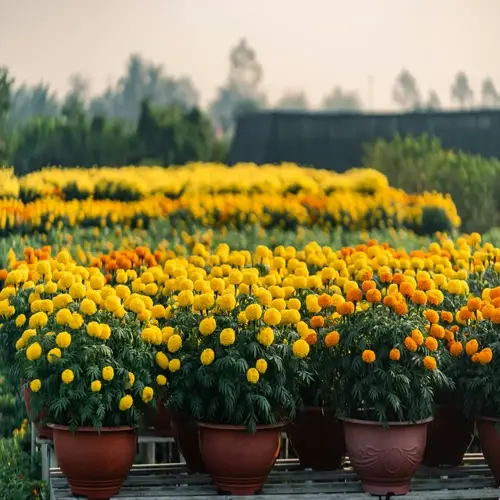

A mum flower is a chrysanthemum, one of the most loved fall flowers in North America. Mums belong to the Asteraceae family along with daisies and sunflowers. They fill gardens with bold color right when everything else starts to fade for the season. I grow at least a dozen mum plants each year because nothing else blooms so well in October.
Every September I walk through my local garden center and the range of chrysanthemum plant forms catches me off guard. Tiny tight pompons the size of ping-pong balls sit next to dinner-plate blooms with long curling spider petals. Some look like tidy buttons. Others explode outward like frozen fireworks. The colors span deep burgundy, bright gold, soft lavender, creamy white, and everything in between.
Most mums at your nursery are Chrysanthemum x morifolium hybrids. Breeders have shaped this chrysanthemum plant for thousands of years. Over 20,000 varieties now exist in 13 form classes based on petal shape. Each class groups mums by how their petals look. In my experience, learning just a few classes helps you pick winners at the store every time.
Single Daisy-Like Mums
- Petal layout: One or two rows of flat petals surround a visible center disc, giving them a classic daisy shape that feels cheerful and open.
- Garden use: These varieties attract pollinators better than dense double forms because bees can reach the pollen-rich center disc with ease.
- Growth habit: Single mums tend to be tall and airy, reaching 2 to 3 feet in height, which makes them great for the back of a border.
Globe-Shaped Pompons
- Petal structure: Dozens of short incurving petals pack together into a tight ball shape with no visible center, creating a tidy rounded bloom.
- Size range: True pompons measure under 2 inches across while larger versions called decorative mums can reach 5 inches or more.
- Best feature: Pompons hold their shape for weeks in the garden and last long as cut flowers, making them a favorite for fall arrangements.
Spider and Spoon Mums
- Spider petals: Long tubular petals curl and twist outward in every direction, giving these mums a dramatic look that draws attention fast.
- Spoon tips: Spoon mums have tubular petals that flatten into a small paddle shape at the tip, creating a unique texture you can spot from across the yard.
- Show quality: Both types appear in chrysanthemum shows and competitions because their unusual forms require careful growing skill and attention.
That "x" in Chrysanthemum x morifolium means it is a hybrid. Breeders crossed several wild species from East Asia to create it. Chinese gardeners first grew these mum flower hybrids over 2,500 years ago and the breeding has never stopped. You can trace every mum on your porch back to those ancient Chinese gardens.
When you shop for mums at a nursery, check the plant tag for three key details. Look for the hardiness zone to know if the plant will survive your winter. Check the listed bloom time since mums flower between early September and late November. Look at the flower form name on the tag so you can find that same variety again next year.
Mums also come in two broad groups that matter for your garden. Garden mums handle cold winters and return each spring. Florist mums look great indoors but often lack the root strength to survive freezing ground outside. Knowing which type you have saves you from a sad surprise when spring arrives and your fall purchase never comes back.
No matter which mum flower type you bring home, you get a plant with deep roots in history. Ancient Chinese gardens grew the first golden mums thousands of years ago. Today those same plants have evolved into thousands of shapes and colors. Mums have earned their spot as the star of fall gardens everywhere.
Read the full article: Mum Flower: Types, Care, and Seasonal Tips