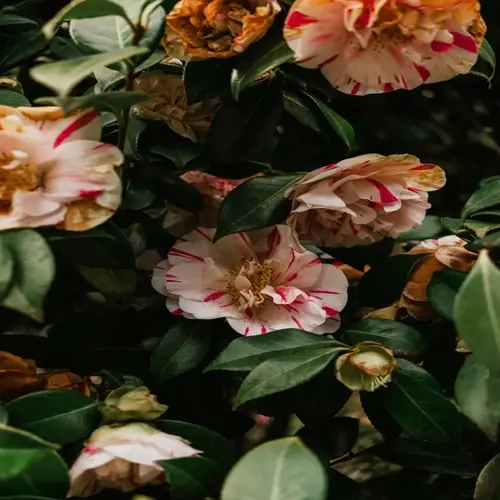

The biggest difference between camellia and sasanqua is when they bloom and how their flowers behave. Sasanquas bloom in fall and early winter with smaller, fragrant flowers. Japonicas bloom in late winter and spring with larger flowers that carry no scent.
The camellia sasanqua vs japonica debate matters a lot more than most gardeners think. I grow both types side by side in my yard and the differences show up fast in real life. My sasanqua flowers fall off the plant whole, like little parachutes drifting to the ground. My japonica petals drop off one by one and make a bigger mess on the walkway. Cleanup under the japonica takes me twice as long every week during bloom season.
These two plants belong to the same genus but sit far apart on the family tree. The Camellia Society splits sasanquas into three groups. Those are sasanqua, hiemalis, and vernalis types. All three came about through years of crossing that made them distinct from japonica. You can think of them as cousins rather than twins.
That last row in the table is a big deal for your garden. Clemson Extension says all sasanqua types resist root rot. Every japonica type can fall prey to this disease in wet soil. That gap matters so much that growers graft japonica tops onto sasanqua roots. The tough root system shields the japonica from rot damage below ground.
When you compare the sasanqua versus japonica camellia for your yard, your soil and light should drive the choice. Sasanquas handle full sun and wet soil much better than japonicas do. If your garden sits in a low spot where water pools after rain, go with a sasanqua. Your japonica would rot in that same spot within a year or two. The sun factor plays a big role too. Sasanquas thrive in spots that get six to eight hours of direct light. Japonicas prefer dappled shade under tall trees where they stay cool all day.
I once planted a japonica in a damp corner of my yard without testing the drainage first. The leaves turned yellow within three months and the plant died before it ever bloomed. I replaced it with a sasanqua Yuletide that thrives in that same spot today. That one mistake taught me to match the right camellia type to my soil conditions.
Pick a sasanqua if you want fall color, good sun tolerance, and a plant that shrugs off wet feet. Choose a japonica if your yard has shade, dry soil, and you want those big showy flowers in spring. You don't have to pick just one type either. Planting both gives you six full months of camellia blooms from October through April.
In my experience, most new growers do best when they start with a sasanqua. These plants forgive more mistakes and handle tougher spots in your yard. They give you flowers in fall when your garden needs color the most. I started with a single Yuletide sasanqua eight years ago and now grow a dozen of each type.
Once you feel confident with your first sasanqua, branch out and try a japonica to extend your bloom season into spring. You'll have color from October through April without much extra work. The two types complement each other well in any garden, and your yard will look alive even in the dead of winter.
Read the full article: Camellia Sasanqua Varieties and Care