
Strategically arranged companion plantings transform your pea patch into a boon instead of a bane. Some neighbors work wonders, sweetening the ground, fending off pests, even making their own little climate. I always design my pea patches with plants that give more than they take, helping to boost production and lessen maintenance, such as...
Root System Allies
- Carrots break up soil compaction with deep roots
- Radishes deter beetles while loosening topsoil
- Plant between pea rows 6 inches apart
Vertical Supporters
- Corn stalks provide natural trellising
- Sunflowers offer wind protection
- Plant after peas establish 3-inch height
Pest-Repelling Herbs
- Mint deters aphids with strong scent
- Rosemary confuses pea moths
- Contain invasive herbs in nearby pots
You can use the technique of carrot interplanting, which involves sowing carrot seed between the pea rows. The carrot's slender, deep-reaching roots do not compete for nutrients and will create no problems for the peas. I sow carrot seed every 3 inches in the trenches of my peas, thus getting double use out of the same bed of soil. Both will benefit from the exposure and from the improved structure of the component plants.
Use radishes as trap crops. Flea beetles prefer them to peas and will leave your precious crop. Firm a bed of this bait ten days before the peas are sown. At the expense of some plants of radish, prefer to lose a few of these greens and save the peas. Pick off all plants infested with beetles before they spread to the peas.
Position corn as living trellises on the north side. When the peas are three inches high, plant corn among them, at a distance of a foot apart, and as they grow, let the tendrils of the peas catch upon them. I practise this in my little garden, adding nothing to my labour, as it saves me the trouble of erecting trellises.
Place cucumbers in summer shade. Choose a spot south of your pea rows where the cucumber vines will shade the ground after the sun has passed overhead. The bush varieties are the best to use, as the running kind are very apt to smother the peas. I plant mine after the peas have made a good start. Their large leaves help maintain a somewhat lower ground temperature during summer heatwaves.
Contain invasive herbs in pots near peas. Mint deters aphids but takes over, unless confined to pots. Use 12-inch diameter pots and sink them into the bed. With the mint potted up weekly, I crush the leaves, releasing repellent oils. The pots need to be upwind.
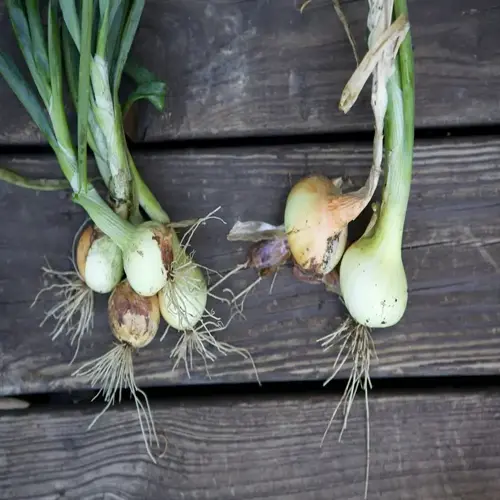
Keep harmful plants (such as onions and garlic) away from your peas. Exudations from alliums stunt the growth of peas. Separate them in the garden; I keep a 3-foot strip bare between pea and allium beds. Be sure to rotate them each year to prevent any residual onion or garlic action.
Read the full article: How to Grow Peas: A Complete Guide