
Introduction
Ask 10 gardeners about the best weed barrier and you'll get 10 different answers. Some swear by landscape fabric while others rip it out after a single season. A recent survey of 300 homeowners showed that 26% use synthetic fabric. Another 22% prefer cardboard as their go to weed control fabric. That split tells you something important: no single option works for every yard.
I've installed and removed more landscape fabric than I care to admit over 12 years of managing garden beds. The truth I learned the hard way is that choosing a weed barrier is like picking the right tool for a job. A hammer drives nails but it won't turn screws. Landscape fabric stops weeds under gravel paths but it can wreck your perennial beds within a few seasons.
Research from Michigan State University backs this up with hard numbers. Dead organic mulch cuts weed growth by 75 to 80% over two growing seasons. A simple layer of wood chips or straw can match what synthetic fabric does without the long term soil damage. Extension programs across the country now push organic mulch as the smarter choice for permanent beds.
This guide breaks down every type of weed barrier with honest trade offs so you can match the right option to your specific project. You'll find research backed data on costs, installation, soil health, and the best barrier for each use case in your yard.
7 Types of Weed Barriers
Not all weed barrier fabric is made the same way or built for the same job. I've tested cheap garden center rolls and heavy duty farm grade products over the years. The differences in quality and performance are huge. Some types work great under a stone path while others belong in your vegetable rows for just one season.
These 7 types cover every option on the market right now. Each one has a sweet spot where it shines and jobs where it falls flat. I organized them so you can compare materials, best uses, lifespans, and trade offs at a glance. SDSU Extension research shaped the fabric details below. That includes the propane torch method for burning clean planting holes with cauterized edges.
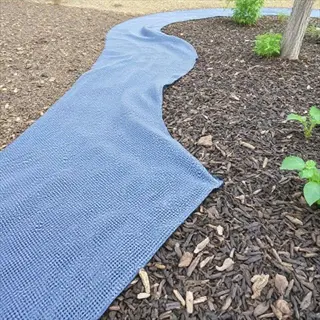
Woven Landscape Fabric
- Material: Made from woven polypropylene strips that create a durable, tear-resistant textile with visible crisscross pattern you can see when held up to light.
- Best Use: Ideal for under gravel driveways, stone pathways, and hardscape areas where you need long-lasting weed suppression without planting through the fabric.
- Lifespan: Typically lasts 5 to 10 years in permanent installations, though UV exposure on uncovered edges accelerates breakdown within 2 to 3 seasons.
- Water Flow: Allows water to pass through the woven gaps, but permeability decreases over time as fine soil particles and decomposing organic matter clog the openings.
- Installation: Requires metal landscape staples at least 6 inches (15 centimeters) long spaced every 2 to 3 feet (60 to 90 centimeters) to hold securely against wind.
- Trade-Off: Provides excellent suppression under hardscaping but creates maintenance headaches in garden beds where roots grow through the weave and become impossible to pull cleanly.
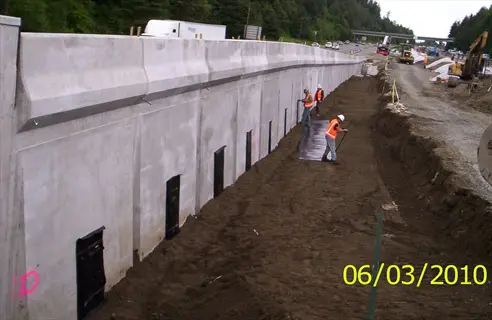
Non-Woven Geotextile Fabric
- Material: Manufactured by bonding polypropylene or polyester fibers together using heat or chemical processes, creating a felt-like sheet without visible weave pattern.
- Best Use: Works well for French drains, erosion control on slopes, and beneath retaining walls where soil separation matters more than planting access.
- Lifespan: Commercial-grade non-woven geotextile rated at 4 to 8 ounces per square yard (135 to 271 grams per square meter) can last 10 to 15 years underground.
- Water Flow: Higher permeability than woven fabric because the random fiber arrangement creates more passage points, making it better for drainage applications.
- Installation: Cut with standard scissors or utility knife and overlap seams by at least 6 inches (15 centimeters) to prevent weed breakthrough at connection points.
- Trade-Off: Excellent for drainage and filtration applications but tears more easily than woven fabric when exposed to foot traffic or sharp gravel edges.
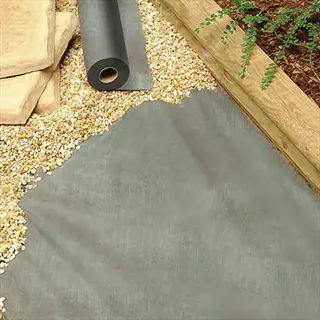
Biodegradable Weed Fabric
- Material: Made from plant-based fibers like jute, hemp, or cotton that decompose naturally into the soil over one to two growing seasons without leaving synthetic residue.
- Best Use: Perfect for vegetable gardens, annual flower beds, and new plantings where you want temporary weed suppression that feeds the soil as it breaks down.
- Lifespan: Breaks down in 1 to 2 growing seasons depending on moisture and soil microbe activity, requiring annual replacement for continued weed control.
- Organic Status: The USDA Agricultural Marketing Service has not approved any biodegradable bio-based weed barriers for use on certified organic farms as of current guidelines.
- Water Flow: Allows full water and air passage through the natural fiber weave, maintaining healthy soil biology and root oxygen levels throughout the growing season.
- Trade-Off: Provides excellent short-term suppression without long-term soil damage, but the ongoing replacement cost exceeds synthetic fabric over multiple seasons.
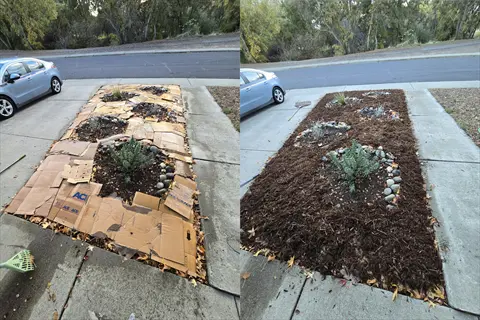
Cardboard Sheet Mulch
- Material: Corrugated cardboard with tape, staples, and glossy labels removed, laid flat in overlapping sheets directly on top of existing vegetation or bare soil.
- Best Use: Excellent for smothering grass to create new garden beds, suppressing weeds between raised bed rows, and building lasagna-style no-dig garden plots.
- Lifespan: Breaks down completely within 4 to 8 months depending on rainfall and soil contact, contributing carbon to the soil food web as it decomposes.
- Cost: Free when sourced from recycled shipping boxes, or approximately $30 to $50 per commercial roll of garden paper for larger coverage areas.
- Water Flow: Absorbs and holds moisture initially, then allows water passage as the fibers soften and decompose, keeping soil underneath consistently moist during breakdown.
- Trade-Off: The cheapest and most soil-friendly barrier option, but requires thick mulch on top to extend lifespan and does not work well for multi-season weed control.
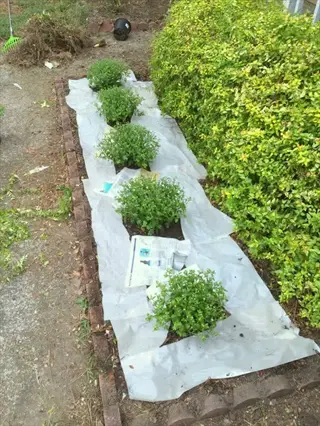
Newspaper Layers
- Material: Standard black-and-white newspaper pages stacked 8 to 10 sheets thick and wetted down to prevent wind displacement before covering with organic mulch.
- Best Use: Works well as a temporary weed barrier in vegetable garden rows, around newly planted trees, and in annual flower beds where seasonal control is sufficient.
- Lifespan: Decomposes within 2 to 4 months in moist conditions, making it the shortest-lived barrier option but also the fastest to integrate into soil biology.
- Cost: Free when using recycled newspapers, making it one of the most budget-friendly options for gardeners managing large areas on a tight budget.
- Water Flow: Absorbs water readily and becomes part of the soil structure as it breaks down, adding carbon and improving moisture retention in sandy or dry soils.
- Trade-Off: Extremely affordable and fully biodegradable but requires frequent reapplication and performs poorly in windy locations without adequate mulch weight on top.
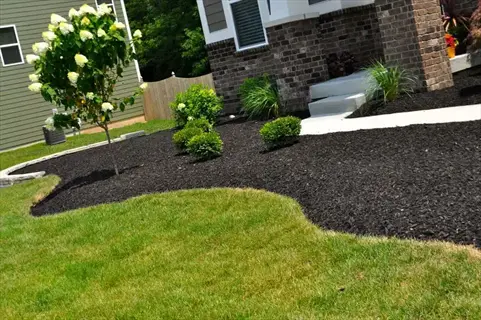
Black Plastic Sheeting
- Material: Solid polyethylene film available in various thicknesses from 1 to 6 mil (0.025 to 0.15 millimeters), completely impermeable to water, air, and light.
- Best Use: Used for soil solarization to kill weed seeds before planting, and in commercial plasticulture vegetable production for seasonal moisture and temperature control.
- Lifespan: Lasts 1 to 3 seasons in direct sun exposure before UV damage causes cracking and fragmentation into microplastic pieces that contaminate the soil.
- Heat Effect: SDSU Extension research warns that black plastic causes significant heat buildup that can trigger bolting or early flowering in cool-season crops like lettuce and cabbage.
- Water Flow: Completely blocks water and gas exchange, requiring drip irrigation underneath and careful management to prevent root suffocation and anaerobic soil conditions.
- Trade-Off: Provides the strongest short-term weed and moisture control but creates environmental concerns from plastic waste and prevents all natural soil processes.
Silage Tarps
- Material: Heavy-duty woven polyethylene tarps originally designed for covering hay and silage piles, repurposed by market gardeners for effective occultation weed control.
- Best Use: Lay over prepared beds 3 to 6 weeks before planting to kill existing weed seedlings through light exclusion while keeping the soil moist and biologically active.
- Lifespan: Built to withstand outdoor exposure for 5 to 10 years with proper storage between uses, making them the most reusable synthetic weed control option available.
- Method: Unlike solarization with clear plastic, silage tarps block all light rather than heating soil, preserving beneficial organisms while still killing surface weed growth.
- Water Flow: Impermeable surface captures rainwater runoff, but the moist dark conditions underneath encourage earthworm activity and natural decomposition of surface plant material.
- Trade-Off: Highly effective pre-planting tool that is reusable for many years, but requires removal before planting and does not provide ongoing in-season weed suppression.
Your best pick from these 7 types depends on what you're building and how long you need it to last. Hardscape projects call for woven landscape fabric that lasts years under stone. Garden beds do better with a biodegradable weed barrier or a simple cardboard weed barrier topped with mulch. Silage tarps fill a unique role for market gardeners who need to prep beds fast without chemicals.
Weed Barrier Installation Guide
Bad landscape fabric installation creates more problems than it solves. Penn State Extension shared a case study where 2 people spent 2 full days tearing out degraded fabric that was put in wrong years before. I've seen the same thing in my own yards. Every shortcut during install comes back to haunt you later. The steps below show you how to install weed barrier the right way and avoid the mistakes that lead to removal nightmares.
This guide covers both synthetic fabric and natural barriers like cardboard. SDSU Extension research shows that drip tape under landscape fabric should go in before you lay anything down. You'll also need landscape pins at least 6 inches long to keep things secure. Getting planting holes in landscape fabric right matters just as much as the fabric you pick.
Clear and Level the Site
- Why it matters: Remove all existing weeds, rocks, and debris from the area because any sharp objects underneath will puncture the fabric and create entry points for aggressive weed growth.
- How to do it: Pull or cut weeds at the root level, rake the soil smooth, and fill any low spots that could create air pockets beneath the barrier where water pools and weeds establish.
- Pro tip: Wait 2 to 3 weeks after initial clearing to let dormant weed seeds germinate, then remove this second flush before laying your barrier for significantly better long-term results.
Install Drip Irrigation First
- Why it matters: SDSU Extension research shows that placing drip tape underneath the barrier before installation ensures water reaches plant roots directly without wasting moisture on the fabric surface.
- How to do it: Lay drip lines along planned planting rows with emitters facing upward, secure them with ground staples, and test the system for leaks before covering with the barrier material.
- Pro tip: UF/IFAS research confirms that drip irrigation reduces weed growth compared to overhead sprinklers because water is delivered only near plant root zones rather than across the entire bed surface.
Lay and Overlap the Barrier
- Why it matters: Proper overlap prevents weeds from pushing through gaps between barrier sheets, which is one of the most common installation failures that leads to weed breakthrough within the first season.
- How to do it: Unroll the fabric or lay cardboard sheets with a minimum 6 inch (15 centimeter) overlap at all seams, running the material in the same direction as the slope to shed water properly.
- Pro tip: For cardboard barriers, wet the sheets as you lay them to prevent wind displacement and improve soil contact, which speeds the initial weed-smothering process and conforms the material to uneven ground.
Secure with Landscape Staples
- Why it matters: Unsecured barriers shift in wind and foot traffic, creating exposed gaps where weeds quickly establish and compromising the entire installation within weeks of laying.
- How to do it: Use metal landscape staples at least 6 inches (15 centimeters) long, inserting them every 2 to 3 feet (60 to 90 centimeters) along edges, seams, and around all planting holes.
- Pro tip: Push staples in at a slight angle rather than straight down to create better holding power in loose or sandy soils, and add extra staples at corners where wind lift is strongest.
Cut Planting Holes Carefully
- Why it matters: Oversized or ragged planting holes become entry points for weeds and reduce the barrier's overall effectiveness, so precision cutting directly impacts long-term weed control success.
- How to do it: SDSU Extension recommends cutting holes 2 to 3 inches (5 to 7.6 centimeters) in diameter using a propane torch on synthetic fabric to cauterize edges and prevent fraying.
- Pro tip: For those without a propane torch, use a sharp utility knife to cut an X-pattern rather than a circle, then fold the flaps under the fabric to maintain maximum coverage around plant stems.
Apply Mulch on Top
- Why it matters: UF/IFAS research shows that 2 to 3 inches (5 to 7.6 centimeters) of organic mulch on top of a barrier protects it from UV damage, holds it in place, and provides additional weed suppression.
- How to do it: Spread wood chips, shredded bark, or straw evenly over the entire barrier surface, keeping mulch 2 to 3 inches (5 to 7.6 centimeters) away from plant stems to prevent rot.
- Pro tip: Choose coarse-textured mulch over fine compost because UF/IFAS found that weed control increases as mulch particle size increases, while fine nutrient-dense mulches can actually encourage weed growth.
Follow these steps in order and your barrier will perform much better than a rushed job. The extra time you spend on site prep and proper overlap saves you hours of weeding and years of frustration down the road.
Weed Barrier Cost Comparison
The sticker price on a roll of landscape fabric tells you almost nothing about the real weed barrier cost. I learned this after buying cheap fabric 3 times in a row before I figured out the math. What matters is the total cost over 5 years when you add up replacement, mulch, and removal labor. A cheap weed barrier that fails in one season costs more than a quality product that lasts five.
The table below puts the landscape fabric price next to free options like cardboard and newspaper. A pro install adds $0.46 to $0.96 per square foot on top of materials. Run the numbers on mulch vs landscape fabric over 5 years and the results might surprise you. The biodegradable weed barrier cost adds up fast because you replace it each season.
Newspaper and cardboard give you the lowest total cost over 5 years if you source them for free. Woven fabric wins on value for paths and driveways because you install it once and forget it. Organic mulch costs more over time but it feeds your soil while it controls weeds. Your budget and your project type should drive the final decision.
Soil Health and Weed Barriers
Most gardeners think about weeds when they pick a barrier but forget about the soil underneath. Your soil is a living system full of microbes, fungi, and earthworms that need air and water to do their jobs. A weed barrier changes what happens below the surface in ways that matter for your plants. The wrong choice can wreck landscape fabric soil health in just a few seasons.
Think of soil under fabric like food in a sealed container. It stays put but it can't breathe. Soil under mulch acts more like a living sponge that absorbs water and feeds organisms at the same time. Penn State Extension found that soil under long term fabric turned into a dense mass with the feel of moist pottery. That level of soil compaction chokes roots and kills the biology your plants need to thrive.
Peer reviewed research from Michigan State University backs up what I've seen in my own gardens. Tarrant et al. found that dead mulch produces higher enzyme activity in the soil than bare ground. Those enzymes break down nutrients so your plants can absorb them. Fabric blocks this process by cutting off air flow and starving the organisms that drive healthy soil. The weed barrier and earthworms connection matters too since fabric blocks the tunnels worms use to move and aerate the ground.
Landscape fabric drainage problems get worse over time as dirt and decomposed mulch fill the tiny pores. Fresh fabric allows some water through but weed barrier water permeability drops each year. I've pulled up 3 year old fabric and found bone dry soil underneath even after a week of rain. That's a death sentence for the root systems you're trying to protect.
The research also found that living ground cover cuts nitrogen runoff by 61% compared to bare soil. This means your barrier choice affects more than just your garden. It changes how much fertilizer ends up in local streams. Organic mulch and living covers protect your soil while doing the same weed control job that fabric promises but can't deliver long term.
Weed Barrier by Use Case
The right weed barrier depends on your project, not on what the label says at the store. I spent years putting landscape fabric in places where it did not belong. A weed barrier under gravel works great. The same fabric in a weed barrier for flower beds turns into a tangled mess within 2 seasons. UNH Extension put it best: in almost all cases, organic mulch is the best choice for perennial gardens and shrub borders.
This table gives you a clear answer for 8 common projects. Each row tells you what to use, why it works, and what to avoid. You might need a weed barrier vegetable garden setup or a weed barrier for raised beds. Maybe you need french drain landscape fabric. Either way, jump to your row and get a straight answer backed by research.
The pattern is simple once you see it. Use landscape fabric for pathways and hardscape where nothing grows. Use mulch or cardboard where plants live and roots need healthy soil. French drains need geotextile for filtration. Getting this match right saves you money and keeps your garden healthy for years to come.
Natural Weed Barrier Alternatives
You don't always need fabric to keep weeds out of your garden. Several weed barrier alternatives do the job just as well while feeding your soil at the same time. UF/IFAS research found that mulch at 2 to 3 inches deep beats a single chemical herbicide treatment for both strength and staying power. When you compare mulch vs landscape fabric for permanent beds, natural options win on every front.
Each method below replaces a specific fabric use case so the switch feels practical and not just wishful thinking. I've used all 4 of these organic weed control approaches in my own gardens. Soil solarization is a top natural weed prevention tool that most people skip. Cover crops for weed control fill the gap when your beds sit empty between seasons.
Coarse Organic Mulch
- Effectiveness: Michigan State University research found dead straw mulch reduces weed biomass by 75 to 80% over two growing seasons, matching or exceeding synthetic fabric performance.
- Best practice: Apply wood chips, shredded bark, or straw at 2 to 3 inches (5 to 7.6 centimeters) deep, choosing coarse textures because UF/IFAS research shows larger particles provide better weed control.
- Soil benefit: Dead mulch produces higher extracellular enzyme activity than bare soil cultivation, indicating healthier nutrient cycling and more active beneficial microorganism communities.
- Replaces: Landscape fabric in perennial beds, shrub borders, and around trees where long-term soil health matters more than short-term labor savings.
Dense Ground Cover Planting
- Effectiveness: Thick ground cover plants shade the soil surface and compete directly with weed seedlings for light, water, and nutrients, creating a living weed barrier that improves over time.
- Best practice: Choose fast-spreading species suited to your climate zone and plant at close spacing to achieve full coverage within one to two growing seasons for lasting suppression.
- Soil benefit: Living roots hold soil in place on slopes, feed beneficial organisms year-round, and create natural mulch from dropped leaves without any synthetic material needed.
- Replaces: Landscape fabric on hillsides and slopes where erosion control and weed suppression are both needed simultaneously without ongoing fabric maintenance.
Soil Solarization
- Effectiveness: UF/IFAS Extension confirms that covering moist soil with clear plastic for approximately 6 weeks during hot weather kills weed seeds, pathogens, and pests in the top several inches of soil.
- Best practice: Use clear plastic (not black) tightly sealed at edges during the hottest months, as the greenhouse effect heats soil to temperatures that destroy weed seeds and soilborne diseases.
- Soil benefit: Unlike chemical treatments, solarization leaves no residue and allows beneficial organisms to recolonize quickly once the plastic is removed before planting.
- Replaces: Pre-plant herbicide applications and aggressive tilling in new garden beds where you want to start with a clean seedbed without chemical inputs.
Cover Crops
- Effectiveness: Tarrant et al. (2024) found that living mulch treatments reduced end-of-season potentially leachable nitrogen by 61% compared to cultivation, providing both weed control and environmental benefit.
- Best practice: Plant fast-growing cover crops like crimson clover, winter rye, or buckwheat in bare garden areas during off-seasons to suppress weeds and add organic matter when turned under.
- Soil benefit: Cover crop roots break up compacted soil, fix nitrogen from the atmosphere in legume varieties, and create channels for water infiltration that fabric would otherwise block.
- Replaces: Landscape fabric during off-season fallow periods in vegetable gardens where leaving soil bare invites weed establishment and nutrient loss through erosion and leaching.
5 Common Myths
Landscape fabric provides permanent weed control and never needs to be replaced once installed properly.
University research shows landscape fabric degrades over time as soil particles clog the pores, and weeds eventually root through it, often within two to three seasons.
Putting more layers of weed barrier fabric will give you better and longer-lasting weed suppression.
Multiple layers restrict water and oxygen flow to soil organisms and plant roots, causing more harm than benefit. A single layer with proper mulch on top is more effective.
Landscape fabric is necessary under all mulch beds to prevent weeds from growing through the mulch layer.
Organic mulch applied at 2 to 3 inches (5 to 7.6 centimeters) deep suppresses weeds by 75 to 80 percent on its own without any fabric beneath it.
Weed barrier fabric improves soil health by keeping the ground protected and maintaining stable moisture levels.
Long-term fabric use compacts soil to a consistency Penn State researchers described as moist pottery, reducing beneficial microbial activity and root health.
Black plastic sheeting and landscape fabric are the same product and can be used interchangeably for weed control.
Landscape fabric is permeable and allows some water and air through, while black plastic is impermeable and blocks all gas exchange, making them suitable for different uses.
Conclusion
The best weed barrier is the one that matches your project, not the one with the best marketing. Landscape fabric has real value under gravel paths and driveways where nothing needs to grow. Organic mulch at 2 to 3 inches deep cuts weed growth by 75 to 80% in garden beds where your plants need healthy soil. Both tools work when you use them in the right spot.
I've made every mistake in this guide at some point during my years of gardening. The biggest lesson I learned is that weed control is not a one size fits all problem. Fabric gave me great results on my stone walkway but it turned my perennial bed into a compacted mess. Once I started matching the barrier to the job, my gardens got healthier and I spent less time fighting weeds.
Here's the simple framework you can take with you today. If your project is a gravel path or driveway, use heavy duty woven landscape fabric. If you're planting a garden bed or flower border, skip the fabric and use organic mulch. If you need to build new beds over grass, put down cardboard and cover it with wood chips. If your garden sits empty between seasons, plant cover crops to keep weeds out.
Your yard is unique and so is your best weed barrier choice. Start with the use case table in this guide, pick the option that fits your project, and install it right the first time. Your future self will thank you for doing it the smart way instead of buying the cheapest roll of fabric at the store.
External Sources
Frequently Asked Questions
What weed barrier actually works?
Organic mulch applied at 2 to 3 inches deep is the most effective long-term weed barrier according to university extension research, reducing weed growth by 75 to 80 percent.
Is it worth putting a weed barrier down?
A weed barrier is worth installing for short-term projects like vegetable rows and gravel paths, but organic mulch outperforms fabric in permanent garden beds.
Do I need to remove weeds before laying a weed barrier?
Yes, clearing existing weeds before laying any weed barrier ensures better contact with the soil and prevents aggressive weeds from pushing through.
How do you permanently stop weeds from growing?
No single method stops weeds permanently, but combining thick mulch layers, dense planting, and regular maintenance creates lasting suppression.
How long will a weed barrier last?
Synthetic landscape fabric typically lasts 3 to 5 years with seasonal use, while biodegradable barriers like cardboard last one growing season.
Is October too late to spray for weeds?
October is not too late for perennial weed control because many broadleaf weeds are actively sending nutrients to their roots, making fall herbicide applications effective.
What is the problem with weed barriers?
The main problems with weed barriers are reduced water flow to plant roots, soil compaction, root damage during removal, and weeds eventually growing through the fabric.
Can water get through a weed barrier?
Woven and some non-woven weed barriers allow water through, but permeability decreases over time as soil particles and decomposing mulch clog the fabric pores.
What kills weeds permanently naturally?
Soil solarization using clear plastic for 6 weeks, combined with 3 inches (7.6 centimeters) of organic mulch, provides the most effective natural long-term weed control.
What is better than a weed mat?
Organic mulch is better than a weed mat for most garden applications because it suppresses weeds while also improving soil structure, moisture retention, and beneficial organism activity.