
Introduction
You flip over a tomato leaf and notice tiny pale dots across the surface. Those dots mean spider mites have been feeding on your plant for weeks before you ever spotted the damage. Here is the worst part: if you grab a bottle of Sevin or malathion off the shelf, you will make the problem much worse instead of better.
Spider mites aren't insects at all. They are tiny arachnids with eight legs, more like spiders and ticks than any garden bug. Each mite acts like a microscopic vampire that punches into a single plant cell and drains it dry. Those pale scars left behind are called stippling. By the time you see them, the colony has grown into the hundreds.
I've watched a twospotted spider mite problem go from a few dots to a full blown mess in under two weeks. A single female lays over 100 eggs in her lifetime. A full generation wraps up in less than one week when heat kicks in. They feed on more than 200 plant species, so nothing in your yard stays safe.
This guide gives you real spider mite control methods that work. I cover how to tell species apart and which organic treatments do the job. You'll also get a seasonal garden pest management plan built on what I've learned over years of testing. Most of all, you'll find out why common products cause outbreaks.
8 Types of Spider Mites
Knowing the types of spider mites in your yard changes how and when you treat them. Some are warm season mite species that peak during your summer heat. Others are cool season mite feeders that do their worst damage in spring and fall when you aren't even looking.
I learned this the hard way when I sprayed a miticide on my spruce trees in July. The spruce spider mite had gone dormant weeks before, so my treatment did nothing at all. Virginia Tech warns that species identification should come first. Predatory mites don't work on every pest species.
The twospotted spider mite, known as Tetranychus urticae, is the one you'll run into most often. It attacks over 180 host plants and lays 5 to 6 eggs per day for more than 100 eggs per female. Below are 8 common species with details on color, hosts, and active season.
Twospotted Spider Mite
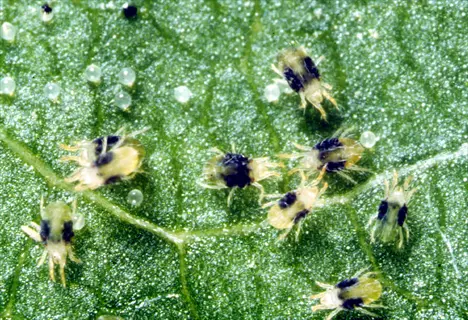
- Scientific Name: Tetranychus urticae is the most widespread and economically damaging spider mite species, found on every continent except Antarctica with over 180 documented host plants.
- Appearance: Adults are pale green to yellowish with two dark spots on either side of the body, though overwintering females turn orange-red, making identification confusing during fall months.
- Active Season: This warm-season species thrives from late spring through early fall, completing a generation in as few as 5 days when temperatures exceed 90 degrees Fahrenheit (32 degrees Celsius).
- Preferred Hosts: Attacks vegetables including tomatoes, beans, cucumbers, and peppers as well as ornamentals like roses, marigolds, and lantana, plus many common houseplants.
- Damage Pattern: Feeding produces fine stippling on upper leaf surfaces that progresses to bronzing, yellowing, and leaf drop, with heavy silk webbing visible during severe infestations.
- Key Fact: A single female can produce over 100 eggs in her lifetime at a rate of 5 to 6 eggs per day, meaning a small colony can explode into thousands within two weeks.
Spruce Spider Mite
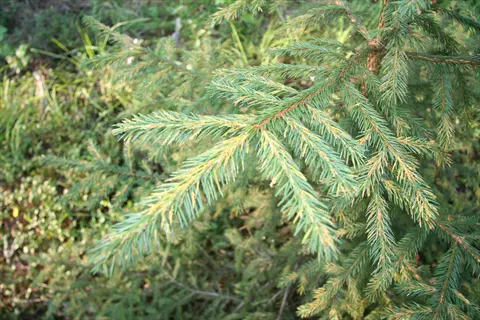
- Scientific Name: Oligonychus ununguis is the top pest of evergreen trees and shrubs across North America, feeding on needled conifers in landscapes and nurseries.
- Appearance: Dark green to black body that is rounder and a bit larger than the twospotted spider mite, making it easy to tell apart under magnification by color and shape alone.
- Active Season: Unlike most mites, this cool-season species feeds in spring and fall when temperatures stay between 60 and 80 degrees Fahrenheit (16 to 27 degrees Celsius), then goes dormant during hot summers above 86 degrees Fahrenheit (30 degrees Celsius).
- Preferred Hosts: Attacks spruce, arborvitae, juniper, hemlock, pine, and Douglas fir, with dwarf Alberta spruce described as almost always infested by Ohio State researchers.
- Damage Pattern: Feeding produces yellow to bronze stippling on needles that may not become visible until summer, even though the actual feeding occurred months earlier in spring.
- Key Fact: Summer dormancy is triggered when temperatures exceed 86 degrees Fahrenheit (30 degrees Celsius) for three consecutive days, so damage often appears worst in July despite no active feeding.
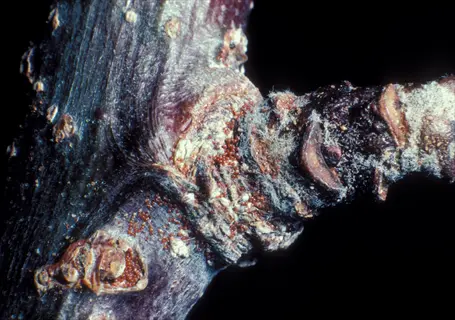
European Red Mite
- Scientific Name: Panonychus ulmi is a major fruit tree pest that targets apple, pear, plum, and cherry orchards across temperate regions of North America and Europe.
- Appearance: Bright brick-red coloring with prominent white spots at the base of curved bristles on the back, making it one of the easier spider mite species to identify under a hand lens.
- Active Season: Active from spring through fall as a warm-season species, with overwintering eggs laid on twigs and branches that hatch when fruit trees start to leaf out.
- Preferred Hosts: Fruit trees in the Rosaceae family including apple, pear, cherry, and plum, but also attacks ornamental trees like hawthorn, mountain ash, and elm.
- Damage Pattern: Heavy feeding causes leaves to turn bronze and dry out, which cuts photosynthesis and fruit quality, with severe infestations causing early fruit drop in orchards.
- Key Fact: Overwintering eggs are visible as tiny red spheres clustered in bark crevices and around bud bases during dormant season, allowing early detection before spring hatching.

Southern Red Mite
- Scientific Name: Oligonychus ilicis targets broadleaved evergreen plants across the southeastern United States and shows up more and more in protected landscapes farther north.
- Appearance: Dark reddish-brown coloring similar to European red mite but found on broadleaved evergreens rather than deciduous fruit trees, which helps narrow identification by host plant.
- Active Season: This cool-season species stays most active in spring and fall, with populations dropping fast during hot summer months above 85 degrees Fahrenheit (29 degrees Celsius).
- Preferred Hosts: Has a strong preference for azaleas, camellias, hollies, and rhododendrons, making it one of the biggest threats to foundation plantings and shade garden shrubs in warm climates.
- Damage Pattern: Feeds on both upper and lower leaf surfaces, causing gray or bronze discoloration that many gardeners mistake for nutrient problems or fungal disease.
- Key Fact: Since this is a cool-season feeder, applying miticides during summer when damage becomes most visible is a waste. The mites are already dormant and not feeding.
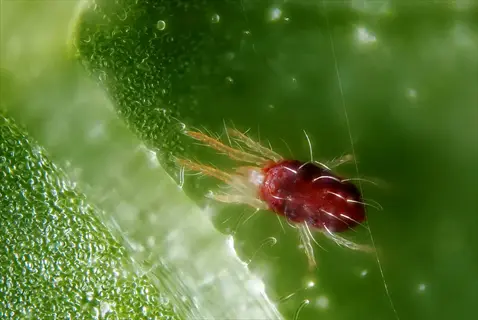
Pacific Spider Mite
- Scientific Name: Tetranychus pacificus is a warm-season pest most common in western states, where it attacks vineyards, fruit orchards, and landscape plantings across California and Oregon.
- Appearance: Similar in size and shape to the twospotted spider mite but lacks the prominent paired spots, instead displaying a more uniform greenish-yellow body color that darkens with age.
- Active Season: Peak activity from June through September in warm western climates, with populations building fast during drought periods common in Pacific coast growing regions.
- Preferred Hosts: Major pest of wine and table grapes, almonds, and stone fruits, as well as many ornamental landscape plants common in Mediterranean climate gardens.
- Damage Pattern: Stippling on grape leaves turns into bronzing and leaf scorch, which can cut grape sugar content and wine quality in commercial vineyards during heavy infestation years.
- Key Fact: UC IPM calls this species and the twospotted spider mite the two most damaging warm-season species in California agriculture and home landscapes.
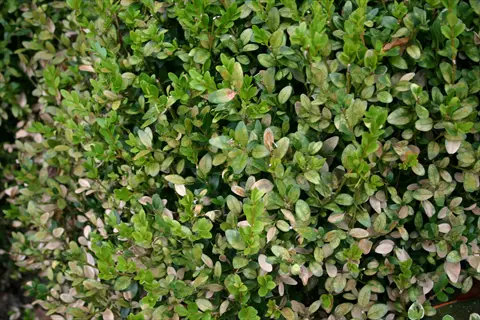
Boxwood Spider Mite
- Scientific Name: Eurytetranychus buxi is a specialist pest found almost only on boxwood hedges and topiary, one of the most popular foundation shrubs in residential landscapes.
- Appearance: Small even by mite standards with a pale yellow-green body that blends right into boxwood leaf surfaces, making visual detection very hard without magnification.
- Active Season: Feeds in spring as boxwood produces new growth, with populations declining through summer and overwintering as eggs on the undersides of boxwood leaves.
- Preferred Hosts: Feeds only on boxwood species and cultivars, with English and American boxwood varieties showing different levels of risk depending on leaf density and growing conditions.
- Damage Pattern: Feeding causes a characteristic fine stippling that gives boxwood leaves a scratched or sandblasted appearance, often dismissed as weather damage or winter injury by homeowners.
- Key Fact: Boxwood hedges in foundation plantings near buildings often experience worse infestations because reflected heat from walls creates the warm, sheltered microclimate that mites prefer.
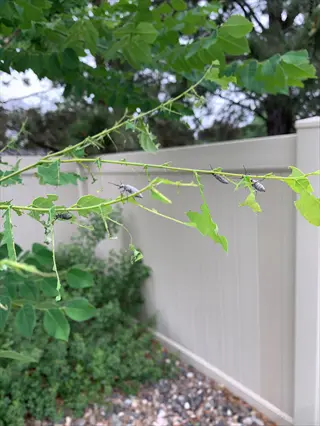
Honeylocust Spider Mite
- Scientific Name: Platytetranychus multidigitali is a specialist pest of honeylocust trees, one of the most commonly planted street and shade trees in urban landscapes across the eastern United States.
- Appearance: Small with a flat body shape that is more oval than round, pale green to amber in color, and tough to tell apart from other species without expert help.
- Active Season: A warm-season species that builds populations through summer, with the heaviest damage showing up in July and August when hot, dry conditions stress urban honeylocust trees.
- Preferred Hosts: Feeds almost only on honeylocust and its cultivars, in particular the thornless varieties used in street plantings and parking lot islands.
- Damage Pattern: Causes yellowing and early leaf drop that homeowners and arborists often blame on drought stress alone, when spider mite feeding is the true cause.
- Key Fact: Urban honeylocust trees in parking lots and along streets suffer worst because reflected heat from pavement and buildings plus reduced air circulation creates ideal mite conditions.
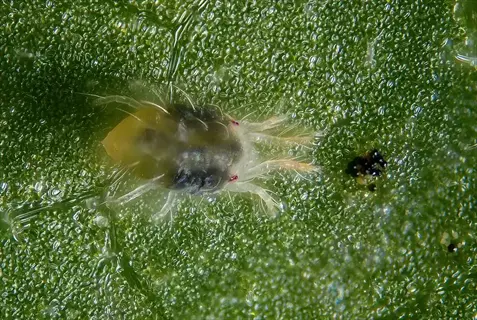
Strawberry Spider Mite
- Scientific Name: Tetranychus turkestani is a close relative of the twospotted spider mite and attacks many of the same hosts, but has the strongest ties to strawberry fields and low growing crop plants.
- Appearance: Looks a lot like the twospotted spider mite in size and coloring, with pale greenish-yellow bodies that may or may not show paired dark spots, making exact identification hard without a microscope.
- Active Season: This warm-season species peaks from late spring through early fall, with the worst populations showing up during long hot and dry stretches in major strawberry regions.
- Preferred Hosts: Most often found on strawberry crops but also feeds on cotton, beans, sugar beets, clover, and many ornamental plants in arid and dry growing regions.
- Damage Pattern: Produces stippling and bronzing similar to twospotted spider mite, with severe infestations reducing berry size, yield, and market quality in commercial strawberry production.
- Key Fact: UC IPM includes this species in its management guidelines for California strawberry production, where it can cause significant economic losses when populations are not caught early.
How to Spot Spider Mites
Spider mite identification is tricky because these pests are less than 1/20 of an inch long. A single colony can hold hundreds of mites on your leaf undersides before you notice any spider mite damage at all. By the time you see stippling leaves or spider mite webbing, the colony has had weeks to grow. That's why I check my plants on a set schedule instead of waiting for trouble.
I use a three stage system to find mites before they cause real harm. Start with the white paper shake test. Hold a sheet of white paper under a branch and tap the leaves hard a few times. Tiny specks that crawl across the paper are mites. If you count 10 or more mites per sample, Ohio State says you need to start treatment right away.
The next step is a 10X hand lens check on your leaf undersides. Look for clusters of round eggs, shed skins, and tiny moving dots near the leaf veins. Fine silk webbing shows up in a more advanced infestation, so don't wait until you see webs. Check every 3 to 5 days during hot, dry weather because that is when populations grow fastest.
Here is the trick most guides skip. If you find mites, do the streak test before you spray anything. Crush a mite on your white paper. A green streak means it is a plant feeding pest mite. A yellow or orange streak means you just killed a beneficial predatory mite that was eating the pests for you. This test takes 2 seconds and can save you from making the problem worse.
Keep in mind that cool season species like the spruce spider mite feed in spring and fall. The visible damage from stippling leaves doesn't show up until summer. If you only look for mites when you see damage, you've missed the window. Your monitoring schedule should match the active feeding season for the mite species on your plants.
The Pesticide Paradox
Most gardeners grab a bottle of broad-spectrum insecticides when they spot pests. With spider mite control, that instinct backfires hard. Before the 1940s, natural enemies spider mites depend on kept them in check as minor pests. Then DDT arrived and mite outbreaks exploded across farms. That same pattern repeats today every time you reach for the wrong product.
I've seen it in my own garden more than once. Three things go wrong when you spray carbaryl spider mites products, malathion, or similar chemicals. First, these sprays kill the predators that eat mites. Ladybugs, lacewings, and predatory mites all die faster than the pest mites do. You wipe out your own defense system with a single spray.
Second, broad-spectrum pesticides change the chemistry inside your plant leaves. The chemicals boost nitrogen levels in the foliage. Higher nitrogen makes your plants more nutritious for mites. Your spray turns your plants into a better food source for the exact pest you tried to kill.
Third, and this one shocked me most, mites that survive a spray reproduce faster than untreated mites. UC IPM found carbaryl exposure causes mites to lay more eggs, not fewer. CSU Extension says carbaryl kills off the good bugs that keep mites in check. Malathion makes mite problems worse despite being sold as a mite control product.
Pesticide resistance makes the whole cycle even worse. Spider mites build resistance fast because they breed in huge numbers and burn through generations in days. A product that worked last month may fail next month. If you see no drop in mites within 5 to 7 days of treatment, Ohio State says to switch products. The table below shows which products cause these problems and what to use instead.
Natural and Organic Treatments
You have real options for organic spider mite control that don't backfire. I start with the gentlest natural spider mite remedy first. Then I move up to a stronger miticide only when the lighter option fails. Each treatment below has its own timing and temperature rules.
CSU Extension says horticultural oil spider mites spray at 2% is the best home miticide you can get. I've seen it work in my own yard too. Insecticidal soap spider mites sprays and neem oil spider mites treatments round out the top 3. If mites don't drop within 5 to 7 days, Ohio State says switch products.
Strong Water Spray
- How It Works: A forceful stream of water from a garden hose knocks spider mites, eggs, and webbing off leaf surfaces, cutting populations by up to 70% with each application.
- Application: Aim the spray at leaf undersides where mites gather, using a hose nozzle that makes a focused jet strong enough to knock mites off without tearing your plants.
- Timing: Apply every 3 to 5 days during active infestations, best in the morning so leaves dry before evening to lower fungal disease risk on wet foliage.
- Limitations: Water sprays alone won't wipe out established colonies and work best as a first response combined with other treatments, or as maintenance between targeted applications.
Insecticidal Soap
- How It Works: Fatty acid salts in insecticidal soap dissolve the waxy coating on spider mite bodies, causing them to dry out and die on contact without leaving harmful residues on plants or soil.
- Application: Spray to wet all leaf surfaces including undersides, as insecticidal soap only kills mites it touches and has no leftover activity once the spray dries on the leaf.
- Timing: Apply in the morning or evening when temperatures are below 90 degrees Fahrenheit (32 degrees Celsius) to avoid leaf burn, and repeat every 5 to 7 days for at least three rounds.
- Limitations: Some plants like ferns, certain succulents, and sweet peas are sensitive to soap sprays, so always test on a small area first and wait 48 hours before treating the whole plant.
Horticultural Oil at 2 Percent
- How It Works: Refined petroleum or plant based oil smothers spider mites and their eggs by blocking their breathing pores, giving you both contact kill and egg control that soap alone cannot match.
- Application: Mix at a 2% rate per label directions and spray to dripping wet coverage on all plant surfaces, paying extra attention to leaf undersides and stem crevices where eggs hide.
- Timing: Apply when temperatures are between 40 and 90 degrees Fahrenheit (4 and 32 degrees Celsius) and never within 30 days of a sulfur application, as the combo causes severe leaf burn.
- Limitations: Oil sprays can hurt plants under drought stress, so make sure your plants are well watered before treatment and skip application during peak afternoon heat above 90 degrees Fahrenheit.
Neem Oil
- How It Works: Cold pressed neem oil contains azadirachtin, which disrupts spider mite feeding, breeding, and molting while also smothering them on contact much like horticultural oil does.
- Application: Mix per label directions, often 2 tablespoons per gallon of water with a small amount of liquid soap as a mixer, and spray to full coverage on all plant surfaces.
- Timing: Apply in the evening to avoid fast breakdown from sunlight and repeat every 7 to 14 days, as neem's growth effects take longer to work compared to contact kill products.
- Limitations: Neem oil can clog spray nozzles if not mixed well, loses power in direct sunlight within hours, and may damage sensitive plants if you use more than the label rate.
Sulfur Spray
- How It Works: Sulfur disrupts cell function in spider mites and has been used as a miticide for centuries, giving moderate contact kill and some repellent action that slows new colonies from forming.
- Application: Apply as a wettable sulfur powder mixed with water per label directions, making sure to cover all plant surfaces while wearing protective gear to avoid skin and eye irritation.
- Timing: Only apply when temperatures are below 90 degrees Fahrenheit (32 degrees Celsius), as sulfur burns plants in high heat, and never within 30 days of any oil based spray.
- Limitations: Sulfur damages cucurbits, some grape types, and other sensitive plants, and the 30 day buffer with oil treatments limits your rotation options if you need to switch products.
Predatory Mite Buyer's Guide
Predatory mites hunt and eat spider mites for you. They are your best natural weapon for this fight. UC IPM says you need 1 predator for every 10 pest mites. Use that predator release ratio when you buy predatory mites online.
I've tested all the major species below for biological control spider mites in my own yard. Phytoseiulus persimilis is great for cool spaces but dies in heat above 85 degrees Fahrenheit. Amblyseius californicus handles the widest range and is my go to for summer. If your order shows up on a bad day, store them at 50 degrees Fahrenheit with high humidity. Research shows they survive 70 days that way.
Match your purchase to the pest mite species on your plants before you order. Virginia Tech warns that not all predatory mites work on every pest type. When in doubt, Amblyseius californicus is the safest all around choice.
Seasonal Treatment Calendar
Most guides tell you to treat spider mites when you see damage. That's too late. Smart spider mite prevention means knowing when to spray for spider mites based on the season. Cool season mites feed in spring and fall. Warm season mites peak June through September. Treat at the wrong time and you waste money on mites that aren't even feeding.
I built this seasonal spider mite treatment calendar from years of my own notes. It tells you when to start looking and when to release predators. You'll know how to prevent spider mites before a spider mite infestation starts. Check your plants every 3 to 5 days during hot dry spells.
One big mistake I see every year: gardeners spraying their spruce trees for mites in July. Ohio State found that spruce spider mites go dormant once temps hit 86 degrees Fahrenheit for 3 straight days. Summer spraying against cool season mites is a total waste. Save your treatment for spring and fall when they feed, and learn how to prevent spider mites through proper timing instead.
5 Common Myths
Spraying a general insecticide like carbaryl or malathion will kill spider mites and solve the problem quickly.
Broad-spectrum insecticides destroy natural predators and can cause spider mites to reproduce faster, making infestations worse according to UC IPM research.
Spider mites are a type of insect, so any insect killer product from the garden center will work against them.
Spider mites are arachnids with eight legs and a single body segment, more closely related to spiders and ticks, which is why insecticides designed for six-legged insects often fail.
If you cannot see spider mites on your plants, that means your garden is mite-free and healthy.
Spider mites are less than one-fiftieth of an inch long and can build large colonies on leaf undersides long before damage becomes visible to the unaided eye.
Spider mites only attack weak or dying plants, so healthy gardens do not need to worry about infestations.
Spider mites feed on over 200 plant species regardless of health, though drought-stressed plants are more susceptible because dry conditions favor mite reproduction and reduce predator populations.
Once you apply a miticide treatment, the spider mite problem is permanently solved and will not return.
Spider mites develop pesticide resistance quickly and can repopulate in under two weeks, so ongoing monitoring every 3 to 5 days and repeated treatments are necessary for lasting control.
Conclusion
You now know more about spider mite control than most plant pros do. The biggest takeaway from this guide is simple: put down the Sevin and malathion. Those products make mites worse through 3 proven paths we covered above. Organic pest control tools like soap and oil do the job without the backfire.
Speed matters with spider mite treatment. A full generation can wrap up in under one week. I've seen small problems turn into full blown losses in days. Check your plants every 3 to 5 days in hot dry weather. Use the seasonal calendar above to time your efforts right for each species.
Your spider mite prevention skills and integrated pest management knowledge put you way ahead now. You can spot the species and pick the right predatory mite. You know which treatments protect your garden and which hurt it.
Researcher Suzuki put it well: stop a pest before it becomes a big threat. That's the most lasting control plan for your whole garden. Start your monitoring routine this week and trust the natural tools that work.
External Sources
Frequently Asked Questions
Is it possible to get rid of spider mites?
Yes, spider mites can be eliminated using a combination of water sprays, insecticidal soaps, horticultural oils, and predatory mites, though persistent monitoring is essential to prevent reinfestation.
Is spider mite harmful?
Spider mites are harmful to plants because they pierce leaf cells and drain contents, causing stippling, yellowing, and eventual leaf drop, but they are not harmful to humans or pets.
What causes spider mites?
Spider mites thrive in hot, dry, dusty conditions, and infestations are often triggered by drought stress, low humidity, and the use of broad-spectrum insecticides that kill their natural predators.
Are spider mites visible to the human eye?
Spider mites are barely visible at less than one-fiftieth of an inch long, but you can spot them using a white paper shake test or a 10X magnifying lens.
What are the first signs of spider mites?
The first signs include tiny pale dots (stippling) on the upper surface of leaves, a dusty or sandblasted appearance, and fine silky webbing on leaf undersides.
What is a natural killer for spider mites?
Effective natural killers include insecticidal soap, horticultural oil, neem oil, and strong water sprays that physically dislodge mites from plant surfaces.
Do spider mites over winter?
Many spider mite species overwinter as dormant adult females in sheltered spots such as bark crevices, leaf litter, and soil, resuming activity when temperatures warm in spring.
What naturally eats spider mites?
Natural predators include predatory mites like Phytoseiulus persimilis and Amblyseius californicus, along with ladybugs, lacewing larvae, minute pirate bugs, and sixspotted thrips.
Where do spider mites lay eggs?
Female spider mites lay eggs on the undersides of leaves, often near leaf veins where they are protected from sunlight and predators, depositing 5 to 6 eggs per day.
Can mites live in your bed?
Spider mites cannot live in your bed because they require live plant tissue to feed on, though other mite species like dust mites are common in bedding.