
Introduction
A japanese yew hedge adds deep green beauty to any home. This shade tolerant evergreen shrub holds its color through every season. It shapes into clean lines with basic pruning. Taxus cuspidata came to American gardens from Asia in 1833 and has been a top pick ever since.
I've grown this plant in my own yard for over 15 years and still rank it among the best shrubs you can own. But here's what most guides skip over. Cornell research calls it one of the most poisonous woody plants in the world, yet it sits in millions of yards right next to kids and pets.
That contrast is why this guide goes deeper than the rest. You'll learn about 6 top cultivars and proper care for every season. You'll also get pruning methods for hedges and topiaries plus smart design ideas for your landscape.
Every section also covers the safety facts that owners need before they plant or keep a japanese yew. Whether you want a tall privacy screen or a small golden accent, the right variety exists for your space. Let's start with the best cultivars and work through it all.
6 Best Japanese Yew Cultivars
Not all japanese yew varieties look or grow the same way. Some reach 25 feet tall as upright japanese yew trees while others stay low to the ground as dwarf japanese yew shrubs. Picking the wrong cultivar for your space leads to years of extra pruning or a plant that never fills in the way you want.
I've planted most of these japanese yew cultivars in my own projects over the years. In my experience, Taxus cuspidata Capitata is the one I reach for most when a client needs height. For golden japanese yew color, nothing beats the Nana Aurescens in a shaded border. Each cultivar below includes mature size, best use, and care notes so you can match the right plant to your yard.
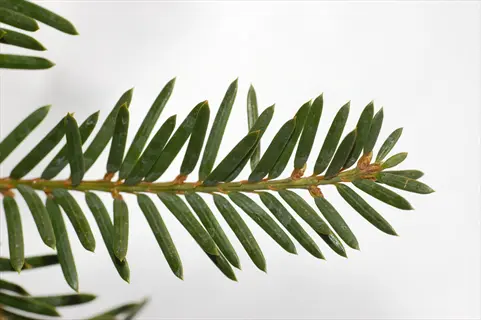
Capitata (Upright Japanese Yew)
- Mature Size: Grows 10 to 25 feet (3 to 7.6 meters) tall with a strong pyramidal shape, making it the largest and most tree-like Japanese yew cultivar available in nurseries.
- Growth Habit: Develops a single central leader with dense branching that forms an upright pyramidal silhouette on its own without heavy pruning or shaping intervention needed.
- Best Landscape Use: Ideal for tall privacy screens, formal hedges along property boundaries, and standalone specimen trees where vertical height and year-round green coverage are priorities.
- Foliage Character: Dark green needles arranged in a V-shaped pattern on the stem, maintaining rich color throughout winter when many other landscape plants lose their visual appeal entirely.
- Care Notes: Tolerates heavy pruning and shaping exceptionally well, responds fast to cuts with dense new growth, and needs well-drained soil to prevent root rot in the lower trunk area.
- Cold Hardiness: Reliable down to negative 30 degrees Fahrenheit (negative 34 degrees Celsius), making it one of the hardiest evergreen hedge options for cold northern climates.
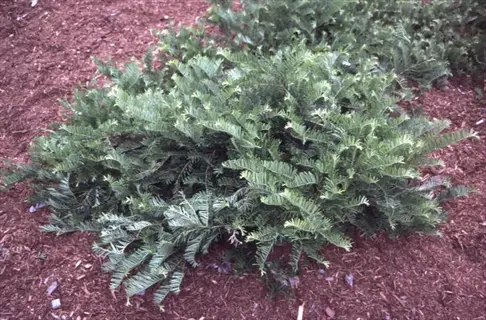
Densa (Dense Spreading Yew)
- Mature Size: Reaches only 3 to 4 feet (0.9 to 1.2 meters) tall but spreads 6 to 8 feet (1.8 to 2.4 meters) wide, creating a low, broad mound of dense evergreen foliage.
- Growth Habit: Forms a compact, spreading dome shape on its own without pruning. It grows wider than tall, filling horizontal space in foundation beds and borders with ease.
- Best Landscape Use: Perfect for foundation plantings under windows, low border hedges, and ground cover applications where a tidy evergreen mass is needed without blocking views or access.
- Foliage Character: Very dense, dark green needle coverage that creates an almost solid surface of green, stunning when dusted with snow in winter garden settings.
- Care Notes: Requires minimal pruning beyond occasional shaping, handles deep shade well near building foundations, and benefits from good air circulation to prevent fungal issues in humid conditions.
- Cold Hardiness: Very cold hardy through USDA Zone 4, and its low profile keeps it sheltered from damaging winter winds that cause burn on taller yew cultivars.
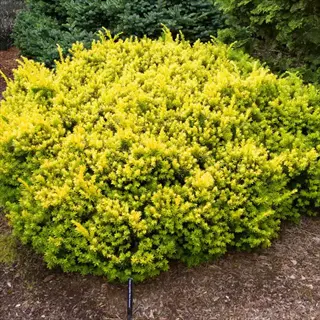
Nana Aurescens (Golden Dwarf Yew)
- Mature Size: Compact grower reaching 1 to 3 feet (0.3 to 0.9 meters) tall and 3 to 6 feet (0.9 to 1.8 meters) wide, one of the smallest Japanese yew cultivars available.
- Growth Habit: Low-spreading form with arching branches that create a layered, cascading effect, even more attractive when allowed to drape over walls, raised beds, or rock garden edges.
- Best Landscape Use: Outstanding as a color accent plant in mixed borders, rock gardens, and container plantings where its bright golden-yellow new growth provides striking contrast against darker foliage.
- Foliage Character: New spring growth emerges bright golden yellow before maturing to yellow-green, creating a two-tone color display that lasts from spring through midsummer in most climates.
- Care Notes: Color is brightest in partial sun locations with morning light and afternoon shade, as full deep shade reduces the golden coloring, and too much direct sun can scorch needles.
- Cold Hardiness: Hardy through USDA Zone 4, though golden foliage may show more winter bronzing than green cultivars in exposed sites without some wind protection.
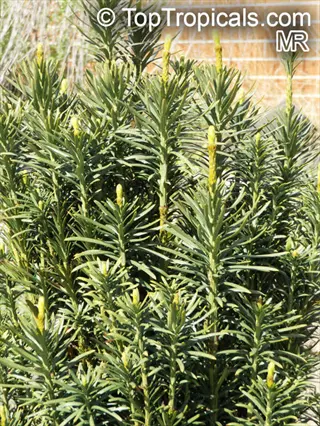
Fastigiata (Columnar Japanese Yew)
- Mature Size: Grows 10 to 15 feet (3 to 4.5 meters) tall but only 3 to 5 feet (0.9 to 1.5 meters) wide, forming a narrow columnar or vase-shaped silhouette in the landscape.
- Growth Habit: Upright branches grow close together to create a narrow, formal column shape that works in tight spaces where Capitata would be too wide for the available planting area.
- Best Landscape Use: Excellent for narrow planting strips alongside walkways, driveways, and entryways, and works great as paired accent columns flanking doorways or garden gates.
- Foliage Character: Dense dark green needles on tight vertical branches create a solid column of green texture that adds strong architectural presence to formal garden designs.
- Care Notes: Benefits from occasional light shearing to maintain its tight columnar form, and may need tying or staking in heavy snow regions to prevent branches from splaying open.
- Cold Hardiness: Reliable through USDA Zone 4, but the narrow form can collect heavy snow that splits branches, so gentle shaking after storms prevents structural damage in northern climates.
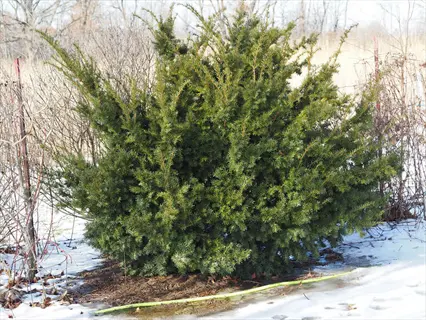
Expansa (Spreading Japanese Yew)
- Mature Size: Reaches 3 to 5 feet (0.9 to 1.5 meters) tall and spreads 6 to 10 feet (1.8 to 3 meters) wide, creating a broad, vase-shaped form that fills large spaces efficiently.
- Growth Habit: Open, graceful branching pattern with a wider vase shape than Densa, creating a more natural, less formal appearance suitable for relaxed garden settings and woodland edges.
- Best Landscape Use: Works well as a large-scale ground cover on slopes, as a mass planting beneath tall trees, or as an informal low barrier where a natural look is preferred over formal shearing.
- Foliage Character: Medium green needles with a slightly more open texture than Densa, giving the plant a softer, more relaxed appearance that blends right into informal garden designs.
- Care Notes: Tolerates deep shade and dry conditions under established trees better than most cultivars, making it the top choice for challenging under-canopy planting situations in mature landscapes.
- Cold Hardiness: Hardy through USDA Zone 4 with good winter performance, and the spreading habit keeps it low enough to benefit from natural snow insulation in cold climates.
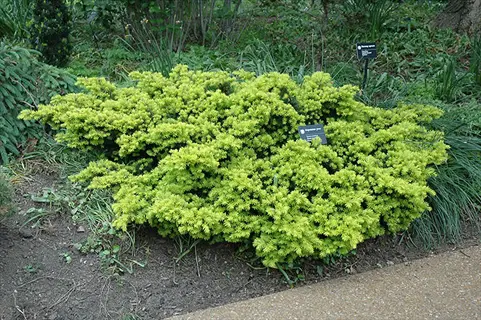
Aurescens (Dwarf Golden Yew)
- Mature Size: Very compact at just 1 to 2 feet (0.3 to 0.6 meters) tall and 2 to 4 feet (0.6 to 1.2 meters) wide, making it the most petite Japanese yew cultivar sold in stores.
- Growth Habit: Very slow, tight mounding form that stays low and compact with minimal intervention, almost hugging the ground as it gradually fills in over several growing seasons.
- Best Landscape Use: Ideal for rock gardens, alpine plantings, small-space container gardens, and as an edging plant along pathways where a miniature evergreen accent is needed year round.
- Foliage Character: Bright yellow new growth matures to deep green, creating a dynamic seasonal color shift similar to Nana Aurescens but on a much smaller and more compact plant frame.
- Care Notes: Needs excellent drainage due to its small root zone, benefits from a thin layer of organic mulch to retain moisture, and should be placed where it will not get buried by larger plants.
- Cold Hardiness: Hardy through USDA Zone 4, and its very low profile means it is almost always protected by snow cover in northern winters, reducing the risk of desiccation and wind burn.
Your best cultivar depends on the space and purpose you have in mind. Tall screens need Capitata or Fastigiata while foundation beds do best with Densa or Expansa. If you want color, the golden forms bring bright contrast to shaded corners that most plants can't handle.
Japanese Yew Care Essentials
Japanese yew care comes down to one golden rule. Keep the roots dry. I've seen more of these plants die from wet feet than from cold, bugs, or disease combined. This shade tolerant evergreen handles drought, deep shade, and freezing winters without complaint. But soggy soil will kill it in a matter of weeks.
Your japanese yew soil requirements are simple. You need well-drained soil with a pH between 5.5 and 7.0. Sandy loam works best, but any ground that drains within a few hours after rain will do the job. Heavy clay is the enemy here because it traps water right where the roots sit.
For japanese yew water needs, give young plants about 1 inch of water per week during their first year. After that, established plants handle dry spells on their own. Place yours in partial shade for the best results, though this tough shrub grows fine in full sun or deep shade across USDA Zones 4a through 7b. The table below gives you a quick view of what to do and what to avoid.
Pruning and Shaping Techniques
Pruning japanese yew is one of the most rewarding jobs in the garden. This plant grows back from old wood like almost no other evergreen can. You can cut it hard and it bounces right back with thick new growth. That's why it works so well for a japanese yew hedge, topiary shapes, and even bonsai forms that take years to perfect.
When to prune japanese yew depends on what you want to achieve. I follow a seasonal calendar that keeps my plants dense and shaped all year long. Heavy cuts go in early spring before growth starts. Light trims happen in late spring and summer for shaping yew into clean lines. The schedule below breaks it all down for you.
Early Spring Heavy Pruning
- Timing: Perform major structural pruning in late February through early April before new growth begins, when the plant is still dormant and sap flow has not yet started.
- Method: Remove up to one-third of the total plant volume using the one-third rule, cutting back to healthy wood where dormant buds will produce dense new growth in spring.
- Purpose: This is the best time for size reduction, hedge renovation, rejuvenation of overgrown specimens, and correcting structural problems that developed during the previous growing season.
Late Spring Shaping Trim
- Timing: Trim new growth in May through June after the spring flush has expanded but before the new needles harden, creating the ideal window for precise shape refinement.
- Method: Use hand shears or hedge trimmers to clip the soft new growth back to the desired outline, shaping hedges, topiaries, and formal specimens with clean geometric lines.
- Purpose: Maintains the desired shape while the plant grows, ensuring that cut surfaces fill in fast with fresh green growth rather than showing brown stubs.
Summer Light Maintenance
- Timing: Perform light touch up trimming in July through August if needed to maintain a clean formal look or remove stray branches that break the silhouette.
- Method: Use hand pruners for selective cuts on individual branches rather than power shears. Avoid removing more than a few inches of growth to prevent stress during hot weather.
- Purpose: Keeps formal hedges and topiaries looking sharp through the summer display season without triggering a flush of tender new growth that could get hit by early fall frost.
Fall and Winter Preparation
- Timing: Stop all pruning by mid September to allow the plant to harden off before winter, as late cuts stimulate tender new growth that is very prone to freeze damage.
- Method: Focus on removing dead, broken, or diseased branches in fall. Apply anti desiccant spray to exposed foliage in late November for winter wind protection.
- Purpose: Protects the plant from winter burn and freeze damage by ensuring all growth hardens before cold arrives. Clearing dead wood also prevents fungal disease from surviving in damaged tissue.
Japanese yew's bonsai tradition goes back centuries in Japanese temple gardens. I started my first yew bonsai 8 years ago and it taught me more about this plant's strength than anything else. If the plant can survive being shaped into a miniature tree in a small pot, it can handle whatever pruning you throw at it in the landscape.
Landscape Design With Yew
Smart japanese yew landscaping starts with matching the right cultivar to your situation. In my experience, I've designed beds around shaded north walls, narrow side yards, and wide open slopes. This shrub handles all of them. You might need a privacy screen or a low border. Either way, get your japanese yew spacing right so plants fill in without crowding each other.
Most people don't realize that japanese yew is one of the few evergreens that thrives on the north side of a building in full shade. That makes it perfect for dark corners where other plants give up and die. Below are 4 design setups I use the most. Each one lists cultivar picks, spacing, and companion plant ideas for your shade garden or yard.
Privacy Hedge and Screen
- Best Cultivar: Capitata planted 6 to 8 feet (1.8 to 2.4 meters) apart for a dense evergreen wall reaching 10 to 15 feet (3 to 4.5 meters) tall within 8 to 10 years of planting.
- Design Tip: Stagger plants in a double row with 4 feet (1.2 meters) between rows for a thicker, more solid screen that blocks both sight lines and winter wind.
- Companion Pairing: Underplant with shade tolerant hostas, ferns, or liriope at the base to add texture layers and cover bare lower stems as the japanese yew hedge matures and lifts its canopy.
Foundation Planting Design
- Best Cultivar: Densa or Expansa planted 4 to 6 feet (1.2 to 1.8 meters) apart beneath windows and along building walls where their spreading habit stays below window height on its own.
- Design Tip: Plant at least 3 feet (0.9 meters) from the foundation wall to allow air flow and prevent moisture buildup that promotes both root rot in the yew and mold on the building.
- Companion Pairing: Combine with taller flowering shrubs like hydrangeas set behind the yew line to create depth. The yew provides a consistent green base that frames the seasonal blooms.
Shade Garden Centerpiece
- Best Cultivar: Nana Aurescens or Aurescens for their golden foliage that brightens dark corners where most colorful plants fail to thrive or produce weak, stretched growth.
- Design Tip: Position golden cultivars where they receive dappled morning light filtered through overhead canopy to bring out the yellow coloring without risking scorch from intense afternoon sun.
- Companion Pairing: Surround with blue flowering shade plants like brunnera or corydalis to create a cool color contrast between the golden yew foliage and the blue flowers.
Slope and Erosion Control
- Best Cultivar: Expansa planted 5 to 8 feet (1.5 to 2.4 meters) apart on slopes where its wide spreading root system and dense branching hold soil well while tolerating dry conditions.
- Design Tip: Plant in staggered rows across the slope rather than in straight lines down the hill to create overlapping coverage zones that prevent water from channeling between plants.
- Companion Pairing: Mix with low ornamental grasses and creeping groundcovers between yew plants to cover bare soil during the setup phase while the yew fills in over 3 to 5 years.
One thing I always warn my clients about is root competition. You should avoid planting your yew too close to surface rooted trees like maples and birches. Those trees steal moisture and nutrients right from your yew's root zone. Give your foundation planting at least 8 feet of distance from large tree trunks to keep your plants healthy.
Japanese Yew Toxicity Facts
You need to know this part before you plant or keep one of these shrubs. I've seen a neighbor lose a family dog to this plant, and it changed how I talk about yew safety. Japanese yew poisonous traits show up in every part of the plant. Only the red fleshy berry coating is safe. The taxine alkaloids inside act as a cardiotoxin that blocks calcium channels in your heart muscle. There is no antidote for acute poisoning.
Japanese yew poisoning symptoms include trembling, a slow pulse, trouble breathing, and seizures. Death can follow in just 1 to 3 hours after someone eats the plant. A 2024 Cornell case report found 4 beef cattle dropped dead over 3 days after eating discarded yew clippings. The first cow was eating fine and then collapsed moments later.
This plant is toxic to pets and toxic to livestock at very small doses. Cornell research shows that just 30 grams can kill a dog. That's about 1 ounce of plant material. Penn State proved that taxine alkaloids stay active in dead root material for at least 7 years after you remove the plant. Fresh and dried clippings are both just as dangerous. The chart below shows lethal doses for different species.
If you suspect any person or animal has eaten japanese yew, call poison control or your vet right away. Don't wait for symptoms to show up. Speed is everything for getting help with yew poisoning. Always bag and trash your clippings far from kids, pets, and any livestock in the area.
Propagation and Planting Tips
You can propagate japanese yew from cuttings or from seed, but cuttings give you faster and more reliable results. I started my first batch of japanese yew cuttings about 10 years ago using rooting hormone and a simple perlite mix. About 75% of them took root within 3 months, and I've used the same method ever since.
Growing japanese yew from seed is possible but takes 18 to 24 months because the seeds need double dormancy breaking. That's why almost every nursery uses cuttings instead. Transplanting store bought plants works well too, but expect 6 to 8 weeks of adjustment before your new yew settles in. The hardening off process is key for any young plants you start indoors. Below are the 4 best methods with full details.
Stem Cuttings in Fall
- Best Timing: Take 6 to 8 inch (15 to 20 cm) semi hardwood cuttings in September through November from healthy current year growth, choosing stems that snap clean when bent at a sharp angle.
- Preparation: Strip needles from the lower half, scrape a thin sliver of bark from one side of the base, dip in rooting hormone powder, and insert into a pot filled with moist perlite and peat mix.
- Success Rate: Cuttings root within 8 to 12 weeks when kept at 65 to 70 degrees Fahrenheit (18 to 21 degrees Celsius) with steady moisture, giving you about 70 to 80% success with proper technique.
Seed Germination Process
- Collection: Harvest seeds from ripe red arils in fall. Remove the fleshy coating while wearing gloves because the seed inside is very toxic. Wash seeds well in clean water.
- Stratification: Seeds require double dormancy breaking: 3 to 4 months of warm treatment at 68 to 77 degrees Fahrenheit (20 to 25 degrees Celsius) followed by 3 to 4 months of cold treatment at 34 to 41 degrees Fahrenheit (1 to 5 degrees Celsius).
- Timeline: From seed collection to a seedling ready for transplanting takes 18 to 24 months minimum, which is why commercial nurseries use cuttings instead of seeds.
Transplanting Container Plants
- Best Timing: Plant nursery stock in early spring or early fall when temps are mild. Avoid midsummer heat and midwinter frozen ground that stress new transplants.
- Planting Depth: Dig the hole twice as wide as the root ball but no deeper. Set the top of the root ball level with the soil surface to prevent crown rot from buried bark tissue.
- Recovery Period: Expect 6 to 8 weeks of transplant adjustment during which the plant may show slight yellowing or needle drop. This is a normal stress response and not a sign of disease.
Hardening Off New Plants
- Process: Move rooted cuttings or indoor seedlings outside bit by bit over 10 to 14 days. Start with 2 hours of sheltered outdoor time and add more exposure each day.
- Protection: Keep new plants in partial shade and out of wind for the first full growing season. Water them often until roots establish in their permanent garden spot.
- First Winter: Mulch the base with 3 to 4 inches (7.5 to 10 cm) of organic mulch. You can also apply anti desiccant spray in late fall to protect tender young foliage from winter wind damage.
5 Common Myths
Japanese yew berries are completely safe to eat because birds consume them without harm throughout the fall and winter seasons.
Only the fleshy red aril is non-toxic. The seed inside contains lethal taxine alkaloids, and birds survive because they pass seeds whole without crushing them.
Removing a Japanese yew plant from your yard eliminates all toxicity danger to children, pets, and nearby livestock permanently.
Penn State research proved that taxine alkaloids persist in dead root material for at least seven years at levels comparable to fresh roots, creating ongoing hidden risk.
Japanese yew needs full sun to grow properly and will become thin, leggy, and unhealthy if planted in shaded garden areas.
Japanese yew is one of the most shade-tolerant evergreens available, thriving in full shade to full sun across USDA Zones 4 through 7.
Dried or dead Japanese yew clippings become harmless over time and are safe to leave in compost piles or near animal grazing areas.
Fresh and dried yew are equally toxic according to Cornell research, and discarded clippings in pastures have caused multiple documented livestock deaths.
All Japanese yew cultivars grow into large trees reaching 40 to 50 feet (12 to 15 meters) tall and require enormous garden spaces.
Most landscape cultivars stay between 3 and 10 feet (0.9 to 3 meters) tall in cultivation, with compact varieties like Densa reaching only 4 feet (1.2 meters).
Conclusion
Japanese yew gives you something few other plants can match. This shade tolerant evergreen shrub holds its beauty through every season. It shapes into almost any form you want. Taxus cuspidata thrives in spots where other plants just give up. You can grow tall Capitata hedges or tiny golden Aurescens in rock gardens. There's a cultivar for every yard.
But japanese yew care carries a weight that you can't ignore. Taxine alkaloids are lethal to people, pets, and livestock at very small doses. Dead roots hold their poison for at least 7 years after you pull the plant. Clippings left on the ground are just as toxic as fresh growth. In my years of working with this shrub, I always bag trimmings and keep them far from animals and children.
Here's something most guides skip over. Japanese yew grows strong across North America. But in its native China, it's listed as a protected wild plant because wild numbers are dropping. What thrives in your garden is struggling in the forests where it started. That fact makes good care of your own plants feel even more meaningful.
Take a look at your yard and think about where a japanese yew could fit. Pick the right cultivar for your space and give it well drained soil along with steady japanese yew care. Specimens in Japan have lived over 2,000 years. With the right approach, the one you plant today could outlast us all.
External Sources
Frequently Asked Questions
Is Japanese yew toxic to humans?
Yes, all parts except the fleshy red aril contain taxine alkaloids that can cause cardiac arrest and death in humans within hours of ingestion.
What is Japanese yew used for?
Japanese yew is used for hedges, privacy screens, foundation plantings, topiaries, bonsai, and has historical significance in Japanese temple gardens.
Do Japanese yews like sun or shade?
Japanese yews are exceptionally shade tolerant and grow well in full sun, partial shade, or deep shade, making them one of the most versatile evergreens.
Is Japanese yew toxic to dogs?
Yes, Japanese yew is highly toxic to dogs. Cornell University research documents a lethal dose as low as 30 grams total, with death occurring within hours.
Is it bad to touch a yew tree?
Touching the foliage is generally safe for adults, but wearing gloves is recommended during pruning to avoid skin irritation from sap and needle contact.
What is the problem with the Japanese yew?
The primary problem is extreme toxicity to humans, pets, and livestock, combined with susceptibility to root rot in poorly drained soils.
Why are yew trees so special?
Yew trees are special for their exceptional longevity of over 1,000 years, shade tolerance, pruning versatility, and cultural significance in Asian temples.
What are the disadvantages of yew?
Disadvantages include extreme toxicity to people and animals, intolerance of wet soils, slow mature growth rate, and vulnerability to deer browsing.
What is another name for Japanese yew?
The scientific name is Taxus cuspidata. It is also called spreading yew, and specific cultivars have names like Capitata, Densa, and Nana.
Is Japanese yew fast growing?
Japanese yew grows rapidly when young but slows considerably at maturity, typically taking 10 to 20 years to reach full landscape size.