
Introduction
The corn plant has been a household favorite since growers first brought it indoors in the mid 1800s. Its scientific name is Dracaena fragrans. The word "fragrans" comes from the sweet scent of its rare flowers that bloom at night. Those blooms almost never show up indoors, but the bold green leaves more than make up for it.
I have kept these plants in my home for over 15 years, and they've outlasted every other indoor plant I own. NC State Extension data shows they can reach 3 to 14.5 feet tall with leaves stretching 18 to 36 inches long. That size turns any corner into a tropical focal point.
Most houseplant care guides skip the details that matter most. Fluoride in your tap water causes brown tips. Cultivar differences affect where you place your pot. Seasonal shifts change how often you water. This Dracaena fragrans guide covers each of those gaps so your plant can thrive for decades. Some documented ones have lived over 40 years with basic houseplant care.
Think of this indoor plant as a reliable old friend that asks for very little. It gives back years of lush green foliage with minimal effort. Below you will find variety picks and corn plant care schedules to keep it looking great all year.
7 Corn Plant Varieties
You can find 7 main corn plant varieties at most garden centers and online shops. NC State Extension lists 9 types of Dracaena fragrans in total. You'll spot cultivars like Warneckii along with the rest. Each one has its own leaf pattern, size, and light needs. Picking the right variety saves you from years of struggle in the wrong spot.
I've grown 5 of these corn plant varieties in my own home over the years. Dracaena fragrans Massangeana is the one most stores carry thanks to its bold yellow center stripe. But Janet Craig handles dim rooms far better, and Lemon Lime beats every other variety for bright color. White stripes make a strong case for Warneckii. The list below breaks down each cultivar so you can find your best fit.
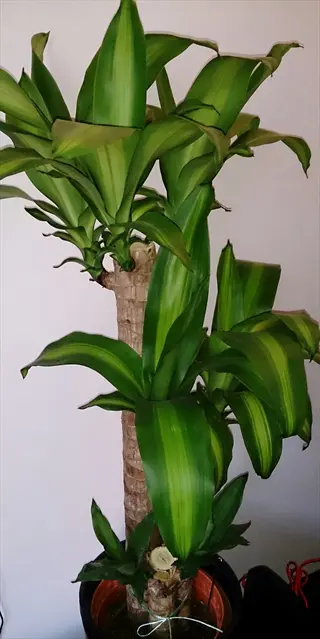
Massangeana (Mass Cane)
- Leaf Pattern: Broad glossy green leaves with a wide central yellow-to-lime stripe running the full length of each leaf, giving a bold tropical appearance.
- Mature Size: Grows 4-5 feet (1.2-1.5 meters) tall with a 2-foot (0.6 meter) spread on stout tan cane stems, making it one of the larger indoor cultivars.
- Light Needs: Performs best in bright indirect light but tolerates moderate shade; too little light causes the yellow variegation to fade toward solid green.
- Best For: Living rooms, entryways, and offices where a tall, eye-catching focal point is needed without requiring constant attention or direct sunlight.
- Care Notes: The most commonly sold corn plant cultivar worldwide, prized for its forgiving nature and ability to adapt to a wide range of indoor environments.
- Availability: Widely available at garden centers, grocery stores, and online retailers year-round, typically sold as multi-cane arrangements at mixed heights.
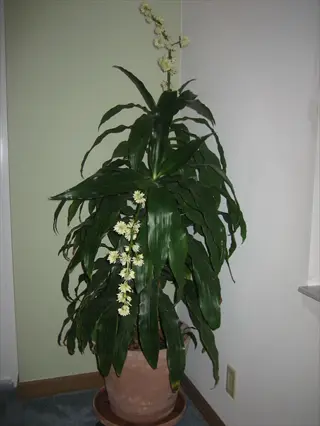
Janet Craig
- Leaf Pattern: Solid dark green glossy leaves without variegation, creating a lush and uniform appearance that fits right into modern and minimalist interiors.
- Mature Size: Reaches 3-5 feet (0.9-1.5 meters) tall indoors, though a compact form called Janet Craig Compacta stays under 3 feet (0.9 meters).
- Light Needs: One of the most shade-tolerant cultivars in the Dracaena family, making it a top choice for dark offices, hallways, and rooms with small windows.
- Best For: Low-light office cubicles, bathrooms with limited natural light, and commercial interiors where consistent green foliage is preferred over variegation.
- Care Notes: A bit more tolerant of inconsistent watering than variegated types; its solid green leaves capture light well even under fluorescent bulbs.
- Availability: Commonly found at nurseries and plant shops, often sold alongside Massangeana at a lower price point due to its plain green look.
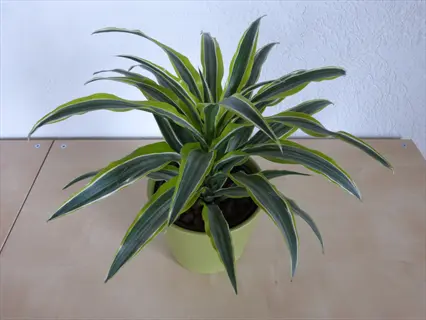
Lemon Lime
- Leaf Pattern: Striking chartreuse and dark green striped leaves with bright lime-yellow margins that add a vibrant pop of color to any room.
- Mature Size: Grows 4-6 feet (1.2-1.8 meters) tall indoors with an upright, columnar growth habit similar to Massangeana but with more vivid coloring.
- Light Needs: Requires brighter indirect light than solid green varieties to maintain its vivid lime coloring; low light causes the bright margins to darken.
- Best For: Well-lit living rooms, sunrooms, and spaces that benefit from a bold splash of color without the need for flowering plants.
- Care Notes: More sensitive to direct sun than darker cultivars; prolonged direct rays can bleach the bright lime margins to a pale yellow.
- Availability: Growing in popularity at specialty plant shops and online retailers, though less common than Massangeana at general garden centers.
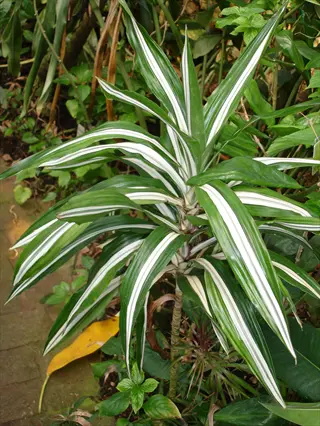
Warneckii
- Leaf Pattern: Gray-green leaves edged with crisp white stripes, giving a cool and elegant appearance that pairs well with modern and Scandinavian-style decor.
- Mature Size: Reaches 2-4 feet (0.6-1.2 meters) tall indoors with a narrower profile than Massangeana, making it suitable for tighter spaces and tabletops.
- Light Needs: Tolerates low to medium indirect light well, though the white striping shows best contrast under moderate bright indirect conditions.
- Best For: Desktops, shelving units, and smaller rooms where a compact but eye-catching plant adds character without overwhelming the space.
- Care Notes: Documented by both Clemson and NC State Extension as a popular cultivar; its compact growth habit makes it easier to manage indoors.
- Availability: Available at most well-stocked garden centers and online specialty shops, often sold as a single-cane tabletop plant or multi-cane floor arrangement.
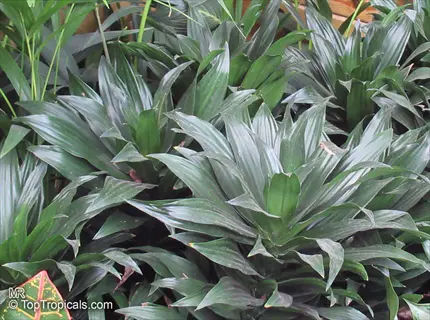
Compacta
- Leaf Pattern: Dense rosettes of short, dark green leaves clustered tightly along the stem, giving a full and sculptural look unlike the arching leaves of other cultivars.
- Mature Size: Stays small at 2-3 feet (0.6-0.9 meters) tall, making it one of the most compact Dracaena fragrans cultivars available for indoor growing.
- Light Needs: Handles low to medium light conditions with ease and is one of the best cultivars for rooms that receive little natural sunlight throughout the day.
- Best For: Small apartments, bedroom nightstands, office desks, and any tight space where a full-sized corn plant would be too large and overpowering.
- Care Notes: Slower growing than other cultivars, which means it needs less frequent repotting and pruning but also recovers more slowly from damage or stress.
- Availability: Found at specialty nurseries and online plant retailers; less common in general garden centers but well worth seeking out for compact spaces.
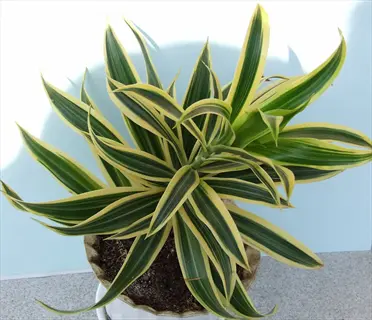
Lindenii
- Leaf Pattern: Green leaves with creamy white to yellow stripes running along the outer margins rather than the center, creating the reverse pattern of Massangeana.
- Mature Size: Grows 3-5 feet (0.9-1.5 meters) tall indoors with a graceful arching leaf habit that gives it an elegant, fountain-like silhouette.
- Light Needs: Performs best in bright indirect light to maintain clear edge variegation; in low light the margin stripes may become less distinct over time.
- Best For: Spaces where you want the tropical corn plant look with a more refined and less common variegation pattern that stands apart from the standard Massangeana.
- Care Notes: Listed by both NC State Extension and Clemson Extension as a recognized cultivar; shares the same core care requirements as other Dracaena fragrans varieties.
- Availability: Less commonly sold than Massangeana but available through specialty nurseries, online plant shops, and well-stocked tropical plant sections.
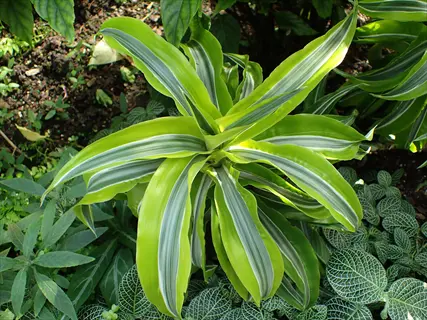
Limelight
- Leaf Pattern: Uniform bright lime-green to golden-yellow leaves without contrasting stripes, making it one of the most striking and unique corn plant cultivars.
- Mature Size: Reaches 3-5 feet (0.9-1.5 meters) tall indoors with a similar growth habit to Massangeana but but with a different color impact.
- Light Needs: Needs moderate to bright indirect light to maintain its signature lime coloring; too little light causes the leaves to shift toward a duller green.
- Best For: Statement plant for well-lit spaces, plant collections where color variety is desired, and rooms with neutral decor that benefit from a natural color accent.
- Care Notes: Documented by NC State Extension as a recognized Dracaena fragrans cultivar; the all-over lime color makes any browning or damage more visually noticeable.
- Availability: Available through specialty plant retailers and online shops; gaining popularity as indoor plant enthusiasts seek more colorful foliage options.
Corn Plant Care Essentials
Getting the basics right keeps your corn plant healthy for years. Light, water, temperature, and humidity all play a role. Miss one and your plant tells you fast with brown tips or yellow leaves. The table below gives you a quick snapshot of each care factor so you can check your setup right now.
Your corn plant light requirements depend on which cultivar you own. Variegated types like Lemon Lime need bright indirect light to keep their color. Solid green types like Janet Craig are perfect for anyone who wants a low light houseplant. Place variegated plants near east or north windows and solid green ones further from the glass.
Learning how to water corn plant the right way is the single most important skill you can build. Think of checking soil moisture like checking before you cross a street. It takes 2 seconds and saves you from the biggest danger. Stick your finger into the top 1 to 2 inches of soil. If it feels dry, go ahead and water. If it still feels damp, wait a few more days.
Clemson Extension sets the ideal corn plant temperature at 60 to 70°F during the day. Nights should run about 10 degrees cooler for best growth. Corn plant humidity should stay around 40 to 50% for strong growth. When it drops below 30 to 40%, mist the leaves or set a pebble tray under the pot. I keep a small hygrometer next to mine so I never have to guess.
Soil, Fertilizer, and Repotting
The best soil for corn plant health starts with the right mix. Most growers grab whatever bag is on sale, but that mistake leads to brown tips within weeks. Your Dracaena needs a well-draining potting mix that keeps fluoride away from the roots. I learned this the hard way after years of fighting brown leaf edges on every plant I owned.
Corn plants rank among the top fluoride sensitivity plants in the houseplant world. Clemson Extension warns that fluoride damage builds up over time and you can't reverse it on leaves that already show burns. Avoid potting soils loaded with perlite because perlite contains fluoride that leaches out each time you water. One of the best defenses is testing and managing your soil pH. Keep it between 6.0 and 6.5 to block fluoride uptake at the root level.
Your corn plant fertilizer choice matters just as much as your soil. Never use products that list superphosphate on the label. Superphosphate carries high fluorine levels that go straight into the roots. Repotting corn plant projects work best in spring when growth picks up. Choose a pot just 1 to 2 inches wider than the current one to prevent soggy soil.
Ideal Potting Mix Recipe
- Base: Use a standard indoor potting soil with good drainage as the foundation, choosing one that lists loam or composted bark as primary ingredients.
- Amendment: Mix in coarse sand or pumice at about one part amendment to three parts potting soil to improve drainage without adding fluoride-containing perlite.
- pH Target: Aim for a soil pH between 6.0 and 6.5 as recommended by Clemson University Extension to minimize fluoride uptake through the root system.
Monthly Fertilizer Schedule
- Product Type: Use a balanced liquid houseplant fertilizer diluted to half strength, and confirm the label does not list superphosphate as an ingredient.
- Timing: Feed once per month during the active growing season from April through September, then stop during the fall and winter dormant period.
- Application: Water the soil a bit before applying fertilizer to prevent root burn, and flush the soil with plain filtered water every three months to remove built-up salts.
When and How to Repot
- Frequency: Plan to repot every two to three years or when roots begin circling the bottom of the pot and emerging from drainage holes.
- Pot Selection: Choose a new container that is only 1-2 inches (2.5-5 centimeters) wider in diameter than the current pot to avoid excess soil moisture retention.
- Best Season: Repot during spring or early summer when the plant is in active growth mode and can bounce back fast from the root disturbance.
Fluoride Damage Prevention
- Water Choice: Use filtered, distilled, or rainwater for all watering since fluoride in municipal tap water is the leading cause of brown leaf tips on Dracaena.
- Soil Choice: Avoid potting mixes with high perlite content because perlite contains fluoride that occurs in the material that leaches into the soil with each watering cycle.
- Fertilizer Check: Read fertilizer labels with care and avoid any product listing superphosphate, which contains high levels of fluorine according to Clemson Extension research.
Propagation and Pruning
Once you learn how to propagate corn plant cuttings, you can turn one tall Dracaena into several new plants for free. Corn plant propagation works best in spring or late summer when the plant pushes out active growth. I've made over a dozen new plants from a single tall cane using Dracaena fragrans stem cuttings and air layering methods.
Pruning corn plant stems serves two goals at once. It controls height on plants that have grown too tall for the room. And every stem you cut off becomes a new cutting you can root. Dip the cut end into rooting hormone. This speeds up root growth and gives your new plants a stronger start from day one. Expect 4 to 8 weeks before you see real roots forming. Air layering takes a bit longer but works best for tall plants you want to shorten without losing the top growth.
Stem Tip Cuttings
- Process: Cut 4-6 inches (10-15 centimeters) from the top of a healthy stem just below a leaf node using a clean, sharp blade sterilized with rubbing alcohol.
- Rooting: Place the cutting in a jar of filtered water or moist potting mix, and dip the cut end in rooting hormone powder to speed root development.
- Timeline: Expect visible roots within 4-8 weeks in water, or tug the cutting after 6 weeks in soil to check for resistance that indicates new root growth.
Stem Section Cuttings
- Process: Cut a leafless cane section 4-6 inches (10-15 centimeters) long that contains at least two nodes, and mark the top end so you plant it right side up.
- Rooting: Insert the bottom half of the section into moist potting mix and place in a warm spot with bright indirect light and a clear plastic bag over the pot for humidity.
- Timeline: New shoots emerge from the nodes within 6-10 weeks, and the cutting can be treated as a new plant once several leaves have opened up.
Air Layering
- Process: Make a small upward cut about one third through the stem at the desired height, wedge it open with a toothpick, and wrap the area in damp sphagnum moss.
- Wrapping: Cover the moss with plastic wrap and secure both ends with tape or twist ties, keeping the moss moist by unwrapping and misting every few days.
- Timeline: Roots grow through the moss in 6-12 weeks; once a healthy root ball is visible through the plastic, cut below the new roots and pot the rooted section.
Pruning for Shape
- When to Prune: Trim your corn plant in spring when new growth begins, removing leggy or bare stems to encourage branching and a fuller look.
- How to Cut: Use clean pruning shears and cut the cane at any height; the plant will sprout one or more new growing points just below the cut within several weeks.
- Reuse Cuttings: Every stem you remove during pruning can become a new plant through the tip cutting or stem section methods described above, so nothing goes to waste.
Pests, Diseases, and Toxicity
Corn plant pests show up when you least expect them. Mealybugs hide in leaf joints as white cotton clusters while scale insects stick to stems as small brown bumps. I check my plants every week and still find new pests from time to time. A bottle of neem oil is your best friend for treating most infestations before they spread to your other houseplants.
One question I get asked more than any other is corn plant toxic to cats or not. Yes, Dracaena fragrans toxic effects are real. The ASPCA confirms these plants contain saponins. NC State Extension rates the poison level as low, so it won't kill a pet in most cases. But cats that chew the leaves can show vomiting, drooling, loss of appetite, and dilated pupils. Dogs may vomit and act depressed. Call your vet right away if you see any of these signs.
The table below lists the most common corn plant pests and diseases with clear signs to look for and fast treatment steps you can take at home. Keep your plant away from pets and check for bugs on a set schedule to catch problems while they are still small.
Seasonal Care Calendar
Good seasonal houseplant care makes the difference between a corn plant that survives and one that thrives. Most problems I see pop up when owners keep the same watering and feeding routine all year. Your corn plant care indoors needs to shift with the seasons just like outdoor gardens do.
The corn plant fertilizer schedule is simple once you see it laid out. Feed once a month from April through September, then stop for winter. Spring is also the best time to think about when to repot Dracaena that has outgrown its pot. I mark my calendar each March to check roots and plan for the growing season ahead.
Winter brings the biggest risks for your plant. Indoor heaters dry out the air fast, and low humidity causes brown tips within days. The biggest challenge during this season is winter humidity indoor plants. Most owners forget about it until brown tips show up. A pebble tray or small humidifier near your pot solves the problem for just a few dollars. The table below shows you what to do each season.
5 Common Myths
A single corn plant in your living room will significantly purify your indoor air and remove harmful chemicals.
The 1989 NASA study tested plants in sealed chambers. A 2014 review found you would need 10-1,000 plants per square meter for real-world air cleaning.
Corn plants need direct sunlight to grow well and produce healthy variegated leaves indoors.
Direct sunlight actually scorches corn plant leaves. They thrive in bright indirect light and tolerate low-light conditions that would stress most houseplants.
Brown tips on corn plant leaves mean you are not watering enough and should increase watering frequency.
Brown tips are most often caused by fluoride sensitivity from tap water or high-perlite soil mixes, not underwatering. Using filtered water and maintaining soil pH at 6.0-6.5 helps prevent this.
Corn plants are completely safe to keep around pets because they are common household plants.
Corn plants contain saponins and are toxic to cats, dogs, and horses. Symptoms in pets include vomiting, loss of appetite, excessive drooling, and dilated pupils in cats.
You should water your corn plant on a fixed weekly schedule to keep it healthy and growing.
Watering on a schedule often leads to overwatering and root rot. Instead, check the top 1-2 inches (2.5-5 centimeters) of soil and water only when it feels dry to the touch.
Conclusion
Corn plant care comes down to a few simple habits that anyone can build. Use filtered water to dodge fluoride damage. Check the soil before you water instead of following a set schedule. Adjust your routine with the seasons and your Dracaena fragrans will reward you with years of lush green growth that makes any room feel alive.
This indoor plant forgives more mistakes than almost any other houseplant I've owned. It handles low light, dry spells, and even some neglect without giving up on you. That makes it one of the best investments for plant owners at any skill level. You get bold tropical foliage without the fuss.
Take a moment to match your light conditions to the right pick from the corn plant varieties. Bright rooms do well with Lemon Lime or Massangeana. Dim corners and offices call for Janet Craig or Compacta. Getting this match right from the start sets you up for decades of success with your houseplant care routine.
Some documented corn plants have thrived for over 40 years with nothing more than basic attention. That's not a plant you buy for a season. That's a companion that grows with you and your home for a very long time.
External Sources
Frequently Asked Questions
Is a corn plant a good indoor plant?
Yes, corn plants are excellent indoor plants because they tolerate low light, require minimal watering, and adapt well to typical household temperatures between 60-75 degrees Fahrenheit (15-24 degrees Celsius).
Does a corn plant like sun or shade?
Corn plants prefer bright indirect light but tolerate shade well, making them versatile for various indoor locations.
How do you take care of a corn plant?
Care for a corn plant by providing bright indirect light, watering when the top inch of soil is dry, maintaining 60-75 degrees Fahrenheit (15-24 degrees Celsius), and feeding monthly during the growing season.
What is a corn plant good for?
Corn plants are good for adding tropical greenery to homes and offices, and they were included in the 1989 NASA Clean Air Study for their ability to filter volatile organic compounds.
Do corn plants clean the air?
The 1989 NASA study found corn plants can remove formaldehyde and other chemicals, but a 2014 review showed you would need 10-1,000 plants per square meter for meaningful air cleaning in a typical room.
What to feed corn plants?
Feed corn plants with a balanced liquid houseplant fertilizer once a month during spring and summer, and avoid fertilizers containing superphosphate.
Are coffee grounds good for corn plants?
Coffee grounds can slightly acidify soil, which may help since corn plants prefer a pH of 6.0-6.5, but they should be composted first and used sparingly to avoid mold and fungal issues.
What are common problems with corn trees?
Common problems include brown leaf tips from fluoride sensitivity, yellow leaves from overwatering, root rot, mealybugs, scale insects, and leaf spot diseases.
Where to put a corn plant in the house?
Place a corn plant near a north or east-facing window where it receives bright indirect light, away from cold drafts and heating vents.
What does an overwatered corn plant look like?
An overwatered corn plant shows yellowing lower leaves, mushy or soft stems near the base, a musty soil smell, and drooping foliage despite wet soil.