
Introduction
The first time I grew a black eyed susan, I thought it was just another yellow daisy filling a gap in my border. Then I crouched down and noticed dozens of tiny bees on the dark center cone. Each one was feeding from hundreds of small flowers packed into that single bloom. That moment changed how I saw this native wildflower for good.
Here is the part most gardeners miss. One bloom head holds 250 to 500 tiny individual flowers that each act as their own nectar cup. A single plant feeds far more insects than you might think. Rudbeckia hirta grows wild across 44 U.S. states and serves as the state flower of Maryland too. It also plays a key role in prairie restoration across the Midwest.
These tough plants handle drought, clay soil, and poor ground with ease. They bring in butterflies, bees, and songbirds without asking for much attention from you. Few other garden flowers give you that kind of return on such a small investment of time and effort.
This guide walks you through the best varieties and planting from seed. You will learn care tips, the pollinator science behind these blooms, and how to pair them with the right companions. If you have thought about growing black eyed susans in your own yard, start right here.
8 Best Black Eyed Susan Varieties
The best black eyed susan varieties range from compact 8 inch dwarf plants to towering 5 foot prairie specimens. I tested most of these Rudbeckia cultivars in my own beds over the past decade. Your choice comes down to what you need from the plant and how much room your garden has.
About 25 Rudbeckia species exist in the wild, all native to North America. Rudbeckia hirta splits into 4 regional types. One covers the east, another the southeast, one grows only in Florida, and the last spreads west. These genetic differences shape how each type handles your local climate and soil.
American Gold Rush won the 2023 Perennial Plant of the Year award for its disease resistance. Goldsturm took the same honor in 1999 but now struggles with leaf spot in humid areas. The list below pairs each variety with its ideal use so you can pick the right one for your yard.

American Gold Rush
- Species: Rudbeckia hybrid bred for strong disease resistance, thriving in USDA zones 4 through 9 with great garden performance across a wide climate range.
- Height: Grows 24 to 30 inches (61 to 76 centimeters) tall and spreads up to 40 inches (102 centimeters) wide, forming a dense clump that fills garden beds fast.
- Bloom Period: Produces golden-yellow flowers from midsummer through early fall, offering 8 to 12 weeks of continuous color when you deadhead spent blooms.
- Disease Resistance: Named 2023 Perennial Plant of the Year by the Perennial Plant Association for its strong resistance to Septoria leaf spot.
- Best Use: Ideal for mass planting in borders and pollinator gardens where low-maintenance, disease-free performance matters most to gardeners.
- Care Tip: Performs best in full sun with average to dry soil and needs no special fungicide treatment, unlike many older Rudbeckia cultivars.
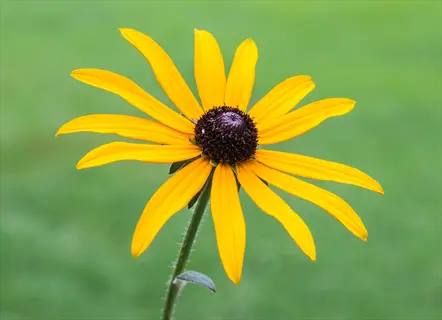
Goldsturm (Rudbeckia fulgida)
- Species: Rudbeckia fulgida var. sullivantii, a true perennial that returns each year without fail in USDA zones 3 through 9 with a spreading habit.
- Height: Reaches 24 to 30 inches (61 to 76 centimeters) tall with sturdy stems that seldom need staking even during heavy rain or wind.
- Bloom Period: Flowers from July through September with deep golden-yellow petals surrounding a very dark brown center cone that holds visual interest into winter.
- Disease Note: Named 1999 Perennial Plant of the Year, but Penn State Extension warns it is quite prone to angular leaf spot and Septoria in humid conditions.
- Best Use: Works well in cottage gardens, borders, and meadow-style plantings where its spreading rhizomes help it fill large areas over time.
- Care Tip: Divide clumps every 3 to 4 years to maintain vigor and reduce disease pressure from overcrowded root systems in established beds.
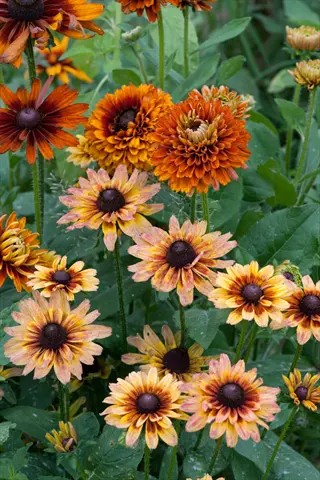
Cherokee Sunset
- Species: Rudbeckia hirta cultivar prized for its unusual double and semi-double flower forms in warm sunset tones hard to find in standard black eyed susans.
- Height: Grows 24 to 30 inches (61 to 76 centimeters) tall, producing branching stems that carry multiple blooms at once for a bushy display.
- Bloom Period: Flowers from midsummer through fall in rich shades of bronze, mahogany, gold, and russet that add warm autumn tones to summer gardens.
- Awards: Won an All-America Selections award for its outstanding garden performance and unique color range that no other black eyed susan variety matches.
- Best Use: Excellent as a cut flower with a warm color palette that blends well in fall bouquets and cottage garden arrangements.
- Care Tip: Treat as an annual or short-lived perennial since this Rudbeckia hirta cultivar tends to live 2 to 3 years but self-sows to maintain its presence.
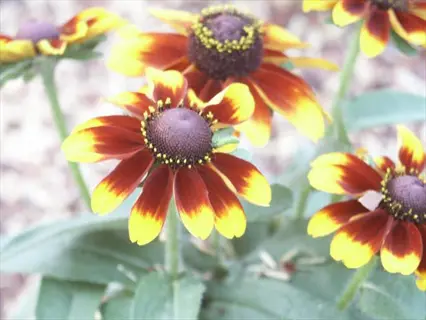
Toto Lemon
- Species: Compact Rudbeckia hirta cultivar developed for container growing and small garden spaces where standard varieties would be too large.
- Height: Stays just 8 to 12 inches (20 to 30 centimeters) tall, making it one of the smallest black eyed susan options available for patio pots and window boxes.
- Bloom Period: Produces soft lemon-yellow flowers with dark centers from early summer through first frost, blooming nonstop without deadheading.
- Container Performance: Thrives in containers at least 12 inches (30 centimeters) deep because its compact root system does not require the depth that full-sized varieties demand.
- Best Use: Perfect for balcony gardens, small patio containers, front-of-border plantings, and anywhere a low-growing splash of yellow is needed.
- Care Tip: Water container-grown plants when the top inch of soil feels dry and use a well-draining potting mix to prevent root rot in confined spaces.
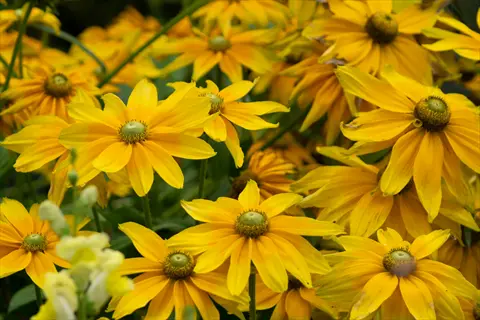
Prairie Sun
- Species: Rudbeckia hirta cultivar distinguished by its unique green center cone that matures to chocolate brown, creating a two-tone effect throughout the bloom cycle.
- Height: Reaches 30 to 36 inches (76 to 91 centimeters) tall with strong stems that hold up well in windy locations without staking or support cages.
- Bloom Period: Flowers from midsummer through fall with 5-inch (13-centimeter) wide blooms featuring golden petals tipped in primrose yellow around the green eye.
- Unique Feature: The green center cone distinguishes it from all other black eyed susan varieties and changes color as the flower matures, adding visual complexity.
- Best Use: Outstanding in prairie-style and naturalized meadow gardens where its tall stature and unique coloring blend with native grasses and wildflowers.
- Care Tip: Grows as an annual or biennial, so allow some flowers to go to seed at the end of the season to maintain the planting from year to year.
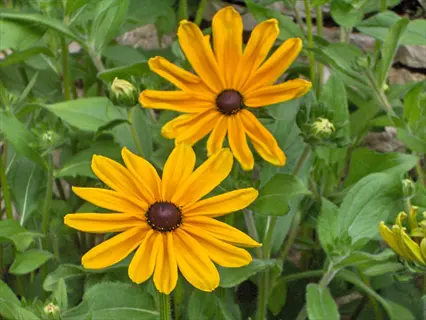
Indian Summer
- Species: Rudbeckia hirta cultivar that produces extra large single and semi-double flowers, among the biggest blooms in the entire black eyed susan family.
- Height: Grows 36 to 42 inches (91 to 107 centimeters) tall with thick, sturdy stems well-suited for cutting and arranging in tall vases and centerpieces.
- Bloom Period: Flowers from midsummer through early fall with golden-orange blooms reaching 6 to 9 inches (15 to 23 centimeters) across on well-established plants.
- Awards: Won the 2000 Fresh Cut Flower of the Year award and an All-America Selections gold medal for superior flower size and garden performance.
- Best Use: Ideal as a cut flower variety due to its long stems and oversized blooms that make dramatic statement arrangements in tall vases.
- Care Tip: Stake taller stems in windy areas and harvest flowers for cutting when petals are all the way open but the center cone is still tight for longest vase life.
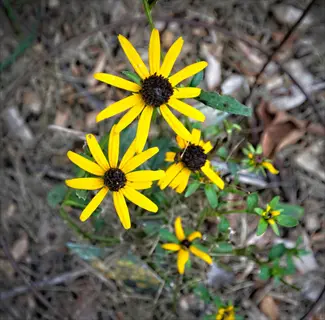
Little Goldstar
- Species: Compact Rudbeckia fulgida cultivar that forms a neat, dense mound, making it a true perennial alternative to taller spreading Goldsturm in smaller gardens.
- Height: Stays 14 to 16 inches (36 to 41 centimeters) tall with a tidy, rounded growth habit that maintains its shape without pinching or pruning throughout the season.
- Bloom Period: Produces classic golden-yellow flowers with dark brown centers from July through September, blooming hard on well-branched stems with abundant buds.
- Compact Advantage: Takes up far less garden space than Goldsturm while delivering the same reliable perennial performance and pollinator appeal in a smaller package.
- Best Use: Excellent for edging borders, small garden beds, and mixed containers where a perennial black eyed susan is wanted but full-size plants would overwhelm the space.
- Care Tip: Divide clumps every 3 to 4 years in early spring to keep the plant vigorous and prevent the center of the clump from dying out over time.
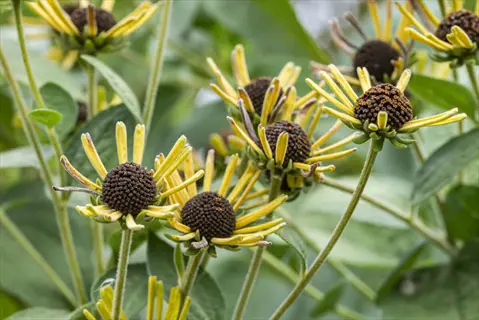
Henry Eilers
- Species: Rudbeckia subtomentosa cultivar with a one of a kind flower form where the petals roll into narrow tubes instead of lying flat like all other varieties.
- Height: Reaches 36 to 60 inches (91 to 152 centimeters) tall, making it one of the tallest garden Rudbeckia options for back-of-border and naturalized plantings.
- Bloom Period: Flowers from late summer through fall with quilled tubular petals surrounding a raised cone, creating a spiky starburst effect unlike any other black eyed susan.
- Unique Feature: The foliage carries a light vanilla scent when brushed, adding a fragrance dimension that no other Rudbeckia variety offers in the garden.
- Best Use: Stunning in prairie-style and cottage garden designs where its tall stature provides vertical interest alongside ornamental grasses and late-season perennials.
- Care Tip: Plant in full sun with good air circulation because the tall stems can flop in heavy shade, and divide every few years to maintain clump density.
If you grow in pots, stick with dwarf varieties like Toto Lemon or Little Goldstar. Standard types send roots too deep for most containers. In my experience, matching your pick to your space gives you better blooms with less effort from day one.
How to Plant Black Eyed Susans
Knowing how to plant black eyed susan the right way saves you months of waiting and wasted seeds. I lost my first batch because I buried them too deep in the soil. These seeds need light to start growing, so you press them onto the surface instead of covering them up.
When to plant black eyed susan depends on your method. Sow seeds indoors 10 weeks before your last frost and give them cold stratification seeds treatment first. This cold period mimics winter and tells the seed it's time to wake up, just as it would under snow outside. You can also direct sow black eyed susan from seed in late fall and let nature handle that cold snap for you.
Seed germination rates range from 0% to 46% based on USDA Forest Service data. Your results depend on the seed source, soil conditions, and whether you used cold treatment. Don't get discouraged if your first batch falls short. In my experience, growing from seed takes patience, but once these plants take hold they stick around through self sowing for years.
Black Eyed Susan Care Tips
Black eyed susan care is about knowing when to step in and when to leave the plant alone. I spent my first year fussing over mine with extra water and fertilizer. They gave me lots of leaves but very few flowers. Once I backed off, the blooms took over.
These plants are a true drought tolerant perennial that does best in lean soil with little attention. Deadheading black eyed susans keeps new flowers coming from summer through fall. You can also skip the deadheading and let them become a self-seeding wildflower that fills your beds on its own each year.
The care calendar below walks you through each season so you know what to do and when. Think of this as your low maintenance cheat sheet for healthy plants year after year.
Spring Care Tasks
- Clean Up: Remove any dead foliage left from winter once new green growth appears at the base of the plant, typically when soil temperatures reach 50°F (10°C) consistently.
- Divide Clumps: Dig up and divide crowded perennial varieties like Goldsturm every 3 to 4 years in early spring before active growth begins to maintain plant vigor.
- Fertilizer Warning: Avoid applying nitrogen-rich lawn fertilizer near black eyed susans because NC State Extension confirms excess nitrogen reduces flower production by a wide margin.
Summer Maintenance
- Watering: Water well once per week during the first growing season to establish roots, then reduce to watering only during extended drought because established plants are drought tolerant.
- Deadheading: Remove spent flower heads often to encourage continuous blooming from midsummer through fall, cutting stems back to just above the next branching leaf node.
- Monitor for Disease: Watch for powdery mildew on leaves during humid weather and improve air circulation by spacing plants 18 inches (46 centimeters) apart to reduce fungal spread.
Fall and Winter Decisions
- Leave Seed Heads: Consider leaving spent flower heads standing through winter because goldfinches and other songbirds feed on the seeds during cold months when food is scarce.
- Self-Seeding Management: Allow some seed heads to dry on the stem if you want the plant to self-sow and fill gaps, or remove all spent flowers to control spreading in tidy garden beds.
- Root Crown Protection: The root crown survives winter dormancy underground, and adding a thin layer of mulch in zones 3 to 4 provides extra insulation for plants in their first year.
Soil and Root Health
- Mycorrhizal Benefit: Black eyed susans form mycorrhizal partnerships with beneficial soil fungi that extend the root network and improve water and nutrient absorption from surrounding soil.
- Soil Preference: These plants thrive in average to poor soil with good drainage and produce more flowers in lean conditions than in rich, amended garden beds.
- Avoid Mulch Piling: Keep mulch several inches away from the plant crown to prevent moisture buildup that can cause root rot and stem decay at the soil surface.
Pollinator and Wildlife Value
Black eyed susan pollinators include bees, butterflies, beetles, and flies. I watched my patch one summer morning and counted 7 different insect types on just 4 plants. In my experience, few other pollinator garden plants pull in that kind of traffic with so little effort from you.
The secret is a feature you can't even see. Under ultraviolet light, a dark bulls eye pattern shows up at the base of each yellow petal. Humans can't detect this mark at all. Bees see it as a bright landing strip that leads them straight to the nectar and pollen at the flower's center. Dr. Sara Tangren at UMD Extension confirmed that this UV pigment acts as a strong visual cue for bee visitors.
Each bloom head holds 250 to 500 tiny flowers that open from the outer rim inward over several days. This means a single head offers fresh nectar and pollen across a long stretch of time. For beneficial insects, that steady supply beats a flower that dumps all its food in one day. Syrphid flies visit the blooms and then lay eggs on nearby plants. Their larvae eat aphids, so your garden gets free pest control as a bonus.
Penn State researchers found that 18 species in Pennsylvania use Rudbeckia as a butterfly host plant or food source. The Silvery Checkerspot butterfly lays its eggs on the leaves, and the caterpillars feed there as they grow. This makes your garden part of a real wildlife food source chain that supports insects through their whole life cycle.
Goldfinches and other songbirds also rely on the seed heads through winter when other food runs low. Leave your spent blooms standing in fall and you give birds a natural feeder that costs you nothing. One plant feeds pollinators all summer and birds all winter, making it one of the hardest working flowers in any yard.
Companion Planting and Design
The right black eyed susan companion plants turn a plain bed into a garden that works all season long. I tested dozens of pairings over the years. Some combos attract 3 times more pollinators than a single species on its own.
Your garden design shapes which partners work best. Prairie-style gardens use ornamental grasses well. An echinacea companion mix adds color contrast too. Cottage beds want informal layers. Modern borders need bold contrast between yellow blooms and cool purple spires.
Penn State research showed that drift planting in groups of 5 to 7 brings in far more bees than single plants spread around. In my experience, those clusters create a visual magnet that pollinators spot from far away. The guide below sorts the best companions by style so you can match plants to your look.
Prairie and Meadow Style
- Grasses: Pair with switchgrass, little bluestem, and maiden grass for an authentic prairie look that adds movement and texture to the golden black eyed susan blooms.
- Wildflowers: Combine with echinacea, blazing star (Liatris), butterfly weed (Asclepias tuberosa), and goldenrod for a pollinator-rich meadow that blooms from early summer through fall.
- Design Tip: Plant black eyed susans in drifts of 5 to 7 plants rather than single specimens to create natural-looking clusters that attract significantly more pollinators.
Cottage Garden Style
- Summer Partners: Mix with zinnias, bee balm (Monarda), and tall garden phlox for an informal, layered cottage border full of overlapping bloom times and warm colors.
- Fall Companions: Add fall asters, sedum Autumn Joy, and joe-pye weed to extend the flowering season well past the first frost with complementary purple and pink tones.
- Design Tip: Let black eyed susans self-sow between other perennials to create the relaxed, unplanned look that defines cottage gardens with spontaneous golden accents.
Modern and Structured Style
- Contrast Plants: Pair with Russian sage, salvia, and agastache for bold color contrast between golden-yellow blooms and cool purple-blue spires in clean geometric beds.
- Foliage Partners: Combine with ornamental fountain grass and variegated miscanthus to add architectural structure and texture alongside the rounded black eyed susan flower heads.
- Design Tip: Plant in repeated blocks of the same variety at even intervals along a border for a contemporary, rhythmic effect that reads as intentional and polished.
Rain Garden and Naturalized Areas
- Wet-Tolerant Partners: Combine with swamp milkweed, cardinal flower, and blue flag iris in rain garden depressions where periodic standing water occurs after heavy rainfall.
- Slope Planting: Use black eyed susans on garden slopes and banks alongside daylilies and native sedges because their root systems help stabilize soil against erosion.
- Design Tip: NC State Extension lists black eyed susan with FACU wetland designation, meaning it thrives in both average and occasionally wet conditions, making it versatile for varied sites.
Common Pests and Diseases
Black eyed susan diseases show up most in humid weather when you crowd plants too close. I lost a whole row of Goldsturm to Septoria leaf spot one wet August. Now I space every plant at least 18 inches apart and the problem stays away.
Powdery mildew Rudbeckia problems look bad but seldom kill the plant. You will see a white coating on the leaves that spreads fast in damp shade. Black eyed susan pests like aphids and slugs cause less harm but still need your eye. In my experience, organic pest control methods handle most of these issues without harsh sprays.
UMD Extension warns that these plants get prone to disease if you leave them in one spot too long. Let them self sow and move to fresh ground for the best health. USDA data also shows that ozone can cause over 50% leaf damage in areas with high air pollution, like the Great Smoky Mountains.
Your best long term fix is to pick disease resistant varieties from the start. American Gold Rush fights off leaf spot that takes down older types. The table below lists the most common problems and how to fix each one with the right treatment paired to each issue.
5 Common Myths
Black eyed susans are completely deer proof and no animal will eat them once established in the garden.
USDA Forest Service data shows 36% of transplanted black eyed susans were grazed by deer in the first year, dropping to 8% in the second year.
You must cover black eyed susan seeds with soil when planting because they germinate like most other flower seeds.
Black eyed susan seeds benefit from light exposure during germination, so they should be pressed onto the soil surface rather than buried beneath it.
All black eyed susan varieties are true perennials that will come back reliably year after year in your garden beds.
Rudbeckia hirta is classified as a biennial or short-lived perennial lasting 2 to 3 years, though it self-sows freely to maintain garden presence.
The dark center of a black eyed susan flower is actually black, which is where the common name originally comes from.
The center cone is dark purplish-brown, not black, and features an egg-shaped dome composed of 250 to 500 tiny individual disk flowers.
Black eyed susans need rich fertilized soil and regular feeding to produce the best flowers and healthiest plants.
Excess nitrogen from lawn fertilizer actually reduces flower performance in black eyed susans, and they thrive naturally in poor, well-drained soil.
Conclusion
A single black eyed susan ties your garden to a native system across 44 states. It feeds hundreds of pollinator species along the way. Each bloom head packs 250 to 500 tiny flowers that keep bees and butterflies fed for days. Few plants can match that impact with so little work from you.
Growing black eyed susans in a native wildflower garden adds color all season. A pollinator garden with these blooms feeds insects from summer through fall. Rudbeckia hirta handles poor soil, drought, and neglect with ease. Penn State research shows 18 species in one state use this plant as a host or food source. Its value goes far past just looking nice in a border.
Scientists keep finding more reasons to pay attention to this common bloom. A 2023 study found 258 chemical compounds in the flowers, some with antioxidant and germ fighting traits. In my experience, the more you learn about this plant the more you respect what it does in the ground.
Start with one variety that fits your space and watch what happens. The bees will show up first. Then the butterflies. Then the goldfinches in winter. Your yard will become a living piece of a native system that has thrived across North America for ages.
External Sources
Frequently Asked Questions
What happens to Black-Eyed Susans in winter?
Black eyed susans go dormant in winter, with above-ground foliage dying back while the root crown survives underground to sprout again in spring.
What is black-eyed Susan symbolism?
Black eyed susans symbolize encouragement, motivation, and justice, and they are the official state flower of Maryland.
Do Black-Eyed Susans need sun or shade?
Black eyed susans perform best in full sun with at least 6 hours of direct sunlight, though they tolerate partial shade with reduced blooming.
Do I need to cut back black-eyed Susans in the fall?
You do not need to cut back black eyed susans in fall because leaving seed heads provides winter food for goldfinches and other songbirds.
Do black-eyed Susans have a lifespan?
Black eyed susans are short-lived perennials or biennials that typically live 2 to 3 years, but they self-sow freely to maintain their presence.
What's the difference between Rudbeckia and Black Eyed Susan?
Black eyed susan is one species (Rudbeckia hirta) within the larger Rudbeckia genus, which contains approximately 25 different species native to North America.
What month does black-eyed Susan flower?
Black eyed susans typically flower from June through September, though bloom time varies by region, with southern areas starting as early as May.
Can black-eyed Susans be grown in pots?
Black eyed susans can be grown in pots, but dwarf varieties like Toto Lemon and Little Goldstar perform best because standard varieties develop extensive root systems.
Can I plant lavender and black-eyed Susans together?
Lavender and black eyed susans make excellent companions because both thrive in full sun and well-drained soil with similar low-water needs.
Do black-eyed Susans spread?
Black eyed susans spread by self-sowing seeds and, in some perennial species like Rudbeckia fulgida, through underground rhizomes.