
Introduction
Your bird of paradise plant can turn any room or garden into a scene from the tropics. The flower looks like an exotic bird in mid-flight, which is how it earned its common name. You might also hear people call it the crane flower thanks to those bright orange sepals and fused blue petals.
I started growing Strelitzia reginae over 8 years ago near a sunny window. That first plant taught me more about light and patience than any other tropical plant I owned. Botanists named the genus after Queen Charlotte of Mecklenburg-Strelitz, wife of King George III. That royal history gives this species extra charm on top of its bold looks.
What makes this plant special goes way beyond its looks. In the wild, sunbirds perch on the fused blue petals to sip nectar. Their weight pops open the anthers and pollen clings to their feet. This foot pollination method is one of the rarest in nature. Mature clumps can push out up to 36 flower spikes per year when you give them the right care. Cut blooms stay fresh for up to 2 weeks in a vase, too.
This guide gives you everything you need to grow a strong and healthy bird of paradise at home or in your yard. You will find care tips, variety picks, ways to propagate, and fixes for common leaf issues in the sections below.
Bird of Paradise Plant Care
Good bird of paradise care starts with light. You need to place your plant where it gets at least 3 to 4 hours of direct sun each day. A south or west facing window works best indoors. I learned the hard way that low light spots cause leggy growth and zero flowers, so don't skip on this step.
Your bird of paradise watering schedule depends on the season and your home's air. Let the top 1 to 2 inches of soil dry out before you water again. That means you will water about once a week in summer and once every 2 weeks in winter. One tip most guides miss is water quality. Tap water leaves mineral buildup in the soil over time because this plant has poor salt tolerance. Switch to filtered, rain, or distilled water to keep those leaf edges clean and green.
For bird of paradise soil, mix equal parts sterilized potting soil, peat moss, and perlite. This blend from the New York Botanical Garden gives you the drainage and moisture balance the roots crave. Keep the bird of paradise humidity above 50% using a pebble tray or a small humidifier near the pot. The ideal temperature range sits between 65 and 80 degrees Fahrenheit or about 18 to 27 degrees Celsius. Protect your plant from cold drafts and keep it away from vents.
Feed your plant with a balanced 20-20-20 bird of paradise fertilizer once a month from spring through fall. Stop feeding in winter when growth slows down. One more thing worth noting is that bird of paradise light requirements change if you grow it outdoors. UF IFAS research found that part shade can produce taller growth and larger flowers than full sun, which surprises most growers.
5 Bird of Paradise Varieties
Most guides show you just 2 types of bird of paradise. The genus holds 5 distinct species that range from 3 foot compact plants to 30 foot giants. Knowing your bird of paradise varieties helps you pick the right one for your space. I grow 3 of these species and each one stands out in a different way.
You should also know about Mandela's Gold, a form with yellow sepals from Kirstenbosch. Strelitzia nicolai gives you a white bird of paradise for indoors or a giant bird of paradise for your yard. This look at all 5 types of bird of paradise helps you find your best match.
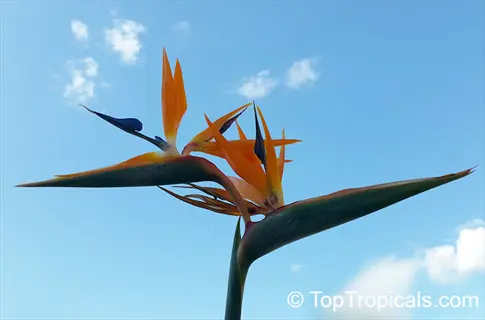
Strelitzia Reginae (Orange Bird of Paradise)
- Height: Grows 3 to 5 feet (0.9 to 1.5 meters) tall with a spread of 2 to 4 feet (0.6 to 1.2 meters), making it ideal for containers and small garden beds.
- Flowers: Produces iconic orange sepals and fused blue-purple petals that bloom from a boat-shaped green spathe, creating the classic bird-in-flight silhouette.
- Growing Zones: Hardy in USDA zones 10a through 12b and can survive in zone 9 with frost protection using row covers during cold snaps.
- Light Needs: Requires minimum 3 to 4 hours of direct sunlight daily for healthy growth and consistent flowering throughout the season.
- Best For: The most popular species for both indoor container growing and outdoor landscape plantings in warm climates across the southern regions.
- Notable Cultivar: Mandela's Gold features striking yellow sepals instead of orange and was released by Kirstenbosch National Botanical Garden in 1996.
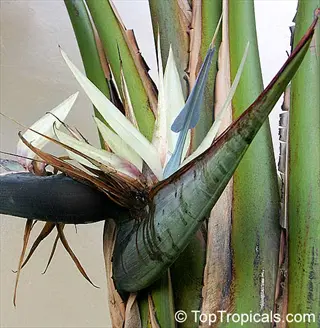
Strelitzia Nicolai (White Bird of Paradise)
- Height: Reaches 20 to 30 feet (6 to 9.1 meters) tall in frost-free climates with massive leaves spanning 5 to 10 feet (1.5 to 3 meters) long.
- Flowers: Produces white and blue-purple flowers from dark purplish-black spathes that are larger but less colorful than the orange species blooms.
- Growing Zones: Hardy in USDA zones 9b through 11, slightly more cold-tolerant than S. reginae, making it suitable for a wider range of regions.
- Indoor Use: Popular as a tall indoor statement plant in bright rooms, though it seldom flowers indoors due to insufficient light intensity.
- Best For: Large landscape installations, courtyard plantings, and creating tropical canopy effects in gardens with enough vertical space available.
- Unique Trait: Contains bilirubin in its arils, the only known animal pigment ever found in a plant, according to peer-reviewed research.
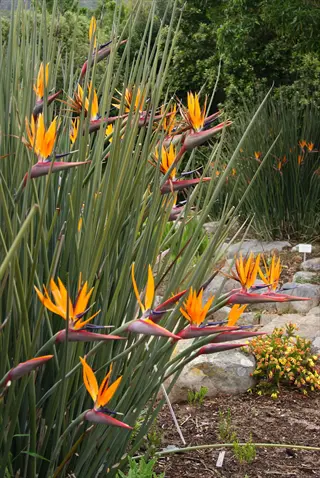
Strelitzia Juncea (Rush-Leaf Bird of Paradise)
- Height: Grows 4 to 6 feet (1.2 to 1.8 meters) tall with an upright, narrow growth habit that takes up less horizontal space than other species.
- Foliage: Produces cylindrical rush-like leaves without the broad blade, giving it a bold and different architectural appearance from other Strelitzia species.
- Flowers: Bears orange and blue flowers similar to S. reginae but slightly smaller, appearing above the narrow reed-like foliage during blooming season.
- Water Needs: More drought-tolerant than other species due to its reduced leaf surface area, making it an excellent choice for water-wise landscaping designs.
- Best For: Modern landscape designs, xeriscaping projects, and gardens where a striking vertical accent plant is needed without broad spreading foliage.
- Availability: Less commonly found in nurseries than S. reginae or S. nicolai, making it a collector's plant that stands out in any garden collection.
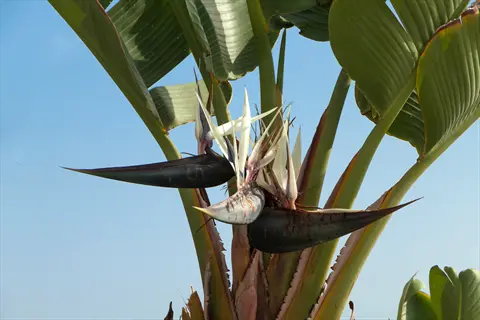
Strelitzia Alba (White-Flowered Banana)
- Height: Grows 15 to 20 feet (4.6 to 6 meters) tall with large banana-like leaves, creating a lush tropical canopy in suitable growing conditions.
- Flowers: Produces all-white flowers from dark purplish-black spathes, distinguishing it from S. nicolai which has both white sepals and blue-purple petals.
- Native Range: Found in the Western Cape region of South Africa, growing along forest margins and in coastal bush environments near the coast.
- Rarity: One of the rarer Strelitzia species in cultivation, seldom available at standard nurseries and more often found through specialty botanical collections.
- Best For: Botanical gardens, collector plantings, and large tropical landscapes where its impressive size and rare pure white blooms can be fully appreciated.
- Conservation: While not threatened at this time, its limited natural range makes habitat preservation important for the long-term survival of wild populations.
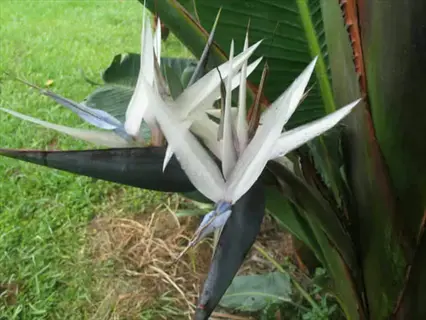
Strelitzia Caudata (Mountain Strelitzia)
- Height: Reaches 15 to 20 feet (4.6 to 6 meters) tall with a tree-like trunk, making it the most tree-like species in the entire Strelitzia genus.
- Flowers: Bears white and pale blue flowers similar to S. alba but with distinctive tail-like extensions on the petals that give the species its name (caudata means tailed).
- Native Range: Found in the mountainous regions of eastern South Africa, Swaziland, and Mozambique, growing at higher elevations than other Strelitzia species in the wild.
- Cold Tolerance: Slightly more cold-tolerant than lowland species due to its mountain habitat origin, though it still requires protection from hard freezes.
- Best For: Large botanical collections and tropical-style gardens where its unusual tree form and rare flowers can serve as a dramatic focal point.
- Availability: The rarest Strelitzia species in cultivation, very hard to source outside of specialty botanical gardens and dedicated collector networks.
Propagation Methods
You can grow new plants through bird of paradise propagation using 2 main methods. Growing bird of paradise from seed takes patience since bird of paradise seeds need 4 to 7 years to reach blooming age. Bird of paradise division cuts that wait down to just 1 to 2 years for flowers. I have tried both and can tell you that each path has its own rewards.
One thing you need to know right away is that this plant does not root from stem cuttings in water. Many new growers try it and end up with a rotting stem. Seeds and division are your only real options, so let's look at both methods in the list below.
Growing From Seed
- Timeline: Seeds take 4 to 7 years to reach blooming maturity, making this the slowest but most rewarding propagation method for patient gardeners.
- Germination: Soak seeds for 24 to 48 hours in warm water, then sow at 85 degrees Fahrenheit (29 degrees Celsius) and expect germination in up to 8 weeks.
- Setup: Plant seeds in a mix of sterilized soil and perlite, keep the soil moist but not waterlogged, and provide bottom heat with a seedling mat.
- Best For: Growers who want multiple plants at low cost, plant enthusiasts who enjoy watching the full life cycle, or anyone seeking a long-term gardening project.
Division of Root Clumps
- Timeline: Divided plants tend to reach flowering maturity in 1 to 2 years, making division the fastest path to a blooming bird of paradise plant.
- Minimum Size: The parent clump should be at least 24 inches (60 centimeters) in diameter before division to ensure both sections have enough roots to survive.
- Process: Separate the clump with care using a sharp, sterilized knife, ensuring each division has at least 3 healthy fan-shaped shoots with attached roots.
- Recovery: Place your new divided plants in bright filtered light for 6 weeks with no direct sun exposure, then gradually transition to normal light conditions.
Division Rate and Yield
- Growth Rate: Each established branch produces only 0.5 to 1.5 potential divisions per year, so large clumps take several years to develop enough material for splitting.
- Flowering After Division: Expect full bloom recovery about 2 to 3 years after splitting, according to research from SANBI in South Africa.
- Pot Selection: Use a container just a bit larger than the root ball because bird of paradise blooms more profusely when slightly rootbound in its pot.
- Timing: Divide in early spring just before the active growing season begins, giving the plant the entire warm season to establish new roots and foliage.
Water Rooting (Not Possible)
- Fact: Bird of paradise does not root from stem cuttings placed in water, unlike many popular houseplants such as pothos, monstera, or philodendron species.
- Why: The plant lacks the adventitious root nodes along its stems that allow other tropical plants to generate new roots from cut sections in water.
- Common Mistake: Many new plant owners attempt water propagation after seeing success with other tropical species, but bird of paradise stems just rot in water.
- Alternative: If you want a new plant without seeds or division, purchase a nursery-grown specimen or ask a friend with a large mature clump for a division.
Outdoor Landscape Planting
Growing bird of paradise outdoor gives you a show that no potted indoor plant can match. I planted my first row of them along a south facing fence 5 years ago and the blooms still stop my neighbors in their tracks. You need to know your bird of paradise hardiness zone before you put anything in the ground, though.
Space your plants 24 to 36 inches apart for borders and mass plantings. UF IFAS research found that part shade can produce taller growth and larger flowers than full sun, which goes against what most growers expect. Your bird of paradise is also bird of paradise deer resistant and shrugs off rabbits too, per NC State Extension.
Your best bird of paradise companion plants are canna lilies and heliconia for a tropical feel. Bird of paradise cold tolerance drops fast below 50°F so you need a frost plan ready. Once the plants settle in for about 6 months with regular water, their drought rating climbs to high.
If you live below zone 9, keep your bird of paradise in pots that you can roll inside before the first frost hits. A good set of plant casters makes this job simple and saves your back during the move.
Troubleshooting Leaf Problems
Bird of paradise yellow leaves and bird of paradise brown edges are signs your plant needs help. You might also spot bird of paradise leaves curling inward on hot days. I have dealt with every issue on this list and each fix comes from real trial and error. Most bird of paradise pests and leaf problems are easy to solve once you know the cause.
Bird of paradise not blooming is another common headache that frustrates growers. UF IFAS lists pests like aphids, scales, snails, and leaf borers but notes that major pest issues are rare for this plant. The list below covers each problem and shows you the steps to fix it fast.
Yellow Leaves
- Cause: Overwatering is the most frequent cause of yellowing leaves, leading to waterlogged roots that cannot absorb nutrients properly from the saturated soil.
- Fix: Allow the top 2 inches (5 centimeters) of soil to dry completely between waterings and check that the drainage holes are not blocked by compacted soil.
- Prevention: Use a well-draining potting mix with perlite and avoid letting the pot sit in a saucer filled with standing water for more than 30 minutes.
Brown Leaf Edges
- Cause: Low humidity, mineral buildup from tap water, or salt in the soil are the main causes of brown crispy edges on bird of paradise leaves.
- Fix: Switch to filtered, distilled, or rainwater to reduce mineral deposits, and flush the soil well every few months to wash out built up salts.
- Prevention: Increase humidity around the plant using a pebble tray filled with water or by grouping it with other tropical plants that release moisture.
Curling Leaves
- Cause: Underwatering or very low humidity causes leaves to curl inward as the plant tries to hold moisture by reducing its exposed leaf surface area.
- Fix: Water the plant well until water flows from the drainage holes, and mist the leaves or use a humidifier to raise the moisture levels around it.
- Prevention: Set a watering schedule based on soil dryness rather than a fixed date, since water needs change with seasons and indoor heating cycles.
Failure to Bloom
- Cause: Not enough light is the most common reason mature bird of paradise plants fail to bloom, per the University of Wisconsin-Madison Extension.
- Fix: Move the plant to a brighter location with at least 3 to 4 hours of direct sunlight each day, and ensure the plant is mature enough at 3 to 5 years old.
- Prevention: Keep the plant a bit rootbound in its container, as bird of paradise blooms better when roots are snug, and feed it during spring and summer.
Scale and Pest Infestations
- Cause: Scale insects are the main pest problem for bird of paradise per UF IFAS Extension, showing up as small brown bumps on stems and leaf bottoms.
- Fix: Remove scale by hand with a cotton swab dipped in rubbing alcohol, or apply neem oil spray to all surfaces every 7 to 10 days until the bugs are gone.
- Prevention: Inspect new plants before bringing them home, keep foliage clean by wiping leaves with a damp cloth each month, and ensure good air flow around plants.
Pet Safety and Toxicity
If you have pets at home, you need to know that bird of paradise is not bird of paradise pet safe. NC State Extension rates the poison level as low in severity, so there is no need to panic. The plant is bird of paradise toxic to cats, bird of paradise toxic to dogs, and horses as well. The good news is that it does not cause skin rashes from touch alone.
The main risk comes from the fruit and seeds, not the leaves or stems. If your pet eats part of the plant, watch for mild nausea, vomiting, and drowsiness. These are the signs NC State Extension lists as the most common reactions. Most pets recover fast with no lasting issues, but you should still call your vet if symptoms last more than a few hours.
I keep my bird of paradise on a tall plant stand so my cats can't reach the pot. You could also place yours in a room your pets don't enter. Some people worry that bird of paradise poisonous effects get worse over time. They don't. The toxin acts as a simple GI irritant and does not build up in the body.
A few simple habits keep your pets and your plant safe at the same time. Sweep up fallen seeds or fruit right away and trim spent flower heads before they drop. These small steps let you enjoy the beauty of this plant without putting your furry family members at risk.
5 Common Myths
Bird of paradise plants must have full direct sunlight all day long or they will never produce any flowers at all.
While bright light is essential for blooming, University of Florida research shows that part shade can actually produce taller growth and larger flowers than full sun exposure.
You can easily grow bird of paradise from cuttings placed in water, just like pothos or philodendron plants.
Bird of paradise cannot be propagated by stem cuttings or water rooting. The only reliable methods are seed germination and division of established root clumps.
When bird of paradise leaves split along the edges, it means the plant is damaged and needs immediate treatment to survive.
Leaf splitting is a completely natural process that helps reduce wind resistance. It is not a sign of damage, disease, or poor health.
Bird of paradise is extremely dangerous and highly toxic to pets, requiring emergency veterinary care if any part is touched.
NC State Extension rates bird of paradise toxicity as low severity. Ingestion of fruit or seeds may cause mild nausea and vomiting, but it is not a severe poison.
All bird of paradise plants look the same and only come in the standard orange and blue flower color combination.
The genus Strelitzia contains five distinct species plus cultivars like Mandela's Gold with yellow sepals and dwarf varieties bred at Kirstenbosch Botanical Garden.
Conclusion
The bird of paradise plant stands out as one of the best indoor tropical plants for your home or yard. You get 5 species to choose from and built in drought tolerance. Add deer resistance and up to 36 flower spikes per year to that list and it's hard to find a better pick.
Your success with bird of paradise care comes down to matching the right species to your space. A compact Strelitzia reginae fits a sunny window or patio pot with ease. A towering S. nicolai turns your yard into a tropical escape if you live in zones 9b through 11. Think about your patience level too. Seeds take 4 to 7 years to bloom but cost very little. Division gets you flowers in 1 to 2 years if you have a mature clump to split.
UF IFAS experts put it best when they said the bird of paradise plant has outstanding features and could be planted more. I agree with that after years of growing these plants in my own home and garden. Few species deliver the same mix of bold looks, low water needs, and wildlife resistance in one package.
Pick the variety that fits your climate and your room. Give it the right light and water and it will reward you for years. Bird of paradise care is simple once you learn the basics. This plant has been proving that to growers around the world since the 18th century.
External Sources
Frequently Asked Questions
Is a bird of paradise a good indoor plant?
Yes, bird of paradise makes an excellent indoor plant thanks to its dramatic foliage and tolerance for indoor conditions, though it needs bright light near a south or west-facing window to thrive.
Where is the best place to put a bird of paradise?
The best place is near a south-facing or west-facing window where the plant receives 3 to 4 hours of direct sunlight daily, with room temperature between 65 and 80 degrees Fahrenheit (18 to 27 degrees Celsius).
How to care for a bird of paradise plant?
Provide bright direct light, water when the top inch of soil dries out, maintain humidity above 50 percent, use well-draining soil, and fertilize monthly during the growing season.
Does a bird of paradise need sun?
Yes, bird of paradise needs a minimum of 3 to 4 hours of direct sunlight daily to maintain healthy growth, and even more sun exposure to produce flowers.
How often should I water a Bird of Paradise?
Water your bird of paradise when the top 1 to 2 inches of soil feel dry, roughly every 1 to 2 weeks depending on season, humidity, and pot size.
What is the most unkillable indoor plant?
While bird of paradise is resilient, plants like pothos, snake plant, and ZZ plant are often considered the hardest to kill due to their extreme tolerance for neglect and low light.
What are common problems with Bird of Paradise plants?
Common problems include yellow or brown leaves from overwatering, curling leaves from underwatering, failure to bloom from insufficient light, and pest infestations from scale and spider mites.
What are the benefits of the bird of paradise plant?
Bird of paradise offers striking tropical foliage, long-lasting cut flowers that stay fresh for up to two weeks, drought tolerance once established, and deer resistance in the landscape.
How often should I repot a bird of paradise?
Repot bird of paradise every 2 to 3 years or when roots circle the bottom of the pot, keeping in mind that slightly rootbound plants bloom more profusely.
Is bird of paradise toxic to cats and dogs?
Bird of paradise is toxic to cats, dogs, and horses, but NC State Extension rates the poison severity as low. Ingestion of fruit or seeds may cause mild nausea, vomiting, and drowsiness.