
Introduction
A birch tree catches your eye the moment you see one in a yard or forest. The genus Betula holds about 119 accepted species. They grow across the Northern Hemisphere in arctic tundra, cool mountains, and warm river valleys. Paper birch bark holds the highest caloric value of 24 tested tree species at 5,740 calories per gram. That fact alone shows the raw energy these trees store inside their structure.
I planted my first birch over 15 years ago on a piece of land cleared by a storm. Within 3 years, that single river birch grew into a full shade canopy while other trees were still tiny. These trees are the first responders of the forest. They rush into disturbed land after fire or logging and rebuild soil for future generations.
Most guides cover birch tree species or basic care tips, but not both at once. This guide brings it all together in one place. You will get profiles of 8 popular species and planting steps backed by USDA data. You will also learn about care schedules, medicinal bark compounds, and the role birch plays in wild forests.
Climate change is pushing birch ranges further north each decade. Picking the right species for your zone matters more now than ever. Below, you will learn which birch fits your yard and how to keep it strong for years to come.
8 Birch Tree Species
Not all types of birch trees look or grow the same way. Some have white bark while others show salmon, gold, or near black tones. Picking the right one for your yard starts with knowing what each species offers. Think of it like picking a running shoe. River birch handles the heat, paper birch loves the cold, and silver birch brings European elegance to your garden.
In my experience growing 5 of these 8 species, birch tree identification gets easy fast. You just need to check the bark color, leaf shape, and growth habit. Paper birch can reach 70 feet tall with some wild specimens topping 100 feet. Its seeds weigh just 3 million per kg, making them some of the lightest tree seeds you will ever find. Each species below includes the key details you need to make a smart choice for your space.
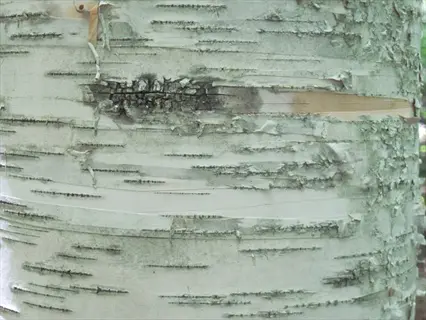
Paper Birch (Betula papyrifera)
- Bark: Bright white peeling bark with horizontal lenticels is the hallmark of paper birch. It develops after five or more years of growth and curls into papery sheets.
- Size: Paper birch reaches 70 feet (21 m) tall with a spread of 25 to 30 feet (7.6 to 9.1 m), though specimens exceeding 100 feet (30 m) have been recorded in the wild.
- Hardiness: Thrives in USDA zones 2 through 7, preferring cooler climates across Canada and the northern United States where summers stay moderate.
- Ecology: Serves as a pioneer species that colonizes areas disturbed by fire or logging within 30 years, enriching forest soil with calcium, potassium, and nitrogen.
- Lifespan: Matures at 60 to 70 years with most trees living under 140 years, though the oldest known specimen reached 225 years on Mount Washington in New Hampshire.
- Best Use: Ideal as a specimen tree in your yard if you live in a northern climate where bronze birch borer pressure is lower due to cooler summers.
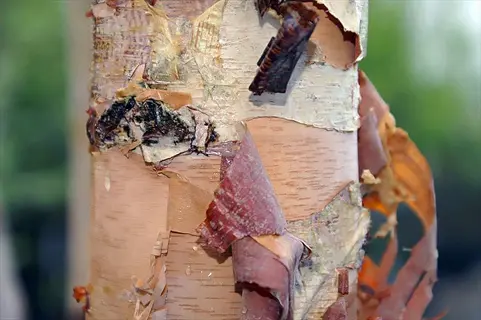
River Birch (Betula nigra)
- Bark: Salmon, peach, orange, and cinnamon-colored bark peels in curly flakes, giving river birch a multicolored appearance that stands out in every season of the year.
- Size: Fast-growing tree reaching 50 to 75 feet (15.2 to 22.9 m) tall with a spread of 35 to 50 feet (10.7 to 15.2 m), often grown as a multi-stemmed specimen.
- Hardiness: Hardy in USDA zones 4 through 9, making it the most heat-tolerant birch and the best choice for southern gardens and warmer climates.
- Pest Resistance: Resistant to bronze birch borer (Agrilus anxius), the most destructive pest affecting other birch species, giving it a major survival advantage in the landscape.
- Soil Needs: Prefers acidic soil with pH 4.0 to 6.5 and develops iron chlorosis in alkaline soils above pH 6.5, which can eventually weaken and kill the tree.
- Best Use: Outstanding shade tree and landscape focal point. The Heritage cultivar is a top pick, with superior bark color and vigorous growth.
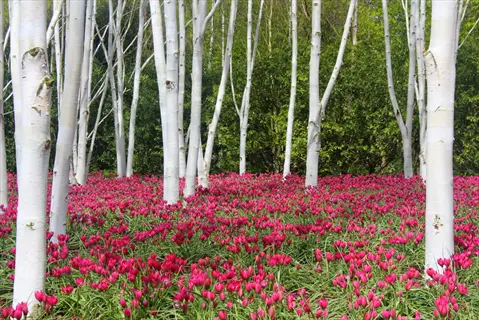
Silver Birch (Betula pendula)
- Bark: White bark with black diamond-shaped patches at the base gives silver birch its elegant appearance, and its drooping branch tips create a graceful weeping silhouette.
- Size: Grows 40 to 80 feet (12.2 to 24.4 m) tall with a spread of 15 to 30 feet (4.6 to 9.1 m), featuring a slender pyramidal to rounded crown.
- Hardiness: Thrives in USDA zones 2 through 7 and is native to Europe and parts of Asia, where it ranks among the most popular ornamental birch species.
- Cultural Note: Known as the Lady of the Woods in European folklore, silver birch is the national tree of Finland and holds deep cultural meaning across Scandinavian countries.
- Susceptibility: Vulnerable to bronze birch borer in warmer parts of its range, so it performs best in cooler regions with mild summers below 85 degrees Fahrenheit (29.4 degrees Celsius).
- Best Use: You can plant silver birch as a specimen or accent tree in a European style garden. Try grouping three together for a dramatic grove effect.
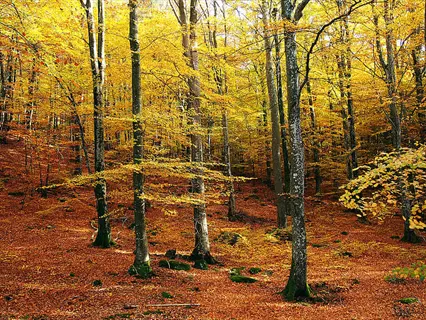
Yellow Birch (Betula alleghaniensis)
- Bark: Golden-yellow to bronze bark peels in thin, wispy curls and has a distinct wintergreen scent when scratched, making identification straightforward in the field.
- Size: One of the largest birch species, yellow birch can reach 60 to 75 feet (18.3 to 22.9 m) tall with a trunk diameter exceeding 24 inches (61 cm).
- Hardiness: Found in USDA zones 3 through 7, yellow birch prefers cool, moist forests and is most common in the northeastern United States and southeastern Canada.
- Climate Indicator: The National Park Service identifies yellow birch as a good indicator species for monitoring climate change impacts because of its preference for cool climates.
- Timber Value: Prized for fine woodworking, cabinetry, and flooring, yellow birch produces a harder, more durable wood than most other birch species in North America.
- Best Use: Best suited for your yard if you have a large lot in a cool climate. It works as both a shade tree and a timber resource.
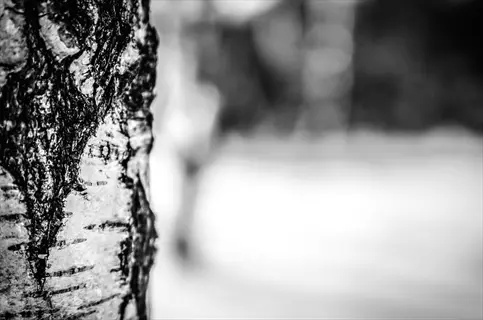
Black Birch (Betula lenta)
- Bark: Dark reddish-brown to near-black bark with horizontal lenticels does not peel like other birch species, so it is often mistaken for a cherry tree at first glance.
- Size: Reaches 40 to 70 feet (12.2 to 21.3 m) tall with a rounded crown spreading 25 to 35 feet (7.6 to 10.7 m), growing at a moderate pace.
- Wintergreen Oil: Black birch contains methyl salicylate, the same compound as wintergreen, and served as the main natural source of birch oil and birch beer flavoring for decades.
- Hardiness: Grows well in USDA zones 3 through 8, tolerating a wider range of temperatures than paper birch or yellow birch species.
- Ecology: Produces abundant seeds that feed chickadees, pine siskins, and other songbirds, while its leaves serve as food for mourning cloak butterfly caterpillars.
- Best Use: Plant black birch in your woodland garden or naturalized area. Its dark bark gives you strong visual contrast against lighter birch or other deciduous trees.
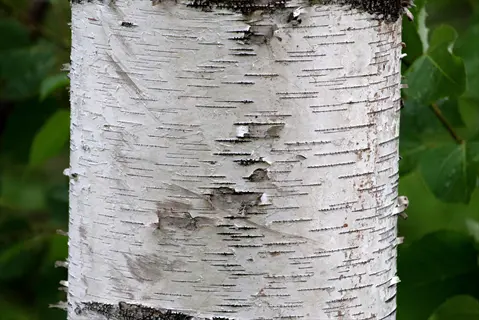
Gray Birch (Betula populifolia)
- Bark: Chalky white bark marked with dark triangular patches beneath each branch does not peel, which is the key feature that distinguishes gray birch from paper birch.
- Size: A smaller species reaching 20 to 40 feet (6.1 to 12.2 m) tall with a narrow, irregular crown and often growing in clumps of multiple trunks.
- Hardiness: Hardy in USDA zones 3 through 7, gray birch is a fast-growing pioneer species that thrives in poor, rocky, or sandy soils where other trees struggle.
- Lifespan: One of the shortest-lived birch species at 30 to 50 years, gray birch fills a temporary role in forest succession before being replaced by longer-lived trees.
- Tolerance: Handles drought, urban pollution, and compacted soils better than most birch species, so it is tougher than its delicate appearance suggests.
- Best Use: Works well if you need a restoration planting, naturalized border, or short-term nurse tree to shelter slower-growing species in poor soil.
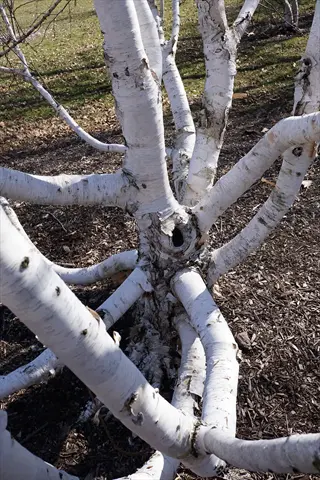
Himalayan Birch (Betula utilis)
- Bark: Brilliant white bark that peels in broad papery sheets is the most striking feature of Himalayan birch, and it develops earlier than in most other white-barked species.
- Size: Grows 30 to 50 feet (9.1 to 15.2 m) tall with a spread of 20 to 30 feet (6.1 to 9.1 m), forming an upright oval to pyramidal crown shape.
- Hardiness: Suited to USDA zones 4 through 7 and native to the mountain forests of Nepal, northern India, and western China at elevations up to 14,000 feet (4,267 m).
- Historical Use: The bark was used as writing material in ancient Sanskrit manuscripts, giving the tree the name bhurja-patra in Sanskrit literature.
- Cultivar Note: The variety jacquemontii is the most popular ornamental selection, prized for its very bright white bark and strong upright growth habit.
- Best Use: Outstanding specimen tree for cooler gardens where its bright bark creates a focal point. It looks best against dark evergreen backgrounds.
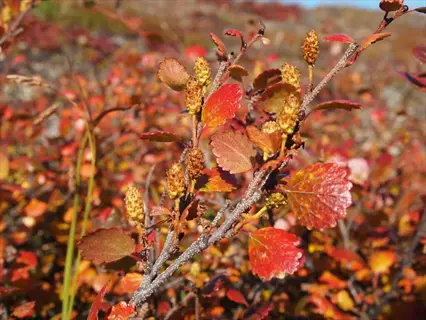
Dwarf Birch (Betula nana)
- Bark: Thin reddish-brown bark on compact, dense branches gives dwarf birch a shrubby appearance quite different from its tall relatives in the birch genus.
- Size: Grows only 1 to 4 feet (0.3 to 1.2 m) tall with a spreading, mounded form that can reach 3 to 5 feet (0.9 to 1.5 m) wide.
- Hardiness: Cold-hardy in USDA zones 1 through 6, dwarf birch is native to arctic and alpine tundra across North America, Europe, and northern Asia.
- Ecology: Provides essential food and shelter for ptarmigan, arctic hare, and reindeer in tundra environments where few other woody plants survive above the tree line.
- Leaves: Tiny rounded leaves just 0.5 to 1 inch (1.3 to 2.5 cm) across turn vivid orange and red in autumn, creating a carpet of fall color at ground level.
- Best Use: Ideal for your rock garden, alpine planting, or cold-climate ground cover. You get great texture without any competition for vertical space.
If you have a small yard, check out the Fox Valley cultivar of river birch. It stays compact at just 10 feet tall by 12 feet wide. Match your zone and yard size to the species above, and you will find the right birch for your space.
How to Plant a Birch Tree
Knowing how to plant birch trees the right way saves you years of trouble down the road. Most people dig a hole, drop the tree in, and hope for the best. That approach fails with birch because their roots behave different from most trees. Think of birch roots like a dinner plate rather than a carrot. They spread wide near the surface with the bulk sitting in the top 24 inches of soil and no taproot at all.
In my years of transplanting birch trees, I learned that where to plant birch trees matters just as much as how you plant them. The east or north side of a building works best because it catches more rain and keeps roots shaded on hot afternoons. Your birch tree planting site needs acidic soil with a pH of 4.0 to 6.5 and enough space for roots to spread wide. Get the birch tree root ball into the right spot and your tree will reward you for decades.
Choose the Right Location
- Sunlight: Birch trees need full sun to partial shade, ideally receiving at least six hours of direct sunlight per day while keeping the root zone shaded and cool.
- Soil pH: Test soil before planting and aim for an acidic range of pH 4.0 to 6.5 because alkaline soils above pH 6.5 cause iron chlorosis that weakens and can kill birch trees.
- Distance: Plant at least 20 feet (6.1 m) from buildings, driveways, and underground utilities since birch roots spread wide near the surface in the top 24 inches (60 cm) of soil.
- Wind Protection: Select a spot on the east or north side of your property to maximize rainfall exposure and provide natural afternoon shade that protects roots from heat stress.
Prepare the Planting Hole
- Width: Dig the hole three times wider than the root ball to give lateral roots plenty of loose soil to spread through during the first growing season after planting.
- Depth: Make the hole only as deep as the root ball itself so the topmost lateral root sits just below the soil surface and is not buried too far underground.
- Soil Amendment: Mix the backfill with compost or peat moss to maintain acidity and improve drainage, especially in heavy clay soils that hold too much standing water.
- Drainage Test: Fill the hole with water before planting and let it drain. If water sits for more than four hours, choose a different spot or raise the planting area.
Plant and Backfill Carefully
- Timing: Plant birch trees in early spring or early fall when temperatures are mild and the tree can establish roots before the stress of summer heat or winter cold arrives.
- Positioning: Set the tree in the center of the hole with the trunk straight and the root flare visible at soil level to prevent trunk rot from buried bark.
- Backfilling: Fill the hole in layers, tamping each layer to remove air pockets without compacting the soil so tight that root growth becomes restricted.
- Initial Watering: Soak the planting area with 2 to 3 gallons (7.6 to 11.4 liters) of water right after backfilling to settle soil around the root ball.
Mulch and Protect the Root Zone
- Mulch Depth: Apply a 3 inch (7.6 cm) layer of organic mulch such as wood chips or shredded bark over the root zone to keep soil cool, moist, and free of competing weeds.
- Mulch Radius: Spread mulch in a circle at least 3 feet (0.9 m) from the trunk in all directions but keep it 2 to 3 inches (5.1 to 7.6 cm) away from the bark to prevent rot.
- Staking: Stake the tree only if wind is strong enough to rock the root ball in the ground, and remove stakes after one year so the trunk develops natural strength.
- First Season Care: Water deep two to three times per week for the first growing season, providing about 1 inch (2.5 cm) of water per week to help roots establish.
Birch Tree Care Essentials
Good birch tree care keeps your tree alive for decades instead of just a few years. Caring for a birch tree is like caring for fair skin in summer. You need to keep it hydrated, protect it from intense heat, and watch for the first signs of stress before problems get worse. I lost my first paper birch because I skipped watering during a hot August, and bronze birch borer moved in within weeks.
Watering birch trees is the single most important task on your list. Give your tree about 1 inch of water per week during summer, and more during dry spells. Birch tree soil requirements call for acidic ground with a pH of 4.0 to 6.5. River birch develops iron chlorosis in alkaline soils above pH 6.5. That turns leaves yellow and can kill your tree over time.
Pruning birch trees at the wrong time causes heavy sap bleeding that attracts pests. The best window is late summer or fall when sap flow slows down. Mulching birch trees with a 3 inch layer of wood chips keeps roots cool and moist. That mulch layer also acts as your first line of defense against bronze birch borer, since borers target stressed trees first.
Check your birch in late spring each year for D shaped exit holes in the bark and any dieback at the crown tips. Those are the telltale signs of bronze birch borer. A healthy, well watered birch can fight off borers on its own. A stressed one cannot.
Birch Tree Uses and Products
Birch tree uses go far beyond good looks in your yard. These trees are like a general store of the forest. Their bark writes history, their birch sap quenches thirst, their wood builds homes, and their oil soothes aches. In my experience tapping birch sap over the past 4 years, I have been amazed by how much the tree gives back when you treat it right.
Birch wood uses range from birch plywood panels in your kitchen cabinets to the toothpick you grab after dinner. Most American made toothpicks come from birch wood because its straight grain resists splintering. Birch firewood burns hot thanks to bark with 5,740 calories per gram of energy. Birch bark uses stretch back centuries to canoe building and waterproof storage.
Birch Wood for Lumber and Crafts
- Plywood: Birch is one of the most popular hardwoods for birch plywood and veneer production, valued for its smooth grain, light color, and consistent quality across large panels.
- Furniture: Yellow birch and paper birch are used in cabinetry, flooring, and furniture making because the wood finishes clean and accepts stains well across the surface.
- Toothpicks: Most American made toothpicks come from birch wood, chosen for its straight grain that resists splintering and its neutral taste when placed in your mouth.
- Firewood: Paper birch bark holds the highest caloric value per unit weight of 24 species tested at 5,740 calories per gram, making birch firewood an excellent fire starter.
Birch Sap and Birch Syrup Production
- Sap Tapping: You can harvest birch sap in early spring when temperatures swing above and below freezing, similar to maple tapping but during a shorter two to three week window.
- Sugar Content: Birch sap has about 0.9% carbohydrate, much lower than maple sap. You need about 80 to 100 gallons to make just 1 gallon of birch syrup.
- Birch Water: You can drink unprocessed birch sap as birch water, a popular choice in Scandinavian and Eastern European countries for its light, sweet flavor and mineral content.
- Historical Use: Indigenous peoples across North America and Northern Europe tapped birch sap for centuries as a spring tonic and sweetener.
Birch Bark for Traditional Uses
- Canoes: Native American birch bark canoes were lightweight, waterproof, and easy to fix in the field. Paper birch bark was one of the most important natural materials in North American history.
- Writing Material: Himalayan birch bark served as writing material for ancient Sanskrit manuscripts. The tree's Sanskrit name bhurja-patra means birch leaf or writing surface.
- Containers: Birch bark's natural waterproof properties made it ideal for storage baskets, cooking vessels, and roofing material across subarctic and boreal cultures.
- Oil Extraction: Black birch bark produces methyl salicylate through distillation, the same compound found in wintergreen. People used it as a natural pain reliever for generations.
Birch Beer and Food Products
- Birch Beer: Black birch is the original source of birch beer flavoring, a classic carbonated drink popular in the northeastern United States and Canada.
- Xylitol: Your sugar free gum might come from birch wood. Birch is a natural source of xylitol, a sugar alcohol that helps cut down the bacteria that cause cavities.
- Birch Syrup Flavor: Birch syrup has a stronger, more complex flavor than maple syrup with hints of caramel and molasses plus a slight bitterness that pairs well with savory dishes.
- Smoking Wood: You can use birch wood chips for smoking fish and meats. Scandinavian cooks love them for the mild, sweet flavor they add to your food.
Medicinal Compounds in Birch
Most people never think about birch tree medicinal uses when they look at a birch in their yard. But birch bark is like a natural pharmacy wrapped around a tree trunk. Scientists have found over 137 compounds across Betula species. Some of those compounds show real promise in modern medicine. In my experience reading the research, the data on betulin birch bark alone is enough to change how you see these trees.
Betulin makes up as much as 30% of the dry weight of birch bark. That makes birch the top natural source of this compound. Your tree's bark also holds betulinic acid. This compound can target tumor cells while leaving healthy cells alone. In mouse studies, betulinic acid proved safe at doses up to 500 mg per kg of body weight. Birch bark extract has a long history in birch traditional medicine. You can find it listed in Russian, French, European, and Ayurvedic medical books.
A birch bark cream with over 80% betulin improved skin moisture in clinical tests. Black birch also gives you methyl salicylate, the same pain relief compound found in wintergreen oil. These results don't mean you should skip your doctor. They do mean birch trees carry more value than most people ever realize.
Birch Trees in the Ecosystem
The birch tree ecological role goes far beyond looking pretty in your yard. Birch trees act as trailblazers in the wild. They arrive first on barren ground after fire or logging and build a living base of shade and nutrients. In my years of watching forest recovery, nothing moves in faster than a pioneer species birch. They can fill a cleared area within 30 years and set the stage for slower trees to follow.
Birch tree wildlife value surprised me the first time I spent a full season watching one tree. Chickadees, song sparrows, and woodpeckers use birch for nesting and food. Mourning cloak butterflies lay their eggs on birch leaves. Every nurse tree birch you plant gives wildlife a home and a food source at the same time. Birch tree soil enrichment happens each fall when leaves break down. They return key nutrients like calcium, potassium, and nitrogen to your soil.
Birch tree climate change impacts are real and growing. The National Park Service tracks yellow birch as a climate change indicator. Its range keeps shifting north as temperatures rise. If you plant birch in your yard, you help support an ecosystem that is under pressure from warming trends across the Northern Hemisphere.
Pioneer Species and Forest Succession
- First Colonizer: Birch trees are among the first species to grow on disturbed land after fire, logging, or glacial retreat. They arrive within a few years and build topsoil for slower growing species.
- Nurse Tree Function: Birch canopies provide shade and wind protection that help seedlings of spruce, fir, and maple survive their first years beneath the birch canopy.
- Rapid Establishment: Birch fills disturbed areas within 30 years and creates a closed canopy that holds soil in place and cools the ground for the next wave of forest growth.
- Succession Timeline: As the forest matures over 60 to 100 years, shade tolerant hardwoods take over the canopy. Birch then depends on gaps in the canopy to keep growing.
Wildlife Habitat and Food Source
- Bird Habitat: Chickadees, song sparrows, and woodpeckers use birch trees for nesting and foraging. The peeling bark layers create insect rich spots along the trunk for birds to feed.
- Catkin Seeds: Each birch produces millions of tiny winged seeds per year that feed redpolls, pine siskins, and other seed eating birds through the winter months.
- Insect Support: The mourning cloak butterfly lays eggs on birch and related species. Birch leaves support hundreds of caterpillar species that form the base of forest food webs.
- Mammal Browse: Moose, deer, and snowshoe hare eat birch twigs and bark during winter when other food runs out across boreal and northern forests.
Soil Enrichment and Nutrient Cycling
- Leaf Litter Value: Birch litter adds calcium, potassium, magnesium, phosphorus, boron, and nitrogen to the soil as leaves break down each autumn on the forest floor.
- Mycorrhizal Networks: Birch roots form wide partnerships with fungi that move nutrients and water between trees. These networks connect your birch to its neighbors underground.
- Acid Soil Improvement: Birch leaf litter carries more calcium than most conifer needles. Over decades of leaf fall, this helps raise soil pH and improve fertility on acidic sites.
- Organic Matter Builder: Birch's fast growth and yearly leaf drop add large amounts of organic matter to soil. This improves soil structure and water retention in sandy or worn ground.
Climate Change Indicator and Risk
- Range Shift: The National Park Service tracks yellow birch as a climate change indicator species. Its range is expected to shrink north as average temperatures continue to rise.
- Heat Stress: Birch trees have roots near the surface and are sensitive to drought. They are among the first canopy trees to show decline when summers get hotter and drier.
- Pollen Changes: Warmer springs cause birch to leaf out and release pollen earlier in the season. This shifts timing for pollinators and extends the birch pollen allergy window.
- Why It Matters: Watching your birch tree's health helps you track how climate shifts affect your local area. A struggling birch is often an early warning sign of bigger changes.
5 Common Myths
Birch trees only have white bark, and any tree with white bark must be a birch species.
Birch bark ranges from white and cream to salmon, orange, lavender, cinnamon, and near-black depending on the species, such as river birch or yellow birch.
Birch trees need constant watering and cannot survive without being near a river or stream.
While birch trees prefer moist soil, many species like river birch tolerate sandy to clay soils and periods of moderate drought once established in the right conditions.
All birch trees die young and are not worth planting because they only live around 20 to 30 years.
Most birch species mature at 60 to 70 years, and some specimens like paper birch have been documented living over 200 years in cool mountain climates.
You should prune birch trees in early spring just before they leaf out for the best results.
Pruning birch in spring causes heavy sap bleeding from fresh cuts, so the recommended time is late summer or fall when sap flow has slowed down.
Birch trees are purely ornamental and have no practical, medicinal, or ecological value beyond looks.
Birch wood is used for lumber, plywood, and toothpicks, birch bark contains betulin studied for anti-tumor properties, and birch trees enrich soil and host wildlife.
Conclusion
You now have what you need to pick the best birch tree for landscaping in your yard. With 119 birch tree species to choose from, the right match comes down to your zone, soil type, and the look you want. River birch stands out as the most flexible choice since it handles heat, resists bronze birch borer, and grows fast in zones 4 through 9.
Birch tree care doesn't have to feel hard. Keep the soil moist, mulch the roots, prune in late summer or fall, and test your soil pH every couple of years. In my experience, the trees that get those basics right are the ones that thrive for decades. Paper birch was the first tree to fill cleared land after fire, and its bark holds the highest caloric value of 24 species tested. That kind of toughness runs through the whole birch family.
Betulin in birch bark gives these trees value that goes well beyond shade and good looks. The research on this compound is still growing, and birch trees play a major role as pioneer species that rebuild forests from the ground up. Every birch you plant helps soil, wildlife, and your local ecosystem at the same time.
Think about which birch tree species fits your space, climate, and goals. Bronze birch borer pressure keeps rising in warmer areas. Choosing a resistant species and giving it solid care matters more now than ever. Your birch can be one of the best trees in your yard for years to come.
External Sources
Frequently Asked Questions
Are there birch trees in Germany?
Yes, birch trees grow widely across Germany, especially silver birch (Betula pendula) and downy birch (Betula pubescens), which thrive in the country's temperate climate and are found in forests, parks, and urban landscapes.
What is special about a birch tree?
Birch trees stand out for their distinctive peeling bark, rapid growth as pioneer species, and the presence of betulin in their bark, a compound with medicinal potential. They also enrich soil and support diverse wildlife.
What is birch pollen allergy?
Birch pollen allergy is an immune response triggered by airborne pollen from birch catkins during spring. Symptoms include sneezing, itchy eyes, and nasal congestion, and it can also cause oral allergy syndrome with certain raw fruits and nuts.
What is another name for a birch tree?
Birch trees are also known by their genus name Betula. Specific species carry alternative common names such as white birch for paper birch, lady of the woods for silver birch, and sweet birch for black birch.
What is Germany's national tree?
Germany's national tree is the oak (Quercus robur), not the birch. However, the birch holds strong cultural significance in German tradition, associated with spring celebrations and Maypole festivals.
What country has a lot of birch trees?
Russia has the largest birch tree population in the world, with birch forests covering vast stretches of Siberia and the Ural region. Finland, Sweden, Canada, and Norway also have significant birch populations.
Why do people like birch trees?
People appreciate birch trees for their striking white or multicolored peeling bark, graceful form, golden fall foliage, and fast growth rate. They also attract butterflies, songbirds, and provide year-round visual interest.
Are birch trees healthy?
Birch trees contain health-promoting compounds including betulin and betulinic acid in their bark, and their sap is consumed as a traditional health drink. However, they are short-lived trees prone to stress in hot or dry conditions.
What to avoid if allergic to birch trees?
If allergic to birch pollen, avoid raw apples, cherries, peaches, pears, carrots, celery, hazelnuts, and almonds due to oral allergy syndrome. Cooking these foods typically eliminates the cross-reactive proteins.
Is birch oak or pine?
Birch is neither oak nor pine. Birch trees belong to the family Betulaceae and genus Betula, while oaks are in Fagaceae and pines in Pinaceae. Birch trees are deciduous hardwoods, unlike evergreen pines.