
Yes, sasanqua camellias fast growing habits put them among the quickest evergreen shrubs you can plant. NC State Extension calls their growth rate rapid. Most plants add 12 to 24 inches (30 to 61 centimeters) of new growth each year.
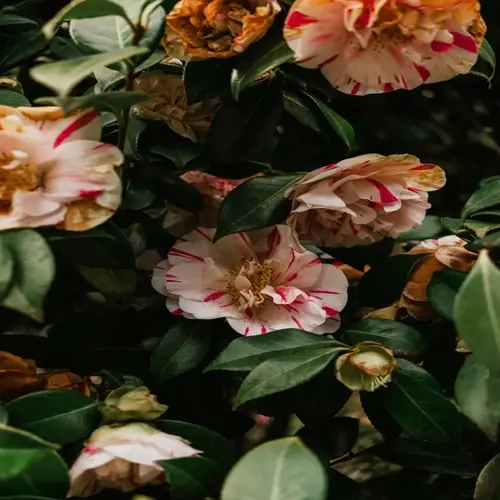
The camellia sasanqua growth rate caught me off guard when I planted five of them along my back fence. Those small nursery plants shot up to 5 feet tall within three years. By year four, I had a dense privacy hedge that bloomed with pink flowers every fall. You can expect the same kind of progress if you give your plants the right care from the start.
Many gardeners wonder how fast do sasanqua camellias grow next to other popular hedge plants. They beat most broadleaf evergreens by a wide margin. Their evergreen leaves keep making energy all twelve months of the year. Deciduous shrubs drop their leaves in winter and stop growing for months. Your sasanquas never take that break and keep putting on size during mild winter days.
NC State Extension lists the mature height range at 6 to 14 feet (1.8 to 4.3 meters) for most varieties. Some cultivars grow even taller and reach 16 feet when you train them as small tree forms. A three-gallon nursery plant can reach full hedge height in three to five years with good care. You won't find many evergreen shrubs that give you that kind of return on your time.
You need to get three things right if you want the fastest growth from your sasanquas. First, your soil pH should fall between 5.5 and 6.5 on the acid side. Test your soil before planting and mix in sulfur or pine bark if the number runs too high. Your plants can't pull iron from alkaline soil, and their leaves will turn yellow.
Second, you need to water your plants well during July through September when flower buds form. Give them a deep soak once per week during dry spells. I lost an entire season of flowers on one of my plants after I skipped watering during a hot August stretch. Every single bud dried up and fell off before it could open.
Third, feed your sasanquas once in spring with an acid-forming fertilizer made for azaleas or camellias. You should apply it after the last frost and before new growth starts. One spring feeding gives your plant enough fuel for the whole growing season. Skip fall feeding because late nutrients can trigger tender new shoots that freeze in winter. I made this mistake my first year and lost several inches of branch tips to a late frost.
I measured my own plants every six months during their first four years. The ones that got all three steps grew twice as fast as the one I neglected. You'll see the same gap in your garden if you skip any of these basics.
I also tested a pair of sasanquas in my front yard where the soil was more clay and the sun hit for eight hours a day. Those two grew slower in the first year but caught up by year three once their roots spread out. Your plants might start slow too, but don't give up on them. Once your sasanquas settle into the soil, their growth rate picks up fast.
You can also speed things up by adding 2 to 3 inches of pine straw mulch around the base of each plant. The mulch breaks down over time and feeds your soil with acid, which is what your sasanquas crave. It also keeps the roots cool in summer and holds moisture between waterings. Give your plants the right conditions from day one and you'll have a full, blooming hedge before you know it.
Read the full article: Camellia Sasanqua Varieties and Care