
Introduction
Your anthurium plant does something most houseplants can't. It blooms for months on end, cleans your air, and asks for very little care. The genus holds over 1,000 species with bold red flamingo flower blooms and velvety foliage that looks like living art.
I've grown anthuriums on my windowsill for over 8 years and they still surprise me. Think of them as the orchids of the aroid world. Both are tropical epiphytes that cling to tree branches in the wild. The big difference is that anthuriums reward you with year-round color instead of one annual bloom. UF IFAS Extension research shows that several cultivars bloom at just 100 foot candles of light. They keep flowering for over 1.5 years at that low level.
Most people don't know that anthuriums made NASA's Clean Air Study list. These indoor tropical plants filter ammonia and formaldehyde from your air. They also remove toluene and xylene around them. Your anthurium does double duty as a living air filter while adding color to your space. Florida now leads U.S. potted anthurium production and demand keeps growing.
This anthurium care guide covers everything you need to keep your plant strong. You'll learn which varieties suit your home and how to get more blooms with a simple fertilizer switch. We'll also cover the watering habits that prevent root rot so your plant thrives for years.
8 Popular Anthurium Varieties
Picking your anthurium variety is like choosing a paint color. Flowering types of anthurium like anthurium andraeanum give you bold reds and pinks. Foliage types like anthurium crystallinum show off silver veining on dark green leaves instead. I've tried growing 6 of these 8 varieties in my own home over the years.
These 2 groups of anthurium varieties need different care from you. The flamingo lily and other flowering types love bright indirect light. Foliage types need more shade and 70 to 80% humidity to look their best. You can grow anthurium scherzerianum in cooler rooms that would stress other species.
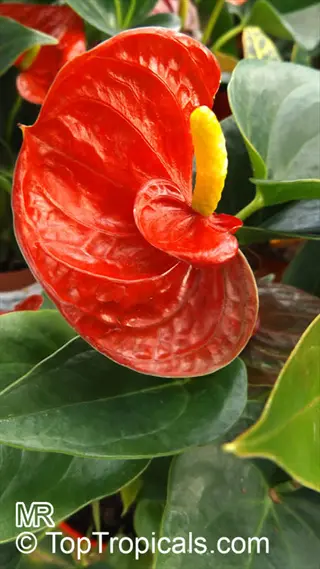
Anthurium Andraeanum
- Common Names: Known as flamingo flower and painter's palette, this is the top selling anthurium species in garden centers worldwide.
- Appearance: Produces glossy, heart-shaped spathes in red, pink, white, orange, and purple that grow up to 6 inches (15 cm) across.
- Light Needs: Thrives in bright indirect light between 100 and 2,500 foot candles and blooms indoors for over 18 months at lower levels.
- Size: Grows 1 to 1.5 feet (30 to 45 cm) tall and 9 inches to 1 foot (23 to 30 cm) wide, making it great for tabletops and shelves.
- Bloom Duration: Each spathe lasts 4 to 8 weeks before fading, and healthy plants push new blooms all year with proper feeding.
- Best For: Beginners who want reliable color indoors, since this species handles a wider range of conditions than most anthuriums.
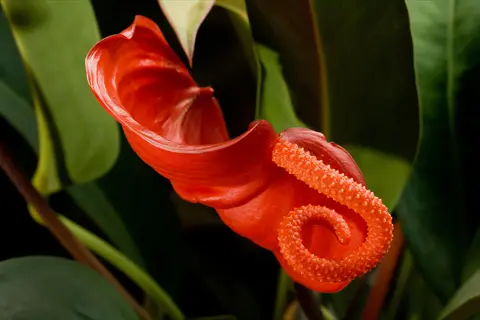
Anthurium Scherzerianum
- Common Names: Called the pigtail anthurium or flamingo lily because its spadix curls into a corkscrew shape that makes it stand out.
- Appearance: Features narrower spathes in red, orange, or pink with a curled spadix, and its leaves stretch longer than andraeanum types.
- Light Needs: Prefers lower light than andraeanum and does well in medium indirect light near north-facing windows.
- Size: Stays compact at 12 to 18 inches (30 to 45 cm) tall, great for desks, nightstands, and bathroom shelves.
- Temperature: More cold-tolerant than andraeanum and handles temps down to 60°F (15°C) without stress or leaf drop.
- Best For: Growers who want a unique look in a small space and those with cooler rooms that might stress other species.
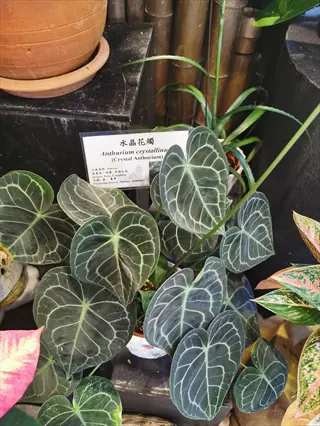
Anthurium Crystallinum
- Common Names: Known as the crystal anthurium, this foliage variety is prized for its velvety dark green leaves with silver-white veining.
- Appearance: Produces large, heart-shaped leaves up to 12 inches (30 cm) long with a soft texture and silver veins that shimmer in light.
- Light Needs: Requires lower light than flowering species and does best in dappled or filtered light to protect its soft leaves.
- Humidity: Demands 70 to 80% humidity and benefits from a humidifier or pebble tray near other plants.
- Growth Habit: Grows as a terrestrial or low-climbing epiphyte with aerial roots that do well on a moss pole or moist support.
- Best For: Intermediate to advanced growers who can provide steady high humidity in a terrarium, greenhouse, or humid room.
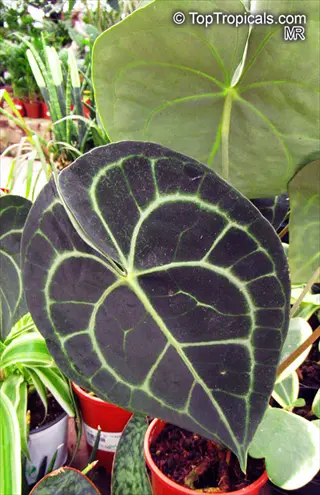
Anthurium Clarinervium
- Common Names: Called the velvet cardboard anthurium because its thick, stiff leaves feel almost like cardboard to the touch.
- Appearance: Shows deep green, heart-shaped leaves with bold white veining like crystallinum but thicker and more rigid in texture.
- Light Needs: Handles a wider range of light than crystallinum and does well in medium indirect light at home.
- Humidity: Needs 60 to 70% humidity, which is lower than crystallinum, and adapts to average household conditions.
- Origin: Native to the limestone karst regions of southern Mexico, where it grows on rocky surfaces rather than in soil.
- Best For: Collectors who want striking foliage that is more forgiving than crystallinum and can handle typical indoor humidity.
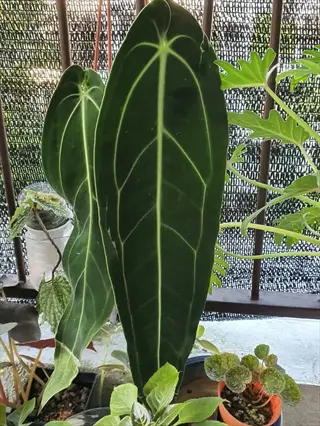
Anthurium Warocqueanum
- Common Names: Called the queen anthurium because its long, pendant leaves can reach over 3 feet (90 cm) under ideal conditions.
- Appearance: Produces narrow, dark green leaves with silver veining that hang down and create a striking vertical display.
- Light Needs: Prefers bright filtered light like its natural rainforest home and should never get direct sun on its thin leaves.
- Humidity: Requires 70 to 80% humidity at all times and almost always needs a humidifier or enclosed growing space.
- Growing Challenge: One of the more demanding anthuriums because it needs stable temps, high humidity, and good air flow around roots.
- Best For: Advanced collectors with greenhouse cabinets or plant rooms who can keep tropical conditions going all year.
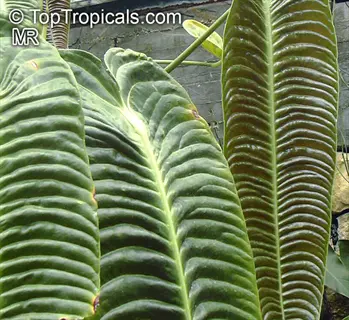
Anthurium Veitchii
- Common Names: Known as the king anthurium, its leaves grow deep ridges that give them a pleated or quilted look unlike any other species.
- Appearance: Grows long leaves up to 3 feet (90 cm) with rippled ridges running along the surface in a dark glossy green.
- Light Needs: Does best in bright indirect light and can handle a bit more light than other foliage types, though direct sun still burns.
- Humidity: Needs 60 to 70% humidity, which is easier than warocqueanum, and adjusts to home conditions with misting or a pebble tray.
- Growth Rate: Grows faster than many foliage anthuriums once settled in, pushing new leaves through the warm months with proper care.
- Best For: Intermediate growers who want a statement plant with less demanding humidity needs but leaves just as dramatic as the queen.
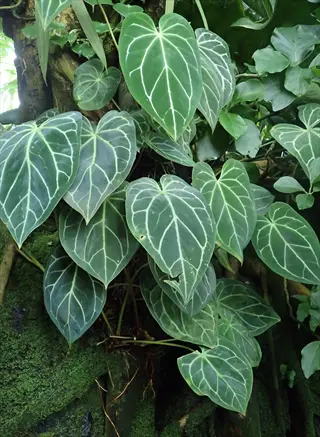
Anthurium Magnificum
- Common Names: Called the magnificent anthurium, this species is valued for its broad, velvety leaves with white veining on dark green surfaces.
- Appearance: Produces wide, heart-shaped leaves like crystallinum but larger and thicker, with white veins and a velvety feel that deepens over time.
- Light Needs: Prefers moderate indirect light and adapts well to typical indoor spots, handling lower light better than many foliage anthuriums.
- Humidity: Needs 60 to 70% humidity and is more adaptable than crystallinum or warocqueanum, handling brief dry spells without leaf damage.
- Stem Feature: Has a square petiole cross-section that tells it apart from crystallinum, which has a round petiole when you look at it from above.
- Best For: Growers who love the velvet-leaf look of crystallinum but want a sturdier species that handles average home conditions.
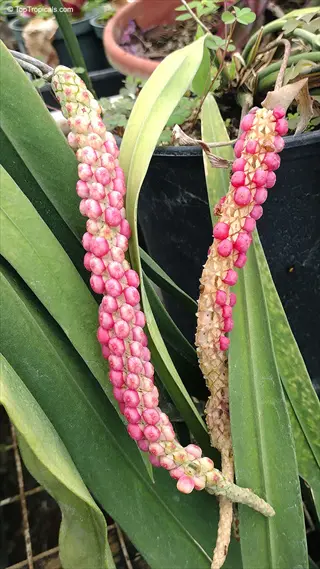
Anthurium Vittarifolium
- Common Names: Called the strap-leaf anthurium because its long, narrow leaves hang down like green ribbons from the center of the plant.
- Appearance: Grows pendant leaves that reach over 4 feet (120 cm) long but only 2 to 3 inches (5 to 8 cm) wide for a cascading effect.
- Light Needs: Does well in moderate to bright indirect light and adapts to many indoor spots, with brighter light pushing faster growth.
- Humidity: Prefers 60 to 70% humidity and benefits from grouping with other plants or sitting in a humid room like a kitchen or bathroom.
- Display Style: Best on a high shelf, in a hanging basket, or mounted on a board so its long leaves can cascade down for full visual impact.
- Best For: Anyone who wants an unusual cascading anthurium that adds vertical drama without needing the extreme humidity of other rare species.
Ideal Light and Placement
Getting your anthurium light requirements right is the fastest way to more blooms. Picture the dappled light on a tropical forest floor under a tall tree canopy. That filtered brightness is what your anthurium wants near a window. UF IFAS data shows the best growth happens at 1,000 to 2,500 foot candles under 80 to 90% shade.
The good news for you is that anthuriums don't need much light to flower. Your plant can keep blooming at just 100 foot candles for over 1.5 years indoors. That's about what you get 3 to 5 feet from an east window in most homes. I keep my bright indirect light anthurium collection near an east window and they bloom all year without any fuss.
Watch your plant for signs that light levels are off. Pale green flowers mean your anthurium gets too much anthurium sunlight and you need to move it back from the glass. Stretched stems and long gaps between leaves mean your plant sits in anthurium low light and needs a brighter spot. Foliage types like crystallinum need more shade than flowering types. Give your crystallinum filtered light anthurium growers often skip this step.
Your east window is the sweet spot for most anthuriums in your home. South and west windows work too, but you'll need to pull the plant further from the glass or hang a sheer curtain to block the harsh rays.
Soil, Potting, and Repotting
Your anthurium soil mix matters more than most people think. In the wild, anthurium roots cling to tree branches with air and rain all around them. Your anthurium potting mix should feel like a loose handful of bark chips rather than packed garden dirt. Standard potting soil holds too much water and chokes the roots, which is why I lost my first 2 anthuriums before I learned this lesson.
UF IFAS Extension tested a 1:1:1 ratio of peat, perlite, and bark as the best epiphyte soil for anthuriums. You want to keep your anthurium soil pH between 6.0 and 6.5 for the best root health. An orchid mix anthurium growers love works great as a base since you can add perlite and peat to dial it in. You should plan on repotting anthurium plants every 2 years to keep roots happy.
Standard Epiphyte Mix
- Ratio: Combine equal parts peat moss, perlite, and orchid bark in a 1:1:1 ratio, which is the formula recommended by the University of Florida IFAS Extension.
- pH Target: Aim for a soil pH between 6.0 and 6.5, which you can test with an inexpensive soil pH meter available at most garden centers.
- Drainage: This mix drains fast while holding just enough moisture around the roots, copying the conditions anthuriums get on tropical tree branches.
Orchid-Based Mix
- Ratio: Use 2 parts commercial orchid mix to 1 part perlite and 1 part peat moss for a chunkier blend that gives extra airflow around roots.
- Benefits: The larger bark chips in orchid mix create air pockets that prevent root rot while the peat and perlite keep enough moisture for steady growth.
- Best For: Growers in humid climates or those who tend to overwater, because this chunkier mix dries out faster and cuts the risk of soggy roots.
Sphagnum Moss Method
- Material: Use long-fiber sphagnum moss alone or mixed with perlite at a 3:1 ratio for a lightweight growing medium that holds moisture well.
- Benefits: Sphagnum holds 20 times its dry weight in water and releases it at a slow pace, keeping roots humid without making them sit in water.
- Maintenance: Replace sphagnum moss every 12 to 18 months because it breaks down over time and gets compacted, which blocks airflow to the roots.
Repotting Guidelines
- Timing: Repot your anthuriums every 2 years or when roots circle the bottom of the pot, and always repot during spring for the fastest bounce back.
- Pot Size: Move up only 1 pot size at a time, about 1 to 2 inches (2.5 to 5 cm) larger across, and make sure the new pot has drainage holes.
- Root Care: Remove old soil and trim up to 1 quarter of the root mass if roots are bound tight, which pushes fresh growth in the new mix.
Watering and Humidity
Knowing how often to water anthurium plants trips up most new owners. Treat your anthurium's watering needs like a sponge. Let it soak up water, then wait until the top inch feels dry before you soak it again. I check my plants every few days by sticking a finger into the soil up to my first knuckle. If it feels dry at that depth, it's time for a drink.
Your anthurium watering schedule should change with the seasons. In summer, you might water every 4 to 6 days when your plant drinks faster. Winter slows things down to every 10 to 14 days since cool air and less light cut water uptake. Overwatering anthurium plants is the number one killer and leads straight to anthurium root rot. Good anthurium drainage from the right pot and soil mix stops water from pooling around the roots.
Anthurium humidity is just as important as water in the soil. NC State Extension says you want 60 to 80% humidity around your plant. Most homes sit around 30 to 50% in winter, so a small humidifier near your anthurium makes a big difference. I run mine all winter and my anthuriums have never looked better. Temps below 55°F (13°C) can damage your plant, so keep it warm and humid for the best results.
Feeding and Fertilizer Schedule
Most guides tell you how to fertilize anthurium plants but skip the most important detail. Your anthurium fertilizer needs to change based on what you want your plant to do. Think of nitrogen as fuel for leaves and phosphorus for anthurium flowering. Switching your anthurium NPK ratio is like changing gears from growth mode to bloom mode.
UF IFAS research shows a 3:1:2 NPK ratio pushes your anthurium to grow more leaves during spring. When you want blooms, switch to a 1:2:2 ratio that gives more phosphorus to trigger flowers. I made this one swap last spring and my andraeanum popped out 3 new blooms within a month. Your anthurium feeding schedule should be a half-strength fertilizer every 2 to 4 weeks while it grows. Stop feeding during winter rest.
Water your anthurium before you add any liquid fertilizer to the soil. Feeding on dry roots can burn them fast. A 20:20:20 formula at 50 ppm nitrogen once a month works well for indoor plants that just need steady care without big growth pushes.
Propagation Methods
Learning how to propagate anthurium plants lets you turn 1 healthy plant into several new ones for free. Anthurium propagation works best when your plant is mature and has at least 2 growth points. NC State Extension rates anthurium growth as slow, so new divisions need 4 to 6 weeks to grow roots above 70°F (21°C). I gave away 4 baby anthuriums last spring just from splitting 1 big mother plant.
You have 3 main ways to make new plants. Anthurium division is like splitting twins that each grew their own roots. Anthurium stem cuttings are more like cloning a piece of the parent into a new plant. You can also propagate anthurium in water, which is the method most guides skip. Dipping cuts in anthurium rooting hormone speeds things up but isn't required.
Division Method
- When to Divide: Choose a mature anthurium with at least 2 visible crowns or growth points, and divide during spring repotting when the plant is growing.
- Process: Remove the plant from its pot, pull root clusters apart with your hands or a clean knife, and make sure each piece has at least 2 to 3 leaves and healthy roots.
- Aftercare: Pot each division in fresh epiphyte mix, water it a small amount, and keep it in warm humid conditions above 70°F (21°C) for 4 to 6 weeks while roots settle in.
Stem Cutting Method
- Selecting a Cutting: Choose a healthy stem with at least 1 leaf and 1 or 2 visible aerial root nodes, and cut just below the node with a sterile blade.
- Rooting Medium: Place the cutting in moist sphagnum moss or a perlite and peat mix, keeping the node buried while the leaf stays above the surface.
- Rooting Hormone: Dip the cut end in rooting hormone powder before planting to speed up root growth, though anthuriums will root without it given enough time and warmth.
Water Propagation
- Setup: Place a stem cutting with aerial roots in a clear glass jar of room temperature water, with only the nodes and aerial roots below the waterline.
- Maintenance: Change the water every 3 to 5 days to stop bacteria from building up, and keep the jar in bright indirect light at 70 to 80°F (21 to 27°C).
- Transition: Once water roots grow 2 to 3 inches (5 to 8 cm) long, move the cutting to a moist epiphyte mix and keep humidity high for 2 weeks as it adjusts.
Seed Propagation
- Difficulty: Growing anthuriums from seed is slow and hard to predict, taking 2 to 4 years to reach bloom size, so mostly collectors and plant breeders use this method.
- Pollination: You must hand pollinate anthurium flowers because the female and male phases of a single spadix happen at different times and need pollen from a second plant.
- Germination: Sow fresh seeds on moist sphagnum moss in a sealed container at 75 to 80°F (24 to 27°C) with high humidity for the best sprouting rates.
5 Common Myths
Anthuriums need direct sunlight to produce their colorful blooms and will not flower in low light conditions.
Anthuriums bloom continuously at just 100 foot candles of indirect light for over 18 months, and direct sun actually scorches their leaves.
The bright red or pink parts of an anthurium are its flower petals that attract pollinators in the wild.
The colorful part is a modified leaf called a spathe, while the true flowers are the tiny bumps clustered on the central spike called a spadix.
Anthuriums are safe for homes with pets because they are just decorative tropical plants with no harmful properties.
All parts of an anthurium contain insoluble calcium oxalate crystals that are toxic to dogs, cats, and horses according to the ASPCA.
You should water your anthurium on a strict weekly schedule to keep the soil consistently moist at all times.
Anthuriums are epiphytes that need their soil to partially dry between waterings, and a strict schedule often leads to overwatering and root rot.
Any standard potting soil from a garden center will work perfectly fine for growing healthy anthuriums indoors.
Anthuriums need a coarse, well-draining epiphyte mix such as equal parts peat, perlite, and bark at a soil pH of 6.0 to 6.5.
Conclusion
Your anthurium plant gives you more color per dollar than almost any other indoor tropical plants you can buy. Flowering anthurium varieties do best in bright indirect light. Foliage types shine in shadier spots with higher humidity. Pick a flowering type like andraeanum if you want easy blooms. Go with crystallinum if you love bold leaves instead.
The right anthurium care comes down to 3 things: light, soil, and feeding. UF IFAS proved these plants bloom for over 18 months at just 100 foot candles of indoor light. Use the 1:1:1 peat, perlite, and bark mix to keep roots healthy. The 3:1:2 to 1:2:2 NPK switch is the care step most beginners miss. It makes the biggest difference in getting more flowers.
I've watched my own anthuriums go from single plants to a full collection over the years. Once you master the basics and your plant grows strong, propagation is the natural next step. Split a mature plant into 2 or 3 new ones and share them with friends. It's one of the best parts of growing these rewarding indoor tropical plants.
Start with the anthurium varieties that match your home's light and humidity levels today. Give your plant the right soil, water by feel, and switch your fertilizer when you want more blooms. Your anthurium will thank you with months of fresh color on your windowsill.
External Sources
Frequently Asked Questions
How do you take care of an Anthurium plant?
Provide bright indirect light, water when the top inch of soil dries, keep humidity at 60 to 80 percent, and feed monthly with a balanced fertilizer at half strength.
Is Anthurium a good indoor plant?
Anthuriums are excellent indoor plants because they bloom in low light, purify air, and require only moderate maintenance.
Where should I put Anthurium in my house?
Place your anthurium near an east or north-facing window where it receives bright indirect light without direct sun exposure.
How often should I water my Anthurium?
Water your anthurium every 5 to 7 days in summer and every 10 to 14 days in winter, checking that the top inch of soil is dry first.
How long do potted anthuriums last?
Potted anthuriums can live for five years or longer with proper care, and individual blooms last four to eight weeks each.
Can anthurium survive in the bathroom?
Anthuriums do well in bathrooms because the naturally high humidity of 60 to 80 percent matches their tropical needs.
What is the luckiest plant inside the house?
Anthuriums are considered lucky indoor plants because their heart-shaped spathes symbolize hospitality and abundance in many cultures.
What are the disadvantages of anthuriums?
Anthuriums are toxic to pets and children, need consistent humidity, grow slowly, and can stop blooming if light or fertilizer is wrong.
Do anthuriums like deep pots?
Anthuriums prefer shallow, wide pots because their root systems spread outward rather than growing deep.
Why water Anthurium with ice cubes?
Ice cube watering delivers a slow, measured amount of water that prevents overwatering and root rot in anthuriums.