Houseplant · Araceae
ZZ Plant
Zamioculcas zamiifolia
Glossy, near-indestructible, and happy in a forgotten corner, the ZZ plant asks for almost nothing and gives back for years.
Bright indirect
Every 14–30 days
59–84°F · 15–29°C
USDA 9–11
Overview
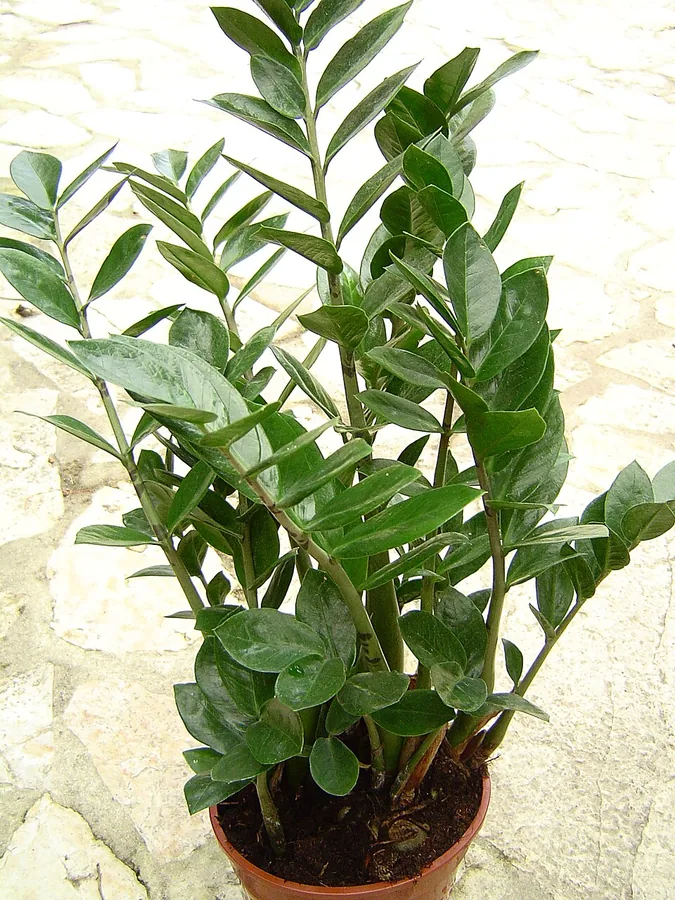
The ZZ plant earns its reputation as the houseplant you can barely kill. Native to eastern Africa, it stores water in thick underground rhizomes, which is how it shrugs off the odd missed watering and a dim spot far from any window. The waxy, deep-green leaflets march in neat rows up arching stems and catch the light like they have been polished.
What makes it such an easy roommate is how little it wants. It grows slowly and steadily, holds its shape without much fuss, and rarely outgrows its welcome at 2 to 4 feet (61 to 122 cm) tall. You can leave it alone for weeks and it stays handsome, which is exactly why it turns up in offices and low-light hallways everywhere.
The one catch is that every part of the plant carries calcium oxalate crystals, so it is not a good fit within reach of pets or small children who like to chew. Handle it, set it somewhere out of the way, and it will reward you with years of quiet, glossy growth.
Care
The short version: give it bright indirect light, water only when the soil has dried out completely, plant it in a fast-draining mix, and keep it warm and out of direct sun.
Light
A ZZ plant does best in bright indirect light, though it tolerates low and medium light better than almost any houseplant. Keep it out of direct sun, which scorches the leaves. The trade-off for a dim corner is slower growth and a leggier shape.
Water
Water only after the mix has dried out completely, which usually means once every 2 to 4 weeks. The rhizomes hold their own reserve, so the plant handles a missed watering far better than a soggy pot. Overwatering is the fastest way to kill it.
Soil
Plant it in a well-drained potting mix, peat- or bark-based, with extra perlite or sand worked in. The goal is a blend that drains fast and never stays waterlogged, since standing moisture is what rots the rhizomes.
Temperature
Keep it in the comfortable range of 59°F to 84°F (15°C to 29°C), the same warmth you would want indoors. It has no tolerance for cold, and a chill below 60°F (15°C) yellows the leaves or makes them drop.
Humidity
Ordinary household humidity suits it fine, so there is no number to chase. It adapts to the dry air of most homes without any misting or fussing.
Feeding
Feed lightly during the spring and summer growing season with a balanced, diluted fertilizer, just once or twice a year. This is a slow grower, so it needs very little, and overfeeding does more harm than good.
Pruning
Pruning is minimal. Simply trim away yellowing or damaged leaflets as they appear to keep the plant looking tidy.
Repotting
Repot every 2 to 3 years, or sooner if the plant outgrows its container. You will know it is time when the thick rhizomes bulge against the pot, roots push out the drainage holes, or growth slows. Move it up just one pot size into fresh, fast-draining mix.
Size & spacing
Indoors a ZZ plant reaches about 2 to 4 feet (61 to 122 cm) tall and spreads roughly the same width. Give it room for the arching stems to fan out without crowding nearby plants.
Troubleshooting
A ZZ plant rarely complains, so when it does, the cause is usually simple. Most trouble traces back to watering or light, and the plant shows it in the leaves and stems. Match what you see below and you can set it right before it spreads.
Yellowing leaves and soft, mushy rhizomes
This is root and rhizome rot, and it almost always comes from too much water rather than too little. The fat underground rhizomes already store their own water, so soggy soil drowns them and turns them mushy and foul-smelling. Stop watering, lift the plant out, cut away anything soft, and repot in a dry, fast-draining mix.
Fix:
- Stop watering
- Unpot and cut away rotted rhizomes
- Repot in dry well-draining mix
Leaflets shriveling and dropping off
When the soil goes bone-dry for too long, a ZZ plant sheds leaflets to cut its losses. The petioles shrivel and the foliage thins out. Give it a thorough drink, then go back to watering only once the mix has dried out again.
Fix:
- Water thoroughly
- Resume regular watering once soil dries
Small brown bumps stuck to the stems
Those waxy brown bumps along the stems and petioles are armored scale, the one pest that bothers a ZZ plant. They often leave a sticky film behind. Wipe them off, then treat with horticultural oil or insecticidal soap, and check any new plant before it joins the others.
Fix:
- Wipe off scale
- Treat with horticultural oil or insecticidal soap
Yellowing or collapse after a cold spell
A ZZ plant resents the cold, and a spell below 60°F (15°C) turns the leaves yellow or makes them collapse. Move it somewhere warmer right away. Keep it away from drafty windows in winter and bring any summer holiday outdoors back inside before the nights turn.
Fix:
- Move to a warmer spot above 60°F (15°C)
Bleached or brown patches on the sunny side
Leaf scorch shows up as pale or brown patches on whichever side faces the window. Direct sun is too strong for this plant. Move it back from the glass into bright indirect light and the new growth comes in clean.
Fix:
- Move to bright indirect light
Stretched, leggy stems and little new growth
A ZZ plant survives in a dim corner, but it pays for it with stretched petioles and barely any new growth. Too little light is the cause. Shift it somewhere brighter, still out of direct sun, and it picks up the pace.
Fix:
- Move to brighter indirect light
Toxicity
This is not a plant to keep within a pet's reach. Every part holds sharp calcium oxalate crystals that sting the mouth and throat and bring on drooling and vomiting if chewed. The sap can also irritate your own skin and eyes, and no part of the plant is safe to eat, so set it somewhere out of reach and wash your hands after handling it.
Toxic to
Cats · Dogs · Horses · Rabbits · Livestock · Birds · People
Cats Toxic
A cat that bites a leaf gets a mouthful of sharp crystals, so expect drooling, pawing at the mouth, and vomiting. The pain usually stops most cats from eating much.
Dogs Toxic
Chewing brings on heavy drooling, oral pain, and an upset stomach. A dog that swallows more may also gag or refuse its food for a while.
Horses Toxic
The same crystals irritate a horse's mouth and gut, leaving it drooling and off its feed. Keep the plant well clear of stalls and paddocks.
Rabbits Toxic
Never offer it to a rabbit. The oxalate crystals burn the mouth and stomach and bring on drooling and a loss of appetite.
Livestock Toxic
Goats, sheep, and cattle react to the crystals with mouth irritation, drooling, and digestive upset, so fence the plant off from grazing animals.
Birds Toxic
A pecking bird gets the same stinging crystals in its mouth and throat. Keep pet birds away from the leaves entirely.
People Caution
The plant is not for eating, and the sap can leave skin or eyes red and stinging. Wash your hands after handling it and keep small children from chewing the leaves.
Wash hands after handling; crystals can irritate skin
Helpline numbers

United States
ASPCA Animal Poison Control: (888) 426-4435 (fee applies)
Poison Control: (800) 222-1222



Canada
Poison Centres: 1-844-764-7669
Varieties
Beyond the familiar glossy green plant, breeders have introduced a handful of distinct ZZ cultivars worth knowing.
'Raven' (Dowon)
Its new leaves push out lime-green and then darken to a glossy, near-black purple as they age.
'Zenzi'
A tidy dwarf that tops out around 10 to 12 inches, with short stems and dark leaves packed tightly together.
'Dark Zamicro'
Another compact dwarf, staying under 2 feet, with smaller leaflets than the standard plant.
Variegated
Its foliage is brushed with cream and white markings instead of solid green.
'Chameleon'
Its new growth opens golden-yellow before settling into dark green as it matures.
'Lucky'
It carries wider green leaves with softly rounded tips on each leaflet.
How to propagate
A ZZ plant multiplies in two ways, one quick and forgiving and the other a long test of patience.
DivisionEasy
Spring, at repotting · Weeks to months
The easiest way to make more plants is to divide one. In spring, while you have the plant out of its pot to repot it, pull the rhizome clumps apart so each piece keeps its own roots and a shoot or two. Pot the divisions up and they settle in over the next few weeks to months.
Leaf cuttingsDemanding
Anytime; very slow · Several months to form a rhizome
You can also root single leaflets, though this one tests your patience. Press a healthy leaflet into moist mix any time of year and wait, since it can take several months just to form a tiny rhizome and longer still before a new shoot appears.
Myths
A ZZ plant thrives in no light at all.
It puts up with a dim corner better than almost any houseplant, which is where the story comes from. But it still needs light to grow, and a truly dark spot stalls it out. Bright indirect light is where it actually does well.
You only need to water a ZZ plant once a season.
It is genuinely drought-tolerant thanks to its water-storing rhizomes, but once a season is too far apart. Water it when the mix has fully dried, roughly once or twice a month. Leave it parched for too long and it starts dropping leaflets.
A ZZ plant meaningfully cleans the air in your home.
This idea traces back to old chamber studies that don't reflect a real room. A peer-reviewed review found that potted plants don't measurably improve indoor air, and ordinary ventilation does far more than any houseplant could.
Touching a ZZ plant causes cancer or dangerous poisoning.
The calcium oxalate in the leaves and sap is an irritant, not a deadly poison, and it certainly doesn't cause cancer. Handling it can leave skin or eyes stinging, so wash your hands afterward, and while eating it is unsafe, the effect is irritation rather than serious harm.
The ZZ plant is safe around pets.
It isn't. The ASPCA lists it as toxic to cats and dogs because of the insoluble calcium oxalate crystals it carries, which sting the mouth and bring on drooling and vomiting if chewed.
Sources
- ASPCA Animal Poison Control
- NC State Extension Gardener Plant Toolbox
- Missouri Botanical Garden Plant Finder
- Missouri Botanical Garden Plant Finder
- Clemson Cooperative Extension HGIC
- UF/IFAS Extension Santa Rosa County
- UF/IFAS Extension (ENH1375/EP639)
- Journal of Exposure Science & Environmental Epidemiology (Cummings & Waring 2020)